The MTA Is Working To Improve Critical Infrastructure On The L Train

By Joseph Morales

   The L train is a subway route that runs from the 8 Av station in Manhattan out to Canarsie-Rockaway Pkwy in Canarsie, Brooklyn. The line passes through many densely populated neighborhoods throughout Manhattan and Brooklyn that truly reflect the hustle and bustle as well as the diversity the city is known for, such as the West Village, Williamsburg, and Bushwick. More than 300,000 riders ride the L train daily as of April 2016, according to the Regional Plan Association. While those are well before pre-pandemic levels, it is essential to note that subway ridership did increase to 65% of pre-pandemic levels from 56% in 2022, according to statistics from the NYC Comptroller’s office. This indicates that subway ridership citywide is starting to recover.

Read More »

The MTA Is Considering Major Transit Upgrades on Utica Ave in Brooklyn. It May Include A Long-Awaited Subway Extension.

By Joseph Morales

Utica Avenue/Malcolm X Blvd is one of the busiest north-south thoroughfares in Brooklyn. The approximately 6-mile stretch passes through numerous densely populated and busy neighborhoods such as Bedford-Stuyvesant(Bed-Stuy), Crown Heights, East Flatbush, and more. It also connects to the Kings Plaza Shopping Center, one of the largest shopping malls in Brooklyn. In addition, the corridor connects to several other critical east-west arteries in the borough, such as Chruch Ave, Linden Blvd, and Kings Hwy, which are at least five miles long. 

Read More »

Several Stations Along the Jamaica Line Are Getting Substantial Improvements

By Joseph Morales

      The Jamaica Line(J, Z trains) is a critical transportation asset in Brooklyn and Queens, connecting parts of Southern Queens and Northern Brooklyn with Lower Manhattan, serving thousands of riders daily.

             Most of the line is elevated except the two stations(Sutphin Blvd-Archer Av-JFK Airport and Jamaica Center Parsons/Archer) and its eastern terminus. Much of this elevated portion runs above Jamaica Ave between the Cypress Hills station in Brooklyn and the 121st Street station in Queens. Most stations along this portion of the line were opened between 1917 and 1918 except for Cypress Hills, which opened in 1893 as it was originally constructed under the Brooklyn Elevated Railroad’s extension of its Lexington Avenue Line. In contrast, the other stations in Queens were opened by a separate company known as the Brooklyn Union Elevated Railroad. During this era, all subway lines were run by private companies with their own fare payment systems.

Read More »

The Flushing Line Is Getting A Slew Of Upgrades That Will Improve Every Aspect of The Rider Experience

By Joseph Morales

  The Flushing Line(7 Train) is a critical transportation link between Manhattan and Queens. The Flushing Line connects Midtown with many of Queens’ busiest neighborhoods, such as Long Island City, Jackson Heights, and Flushing. The Flushing Line also connects with multiple north-south subway lines in Manhattan, the N, W to Astoria, Queens, the E, F, M, R(Queens Boulevard Line), and the G Train(Brooklyn/Queens Crosstown). The subway line also connects to various bus lines, including several routes to LaGuardia Airport and many bus routes in Downtown Flushing, where 173,000 bus riders passed through daily pre-pandemic, with around 28,000 of them making transfers to the Flushing Line.

                      Thus, it is no surprise that the Flushing Line is an extremely busy line, with trains running as frequently as every 2-3 minutes in both directions at certain parts of the AM/PM peak hours. The MTA had already significantly upgraded the line in recent years by installing CBTC(Communications-Based Train Control) to replace the fixed-block signaling on the line used since the early days of the NYC subway system. This led to weekday on-time performance on both the Flushing Line and the Canarsie Line(L) where CBTC was also installed, increasing from a combined 68.1% in 2018 to 90.5% post-CBTC installation. In addition, as the new signaling system does not require trains to be as far apart from each other as fixed block signaling, trains can be run more frequently, which can help to reduce overcrowding and improve convenience for Flushing Line riders. 

  After such dramatic service improvements, the MTA aims to build upon its CBTC success by improving stations across the line and performing additional infrastructure upgrades.

Read More »

CBTC Installation Might Be Icing On The Cake For Recent G Train Upgrades

By Joseph Morales

The G Train(Brooklyn-Queens Crosstown Line) is unique because it is the only subway line outside of shuttles that does not enter Manhattan. Nevertheless, it serves some of the busiest and fastest growing neighborhoods in Brooklyn and Queens, connecting Long Island City to Williamsburg, Downtown Brooklyn, Park Slope and more. Long perceived as a low ridership route with trains having only 5 cars versus the typical 8-10, ridership has increased as neighborhoods have grown and residents and jobs came with it. According to census data obtained by Spectrum News 1, state assembly districts the G passes through  have seen an increase in population between 3.7 and 22.3% between 2011 and 2021. The population of Williamsburg/Greenpoint which is along along the G train grew by 26% between 2010 and 2020. Also, in the five years prior to the pandemic G train ridership rose 15%.  Thus, the need for travel is increasing along the line and the G train will continue to be an important connector between some of the most rapidly growing areas of the city.

Read More »

What Is The Future of the Abandoned BallPark SIR station? Could It Reopen Full Time Some Day?

By Joseph Morales

    The BallPark Station on the Staten Island Railway(SIR) is a station north of the SIR’s terminus at the St.George Ferry Terminal next to the Richmond County Bank Ballpark and the Empire Outlets. This station had opened on June 24, 2001 in coordination with the beginning of the season for the now defunct  Staten Island Yankees baseball team, the former Short Season A affiliate of the New York Yankees, that served to transport riders to baseball games at the 7,000-seat stadium. The station only served trains on game days.

Read More »

Station Entrances to Busy Nostrand Ave Station Opened 2 Years Ago A Day From Today. What Might Happen To Other Entrances Closed During The Same Era?

By Joseph Morales

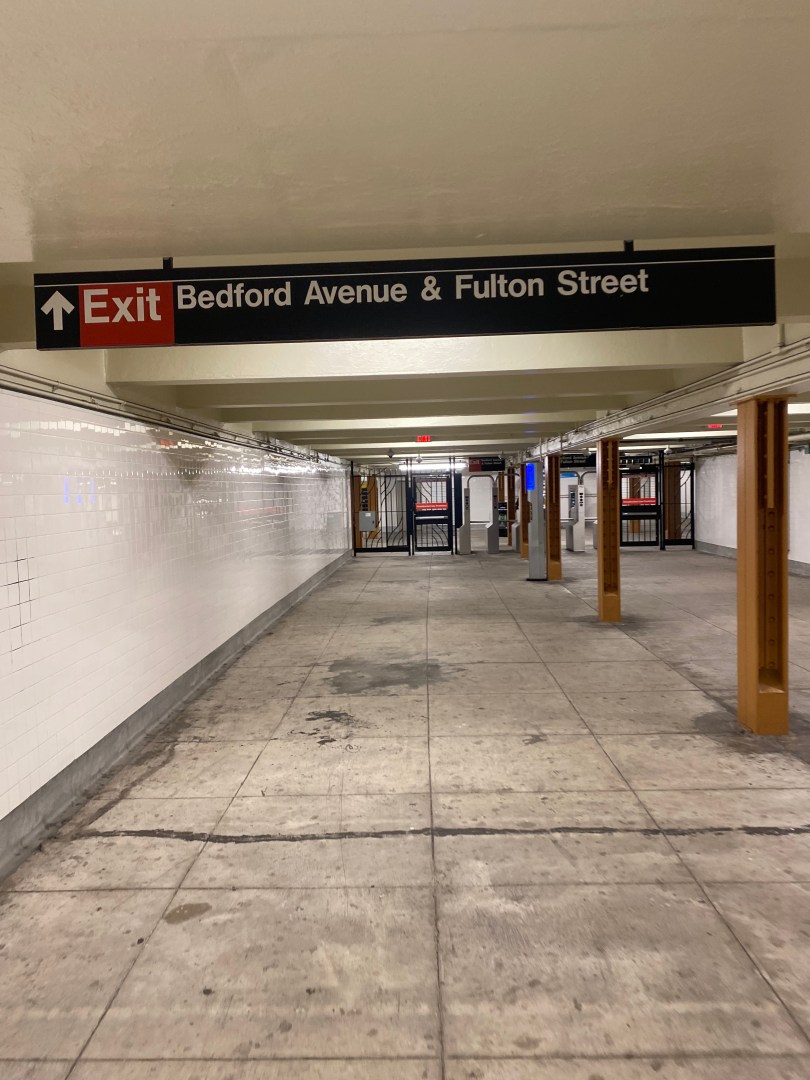
The Nostrand Avenue Station on the Fulton Line(A,C trains) is located under Fulton St between Nostrand and Bedford Avenues in the Bedford-Stuyvesant section of Brooklyn. The area immediately surrounding the station is known for being a busy commercial strip with a combination of high-density residential buildings and retail stores. The station also provides transfer between local and express trains along the Fulton Line as well as the Eighth Avenue Line in Manhattan, in addition to transfers to the B25 and B26 buses along with the B44-LCL/SBS. The station is also a short walk away from the Nostrand Ave LIRR station.

                 Though the station and surrounding community have always been extremely busy, two spacious entrances on Bedford Ave/Fulton St had been closed and abandoned between 1991 and 2021 after the NYPD Transit Bureau determined that they could not provide enough police in the entrances in order to protect straphangers when subway crime was considered out of control in New York City. 

Read More »

Washington Heights Subway Station Entrance Gets Total Facelift From NYCDOT.

By Joseph Morales

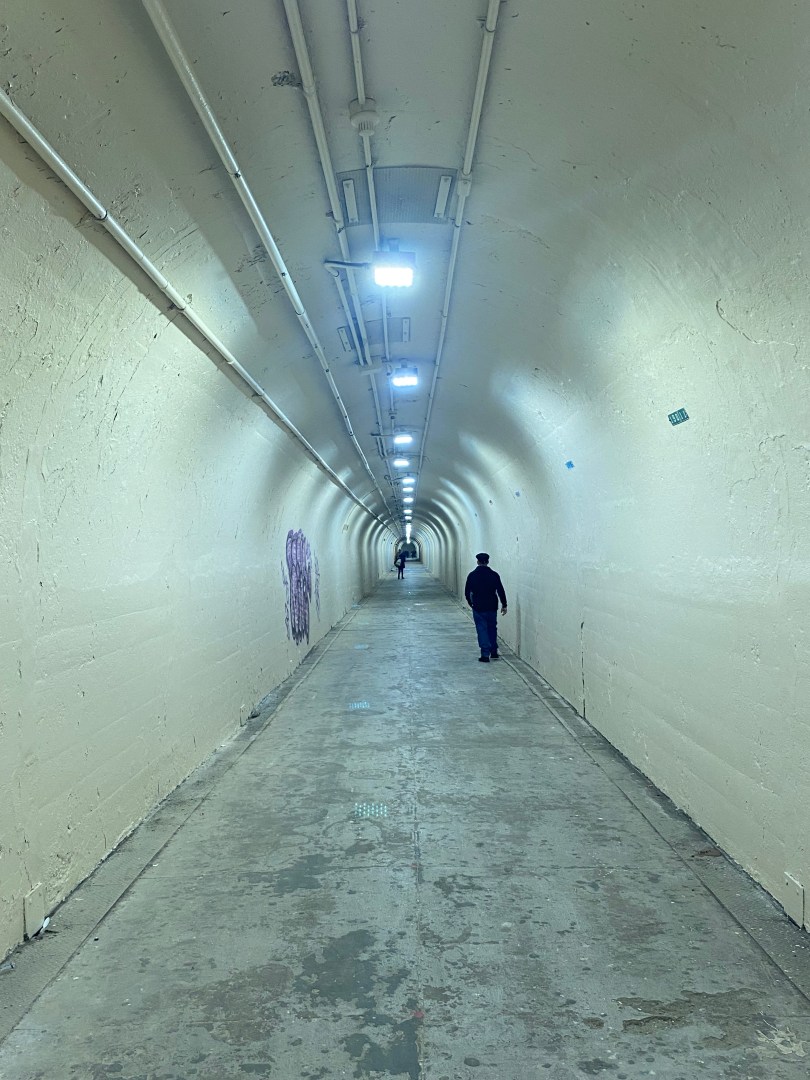
The 191st St Station on the 1 Train is known for its dilapidated and even dangerous conditions by some. This is largely because of the poor condition of a 1,000 foot long tunnel that serves as the entrance to the station from Broadway and West 191st Street. In addition to serving as a subway entrance, many walking in the community use it to get between Broadway and St. Nicholas Ave to avoid having to walk through steep hills on Fairview Ave or the desolate Gorman Park as one does not need to pay the subway fare for the sole purpose of using the tunnel. It is also worth noting that since the tunnel is technically considered a “tunnel street” it is controlled by the NYCDOT rather than the MTA. It is the only street of its kind in NYC.

Read More »

New Clifton Maintenance Shop Is More Sustainable and Will Help To Improve Service Throughout The Staten Island Railway

By Joseph Morales

                 The Staten Island Railway(SIR) is the sole passenger rail line in Staten Island. It runs from from the southwestern tip of Staten Island at the Tottenville station northeast to the St. George Ferry Terminal in the St. George section of the borough. According to the American Public Transportation Administration, almost 2.8 million people rode the Staten Island Railway in 2021. The MTA recently completed the construction of a brand new Clifton Maintenance Shop, which replaces the old one as the sole maintenance shop for SIR trains. This new shop will help the MTA better service on the rail line as well as keep protect the shop from numerous environmental threats.

Read More »

The MTA Is Evaluating Subway Extension to Red Hook That Could Drastically Improve Mobility In The Area

By Joseph Morales

  Red Hook, Brooklyn is an area with a very rich history as one of the busiest industrial neighborhoods in NYC. Now, it is a densely-populated residential community with a growing arts scene and a wide variety of businesses including an IKEA store. A substantial number of Red Hook residents live in the Red Hook East and Red Hook West NYCHA complexes, which is the largest public housing development in Brooklyn and one of the largest public housing complexes in New York City.

             Unfortunately, Red Hook can be a difficult place to travel to and from via public transportation. Red Hook is one of the few Western Brooklyn neighborhoods to not have subway access and bus service is limited. There are two MTA bus routes that operate in Red Hook, the B61 which travels from Park Slope through Red Hook to Downtown Brooklyn as well as the B57 which goes from the IKEA store in Red Hook to Maspeth, Queens primarily via Court Street through Red Hook and Cobble Hill and Flushing Avenue from Downtown Brooklyn to Maspeth. Despite being overcrowded sometimes, the B57 and B61 are not very frequent.(You can check out the schedules for these buses here:(B57)https://new.mta.info/document/7121 (B61) https://new.mta.info/document/7131These routes are also considered to be slow and unreliable. The B57 averaged speeds of 6.5-7.0 with a CJTP(Customer Journey Time Performance) of 56.2-70.6% each month between July 2021-2022. These numbers are lower than the Brooklyn averages of 7.0-7.3 mph and 65.5-74.8% each month in the same timeframe. While the B61 averaged higher speeds than the Brooklyn average of 7.3-7.8 mph each month as well as a pretty much average CJTP of 65.4-78.6%, it received a D on its latest report card from the Bus Turnaround Coalition, an advocacy group that fights for better bus service in NYC. This was in large part due to its 1 in 8 bunch rate, which was higher than 88.5% of NYC bus routes. A bus is considered bunched if it arrives within 25% of the bus that is supposed to come after them on its route. In addition, this route had a 53% on-time rate which was worse than 73.5% of NYC bus routes. CJTP measures what percentage of buses arrive at key destinations along its route within five minutes of its schedule. 

Read More »