The MTA Is Evaluating Subway Extension to Red Hook That Could Drastically Improve Mobility In The Area

By Joseph Morales

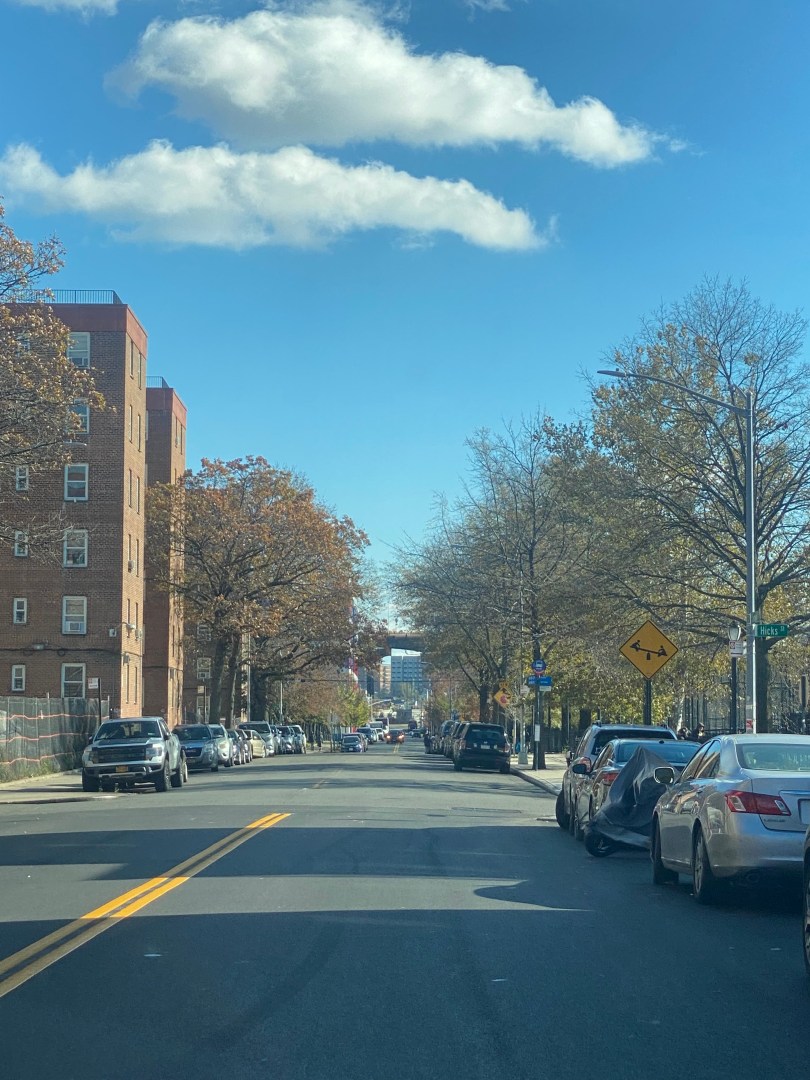
  Red Hook, Brooklyn is an area with a very rich history as one of the busiest industrial neighborhoods in NYC. Now, it is a densely-populated residential community with a growing arts scene and a wide variety of businesses including an IKEA store. A substantial number of Red Hook residents live in the Red Hook East and Red Hook West NYCHA complexes, which is the largest public housing development in Brooklyn and one of the largest public housing complexes in New York City.

             Unfortunately, Red Hook can be a difficult place to travel to and from via public transportation. Red Hook is one of the few Western Brooklyn neighborhoods to not have subway access and bus service is limited. There are two MTA bus routes that operate in Red Hook, the B61 which travels from Park Slope through Red Hook to Downtown Brooklyn as well as the B57 which goes from the IKEA store in Red Hook to Maspeth, Queens primarily via Court Street through Red Hook and Cobble Hill and Flushing Avenue from Downtown Brooklyn to Maspeth. Despite being overcrowded sometimes, the B57 and B61 are not very frequent.(You can check out the schedules for these buses here:(B57)https://new.mta.info/document/7121 (B61) https://new.mta.info/document/7131These routes are also considered to be slow and unreliable. The B57 averaged speeds of 6.5-7.0 with a CJTP(Customer Journey Time Performance) of 56.2-70.6% each month between July 2021-2022. These numbers are lower than the Brooklyn averages of 7.0-7.3 mph and 65.5-74.8% each month in the same timeframe. While the B61 averaged higher speeds than the Brooklyn average of 7.3-7.8 mph each month as well as a pretty much average CJTP of 65.4-78.6%, it received a D on its latest report card from the Bus Turnaround Coalition, an advocacy group that fights for better bus service in NYC. This was in large part due to its 1 in 8 bunch rate, which was higher than 88.5% of NYC bus routes. A bus is considered bunched if it arrives within 25% of the bus that is supposed to come after them on its route. In addition, this route had a 53% on-time rate which was worse than 73.5% of NYC bus routes. CJTP measures what percentage of buses arrive at key destinations along its route within five minutes of its schedule. 

Read More »
MTA Is Working To Make Two Busy Bronx Subway Stations Accessible

By Joseph Morales

           The New York City Subway is among the busiest subway systems in the World. During 2021, the system served approximately 2.4 million riders daily, though this total represented only about 45% of pre-pandemic levels.  NYC’s Subway system provides the freedom for most of its riders to get around to many points of the city through its 472 stations across its 24 subway routes and 3 shuttle services. 

             Unfortunately, for those with mobility disabilities only 24% of these stations are ADA-accessible. This tally might even include stations that are only accessible in one direction or do not allow for ADA-Accessible transfers or the ability for one to use every route in a station. This forced many with accessibility needs to take buses to and from accessible stations, use the woefully unreliable Access-A-Ride system or skip out on their trips entirely. This leads to many people missing out on jobs , recreation and other opportunities as well as other daily activities.

Read More »

  The Train Of Many Colors Is Back On The NYC Subway

By Joseph Morales

            The New York City Transit Museum ran its first run of The Train of Many Colors this year on the 1 line between 137th St-City College and Chambers St in Manhattan. The train features subway cars with multiple different colors that were manufactured in the 1960’s and served through different eras of the New York City Subway system and were retired as recently as 2003. These cars were the R-33, R-33WF(World’s Fair) and R-36 cars. Cars with the Kale Green “Green Machines”,“Tartar Red” and “Gunn Red” Redbird, two-tone robin’s egg blue and cream “Bluebird” as well as the blue-and-silver “Platinum Mist” color schemes were all featured on the train and these schemes are all likely familiar to most adult New Yorkers. The train also featured special holiday decorations which included some paper snowflakes on the windows as well as a special snowflake designed wreath at the front of the train. 

Read More »

Story of Sidewalk Subway Map in SoHo

By Joseph Morales

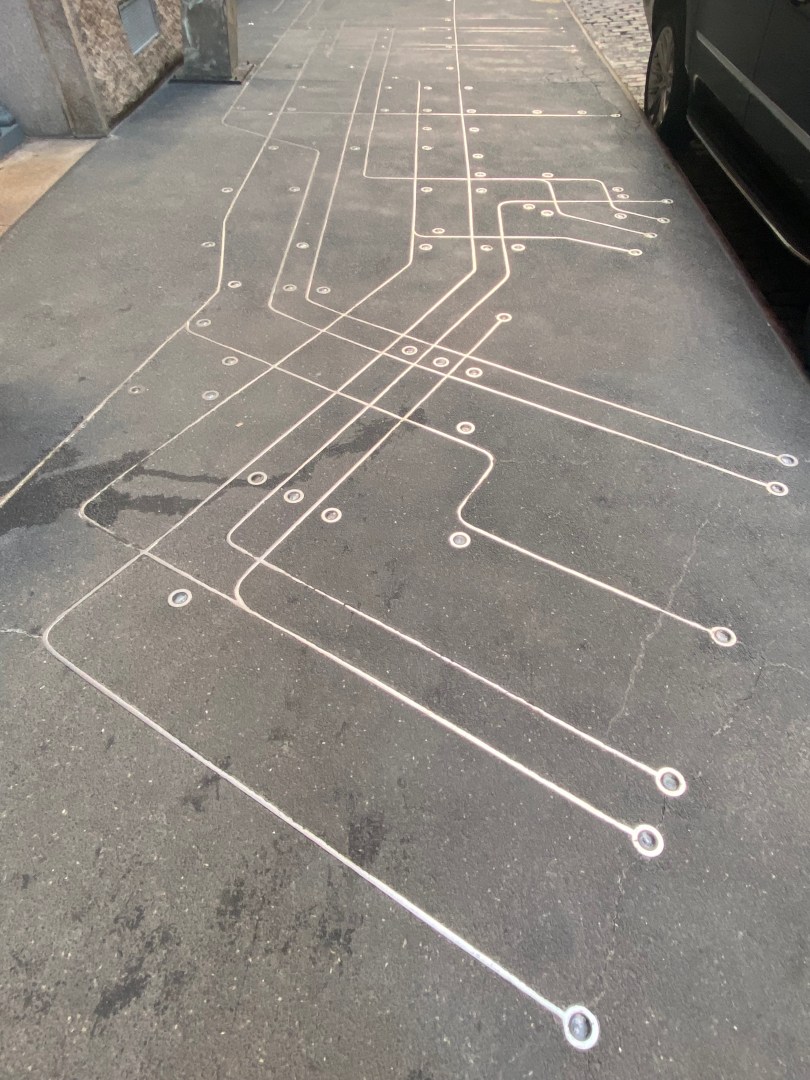
  SoHo is a unique and vibrant neighborhood full of designer boutiques, high-end chain stores and countless compelling art galleries. If you walk around long enough, you may notice what appears to be a floating subway map on the sidewalk on Greene Street between Prince and Spring Streets outside of the SoHo building, just blocks from the Apple Store as well as multiple subway stations. This distinguished and relatable work of art for many New Yorkers has a rich history that started when a building owner wanted to help make a difference with a city and subway system in crisis during the late 1970’s.

Read More »

The Fair Fares Program Provides Half-Priced Transit Fares to Low-Income New Yorkers. Why Haven’t More People Signed Up?

By Joseph Morales

(Link to sign up for Fair Fares is at the bottom of the article upon pressing Read More)

In 2019, NYC Mayor Bill De Blasio and the New York City Council announced the Fair Fares Program to make the MTA’s subway and bus services as well as Access-A-Ride affordable to low-income New Yorkers by offering riders either half-priced MetroCards or Access-A Ride fares to help cover daily transportation costs. The city currently has about $75 million dollars targeted to the program which gives New Yorkers living below the federal poverty threshold the opportunity to obtain half-priced MetroCards with all fare options available(Pay-Per Ride, 7 and 30 day unlimited, etc.) The program which has been fully operational for almost the last two and a half years has been able to serve over 270,006 riders according to the fair fares website. It has changed the lives of many, take for instance Derek Jimenez, an East Harlem resident who works a maintenance job that pays about $1,000 a month($12,000 a year) who told the New York Times in February that now his money stretches further. He told them that though he was able to afford certain things like a guitar he got on sale, that he mostly saves the money. “I hold onto it for now, for rainy days. The economy is really hurting.”  Though the program has had some success, it is astonishing that only 270,006 people are enrolled out of the approximately 700,000 people eligible, which is less than half of all eligible New Yorkers. That is up from only 257,004 as of January 2021. There are a number of reasons, but many are rooted in the systemic inequities that low-income residents of New York City continue to persevere through on a daily basis.

Read More »

Already One of The Largest Transit-Oriented Developments in American History, Hudson Yards Continues To Grow

By Joseph Morales

                  Hudson Yards is one of the largest transit-oriented developments in U.S history. Hudson Yards is a neighborhood on the Far West Side of Manhattan bounded by West 42nd and 43rd Streets, 7th and 8th Avenues, West 28th and 30th Streets and Hudson River Park according to the Hudson Yards Development Corporation. Hudson Yards had a long history of development plans falling through since the 1960’s including a sports stadium proposed as part of New York’s bid to host the 2012 olympics. Hudson Yards has finally come a long way from being a largely vacant space with just the Javits Center and an LIRR yard within the last decade to being a bustling mixed-use area, with a shopping mall, tourist attractions and other commercial/residential skyscrapers as well as the modern 34th St-Hudson Yards subway station.  Now, Hudson Yards continues to grow into a prime neighborhood on Manhattan’s Far West Side.

Read More »

Much Needed New Escalators Are Coming to Some Bronx and Upper Manhattan Subway Stations

By Joseph Morales

Escalators are an important part of NYC subway stations. They not only help people get to their trains more conveniently but they also help those with certain mobility disabilities get to the platform at all.  This is particularly true at these 4 stations in the Bronx and Manhattan, Pelham Pkwy(2,5)(IRT White Plains Rd Line), Pelham Bay Park(6), 181st St(A) and 125th St(1), where escalators are being replaced to improve escalator  The repairs are particularly critical at 181st St and 125th St due to their underground depth or height respectively. An escalator outage at the 181st St station could result in one having to walk down an astonishing 133 steps to access the platform. Even though escalators are available at an entrance on West 184th St, they are three blocks from the main commercial corridor on W 181st St and could be an inconvenience for riders trying to get to W 181st St and trying to transfer to buses. The 125th St station is among the tallest elevated stations in the entire subway system, making getting to the platform a challenge via stairs.

Read More »

Streets Surrounding Staten Island Railway Stations Can Be More Pedestrian-Friendly

By Joseph Morales

             The Staten Island Railway (SIR) is a rapid transit line operating on the East Shore of Staten Island. The SIR is the closest thing Staten Island has to a subway. The line is used by many Staten Islanders to get to the St.George Ferry Terminal, either to transfer to the Staten Island Ferry or to get to the St.George neighborhood. The St. George neighborhood has one of the highest employment densities on Staten Island and is home to major attractions such as the Empire Outlets, Snug Harbor and the Richmond County Ballpark home. Many other important points of interest are located in St. George, such as courts, borough offices as well as social services and other municipal buildings. Besides getting to and from St. George, the SIR is used by many to get to and from a variety of places on Staten Island and can be faster than driving on busy streets such as Hylan Blvd. In addition even though more Staten Islanders own cars than in other boroughs, many Staten Island residents do not own a car, so the railroad is critical for these residents to be able to access the East Shore of the Island.

             Unfortunately, many SIR stations might not be considered pedestrian-friendly. According to a survey done by State Senator Diane Savino in 2013, 61% of SIR riders used the bus and 23% walked in order to access the Staten Island Railway, indicating the need for safe conditions at the stations. 16% of Staten Island residents are seniors, who may find it easier to take public transportation than drive, especially considering the Staten Island Railway has not been known to have the same crime or crowding issues as the NYC subway, making it more senior friendly. These station entrances may be considered unsafe for many reasons, such as lack of signaled crosswalks and sidewalks.  The SIR also does not have MetroCard vending machines, station agents and other amenities found in the NYC subway, making the railway less convenient for riders.

Read More »

CBTC on Eighth Avenue Line Will Improve Commute Times For Many Riders

By Joseph Morales

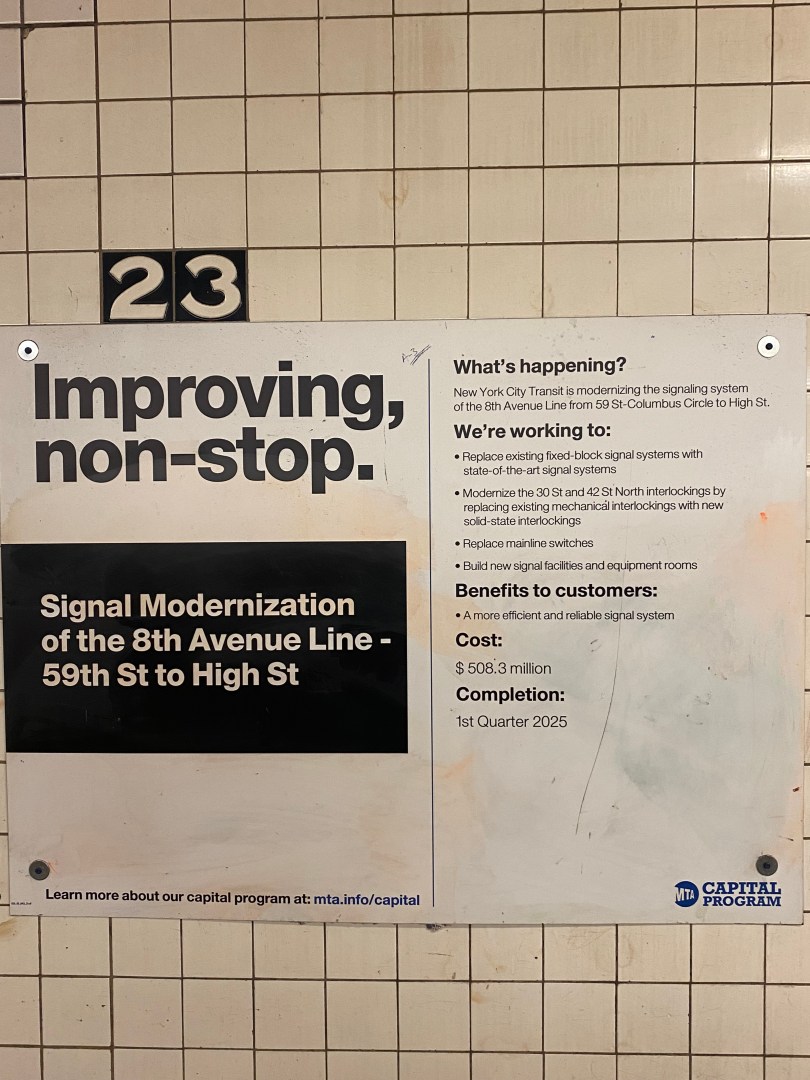
        The Eighth Avenue Line in the NYC Subway System has moved people along the Eighth Avenue corridor into Brooklyn since 1932 and was the first line in the IND(Independent Subway System). While this line has succeeded in moving millions through the busy areas of Manhattan, the signal system is over 80 years old, which constantly leads to signal issues that are a leading cause of service disruptions according to the MTA. The MTA plans to fix the issue by implementing CBTC or communications-based trains control to fix the aging signal system as part of a $508.3 million signal modernization project. In addition as part of the project the MTA plans to modernize the 30th and 42nd St mechanical interlocking with solid-state interlockings, replace mainline switches and build new signal facilities and equipment rooms. The MTA’s Construction and Development Company(C&D) will also coordinate millions of dollars in projects to be done at the same time as CBTC installation to minimize service disruptions due to construction.

Read More »

Developers Of Massive Residential Development at Queensboro Plaza Station Will Also Make The Busy Station Accessible

By Joseph Morales

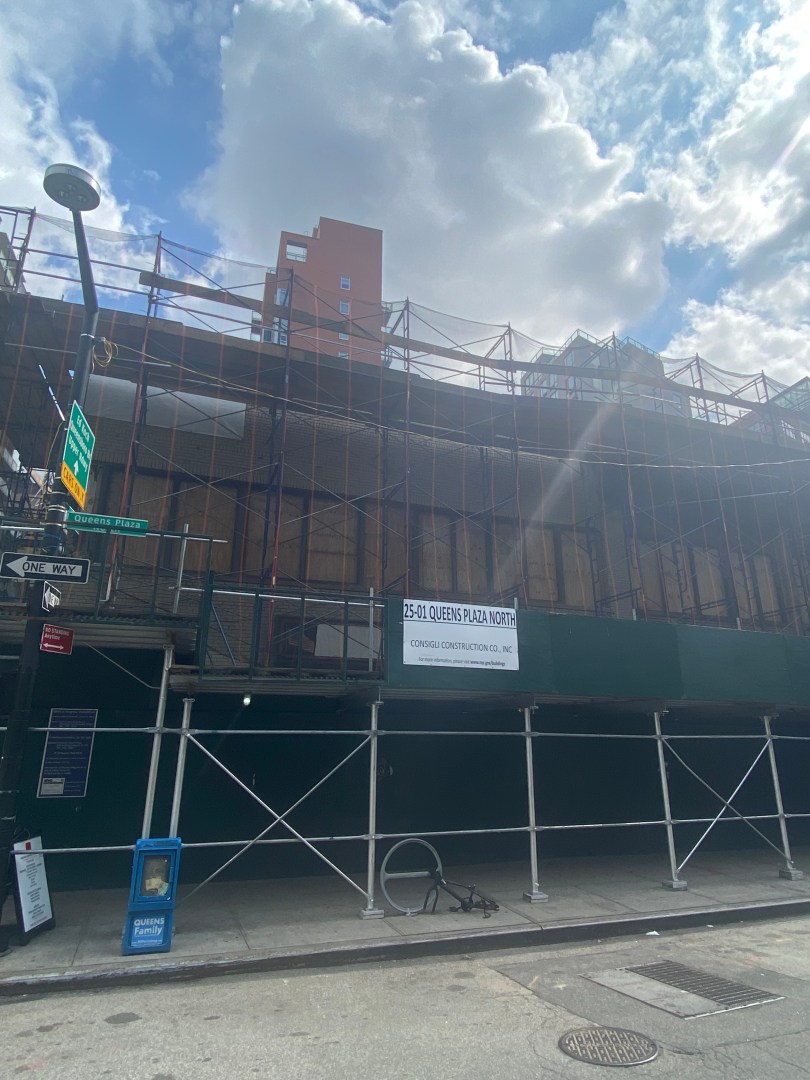
                   The Queensboro Plaza subway station in Long Island City, Queens is one of the busiest subway stations in the borough. It is located in one of Queens’ busiest neighborhoods, as about 14,000 riders passed through the station on a daily basis pre-pandemic. Now, developer Grubb Properties has proposed to replace a stretch of stores outside the station with a 26-story residential building that would host about 410 apartments as well as 7,500 square feet of retail space on the ground floor.  The towers will be connected to the current bridge that exists in the current retail building, giving residents easy access to three subway lines that provide one-stop access into Manhattan as well as many areas in Queens. This will give new residents great access to jobs, recreation and so much more.

Read More »