By Joseph Morales
*In real life, Marble Hill Playground is owned and operated by the New York City Department of Parks and Recreation.
Carmen Gonzalez is a nurse at the Moses Campus of Montefiore Hospital in the Norwood section of The Bronx. Her husband, Andrew, is a curator at the American Museum of Natural History on the Upper West Side of Manhattan. They have been married for 40 years and share an apartment in the Marble Hill neighborhood, overlooking the northern tip of Manhattan Island. The couple bonded over the ambition they both have in their unique crafts and a desire to do the best they can for the people they serve. For Carmen, that means racing around the hospital floor ensuring that all of her patients are as pain-free as possible. Meanwhile, Andrew’s time was spent doing endless research and making constant phone calls to meticulously gather a set of artifacts for immersive exhibits about the history of the universe.
Both Carmen and Andrew had a tough day. Carmen, just finished a 12 hour shift at the hospital due to a nurse shortage that has lasted a few weeks. At the museum, Andrew had a four hour call with an archaeologist who might have discovered fossils representing the tail and lower legs of the carnotaurus. That would be a major finding, as carnotaurus fossils have only been found in Argentina and no one has found fossils representing those parts of the carnotaurus’ body. The new fossils would allow scientists to finally reconstruct the body and allow for a massive exhibit at the museum.
It is now 7PM and the couple has arrived home from work. Andrew casually opens the mailbox, expecting the usual tabloids and maybe a bill or two. Today, he received an interesting letter. The letter had a red heading with a message that read, “YOU HAVE BEEN SUMMONED FOR TRIAL JURY SERVICE” in all capital letters. Andrew was really nervous as a lengthy trial could make it much harder for him to open his exhibit on time. The paltry $72 a day pay rate and the need to sit for hours in a courtroom hallway haven’t even crossed his mind yet. Panicked, he tries to vent to Carmen about the situation,
“What do I do??”, He asks emphatically.
Carmen goes on to explain how summonses don’t always lead to lengthy service periods and how you can sometimes get out of it after just one day of service. Then, she notices what she thinks is an anomaly.
“Centre St, New York County?”, she questions.
“Andrew, the summons is for a Manhattan court. This has to be a mistake”, she adds in a reassuring voice.
“Oh, yes.” Andrew says, relieved that he will likely be able to get out of this with a simple phone call.
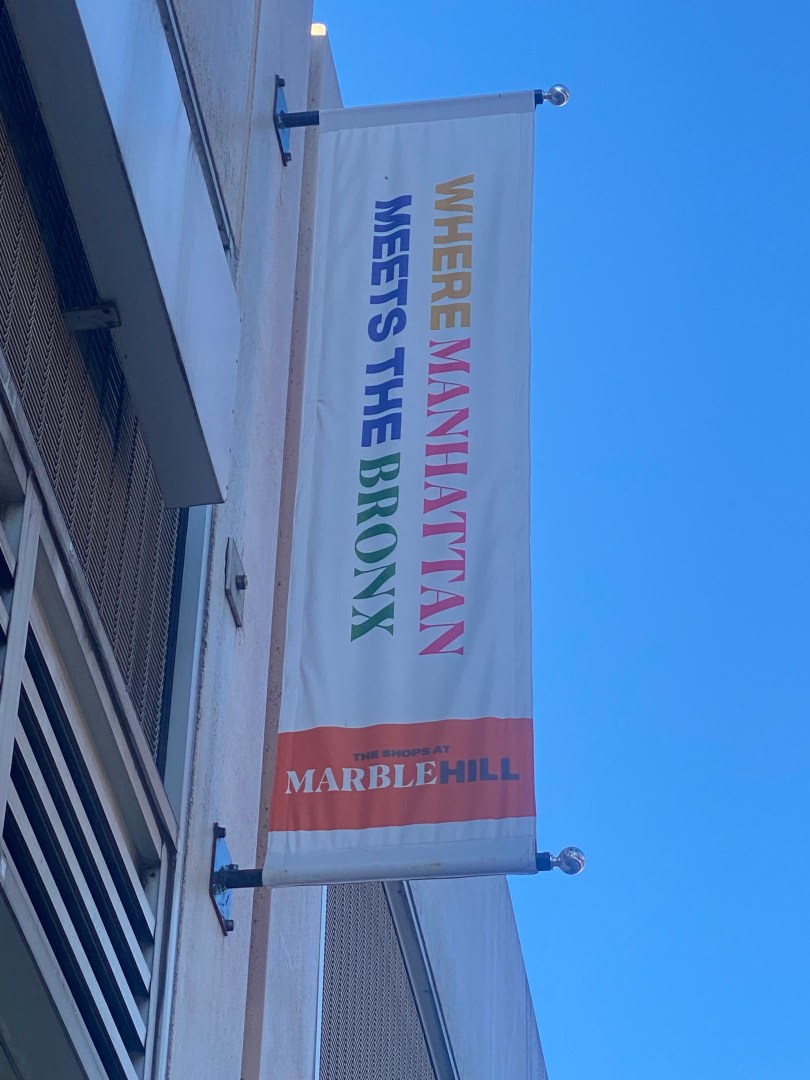
Andrew and Carmen always felt like they live in The Bronx since their apartment is on the north side of the Broadway Bridge. After all, they have a Bronx zip code and are directly served by Bronx bus routes. The next morning, Andrew called the Manhattan Civil Court.
He told the clerk, “Hello, my name is Andrew. I live at 500 Adrian Avenue in The Bronx and I was mistakenly called for Manhattan jury duty.”
“Um, you are actually a Manhattan resident”, the perplexed clerk said.
“What???” Andrew said, confused and in a panic.
“Yes, it says you live at 500 Adrian Ave, New York, NY, 10463.”
Andrew is stressed and confused but he does not want to argue with the secretary. Therefore, he says goodbye and hangs up the phone. He spends the night pacing around and trying to calm his fears about what might happen to his exhibit. Andrew knew he could request a postponement, but with how hectic the museum calendar could get, he wanted to get out of it fully. Carmen, who has been trying to calm Andrew down since he got off the phone, offers some words of reason.
“There has to be a mistake, just show up on the day requested and tell the judge your situation.” she says firmly.
Since Andrew has great trust for his wife, he listens.
Andrew spent the two weeks before his court date locked in at work to ensure everything was ready for when he had to serve on a jury. Countless hours were spent making sure the touchscreens were working, the armatures to hold the fossils were welded and that the model makers sculpted everything to the exact inch. Andrew had zero margin for error since the exhibit was based on hardcore science. He thought that hopefully, his jury duty would last one day versus one trial.
The next morning, Andrew took a long, but relaxing subway ride to the Manhattan Civil Court. He was glad he did not have to deal with the arduous bus trips his friends from the East Bronx had to make to the courts on East 161st Street. Andrew exits the subway in what obviously is and feels like Manhattan. Skyscrapers were all around him and there was a battle between the sound waves of sirens and horns.
He gets to the courthouse after buying a butter roll from a deli. The building is grand, with a superwide staircase and 10 columns that make it stand out as an iconic civic structure. Andrew checks in and sits in the gargantuan waiting room, praying he will be part of the one day group and not the one trial group.
The room is filled with people on their phones and laptops who are trying to occupy themselves during the wait. Many were completing mundane jury paperwork. Other people were making phone calls, hoping to be able to help their workplaces carry on business as usual from afar. There was a video playing about the significance of jury duty that not many people were paying attention to. While Andrew is anticipating not having to serve, he decides to watch the video out of boredom coupled with an inkling that he just doesn’t know what might happen next.
The clerk picked roughly 25 names from a hat including Andrew’s to proceed to a courtroom. It was a civil case and both the plaintiff and defendant each had a lawyer representing them. Both the judge and lawyers happily thanked the prospective jurors for participating in their civic duty. Then, they explained how the “jury selection” process was more of an elimination process. Jurors would be eliminated if it was believed they could potentially have a bias towards one side or the other.
Before the process began, the judge gave a short explanation about what the case was about. Andrew had no way to prepare for what he was about to hear. The plaintiff was a man named Michael Jimenez, who owned the Marble Hill Playground a few blocks from his house. Michael filed a $1,000 lawsuit against defendant Albert Hogan for painting a black border at the spot of the Bronx/Manhattan line at the park. Andrew couldn’t believe it. He thought he was going to get out of jury duty in Manhattan since he was not a resident. Now, he is completely stunned that he doesn’t know what borough he lives in. Andrew is determined to get to the bottom of the discrepancy.
The judge calls Andrew to the stand to be questioned by both lawyers. He gives them and the judge his planned excuse. At this point, he cares a bit less about what happens with jury duty and is really looking for clarity on the borough he claims to his name. Judge Nelson Martinez gives Andrew a puzzled but enthusiastic look. Andrew is about to get the explanation he has sought for the last two weeks.
“Actually, Andrew, you are indeed a Manhattan and New York County resident and are eligible for jury duty as per a ruling in the case, People v Boyd in 1984. Indeed, these changes were made after a woman went to the criminal court with the same excuse as you.” Judge Martinez chuckled.
The judge told the story of how there was a murder trial in 1984 and a woman who lived in Marble Hill claimed she did not have to be a juror on it due to residence in the Bronx.
“You see, one of New York’s most influential justices, Judge Peter McQuillian stopped the entire jury selection process to do a massive review of the boundaries. Eventually, the woman was excused and the state legislature passed a law that solidified Marble Hill as part of New York County.”
Andrew, relieved and in awe, stretched his eyes and got ready for the judge’s next questions.
Albert then said across the courtroom, “And in the charter..”
“Quiet!”, The judge fiercely rejected.
Andrew thought the judge would continue with his questioning. However, Andrew is excused not for residency, but for living too close to the scene of the incident. Judge Martinez felt that there could be a bias given that Andrew might frequent the playground. Nonetheless, Andrew wanted to watch the case out of pure curiosity for what would happen. He had time since the trial was to occur that day and he had already called out of work anyway.
The jury was chosen and the trial began with opening statements. Albert, who was representing himself, rambled about the history of how Marble Hill is a part of Manhattan. He mentioned how Marble Hill was cut off from Manhattan Island to build a stream and how the gap widened when it turned into the Harlem River Ship Canal. Albert also discussed how Bronx Borough President James Lyons painted a Bronx flag in the area as a publicity stunt in 1939 and how Marble Hill residents cannot vote in Bronx elections. In the evidence portion of the trial, Michael’s lawyer, Christian Baez, presented surveillance camera footage that showed Albert clearly painting the border despite the No Vandalism sign outside of the park. Christian then presented receipts that showed the money that Michael paid to numerous contractors in order to have the paint removed. Within minutes, the jury returned a judgment for the plaintiff in the full amount of $1,000.
At the end all the judge said was, “I love irony, but the rule of law must be followed when spreading historical awareness. Court dismissed.”
Carmen and Andrew were both walking together on Marble Hill Ave past the playground the following morning. They were relieved that Andrew was out of jury duty and that he got to learn more about their community in the process. Andrew was shocked to see Albert standing outside the park at what looked to be some sort of stand with a decent crowd around him. Michael was standing just five feet away. Both Andrew and Carmen approach the stand in order to see the cups he is selling. They eventually reach the front of the line and see a souvenir cup that says, “Marble Hill Playground-The Field Between Two Boroughs.” He decided to buy one for $10 as he found the concept rather intriguing.
“Souvenir! Souvenir!”Albert was yelling, hoping to sell his product based on the fact that the sports field is the only public one in NYC that rests between two boroughs.
Michael seemed happy and Andrew wondered why. When Andrew asked, he said,
“Albert’s gonna pay me back with the sales and we’ll have more visitors”, he said.
Indeed, many people were taking pictures of the cups to post on social media. They were raving about how they visited such a unique NYC site. A block away, a group of people were listening to a tour guide give a speech on the abandoned King’s Bridge. The bridge is located underground and used to connect The Bronx to Manhattan over 100 years ago. The case and the publicity that went with it truly took a bad situation and turned it into a learning experience for many. Andrew is thrilled he got to be a part of it.
Acknowledgements
This blog post from Sachi Takahashi-Rial on her blog, NYCPolitics101, was instrumental for informing the courtroom portion of this history. Links to both the post and website can be found below.
Blog Post: https://nycpolitics101.substack.com/p/nyc-jury-duty
Website: https://nycpolitics101.substack.com/

