By Joseph Morales
Electric bicycles and scooters have rapidly become popular mobility devices in New York City since becoming legal in 2020. A report from FOX 5 New York says that 65,000 e-bikes were being used in NYC in 2023. E-scooters have been similarly popular. A pilot e-scooter share program had 150,000 users in the East Bronx alone between August 2021 and August 2023. Many use these mobility devices as a convenient means to get around without the hassles associated with driving or mass transit. In addition, a large number of delivery workers use e-bikes due to their lower costs and ability to operate at speeds of 20-25 mph. Others use the bikes for pure recreation, especially in New York’s plethora of vast green spaces.
Unfortunately, the rise in electric micromobility has also come with new dangers associated with how e-bikes and scooters are charged. This danger is especially prevalent in NYC apartment buildings where the majority of New Yorkers and micromobility users live. Most of these devices are charged via lithium ion batteries. These batteries are known to catch fire and have caused numerous deadly fires across the city. A guide on lithium-ion battery fires from the FDNY makes them seem like anyone’s worst nightmare. New York’s Bravest described these fires as “an explosive, aggressive fire that spreads rapidly, can reignite and is challenging to extinguish.” They also said that fire-extinguishers do not work on these fires and water also has limited efficacy, leaving firefighters with few options for fighting these infernos. Since 2019, 733 lithium-ion battery fires in NYC have killed 29 people and injured another 442. The trends have led NYCHA to nearly ban lithium-ion battery powered mobility devices from apartments before backing down to less severe, but still significant regulations in 2023.
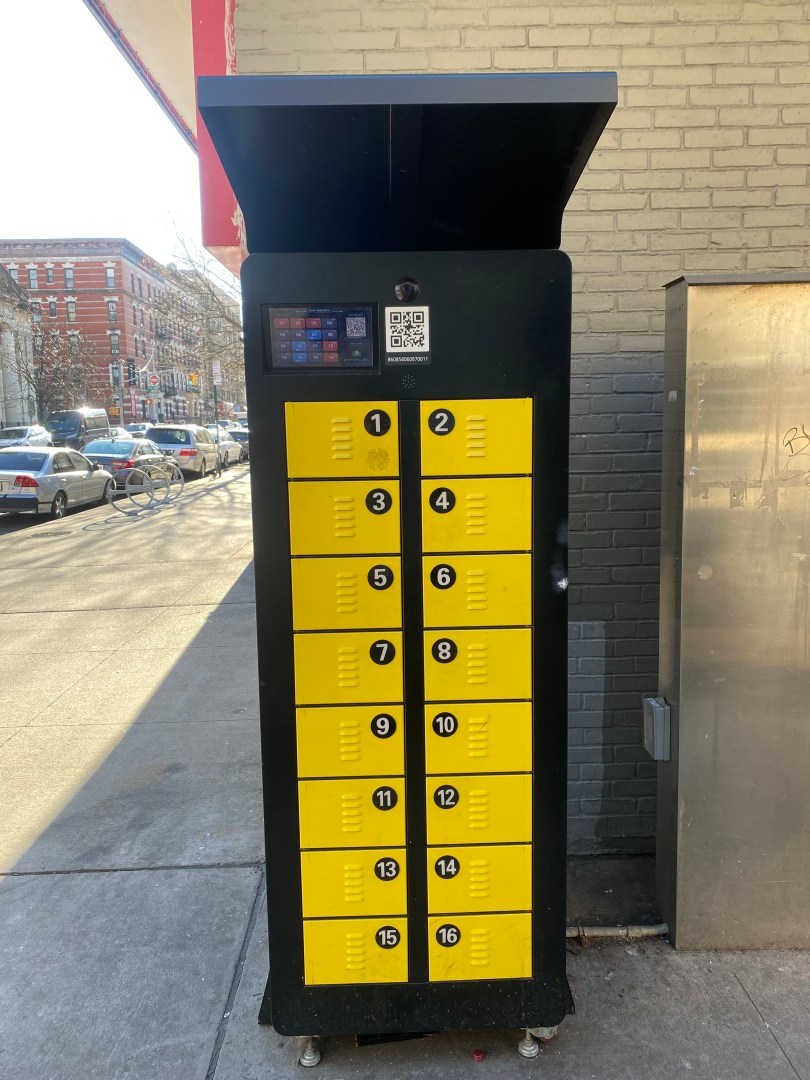
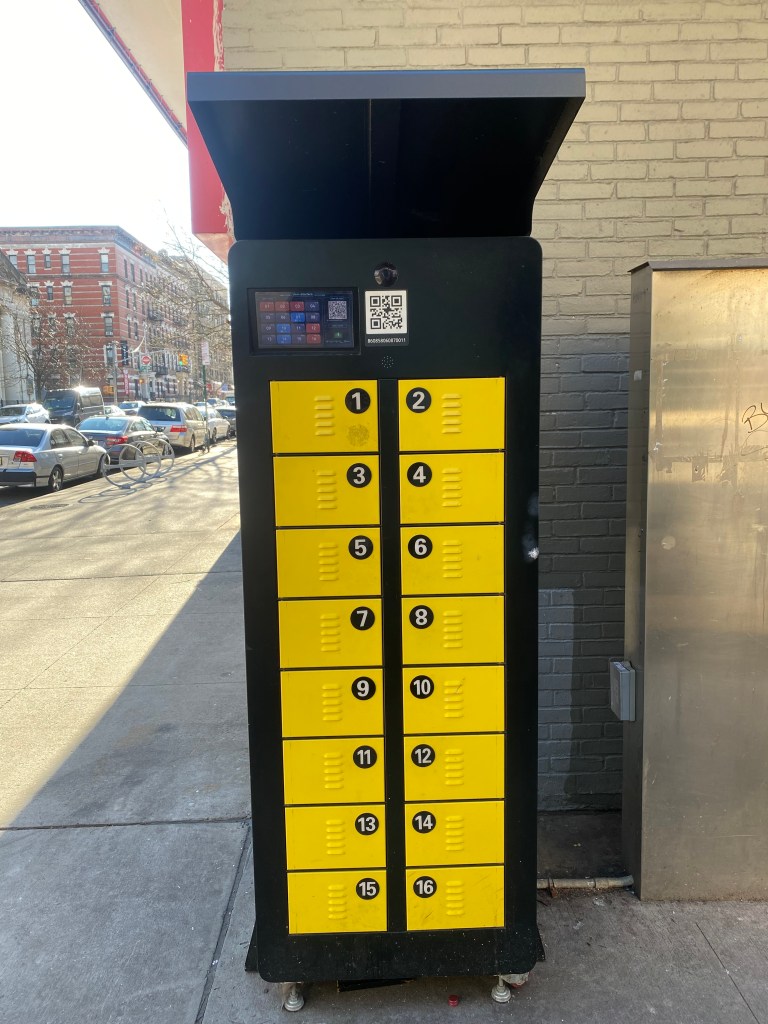
This is why Mayor Eric Adams is starting a new citywide program to expand access to outdoor e-bike charging cabinets. The policy will allow for landlords and tenants to obtain approval for installing battery swapping and charging cabinets on sidewalks in front of their buildings starting February 1st. Owners and renters at residential and commercial buildings along with community facilities are eligible. Battery swapping stations allow users to swap dead batteries for fully charged ones. These stations operate through a cycle where people return dead batteries for charging while getting a battery that is charged and ready for use. Batteries in the swap stations will be Underwriters Laboratories(UL)-certified batteries designed to reduce the risk of fires. The batteries will also be digitally monitored and inspected by operating companies Popwheels and Swobbee for safety purposes. Popwheels and Swobbee were chosen by the NYCDOT with significant input from the FDNY.
One of the program’s goals is to reduce the charging activities in apartments that have led to a horrific rate of fires and fatalities as a result. This system will also give people more space in their homes along with peace of mind that their e-bike can be charged safely. The peace of mind will not just be of benefit to electric micromobility users, but everyone who lives in NYC apartment buildings given the prevalence of these devices. In addition, delivery workers will benefit from spending less on charging costs including batteries and energy. These savings are critical for workers given how the minimum wage for app-based delivery workers in NYC is just $19.56 an hour. Overall, the program will not just make electric micromobility devices safer but also more convenient for the thousands of people who utilize them across the city.
The charging program has operated as a pilot in three Manhattan and two Brooklyn locations exclusively for delivery workers and has already had significant success. Data from the NYCDOT showed that the use of spare batteries decreased by 50% and at-home charging of devices decreased by 35%. This reduction in the use of spare batteries could directly lead to less at-home charging since more workers could rely on charged batteries from the swap stations.
These significant decreases in hazardous charging practices almost certainly led to a tangible decline in the fire risk associated with the devices. Another good sign is that these figures were accomplished solely by delivery workers who are among the most active e-bike users in the city. It is also important to note that the pilot operated in five extremely dense locations with just one battery swapping/charging station each. The spots in Manhattan were Cooper Square in the East Village, Essex Market on the Lower East Side and Plaza de las Americas in Washington Heights. Locations in Brooklyn were at the Brooklyn Army Terminal and the intersection of Jay and Willoughby Sts in Downtown Brooklyn. Therefore, the impacts will likely be more profound when there is a higher volume of stations in front of residences and various locations across NYC.

In addition to the charging plan, the NYCDOT is also set to launch an e-bike trade in program on January 27th. This will allow established delivery workers to trade in e-bikes, mopeds and batteries that are uncertified and unsafe. They will then receive a new UL-certified Fly 11 Pro E-Bike with a UL-certified battery in exchange. The program will go a long way to making electric micromobility safe given how many fires are caused by uncertified and faulty batteries. Peter Simon, a technical expert with renowned insurance company Gallagher Bassett said in a company article he wrote, “‘Anecdotally, it appears a disproportionate number of fires are created by low-quality batteries that do not have the appropriate certification or quality control.’” “‘These batteries appear to be purchased due to their low price.’” As for devices themselves, tech news site TechCrunch says the most important thing to do when purchasing an e-bike is to ensure it is UL-certified. Hence, this program will pay huge dividends in ensuring delivery workers have high-quality and safe devices to do their jobs.
Both the trade-in and charging programs is part of a larger initiative from Mayor Adams called “Charge Safe, Ride Safe” which is aimed at making both e-bike charging and usage safer. This initiative includes an “Interagency Electric Micromobility Task Force” that works on things from preventing fires and crashes to conducting public outreach and everything in between. Other active or pending projects include adding device charging outside NYCHA facilities, advocating for the state to subsidize safe device purchases and evaluating fire safety equipment for various spaces. These initiatives should work to address various safety concerns with electric mobility devices.
New electric micromobility charging and battery swapping stations will go a long way to reduce fire risk and improve convenience for users. In addition, the trade in program will help many receive access to safer devices and batteries who would not otherwise have it. Overall, these programs combined with others in the “Charge Safe, Ride Safe” plan should help to remedy the safety challenges that came with e-bikes/e-scooters being legal in NYC in 2020. These initiatives are critical since electric micromobility is now a mainstay in New York’s transportation fabric. Now, this plan should ensure that thousands of users can continue to ride safely in NYC for years to come.
Works Cited
Bellan, Rebecca. “Everything you need to know about e-bike battery fires.” TechCrunch, 11 July 2023, https://techcrunch.com/2023/07/11/everything-you-need-to-know-about-e-bike-battery-fires/. Accessed 3 January 2025.
“E-Bike Trade In Program.” New York City Department of Transportation, https://www.nyc.gov/html/dot/html/bicyclists/ebikeprograms.shtml#tradein. Accessed 3 January 2025.
FDNY. “Dangers of Lithium-Ion Batteries Includes: Safety Tips & Precautions Fires & Emergencies Codes & Enforcement.” NYC.gov, https://www.nyc.gov/assets/fdny/downloads/pdf/codes/dangers-of-lithium-ion-batteries.pdf. Accessed 3 January 2025.
Gainer, Alice. “New York City plans to expand sidewalk e-bike battery charging program.” CBS News, 2 January 2024, https://www.cbsnews.com/newyork/news/e-bike-battery-charging-stations-nyc/. Accessed 3 January 2024.
Giacovas, Richard. “New Yorkers demanding action on illegal e-bikes.” FOX 5 New York, 27 September 2023, https://www.fox5ny.com/news/new-yorkers-demanding-action-on-illegal-e-bikes. Accessed 3 January 2024.
Hawkins, Andrew J. “New York finally legalizes electric bikes and scooters.” The Verge, 2 April 2020, https://www.theverge.com/2020/4/2/21204232/new-york-legalizes-electric-bikes-scooters. Accessed 3 January 2025.
New York City Office of the Mayor. “Charge Safe, Ride Safe: NYC’s Electric Micromobility Action Plan.” NYC.gov, 20 March 2023, https://www.nyc.gov/assets/home/downloads/pdf/office-of-the-mayor/2023/micromobility-action-plan.pdf. Accessed 3 January 2024.
New York City Office of the Mayor. “Mayor Adams Takes New Actions To Prevent Deadly Lithium-Ion Battery Fires, Promote Safe E-Bike Charging and Usage.” NYC.gov, 22 July 2024, https://www.nyc.gov/office-of-the-mayor/news/574-24/mayor-adams-takes-new-actions-prevent-deadly-lithium-ion-battery-fires-promote-safe-e-bike#/0. Accessed 3 January 2025.
“NYC DOT Finalizes New Rules to Expand Access to E-Bike Battery Charging Cabinets on Sidewalks, Building on Success of Pilot Program That Reduced E-Battery Charging in Apartments.” New York City Department of Transportation, 2 January 2025, https://www.nyc.gov/html/dot/html/pr2025/expand-access-e-bike-battery-charging-on-sidewalks.shtml. Accessed 3 January 2025.
Ross, Esq., James F. “Who Is Liable in a Shared Electric Scooter Accident in New York?” Ross And Hill, 30 October 2024, https://rossandhill.com/who-is-liable-shared-e-scooter-accidents-ny/. Accessed 3 January 2025.
Simon, Peter. “Burning Concerns: The Growing Threat of Lithium-Ion Fires.” Gallagher Bassett, 5 August 2024, https://www.gallagherbassett.com/news-and-insights/2024/aug/burning-concerns-the-growing-threat-of-lithium-ion-fires/. Accessed 3 January 2024.
Smith, Greg B. “NYCHA Moves to Limit E-Bikes After Rescinding Proposed Ban.” THE CITY, 8 November 2023, https://www.thecity.nyc/2023/11/08/nycha-moves-limit-e-bikes/. Accessed 3 January 2025.
Yi, Karen. “NYC delivery workers now make $19 an hour, but many say apps have made tipping harder.” Gothamist, 1 April 2024, https://gothamist.com/arts-entertainment/nyc-delivery-workers-now-make-19-an-hour-but-many-say-apps-have-made-tipping-harder. Accessed 3 January 2025.
 Transit Central