
By Joseph Morales
The states of New York and Pennsylvania are interconnected in a plethora of ways. For starters, New Yorkers love to take advantage of the state’s many tourist and recreation spots. This includes places from the majestic landscapes of the Poconos to the charming and bustling streets of Philadelphia. Many NY families also visit Pennsylvania’s many amusement destinations including Dorney Park in Allentown, Sesame Place in Langhorne, and the three indoor water parks in the Poconos. In addition, many New Yorkers are likely headed to Pennsylvania to visit family and friends this holiday season. This is because Pennsylvania ranked third among states New Yorkers moved to in 2023, beating California by about 7,500 people.


While New York and Pennsylvania are connected in many different ways, there are not as many connections when it comes to transportation. The main way most New Yorkers get to Pennsylvania when traveling is by car. For most, this means entering NJ via the oft congested Hudson River Crossings and then a long drive on one of a few interstates. The ride usually also includes a stint on another dreadfully congested road such as I-80 near the Delaware Water Gap or parts of the NJ Turnpike. As for buses, they are not frequent to many areas and do not allow much flexibility when it comes to trip planning. Trains are very limited and do not serve much of the state.
Amtrak is attempting to help address the issue. The rail company wants to add three new train routes from NYC’s Penn Station to Reading, Allentown and Scranton respectively by the year 2035. Amtrak also plans to expand daily trips from NYC to Harrisburg and Pittsburgh. This is part of Amtrak’s larger vision to dramatically expand passenger rail across the United States. Plans include adding 39 new routes and providing intercity service to America’s 50 largest metropolitan areas.
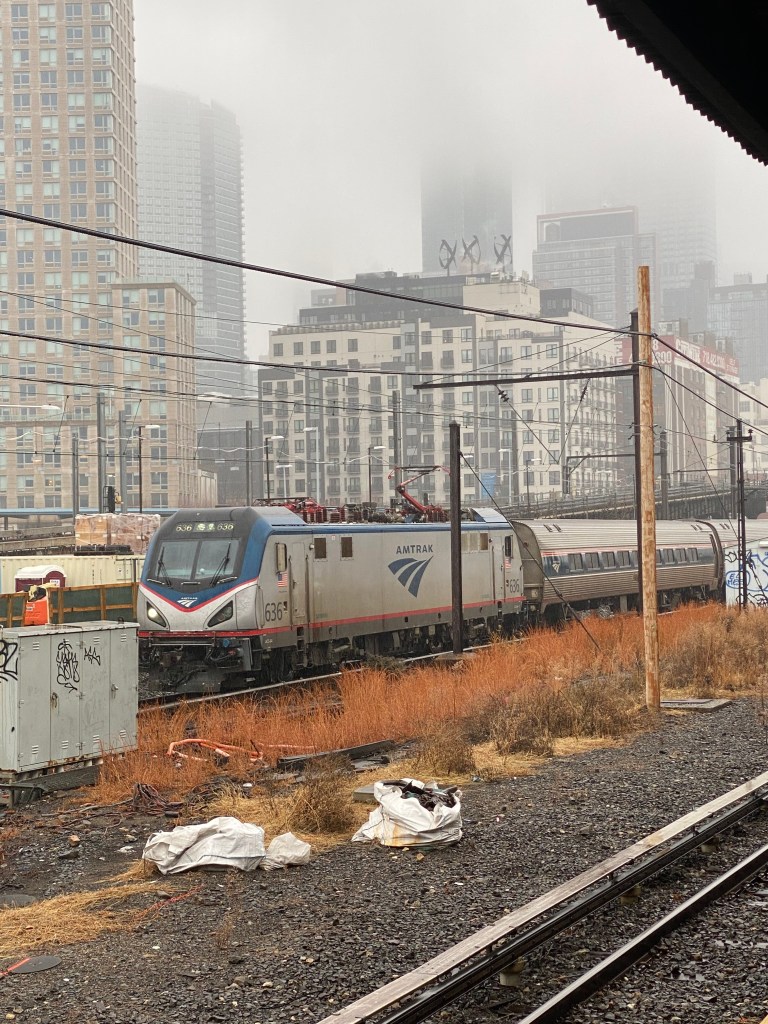
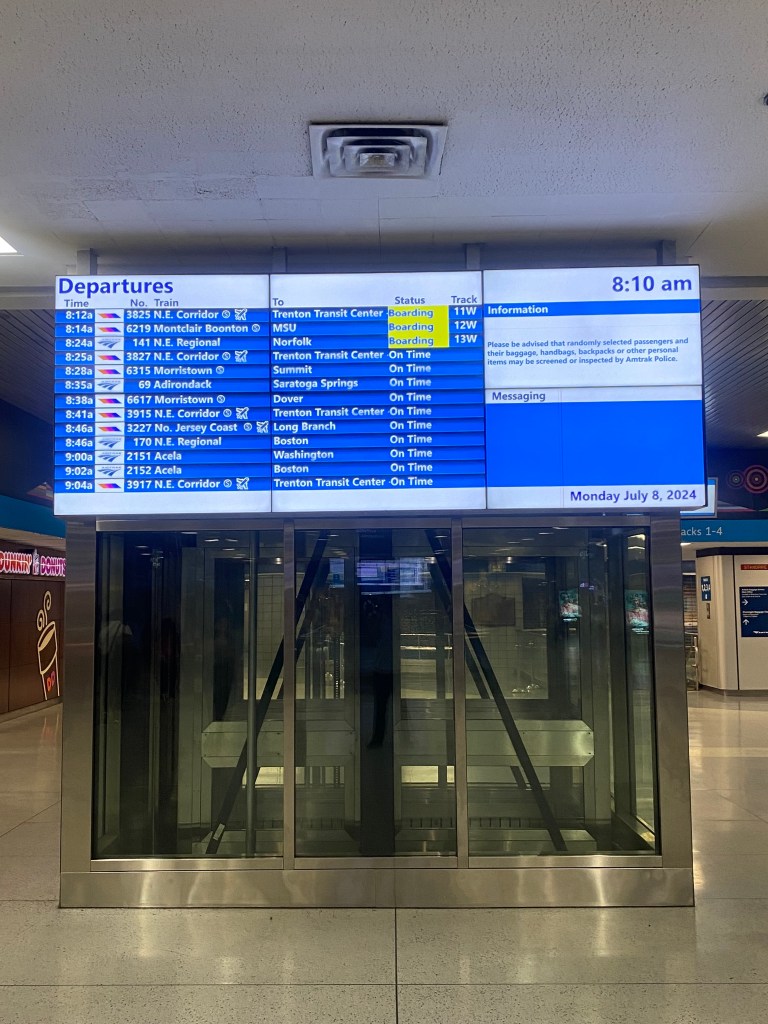
As far as New York and Pennsylvania is concerned, the new routes would be a huge game changer for travelers between these states. Riders would be able to access major destinations such as Dorney Park and the Pocono Mountains via a direct train line for the first time. Trains would also make several stops along the way in major towns which will provide New Yorkers with options to getting to various parts of the state. One of the best parts of it all is that the plan is for all of the routes to have run times comparable to driving. The NYC-Scranton route that’s in its construction phase is set to have a run time of 170 minutes. A previous Amtrak visioning document proposed Allentown and Reading routes to have run times of 165 and 175 minutes respectively.
The new train routes are critical to NY-PA travel for several reasons. One is that car dependency throughout the corridors and particularly in NYC is less than in most of the country. For reference, the Pew Research Center says that 92% of American households have access to a vehicle. According to data from the NYC Department of City Planning, that number is 46% amongst NYC households. The ownership rate in Manhattan where Penn Station is located is a paltry 23%. Other cities in Pennsylvania also have substantial numbers of car-free households. Vanderbilt University data shows that 16.4% of Allentown, PA households did not have vehicles as of 2016. In addition, a draft equity plan from the Reading Department of Community Development says that 20% of residents there relied on public transportation to get to work. These lower car ownership rates means residents often have to rely on a mix of infrequent buses, trains, rideshare and/or rental vehicles to get between NY-PA. This will likely make direct rail service really compelling for many New Yorkers and Pennsylvanians alike.
Added rail service can also help to reduce congestion on the roads between New York and Pennsylvania. Even if many ride the train due to lack of alternatives, others are likely to hop aboard for convenience or to just avoid the stress of driving. A CNBC article says that many rail passengers nationwide value having more leg room and avoiding high airfare or gas prices. This is worth noting since both NY and PA are both in the top 10 for gas prices nationwide. In addition, New York, Pennsylvania and intermediate state New Jersey all have some of the most congested highways in the nation. Hence, the train is ought to attract many motorists that are seeking a different way to travel.
With the potential of rail service clear, many are likely wondering when we can start to see any of the routes in service. The route that is furthest in development is undoubtedly the New York-Scranton route. In fact, the project has already received $9 million in federal funding through the Consolidated Rail Infrastructure and Safety Improvements Program. The funding will be used by the Pennsylvania Northeast Regional Railroad Authority(PNRRA) to repair existing rail bridges and repair abandoned tracks that will be used for the new service. The PNRRA is responsible for developing the new rail service that Amtrak is set to operate. Also being funded are other infrastructure elements such as ties and stone that are needed to maintain 80 mph speeds and the planned train schedule. For reference, the speed limit on Interstate 80 is 65-70 mph. Also, the project is moving into phase 2 of the Federal Rail Administration’s Corridor ID program. This will include things like finalizing station locations, determining train frequencies and figuring out how much a new rail line will cost.
The bipartisan infrastructure law passed in 2021 played a critical role in securing funding for the project. Several politicians including PA Senator Bob Casey and President Joe Biden have been in support of the new rail line. Staunch project supporter and US House Rep Matt Cartwright said during a press conference that trains could run along a Scranton-NYC route as early as 2028.
While rail line construction to Scranton is full steam ahead, proposals to bring trains to Allentown and Reading are still in more preliminary stages. A route to Allentown has been studied as part of the Lehigh Valley Passenger Rail Study by PennDOT consultant WSP. This study evaluated the feasibility of rail connections from Allentown to New York and other parts of Pennsylvania. As for Allentown-New York, they evaluated two route options. One would travel to New York via the Norfolk Southern Freight Railway to Phillipsburg, NJ and connect with NJ Transit’s Morris & Essex Line in Hackettstown. The other would also utilize the Norfolk Southern Railway but instead connect with NJ Transit’s Raritan Valley Line in High Bridge, NJ. Both the via Hackettstown and via High Bridge options both have similar run times of roughly 140 and 150 minutes respectively. They also both have similar constraints as both would have to face the challenge of coordinating with freight operations on the Norfolk Southern along with capacity issues with existing Amtrak and NJ Transit lines. As it stands, both have similar estimated construction costs at $474.9M for the Hackettstown option and $469.9M for the High Bridge option. The line that gets constructed would likely come down to the corridor in which it is deemed easier to navigate the constraints.
Plans to add a rail connection between Reading and Philadelphia and in turn a route between NYC and Reading are also in a similar position. The Reading-Philadelphia portion is the main topic of talks now since NYC and Philadelphia are already connected by rail. Given Amtrak’s interest in a direct route from NYC to Reading through Philadelphia, Amtrak will likely consider it once this connection is complete.
Service between Philadelphia and Reading would also be run via Norfolk Southern freight tracks. This project is headed in the right direction as the Schuylkill River Passenger Rail Authority(SRPRA) and Norfolk Southern have made progress in talks over track space. The SRPRA serves a similar role to the PNRRA in the Reading area. Stops are proposed in Pottstown and Pheonixville with the potential for more stops to be added as the project continues. This project has the unanimous support from the county commissioners in each of the three counties(Berks, Bucks and Montgomery) that the line would run through. The SRPRA says that service along the line could be running by 2029.
The new rail services between NY and PA will undoubtedly be useful for many riders and be a significant boost for many local economies. However, some may still be concerned whether or not current plans are as strong as they could be. At a public meeting discussing the NYC-Allentown route options, multiple people expressed concerns over high speed rail not being part of the proposals. One person, Jeff Barber said, “I am concerned that two and a half hours of travel time does not work for passengers.” The reason why high speed rail is not being considered is because the services would all share tracks at some point with freight trains. This would mean that they could not reliably exceed speeds of 90 mph. They also cannot exceed 110 mph if they have street-level crossings or 125 mph without overhead electric power. It is worth noting that the minimum speed threshold for high speed rail set by the International Union of Railways is 155 mph. Attempting to address one let alone all of the constraints impeding high speed rail would be a massive undertaking and likely lead to an astronomical project cost. With current projected speeds being competitive to driving, trains still have a chance to be a reliable form of travel.
New Amtrak routes between New York and Pennsylvania would be a boon for both New Yorkers and Pennsylvanians alike. The connectedness of the two states combined with their lower rates of car dependence make rail travel essential for residents and visitors. Even those drivers could have easier trips due to less congested roads as some take to the rails. Once the rail lines are complete, everyone travelling between the two states will benefit from having a stronger variety of travel options for years to come.
Works Cited
AAA. “AAA Fuel Prices.” AAA Fuel Prices, 27 December 2024, https://gasprices.aaa.com/state-gas-price-averages/. Accessed 27 December 2024.
“Amtrak Connects Us: More Trains, More Cities, Better Service.” Amtrak, 2021, https://www.amtrak.com/content/dam/projects/dotcom/english/public/documents/corporate/reports/Amtrak-2021-Corridor-Vision-060121.pdf. Accessed 27 December 2024.
Blancaflor, Madison. “When to take the train instead of flying or driving.” The Points Guy, 8 September 2022, https://thepointsguy.com/travel/train-vs-flying-driving/. Accessed 27 December 2024.
Bradley, Jay. “Read it here: Passenger rail study looks at 5 ‘most likely’ corridors linking Lehigh Valley to NYC, Philly, Reading.” LehighValleyNews, 27 March 2024, https://www.lehighvalleynews.com/local-news/rail-study-looks-at-five-most-likely-corridors-connecting-to-nyc-philly-reading. Accessed 27 December 2024.
Clark, Dan. “Florida again a top destination for ex-New Yorkers in 2023.” Times Union, 18 October 2024, https://www.timesunion.com/state/article/top-5-states-new-york-residents-moved-2023-19846015.php. Accessed 27 December 2024.
Federal Highway Administration. “National List of Major Freight Highway Bottlenecks and Congested Corridors Federal Highway Administration (FHWA) Freight Mobility Trends: Truck Hours of Delay, 2019.” United States Department of Transportation, 12 July 2023, https://ops.fhwa.dot.gov/freight/freight_analysis/mobility_trends/national_list_2019.htm. Accessed 27 December 2024.
“A few words about us.” Pennsylvania Northeast Regional Railroad Authority, https://pnrra.org/about-us/. Accessed 27 December 2024.
“Governing The States and Localities.” Vanderbilt University, 2019, https://my.vanderbilt.edu/greencities/files/2019/10/Vehicle-Ownership-in-U.S-2016.pdf. Accessed 27 December 2024.
Lockwood, Jim. “Casey, Cartwright announce $9M toward restoring passenger trains between Scranton and New York City.” Scranton Times-Tribune, 29 October 2024, https://www.thetimes-tribune.com/2024/10/29/casey-cartwright-announce-9m-toward-restoring-passenger-trains-between-scranton-and-new-york-city/. Accessed 27 December 2024.
“Meet SRPRA.” Go SRPRA, 2024, https://gosrpra.com/about-srpra/. Accessed 27 December 2024.
Melwert-KYW News Radio, Jim. “Optimism swirls around talks of restoring Reading-to-Philly passenger train service.” Audacy, 7 September 2024, https://www.audacy.com/kywnewsradio/news/local/optimism-talks-of-restoring-philly-to-reading-train-service. Accessed 27 December 2024.
Neelakandan, Laya. “Travelers increasingly turn to taking Amtrak trains over flights.” CNBC, 11 February 2024, https://www.cnbc.com/2024/02/11/travelers-increasingly-turn-to-taking-amtrak-trains-over-flights.html. Accessed 27 December 2024.
Pyrgidis, Christos N. Railway Transportation Systems: Design, Construction and Operation. CRC Press, 2015.
Rubright, Kathryne. “’Not study money’: Scranton-NYC Amtrak project gets $9 million for construction work.” Pocono Record, 29 October 2024, https://www.poconorecord.com/story/news/local/2024/10/29/scranton-nyc-amtrak-train-federal-grant-slateford-road-bridge-work/75918082007/. Accessed 27 December 2024.
Schaeffer, Katherine. “1 in 10 Americans rarely or never drive a car.” Pew Research Center, 14 November 2024, https://www.pewresearch.org/short-reads/2024/11/14/1-in-10-americans-rarely-or-never-drive-a-car/. Accessed 27 December 2024.
SRPRA. “FAQ.” Go SRPRA, 2024, https://gosrpra.com/frequently-asked-questions/. Accessed 27 December 2024.
“What is needed to go fast?” High Speed Rail Alliance, 25 January 2023, https://www.hsrail.org/blog/what-is-needed-to-go-fast/. Accessed 27 December 2024.
WSP. “Lehigh Valley Passenger Rail Feasibility Analysis.” Google, March 2024. Accessed 27 December 2024.
 Transit Central