
By Joseph Morales
The M15 Local/SBS is the busiest bus route in Manhattan and all of New York City. MTA statistics show that this route has ranked number 1 in ridership for five straight years. The M15 has also had at least three million more riders than the next busiest route in each of the last two years. This is no surprise as the M15 is the only form of transit serving the entirety of Second/First Avenues in Manhattan, which is considered by many to be due for a full length subway line. The route runs from East Harlem/125th St at its northern point, to South Ferry in the Financial District.

To no one’s surprise, making buses faster on the busy Manhattan corridor has been a challenge over the years. However, there have been several meaningful innovations. In 2010, the M15 became the second route in NYC to receive the Select Bus Service(SBS) treatment. This brought features such as dedicated bus lanes, off-board fare collection, less frequent stops and more frequent buses that led to a better service for riders. There continued to be more improvements over the coming years such as transit-signal priority and bus bulbs. Bus bulbs are curb extensions that allow buses to safely pick up passengers without leaving travel lanes.
In more recent years, the NYC Department of Transportation has been making moves to enhance the bus lanes along the route. In 2022, the agency converted a curbside bus lane on 1st Ave between 61st and 79th Sts to an offset lane to reduce obstructions from vehicles. Additionally, the NYCDOT plans to do the same this year on an even bigger scale along 2nd Ave between 59th St and Houston St.
These significant commitments have yielded results and it makes sense why improvements continue to be made at such a rapid pace. While bus speeds did improve by 15% following the launch of SBS, they still have sat at an average of 8 mph over the past year. This is significant given that this is 2 mph above the Manhattan average despite First/Second Avenue being such congested streets. However, it does make sense why any speed gains are always desired given the number of people who rely on the bus daily and how this speed still pales in comparison to subway lines.
Now the NYCDOT’s latest plan includes new bus lanes on Allen and Pike Streets on the Lower East Side from Delancey St to South St. This is because bus speeds in this area average between 4.8-6.5 mph during most weekday hours despite higher numbers on the rest of the route. Unlike other corridors, this will be the one of the few if not only segments in the M15-SBS’ nearly 15-year history receiving bus lanes that did not have them at the route’s launch. Given the bus lanes’ success throughout the rest of the route, it is likely that these lanes will bring similar speed benefits to the Lower East Side. The bus lanes will also make the entire route more reliable, as buses will be stuck in less bottlenecks overall. This project will be implemented this summer and be evaluated during the fall and winter.
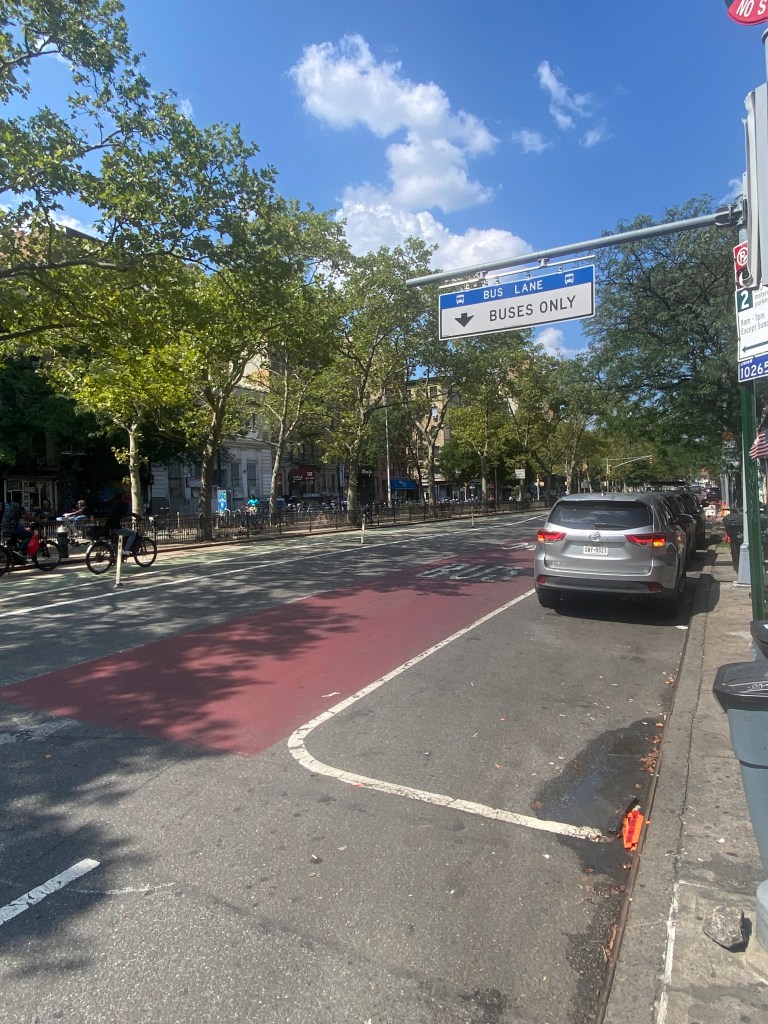
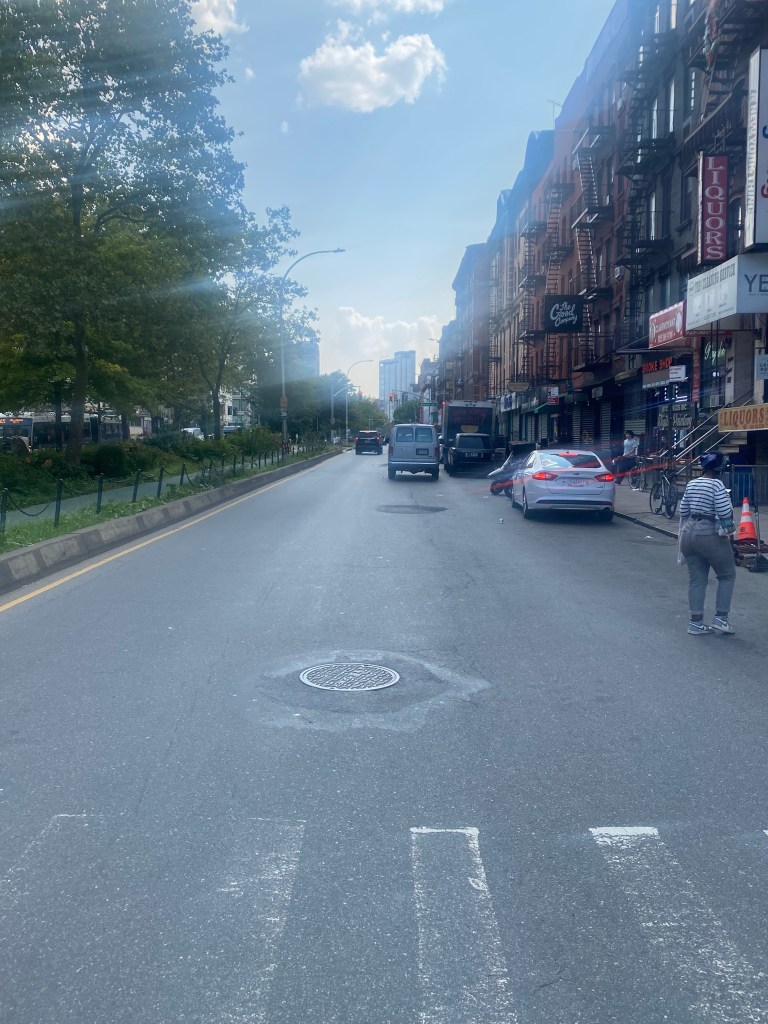
These bus improvements are a long time coming for LES residents and visitors. With stations for the 6 train being a 10-15 min walk from the LES, the M15-SBS is the primary means for thousands of residents to traverse the East Side of Manhattan. In addition, the M15 is the only seamlessly accessible East Side travel option accessible from the Staten Island Ferry and Roosevelt Island Tram. In both places, riders must walk longer distances to subway lines that do not always serve their LES or Financial District destinations.
The only potential con to the project is the loss of a travel lane for vehicles. Motorists may feel that this will increase congestion and hence travel times. However, a NYCDOT traffic analysis showed that the new configuration should have minimal adverse effects on vehicular traffic. It is important to note that the M15 sees millions of annual riders and that only 18% of households on the Lower East Side have access to a vehicle. Therefore, a bus lane extension project will benefit far more people than it could possibly hurt. Since the bus lanes will be offset, parking will be maintained.
Outside of the lanes itself, the MTA has added Automated Camera Enforcement(ACE) to the corridor. ACE includes cameras attached to buses that can issue tickets for bus lane violations along with other traffic infractions that slow down buses such as double parking. This is different from ABLE which only issued bus lane violations. The MTA has stated that on average, ACE has led to a 5% increase in bus speeds and 20% decrease in collisions. This means that the cameras are not just improving transit speeds but safety as well, making it a win for bus riders, motorists and other road users. With fines having started on Monday, this should work well in tandem with the new bus lanes. The fines range from $50-$250 and only 9% of those who get a fine get a second one. The evidence shows that this system leads to sustained behavior change along with a strong likelihood the benefits of ACE can last long-term.
This bus lane project was one of a few planned citywide to mitigate the impacts of congestion pricing by providing people with better transit options in and around the Manhattan Central Business District(CBD). The goal of congestion pricing is to toll drivers entering Manhattan below 60th St to raise revenue for the MTA while reducing emissions and congestion by discouraging car travel. However, many opposed the initiative in large part because they lack quality transit access to the CBD. This led in part to the program being paused by Governor Kathy Hochul. While most LES residents already use mass transit, the new bus lanes will make it much easier for many riders to traverse the East Side including those from Staten Island, Roosevelt Island and other places. This is critical considering congestion pricing opposition has been rampant on Staten Island with Borough President Vito Fosella filing a lawsuit against the program. Though this one project likely won’t quell opposition, it will help mitigate the financial burden on many by providing them with a competitive travel option that can save them money. This, of course, will be important if and when congestion pricing is resumed.
The addition of bus lanes to Allen/Pike Sts between Delancey and South Sts represent a continued commitment to improvements on one of the city’s most critical bus travel arteries. They will also fill a gap in bus lanes that has hampered what is otherwise a really beneficial stretch of bus priority for riders. Hopefully, more projects like this can improve travel for bus riders both on the Lower East Side and across the city for years to come.
Works Cited
Brosnan, Erica. “Staten Island borough president, UFT sue to halt congestion pricing.” Spectrum News NY1, 4 January 2024, https://ny1.com/nyc/staten-island/news/2024/01/04/staten-island-borough-president-uft-congestion-pricing-lawsuit. Accessed 17 August 2024.
Geffner, Amanda, and Kendall Green. “MTA installs bus lane cameras: Here’s how the ACE program works.” FOX 5 New York, 17 June 2024, https://www.fox5ny.com/news/mta-installs-bus-lane-cameras-heres-how-ace-program-works. Accessed 17 August 2024.
Kazis, Noah. “After Delay, More Improvements Coming For East Side Select Bus Service.” Streetsblog NYC, 26 April 2012. Accessed 17 August 2024.
Metropolitan Transportation Authority. “Bus Speeds.” MTA Metrics, 2024, https://metrics.mta.info/?bus/speeds. Accessed 17 August 2024.
Metropolitan Transportation Authority. “MTA to Install ABLE Cameras on 300 Additional Buses Across Nine Routes by End of 2022.” MTA, 3 October 2022, https://new.mta.info/press-release/mta-install-able-cameras-300-additional-buses-across-nine-routes-end-of-2022. Accessed 17 August 2024.
Metropolitan Transportation Authority. “Subway and bus ridership for 2019 – New York City Transit.” MTA, 2020, https://new.mta.info/agency/new-york-city-transit/subway-bus-ridership-2019. Accessed 17 August 2024.
Metropolitan Transportation Authority. “Subway and bus ridership for 2020 – New York City Transit.” MTA, 2021, https://new.mta.info/agency/new-york-city-transit/subway-bus-ridership-200. Accessed 17 August 2024.
Metropolitan Transportation Authority. “Subway and bus ridership for 2021 – New York City Transit.” MTA, 2022, https://new.mta.info/agency/new-york-city-transit/subway-bus-ridership-2021. Accessed 17 August 2024.
Metropolitan Transportation Authority. “Subway and bus ridership for 2022 – New York City Transit.” MTA, 2023, https://new.mta.info/agency/new-york-city-transit/subway-bus-ridership-2022. Accessed 17 August 2024.
Metropolitan Transportation Authority. “Subway and bus ridership for 2023 – New York City Transit.” MTA, 2024, https://new.mta.info/agency/new-york-city-transit/subway-bus-ridership-2023. Accessed 17 August 2024.
New York City Department of City Planning. “Car Ownership in NYC.” Tableau, 24 November 2022, https://public.tableau.com/app/profile/dcptransportation/viz/ACSProfiles/Dashboard1. Accessed 17 August 2024.
New York City Department of Transportation. “Allen, Pike, Madison Streets Bus Lane Proposal | Manhattan Community Board 3 | June 2024.” NYC.gov, 11 June 2024, https://www.nyc.gov/html/dot/downloads/pdf/allen-pike-madison-sts-jun2024.pdf. Accessed 17 August 2024.
New York City Department of Transportation. “Second Avenue Bus and Bike Lane Enhancements | Manhattan Community Board 3 | April 2024.” NYC.gov, 9 April 2024, https://www.nyc.gov/html/dot/downloads/pdf/2nd-ave-e59-st-houston-st-apr2024.pdf. Accessed 17 August 2024.
Rose, Veronica. “DOT Discusses Bike, Bus Priority Lane Future Projects as Congestion Pricing Begins Next Month.” CityLand, 6 May 2024, https://www.citylandnyc.org/dot-discusses-bike-bus-priority-lane-future-projects-as-congestion-pricing-begins-next-month/. Accessed 17 August 2024.
Upper East Site Staff. “Bus Lane Shift Means Faster Service, More Parking on First Avenue: DOT.” Upper East Site, 29 November 2022, https://www.uppereastsite.com/bus-lane-shift-means-faster-service-more-parking-on-first-avenue-dot/. Accessed 17 August 2024.
“What They Are Saying: Governor Hochul Announces Pause on Congestion Pricing to Address the Rising Cost of Living in New York.” Governor Kathy Hochul, 5 June 2024, https://www.governor.ny.gov/news/what-they-are-saying-governor-hochul-announces-pause-congestion-pricing-address-rising-cost. Accessed 17 August 2024.
 Transit Central
Does anyone know why no SBS buses (nor even articulated one) along 42nd?!
LikeLike