By Joseph Morales
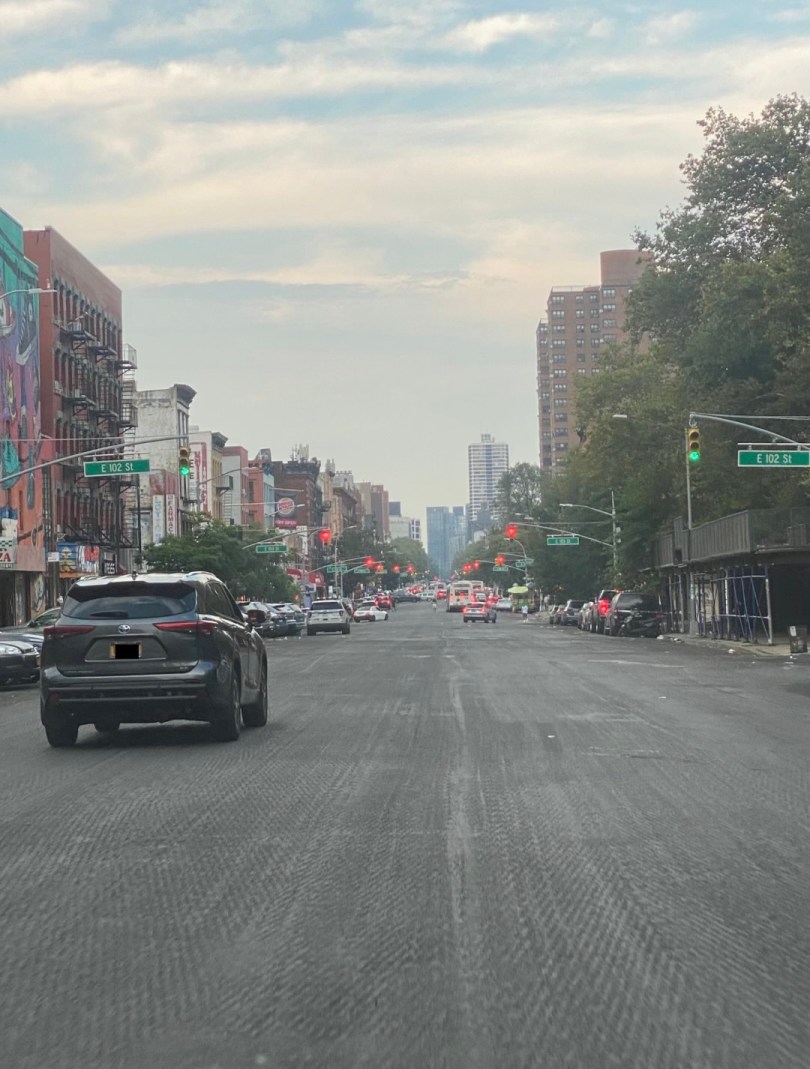
3rd Avenue is one of if not the busiest northbound streets on the East Side of Manhattan. Running from the East Village to East Harlem, the street is home to a plethora of businesses, residences and attractions. Major destinations on and around 3rd Ave include Union Square, the Chrysler Building and the Roosevelt Island Tram. 3rd Avenue is also located one block away from the Lexington Ave Subway(4,5,6).
Despite the nearby rapid transit, 70,000 people ride public buses along 3rd Avenue daily. This comprises many people who ride routes that go to places not served by the Lexington Ave trains such as those on express buses to The Bronx. Other riders on local buses often make particularly long trips trying to access neighborhoods such as West Harlem and Washington Heights. Many people also walk along the corridor. According to data from the NYC Department of City Planning, between 14-36% of residents in the communities served by Third Avenue walk to work. This does not include the many people who walk to and from mass transit.
Unfortunately, 3rd Avenue has been a street known for slow bus speeds and higher rates of vehicle/pedestrian incidents. The street is considered a Vision Zero Priority Corridor due to its high pedestrian KSI(Killed or Seriously Injured) rates. In addition, the street ranked in the top 10% of all Manhattan Streets in the KSI statistic based on data from the NYC Department of Transportation(NYCDOT). As for bus speeds, they are among the city’s slowest with Manhattan’s average bus speeds in the past year being five mph lower than the next slowest borough according to MTA statistics.
To resolve these issues, the NYCDOT recently performed a Complete Streets project on 3rd Ave between 59th and 96th Sts just last year. The project included adding bus lanes and parking protected bike lanes to speed up buses and reduce bicycle/vehicle incidents. The NYCDOT also cut the number of vehicle lanes from five to three in order to reduce motorist speeds and improve safety. In addition to corridor-wide treatments, lower-volume intersections were redesigned with offset crossings to reduce crossing distances and make pedestrians more visible to drivers. Higher-volume intersections received left turn bays with dedicated signals or right turn bays to better organize traffic flow.
While there has been no progress report how the project has gone, the measures taken are known to work well for their intended purposes across the city. According to the MTA, bus lanes installed in 2019 increased bus speeds by 8.4%. Bus lanes on the neighboring Lexington Ave increased speeds by roughly 10% and bus travel times on 125th St buses decreased by 33%. In addition, the pedestrian islands can reduce crashes by 32% and protected bike lanes(PBL) can reduce bicycle/vehicle incidents by 53%, according to the Federal Highway Administration.
Now, the NYCDOT is considering extending its “Complete Streets” project further north from 96th St to 128th St in East Harlem. When it’s all said and done, 3rd Ave between 59th and 128th St might have a design that is more reflective of the modes most people use to traverse the corridor. The next phase of the project would benefit an East Harlem community where only 18% of households have access to a vehicle and 14% of residents walk to work. Unfortunately, buses average speeds of about 5 mph which is lower than the Manhattan average of about 6 mph. In addition, there have been 430 injuries, 18 severe injuries and 5 deaths of road users on 3rd Ave between 96th and 128 Sts from 2019-2023. All five deaths and 18 of the 41 severely injured were pedestrians.
Also, East Harlem has a poverty rate of 38.2% which is more than double the citywide average. Though street improvement projects are important everywhere, they are especially critical in lower-income communities where residents often have fewer travel options.
There is no definitive proposal yet for what the complete street may look like in East Harlem. However, it is likely that it will include similar additions to what was done on the UES. Even if it was an identical project, it could be equally as helpful further uptown given the similarities between East Harlem and the UES. This includes a similar share of residents riding mass transit along with comparable activity densities. The NYCDOT plans to announce a firm proposal in the fall.
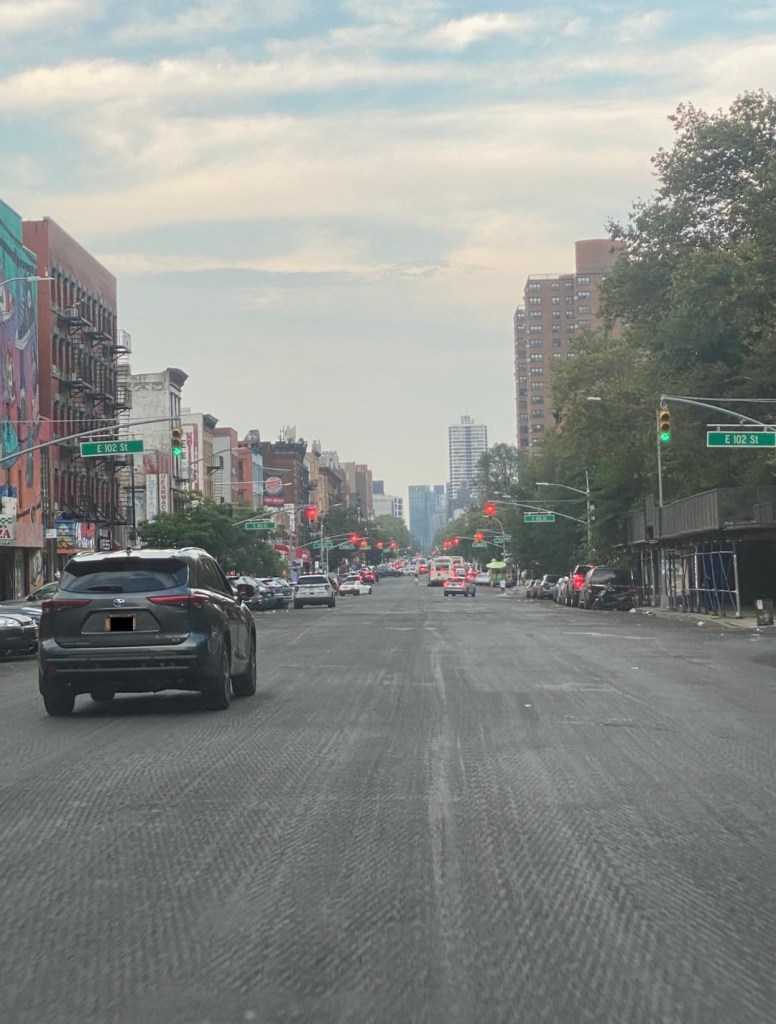
Despite the similitude, there may be some small adjustments between plans to fully fit travel needs in East Harlem. Depending on the feedback they receive, the NYCDOT may make additional upgrades such as curb extensions and new curb regulations if they see fit.
With such high rates of non-vehicular travel amongst East Harlem residents, there were not many reports of pushback due to the loss of car space as there are with many street redesign projects across the city. However, many motorists will likely fear that the street narrowing could lead to more congestion. These fears will likely not lead to much as the project in East Harlem has actually been requested by community boards, elected officials and others. This is in addition to the majority of residents and visitors in the area traveling without a car. Also, motorists are likely to benefit from the road safety upgrades as the street narrowing will likely lead to lower speeds. Not only that, but data from Google Traffic Forecast shows that congestion is not much different between the UES where upgrades have been made and East Harlem. These facts will all point to the added congestion concern with the project being unlikely to substantially affect whatever proposal the NYCDOT makes.
Given how many people walk, cycle and take transit, many believe that the NYCDOT did not go far enough to prioritize these modes in its redesign on the UES. This is despite it being one of the few projects in all of NYC to include both bus lanes and protected bike lanes. A design from the architecture firm WXY called for a different, but similar section of Third Avenue to be reduced to two lanes instead of three and for the PBL to be widened and become a two-way lane. Unlike the NYCDOT’s proposal, the PBL did not include adjacent parking.
Despite its intentions, this proposal is unlikely to be constructed in East Harlem for several reasons. The primary issue is that while bikes cannot travel southbound on Third Ave, there is already a southbound PBL just one block away on 2nd Ave. The NYCDOT often has to make difficult decisions to manage street space to accommodate as many road users as possible. Hence, it is unlikely that they would want to draw increased pushback from motorists for decreasing road space if cyclists have alternative PBL options. While many residents do not own cars, there are likely far more motorists from throughout the region using Third Ave than there are cyclists. The bus lane would not be expanded under the proposal. Thus, this would likely garner more opposition than support making its implementation improbable.
With 3rd Ave being such a critical corridor, the NYCDOT is working to make it better for the people who use it the most. Ideas that are typically countered heavily in most of the city are being embraced given Manhattan’s walking and transit-centric nature. Hopefully, the NYCDOT can work out a solution that benefits as many road users as possible to the greatest possible extent.
Works Cited
“Bicycle Lanes | FHWA.” Federal Highway Administration, https://highways.dot.gov/safety/proven-safety-countermeasures/bicycle-lanes. Accessed 7 July 2024.
Davidson, Justin. “A Plan to Perfect the New York City Street.” Curbed, 11 November 2021, https://www.curbed.com/2021/11/perfecting-nyc-street.html. Accessed 7 July 2024.
Duggan, Kevin, and David Meyer. “Third Ave. ‘Complete Street’ Adds Wide Bike Lane, But Still Keeps Too Much Space for Cars – Streetsblog New York City.” Streetsblog NYC, 8 December 2023, https://nyc.streetsblog.org/2023/12/08/third-ave-complete-street-adds-wide-bike-lane-but-still-keeps-too-much-space-for-cars. Accessed 7 July 2024.
Garber, Nick. “Clogged UES Avenue Getting Badly Needed Bus Lane Revamp, MTA Says.” Patch, 18 July 2022, https://patch.com/new-york/upper-east-side-nyc/clogged-ues-avenue-getting-badly-needed-bus-lane-revamp-mta-says. Accessed 7 July 2024.
Metropolitan Transportation Authority. “Bus Speeds.” MTA Metrics, 2024, https://metrics.mta.info/?bus/speeds. Accessed 7 July 2024.
Metropolitan Transportation Authority. “Improving bus service across New York City – NYC.” MTA, 30 June 2021, https://new.mta.info/projects/bus-improvements. Accessed 7 July 2024.
New York City Department of City Planning. “Car Ownership in NYC.” Tableau, 24 November 2022. Accessed 7 July 2024.
New York City Department of Transportation. “Third Ave Complete Streets Safety Improvements.” nyc.gov, 12 October 2022, https://www.nyc.gov/html/dot/downloads/pdf/third-ave-complete-streets-safety-improvements-oct2022.pdf. Accessed 7 July 2024.
New York City Department of Transportation. “3rd Avenue, East 96th Street to East 128th Street | Manhattan Community Board 11 | June 2024.” nyc.gov, 13 June 2024, https://www.nyc.gov/html/dot/downloads/pdf/3rd-ave-96-st-128-st-jun2024.pdf. Accessed 7 July 2024.
“Pedestrian Refuge Island Safe Transportation for Every Pedestrian Countermeasure Tech Sheet.” Federal Highway Administration, 2018, https://highways.dot.gov/sites/fhwa.dot.gov/files/2022-08/techSheet_PedRefugeIsland2018.pdf. Accessed 7 July 2024.
 Transit Central