By Joseph Morales
Ferries are a critical aspect of New York City’s transportation network. Despite opening just a few years ago, the NYC Ferry network transported 1 million riders to destinations across the city during the first quarter of 2023 across six routes and 25 ferry piers in all five boroughs.
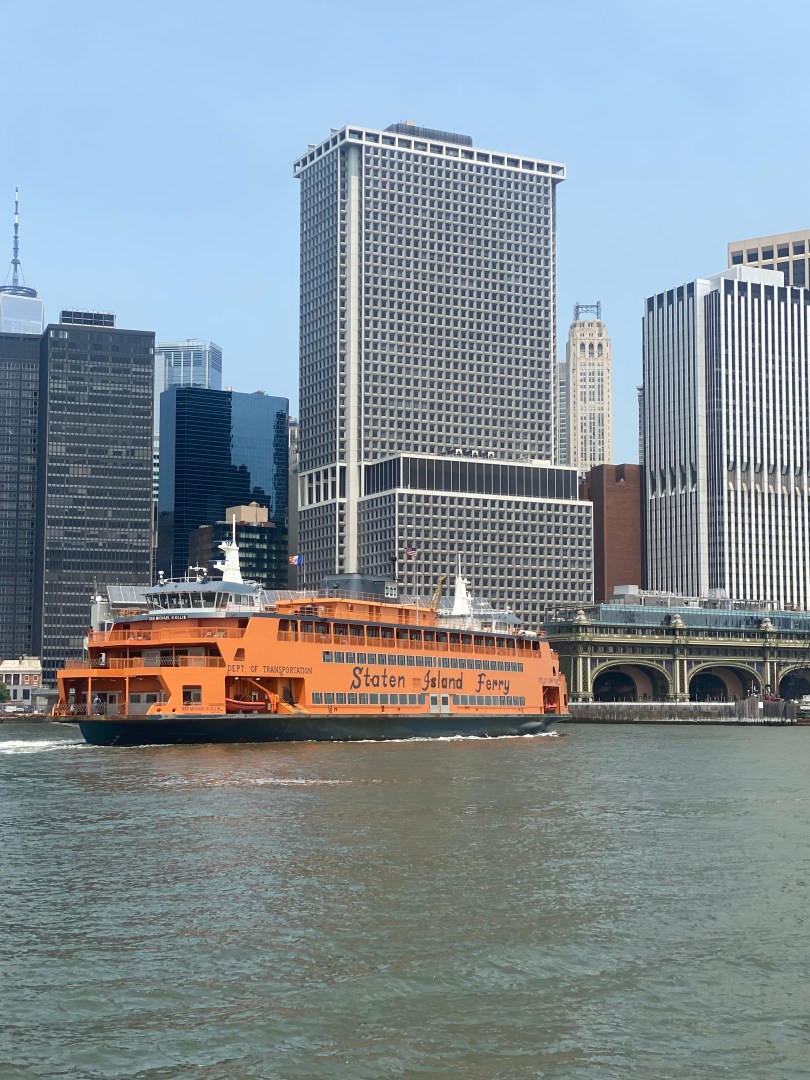
However, the most popular ferry and undoubtedly the most decorated ferry in the New York City area is the world-renowned Staten Island Ferry. Separate from the NYC Ferry system, the Staten Island Ferry, operated by the NYCDOT, transports over 12 million riders annually and has been run since 1905, according to the agency. The service is free and on-time performance in 2022 was 94%, making the service a critical connection for Staten Islanders to Manhattan as the borough is the only one without a direct subway or rail connection to Manhattan. The service also helps Staten Islanders avoid shelling out $6.75 per ride to take an express bus, as those costs can accumulate on a passenger over time.

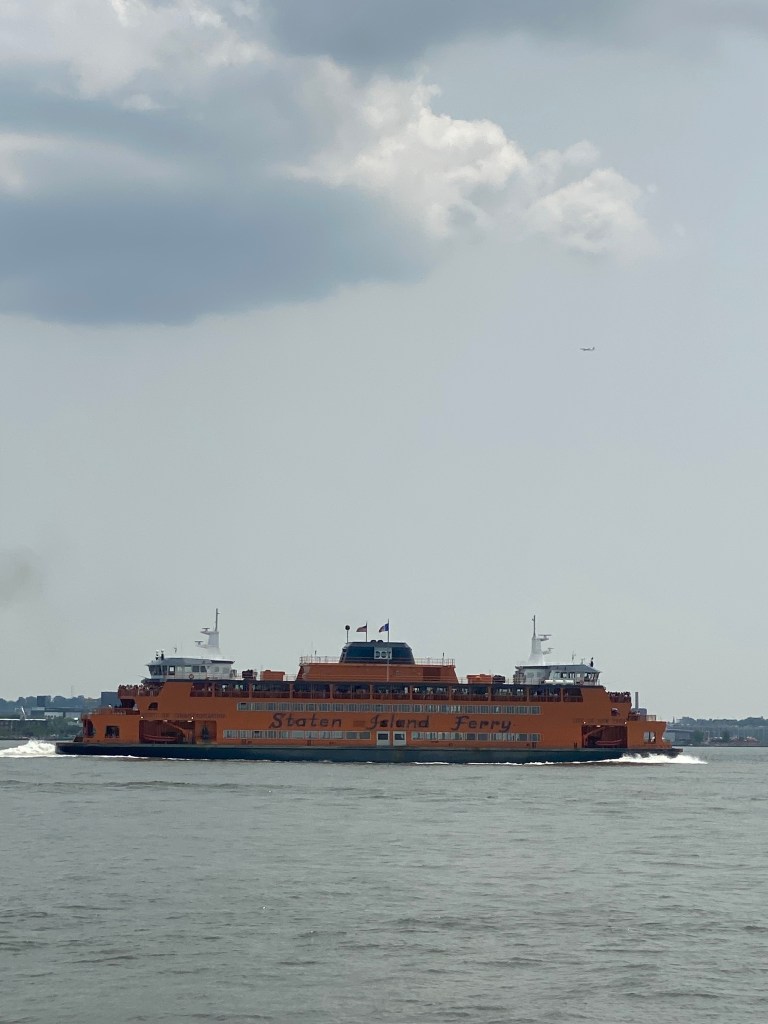
Unfortunately, the Staten Island Ferry is suffering from a worker shortage, which has led to substantially reduced service, including during peak times. Typically, the ferry is supposed to operate every 15 minutes during peak hours and every 30 minutes at all other times. However, due to worker shortages, ferry service is often delayed, with fewer boats in service whenever there are fewer workers than what is needed to operate the schedule of boats. NYC’s other ferry networks, such as the NY Waterway and the NYC Ferry system, have not been affected as their employees are represented by other unions. Each boat in service requires a full crew consisting of a captain, an assistant, and three mates in order to operate the boat safely. The NYCDOT is adamant that any one vacancy can interrupt service, as these staffing levels are mandated by the U.S. Coast Guard.
While recent service disruptions such as the one last Thursday night had largely taken place during the overnight hours, two weeks ago, on May 26th, 2023, just before the Memorial Day Weekend, peak service ran hourly as a result of the majority of workers that day calling in sick. Workers who were off-duty and eligible for overtime that day did not return calls from the NYCDOT. This led to crowded boats and many angry riders as they were trying to get home that night. New Dorp, Staten Island resident Clive Willis texted the Gothamist, “It was exceptionally crowded.” “There was only one boat going back and forth when usually there’s 4 crossing.” A similar event occurred in both July and August 2022.
While the exact cause of that Friday disaster is unknown, Staten Island Borough President Vito Fossella blamed it on a labor contract dispute that has been ongoing since 2011. He called the “severe situation unacceptable” and said that it “hurt thousands of people unnecessarily.”
According to a News 4 NY I-Team investigation done in September 2022, the shortages have been so dire in recent years that the city has even paid workers to sleep in their cars or makeshift sleeping quarters as going home in some instances would not have allowed them to have the mandatory 12 hours rest as required by federal law to operate the boats. Their investigation also found that in 2021, more than two-thirds of ferry employees worked more than 500 hours or a total of almost 21 days of overtime that year. 20% of employees worked an even more astonishing 1,000 hours or about 41 days of overtime that year. Even though ferry workers only work 32 regularly scheduled hours a week as opposed to the usual 40 for city workers, the amount of overtime they work still has them working insanely long hours.
Fossella, along with several other elected officials from Staten Island, repeatedly has called on the city to negotiate with the Marine Engineers Beneficial Association, the union that represents maritime Workers, in order to resolve the shortages. This continues to happen after former Mayor Bill de Blasio had successfully negotiated with 151 out of the city’s 152 labor unions covering over 300,000 workers without a contract from before his administration within his eight years in office. The MEBA was the only one of those 152 without an agreement. Labor historian, emeritus professor of history at Queens College, and author of the book “Working Class New York,” Joshua Freeman, said, “This situation is definitely an outlier” when speaking with the news site,THE CITY on the matter.
Several core issues have made it harder for the MEBA and the city to agree on a labor contract than the city’s other unions. For one, the pay for Staten Island Ferry workers has been far less in recent years than it has been for private vessel workers, and SI Ferry employees have not had a raise since their last labor contract. According to the news site THE CITY, captains, the highest-ranking employees on a ferry, make $20,000 less than the state average for their position.
In August 2022, an administrative judge from the city’s Office of Administrative Trials and Hearings(OATH) said that marine engineers were entitled to wages similar to that of their industry peers. In March of this year, NYC Comptroller Brad Lander, who is responsible for enforcing wage standards for city employees, ruled that the hourly rate for marine engineers should have been $50.45 rather than $37.45. The difference for senior marine engineers is even more stark as the comptroller ruled they should have been receiving $79.91 per hour rather than $40.32 per hour. He also ruled that marine engineers should receive $300,000 in back pay and chief marine engineers should receive a whopping $1.2 million in back pay. Lander stated in a press release that engineers on the Staten Island Ferry “…deserve a fair wage for safely steering thousands of New Yorkers across our harbor each day.” and that “Today’s ruling reflects diligent review of the work, pay, and benefits for comparable workers to set a prevailing wage as required by state law.”
While it is clear that Staten Island Ferry workers receive noncompetitive wages and must work extensive overtime to make more money, that overtime has led to workers who work extreme amount of overtime to be able to make extraordinarily high salaries due to them being able to take more overtime due to the worker shortage. According to an analysis by the Empire Center for Public Policy in 2015, some of these workers were even able to double their pay as 37 ferry workers earned $2.5 million in overtime during fiscal year 2015. One chief marine engineer was even able to double his salary to earn $92,051 to increase his salary to $164,759 by working 1,400 hours overtime or 27 extra hours a week that year. DOT spokeswoman Bonny Tsang said at the time that the agency was looking to “…distribute the work so that no individual will need to work as much overtime as occurred this past year.” While salary numbers for more recent years are not readily accessible, given what the overtime situation has been like, the city may look to cap the max amount of overtime hours for employees in any new contract. Overtime caps already exist for workers covered by the Citywide Agreement, which covers a substantial amount of city employees such as sanitation workers and health/hospitals staff.
The only other desire of the MEBU in negotiations is that the city finds a way to recruit and retain new talent in order to mitigate the worker shoes that leave current workers overworked and have led to the harsh working conditions that employees face on a daily basis. The rigorous U.S. Coast Guard license and pilot requirements make employees who are fit to work on the ferry at a premium. For example, mates must have a U.S Coast Guard Merchant Marine Credential(MMC) with five endorsements in areas such as marine radio operation and radar observation. Additionally, as you might have guessed, many qualified candidates take positions elsewhere for higher pay.
As the city is currently working on mediating a contract with the MEBA, the city may want to consider how the Seafarers International Union(SIU) was able to come to terms with NY Waterway in reference to contracts for their workers. In December 2019, the SIU and its 125 members, who are NY Waterway employees, agreed to a 5-Year contract with the company that included annual wage increases as well as other gains that workers were happy about. NY Waterway Deckhand George Schumpp said in a Seafarers Log published on the SIU website, “It’s probably the best contract I’ve seen in the 31 years I’ve been here.” “The whole thing went very smooth and fast, very professional.” Port Agent Ray Henderson also said, “The negotiations were pretty straightforward, and the committee took their time and studied the facts. They cared about their contract and getting the best possible agreement for their fellow workers.” As NY Waterway is one of the few other ferry operators in the New York region, this may increase pressure on NYC to reach a labor agreement with the MEBU regarding Staten Island Ferry workers as a private, for-profit company was able to do so with the union for its workers.
Given how much New Yorkers rely on the Staten Island Ferry for work, recreation, and other purposes, riders are likely hopeful that a contract will be reached soon to ensure reliable ferry service for years to come.
Works Cited
New York City Economic Development Corporation. “NYCEDC and NYC FERRY Announces Record Breaking Ridership Numbers | NYCEDC.” New York City Economic Development Corporation, 28 April 2023, https://edc.nyc/press-release/nycedc-and-nyc-ferry-announces-record-breaking-ridership-numbers. Accessed 11 June 2023.
New York City Department of Transportation. “NYC DOT – Staten Island Ferry Facts.” NYC.gov, https://www.nyc.gov/html/dot/html/ferrybus/ferry-facts.shtml. Accessed 11 June 2023.
Eyewitness News. “Staten Island Ferry service experiencing ‘significant changes’ due to workers calling out sick.” ABC7 New York, 26 May 2023, https://abc7ny.com/staten-island-ferry-service-sick-outs-nyc/13302124/. Accessed 11 June 2023.
Glorioso, Chris, and Kristina Pavlovic. “Staten Island Ferry Staff Claim Sleep Crisis Amid Worker Shortage.” NBC New York, 7 September 2022, https://www.nbcnewyork.com/investigations/i-team-staten-island-ferry-workers-sleep-in-their-cars-amid-overtime-crunch/3853427/. Accessed 11 June 2023.
Aponte, Claudia Irizarry. “How a Contract Eluded Staten Island Ferry Workers for Nearly 12 Years.” THE CITY — NYC News, 5 August 2022, https://www.thecity.nyc/2022/8/5/23294211/staten-island-ferry-contract-service-disruptions. Accessed 11 June 2023.
Aponte, Claudia Irizarry. “Adams Blames Idle Workers for Grounding Staten Island Ferry. They Beg To Differ.” THE CITY — NYC News, 3 August 2022, https://www.thecity.nyc/2022/8/3/23291235/staten-island-ferry-eric-adams. Accessed 11 June 2023.
Aponte, Claudia Irizarry. “Staten Island Ferry Engineers Entitled to Wage Boost, Comptroller Rules.” THE CITY — NYC News, 30 March 2023, https://www.thecity.nyc/2023/3/30/23663578/staten-island-ferry-wage-boost. Accessed 11 June 2023.
New York City Comptroller Brad Lander. “Comptroller Brad Lander Sets Prevailing Wage Rates for Staten Island Ferry Engineers.” NYC Comptroller’s, 30 March 2023, https://comptroller.nyc.gov/newsroom/comptroller-brad-lander-sets-prevailing-wage-rates-for-staten-island-ferry-engineers/. Accessed 11 June 2023.
New York Post. “Staten Island Ferry workers double their pay in overtime.” Empire Center for Public Policy, 20 December 2015, https://www.empirecenter.org/publications/staten-island-ferry-workers-double-their-pay-in-overtime/. Accessed 11 June 2023.
NYC Office Of Payroll Administration. “Pay Frequently Asked Questions – OPA.” NYC.gov, 2023, https://www.nyc.gov/site/opa/my-pay/pay-frequently-asked-questions.page. Accessed 11 June 2023.
“Citywide Contract – NYC.” DC 37, 2018, https://www.dc37.net/dc37contracts/citywide. Accessed 11 June 2023.
Seafarers Log. “NY Waterway Crews Ratify Five-Year Contract.” Seafarers International Union, 1 December 2019, https://www.seafarers.org/seafarerslogs/2019/12/ny-waterway-crews-ratify-five-year-contract/. Accessed 11 June 2023.
 Transit Central
This was a good read.
Here is what I think
It’s great to see the popularity of ferries in New York City, especially the free Staten Island Ferry, which provides a crucial connection for residents to Manhattan. It’s unfortunate to hear about the worker shortage causing service disruptions, but hopefully, a resolution can be reached soon for the benefit of riders and employees alike.
Ely Shemer
LikeLike