By Joseph Morales
The Staten Island Expressway(SIE) is the busiest highway on Staten Island. The expressway is the only east-west highway in the borough. It connects directly to both the Verrazano-Narrows Bridge to Brooklyn at its eastern end and the Goethals Bridge to Elizabeth, NJ, at the western end. Thus, many Staten Islanders use it to get outside of the borough and to either one of the NJ-NY tunnels or the Brooklyn-Manhattan crossings to get into Manhattan. In addition, to being the only cross-borough expressway in Staten Island, the expressway connects to the West Shore and Dr. Martin Luther King Jr Expwys(both part of NY-440), providing access to destinations throughout the borough as well as the Bayonne Bridge and Outerbridge Crossings respectively that connect to other areas of NJ. The SIE also traverses near some of the borough’s most densely populated neighborhoods, such as areas of the North Shore as well as the St. George area, which includes the Staten Island Ferry. This is important as 83% of Staten Island households have a car, and therefore more Staten Islanders rely on cars to get around their borough than residents of other boroughs.
Thus, it is no surprise that the SIE is the most congested highway in the borough, and there has been bipartisan political support for several improvements throughout the years.
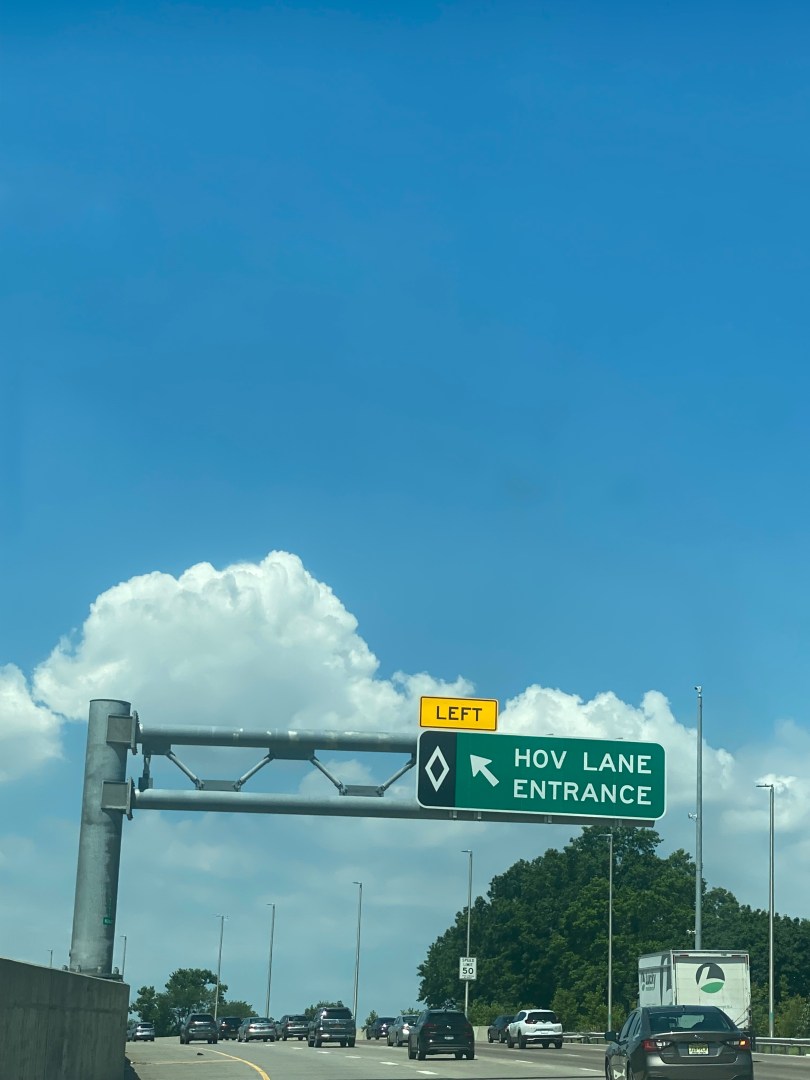
The most prominent project being pushed by elected officials on Staten Island is the extension of the HOV(High Occupancy Vehicle) lanes on the SIE from the Victory Blvd exit in roughly the center of Staten Island to the Goethals Bridge on the Island’s western end. They claim that this would reduce congestion as this would remove a pinch point after the exit where cars using the HOV lane must suddenly merge into general traffic just before the Victory Blvd exit. An extension of the lane will also help speed up carpoolers and express bus riders whose buses use the expressway to get to and from Manhattan daily.
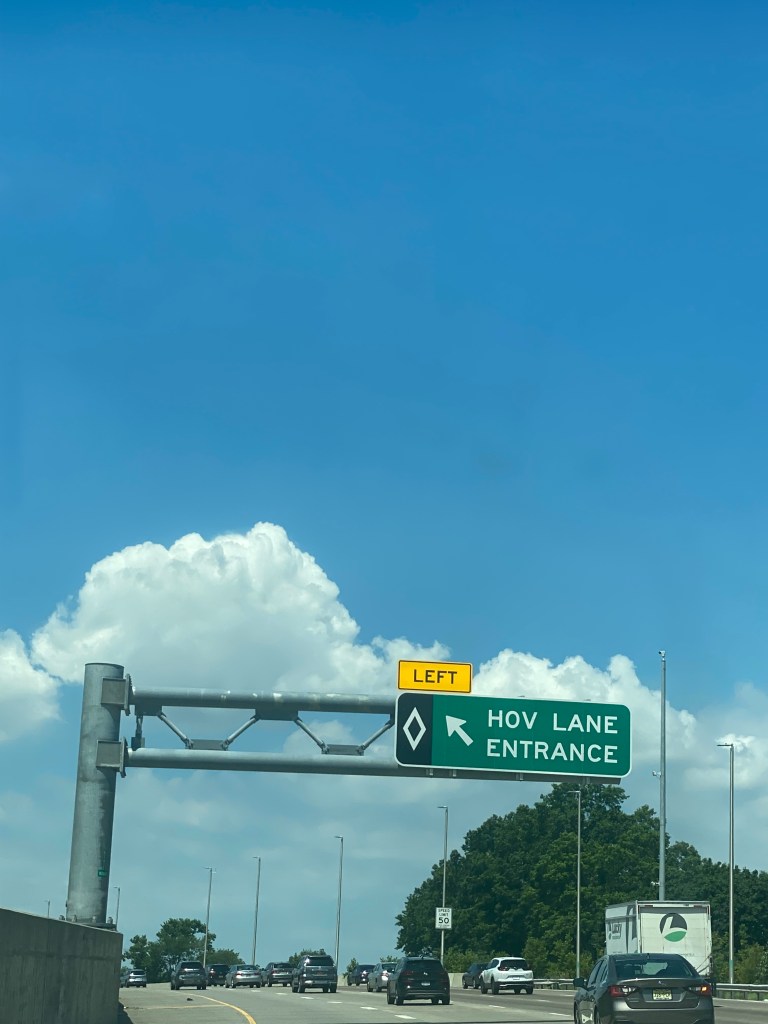
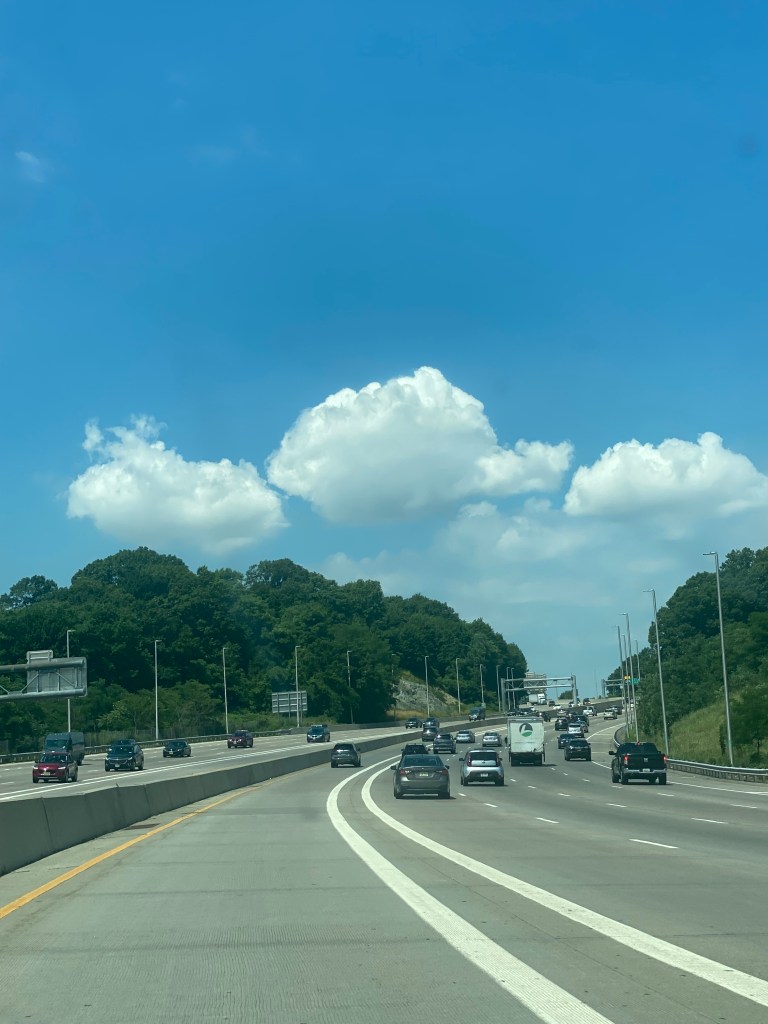
Advocacy in support of this project has been led by a large coalition of Staten Island representatives in the city, state, and federal governments, and they have received mixed responses at times. In 2017 while he was in office, Matteo wrote to both New York State Department of Transportation(NYSDOT) regional director Sonia A. Pichardo on a possible project. Pichardo replied to Matteo, stating that the lane already was serving its purpose by capturing “all HOV vehicles from the West Shore Expressway, Goethals Bridge and the Martin Luther King Jr. Expressway”; therefore, there was no plan to extend the lanes. Matteo asked for a follow-up regarding further explanation and even expressed that he could find money in the city’s capital budget to pursue the project, and he also suggested a feasibility study. The NYSDOT followed up with Matteo again in July 2018, stating that the proposal would offer “little benefit to traffic flow in the area”.
The analogy of those who support the project has a foundation for their argument. During off-peak hours, traffic is the most congested in the area between the Slosson Ave/Todt Hill Rd exit and just after the Victory Blvd exit. There seems to be a phenomenon on many New York City highways where congestion is the worst just before and even sometimes after a major exit or merge as cars seek to either exit or enter the highway. Highway stretches where this is the case include the Whitestone Expressway(I-678) northbound near the Cross Island Pkwy/Whitestone Br in Queens and the Hutchinsons River Pkwy southbound near I-95 As for the SIE specifically where unlike the other highways mentioned, the merge is a rather sudden one that forces motorists to slow down in both the HOV lane and general traffic to ensure that everyone can utilize the roadway safely.

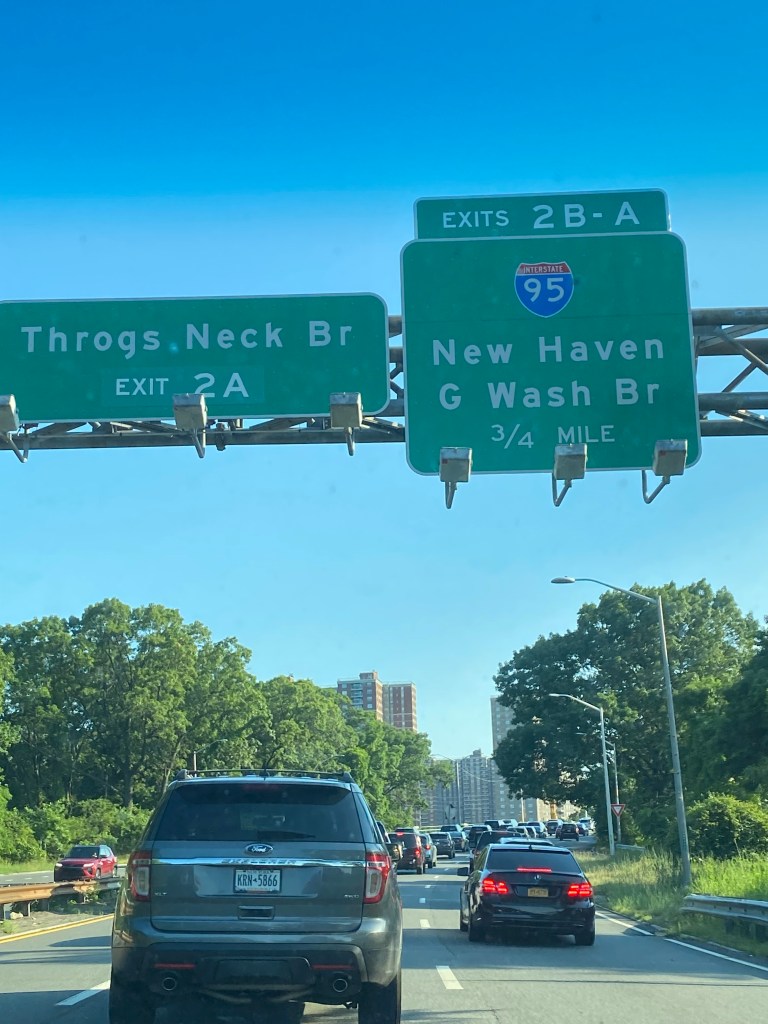
Not only is their analogy proven by several examples citywide, but the NYSDOT has already completed another project to address a similar issue on another part of the expressway. In April 2021, the NYSDOT finished adding an auxiliary lane to the Staten Island Expressway westbound between the Dr. Martin Luther King Jr. Expwy(NY-440) and the Goethals Bridge. The $3.3 million project allows vehicles from NY-440 more time to merge onto the expressway as well as to access Exits 6 and 7 without entering general expressway lanes, creating fewer conflicts with oncoming traffic.
While the theory of Staten Island political reps is understandable, and similar scenes of congestion have been seen throughout the city, one can see the theory that the current HOV lanes serve their intended purpose as vehicles from all the nearby travel arteries are able to use the lane, and congestion is likely less than if the lanes were not there at all. In addition, when the NYSDOT claimed that the project would result in “little benefit to traffic flow in the area”, they had claimed that the congestion was caused by the proximity of the merge to the interchanges with the Dr. Martin Luther King Jr and West Shore Expressways(which are both a continuation of NY-440), a trend also seen near many highway interchanges in the city including the ones described earlier. However, while this in of itself is likely true, it does not subtract from the fact that the sudden merge likely is at least somewhat to blame for congestion, especially considering that other, busier parts of the expressway do not experience the same issues at the same times of day and many times congestion often ends exactly at the merge, according to Google Maps traffic forecast. Additionally, there the interchange is not a major one, as the West Shore Expressway is not as heavily used as other highways throughout the New York Region.
Despite this, the idea of the project has appeared to be everything other than a lost cause. In January 2019, Matteo’s advocacy effort was carried on by former House Rep. Max Rose(D-NY11) and former State Assemblyman Michael Cusick(D-Mid Island). Rose and Cusick wrote to former NY Gov.Andrew Cuomo in January 2019 requesting an expedited study for an HOV lane extension running westbound toward New Jersey or creating a new general-purpose lane.
After the 2019 letter, despite rejecting former Councilman Matteo’s repeated requests for further investigation into the matter, the NYSDOT has and is continuing to explore the possibility of an HOV lane extension more thoroughly. In January 2019, NYSDOT spokesman Glenn Blain said that the state had and would “…maintain an open dialogue with the community on the issue and monitor the situation on the roadway.” More recently, in October 2020, following the commencement of the new auxiliary lane being constructed, NYSDOT commissioner Marie Therese Dominguez stated when referring to the possibility of an HOV lane extension, “That is something that was always under consideration, and we’re going to continue to look at it.”
As the NYSDOT has now been looking into the possibility of constructing the lanes, they estimated the cost to be a hefty $500-$800 million in order to construct the lanes in both directions, a number Malliotakis and Gillibrand believe could have been much less. The NYSDOT is now reassessing the cost to determine if it could be completed for less money.
The reason why the project can cost a significant amount of money is likely because of the complexity of constructing an HOV lane. The Federal Highway Administration(FHWA) states on its website that HOV lanes should not take over general-purpose lanes used for the same trips. Thus, unlike adding another form of a designated lane to a roadway, such as a bus lane, building an HOV lane on the SIE would require the construction of a brand new lane, which would likely cost millions, if not over $100 million dollars. According to the FHWA, the average cost of lane construction in urban areas is $10 million per lane mile. This does not include the markings that would be necessary with the HOV lanes or any engineering constraints that could increase costs. In 2005, the NYSDOT completed a 10-mile segment of an HOV lane on the LIE in Nassau County that required 12 years of construction and $880 million to be completed. An extension of the HOV lanes on the SIE itself, about two miles from Slosson Ave to its current terminus at Victory Blvd, cost the state $118.5 million, according to the Staten Island Advance. Thus, the state might not have felt the need to prioritize the proposed HOV lane extension for the SIE as opposed to other projects across the state.
Additionally, Staten Island Borough President Vito Fossella theorized during a borough transportation summit in February 2023 that the state prioritizes rehabilitation projects over building new infrastructure, such as HOV lanes. This includes projects such as the ongoing rehabilitation of the Bradley and Woolley Ave overpasses over the SIE. However, due to the passage of the Infrastructure and Investment Jobs Act(IIJA) in November 2021, Malliotakis stated that federal funds could cover 80% of the cost. The overpass rehabilitation project is also in part from money being provided through the legislation. As this would reduce the cost to the state of New York to the level of smaller HOV lane projects, this may substantially increase the chance that an HOV extension is completed.
However, regardless of whether or not the HOV lane is extended, HOV lane abuse may be an issue that hinders the ability of existing and/or future HOV lanes to reduce congestion. This is because many drivers use the lanes despite not having the required three or more occupants in their vehicles, leading to more vehicles being in the lane that should not be. According to NYPD data, the department issued 5,007 summonses for HOV lane violations, or 14 summonses per day in 2019. From January through September 2022, the agency issued 2,916 summonses, or 10.7 summonses per day.
Despite the considerable decrease in summonses rates in the two years described, it does not mean that the issue is nonexistent or even mitigated to any extent. Summonses are only representative of the number of motorists the NYPD happened to stop for HOV lane violations, and given how easy it is to enter an HOV lane illegally, it is likely that summonses issued are an undercount of how many violations are actually occurring. After all, it is likely rather diffciult for an officer in their own vehicle to determine whether or not a vehicle in the lane driving at highway speed meets the HOV lane requirements.
The only solution to this issue which was proposed by two of the politicians which is the addition of enforcement cameras in the HOV lanes, similar to how the city already enforces bus lane and speeding laws. There are two key issues to this being able to work however. One is that, the enforcement technology the NYCDOT(New York City Department Of Transportation) is currently permitted to use by state law, has only an 80-85% accuracy rate for detecting HOV lane violations according to former NYCDOT commissioner Polly Trottenberg during her time in office in response to a request from former Borough President James Oddo to address the enforcement issue. He also proposed a pilot using technology from Siemens, Dieplhi, and Condurent(Xerox) that is known to have a 95% accuracy rate and is being tested in other major metropolitan regions such as the San Francisco, Las Vegas and DC areas. However, Trottenberg also told Oddo that implementing those would require state legislation, similar to legislation permitting the use of red light and speeding cameras in NYC.
Another concern is that any cameras or sensors used for the purposes of HOV lane enforcement must be able to count the number of occupants in a car, something that may cause privacy concerns. Not only has this been the case in instances across the country, but Staten Island motorists have been particularly vocal opponents of speed cameras throughout the borough, with many feeling like it is a cash grab from the city and state. In February 2023, when Gov. Hochul proposed to add speed cameras to the Verrazano-Narrows Bridge, Assemblyman Michael Reilly called it “another tax on working families living in car-reliant communities like Staten Island.” State Senator Andrew Lanza shared similar sentiments saying, “This is yet another tax on hard-working Staten Islanders and has nothing to do with public safety.” Many Staten Island politicians have also opposed the expansion of the New York City school zone speed camera program on similar grounds.
As simple as it may seem, extending an HOV lane on a busy expressway is an extremely complex undertaking. Also, a considerable challenge is making sure those lanes are clear for those who need to use them. As Staten Island is heavily reliant on the SIE to get around, anything that would mitigate congestion on the Island make an immense impact on travel throughout the borough.
Works Cited
Dalton, Kristin F. “Matteo appeals again for HOV lane extension, additional enforcement – silive.com.” SILive.com, 30 January 2018, https://www.silive.com/news/2018/01/matteo_asks_again_for_hov_lane.html. Accessed 5 June 2023.
Google Maps. “Google Maps Traffic Forecast.” http://www.google.com/maps, https://www.google.com/maps/@40.6093117,-74.1533847,11071m/data=!3m1!1e3!5m1!1e1?entry=ttu. Accessed 7 June 2023.
Lanza, Andrew J. “Governor Cuomo Announces Completion of Project to Enhance Traffic Safety and Mobility on Staten Island Expressway.” The New York State Senate, 29 April 2021, https://www.nysenate.gov/newsroom/press-releases/andrew-j-lanza/governor-cuomo-announces-completion-project-enhance-traffic. Accessed 5 June 2023.
Federal Highway Administration. “Frequently Asked HOV Questions – Freeway Management Program – FHWA Operations.” FHWA Operations, 19 August 2022, https://ops.fhwa.dot.gov/freewaymgmt/faq.htm. Accessed 5 June 2023.
Pozdena, Randall. “Pricing Kit.” Federal Highway Administration, 5 June 2023, https://www.fhwa.dot.gov/policy/otps/pricingkit.cfm. Accessed 5 June 2023.
Toy, Vivian S. “H.O.V. Lane, Done at Last. Does It Work? (Published 2005).” The New York Times, 10 July 2005, https://www.nytimes.com/2005/07/10/nyregion/nyregionspecial2/hov-lane-done-at-last-does-it-work.html. Accessed 5 June 2023.
Barone, Vincent. “New Staten Island eases morning commute.” SILive.com, 8 September 2015, https://www.silive.com/news/2015/09/light_traffic_on_staten_island_1.html. Accessed 5 June 2023.
Barone, Vincent. “Staten Island Expressway HOV lane to open Thursday.” SILive.com, 2 September 2015, https://www.silive.com/news/2015/09/governor_announces_opening_of.html. Accessed 5 June 2023.
Bascome, Erik. “Borough Hall summit highlights 6 critical Staten Island issues around traffic, transportation.” SILive.com, 23 February 2023, https://www.silive.com/news/2023/02/borough-hall-summit-highlights-6-critical-staten-island-issues-around-traffic-transportation.html. Accessed 5 June 2023.
Lanza, Andrew J. “$46 Million Investment Allocated to Rehabilitate Bridges Along The Staten Island Expressway.” The New York State Senate, 10 June 2022, https://www.nysenate.gov/newsroom/press-releases/andrew-j-lanza/46-million-investment-allocated-rehabilitate-bridges-along. Accessed 5 June 2023.
Bascome, Erik. “’Now is our opportunity’: Officials say feds could fund 80% of S.I. Expressway HOV lane extension.” SILive.com, 24 January 2023, https://www.silive.com/news/2023/01/now-is-our-opportunity-officials-say-feds-could-fund-80-of-staten-island-expressway-hov-lane-extension.html. Accessed 5 June 2023.
Bascome, Erik. “’Now is our opportunity’: Officials say feds could fund 80% of S.I. Expressway HOV lane extension.” SILive.com, 24 January 2023, https://www.silive.com/news/2023/01/now-is-our-opportunity-officials-say-feds-could-fund-80-of-staten-island-expressway-hov-lane-extension.html. Accessed 5 June 2023.
Bascome, Erik. “DOT studying enforcement technology for HOV lanes.” SILive.com, 29 November 2018, https://www.silive.com/news/2018/11/dot-studying-enforcement-technology-for-hov-lanes.html. Accessed 6 June 2023.
Cabanatuan, Michael. “Testing high-tech cameras where it counts: aimed at carpool-lane cheaters.” San Francisco Chronicle, 2 April 2018, https://www.sfchronicle.com/bayarea/article/The-battle-to-catch-Bay-Area-carpool-cheats-takes-12799627.php. Accessed 6 June 2023.
Bascome, Erik. “Speed cameras on Verrazzano? Staten Island lawmakers unanimously oppose state proposal.” SILive.com, 13 February 2023, https://www.silive.com/news/2023/02/speed-cameras-on-verrazzano-staten-island-lawmakers-unanimously-oppose-state-proposal.html. Accessed 6 June 2023.

