
By Joseph Morales
The L train is a subway route that runs from the 8 Av station in Manhattan out to Canarsie-Rockaway Pkwy in Canarsie, Brooklyn. The line passes through many densely populated neighborhoods throughout Manhattan and Brooklyn that truly reflect the hustle and bustle as well as the diversity the city is known for, such as the West Village, Williamsburg, and Bushwick. More than 300,000 riders ride the L train daily as of April 2016, according to the Regional Plan Association. While those are well before pre-pandemic levels, it is essential to note that subway ridership did increase to 65% of pre-pandemic levels from 56% in 2022, according to statistics from the NYC Comptroller’s office. This indicates that subway ridership citywide is starting to recover.
As the L train is among the most popular routes in the NYC subway system, it is no surprise that the line has been the focus of some significant service upgrades that have made headlines in recent years. For starters, the line was equipped with what is known as CBTC(Communications-Based Train Control) in 2009. With this system, the MTA knows exactly where trains are and can thus schedule more trains as there does not need to be a significant buffer zone between trains as with the fixed-block system used on most lines, as the fixed-block system never allows the MTA to know the exact location of trains.
Then, in April 2020, the MTA successfully completed a 12-month project to repair the 14th Street Tunnel between Manhattan and Brooklyn due to damage caused by Hurricane Sandy back in October 2012. While the tunnel was initially supposed to be fully shut down for 15 months, former Governor Andrew Cuomo bought in a team of engineers from Cornell and Columbia Universities who devised an alternative plan that only required service changes during weeknights and weekends, substantially reducing disruption for riders. When the project was said and done, not only was it completed successfully, but it was completed three months and $100 million ahead of schedule. Also completed at the same time were station improvements made to many subway stations, including some stations on the J, M, Z, and G trains, such as wider entrances, new elevators and escalators, and more turnstiles to increase station capacity. In addition, three new electrical substations with two in Brooklyn and one in Manhattan are in the progress of being constructed so that more trains can be run along the line and passengers can get the most out of the CBTC installed in 2009. The MTA has not updated its website since June 17th, 2021 as to completion of any additional work, so it is possible that certain parts of the project have advanced further than what has been described or have even been completed.
While these projects made major headlines and all had clear-cut impacts on riders, several projects are coming up that will also significantly impact riders that most do not know about that are tucked away on the MTA’s capital plan dashboard for the years 2020-24. The three main projects that fit this category are to repair line structure components, replace mainline tracks, and replace mainline switches. These projects all involve replacing to repairing key railway aspects critical to maintaining quality service.
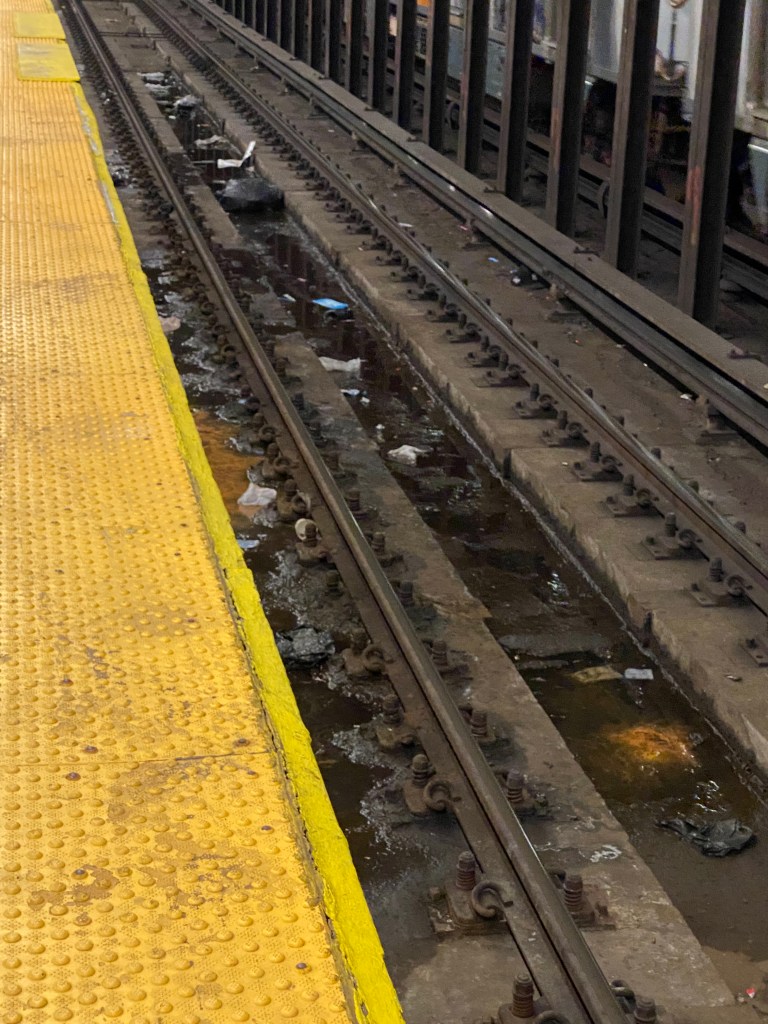
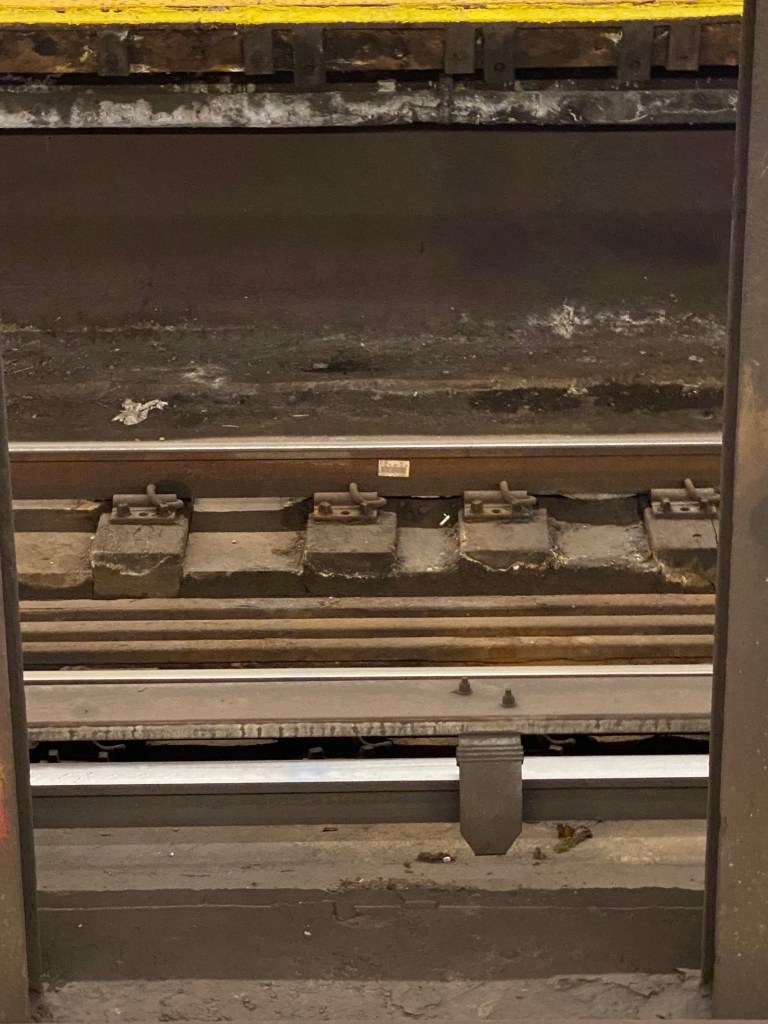
As part of its project to repair line structure components, the MTA works on “the repair of priority steel and concrete defects and leaks” between 8th Ave and 1st Ave in Manhattan. This will lead to stations appearing in better condition and will reduce the risk of train delays due to structural damage on the line. On my visit to the 3rd Av(L) station on Thursday, April 20th, 2023, I noticed grimy tracks with a substantial amount of water in them. I also noticed what appeared to be eroding steel in numerous areas of both the tracks and steel beams supporting the station structure. Based on the MTA’s description of the project on its capital program dashboard, it appears that issues like these throughout the line in Manhattan will be addressed. The dashboard also states that this project will be completed in March 2025 and is currently 9% complete. It is important to note that the dashboard is only updated quarterly, so for any MTA capital project, it is possible that more progress has been made than the dashboard specifies.

As part of a separate but similarly linked project, the MTA is also bringing ventilator bays at the 8th Av Station on the western end of the line to a “state of good repair,” which will help improve ventilation and air quality for riders. While the MTA described in its capital plan dashboard that the work is “contractually combined with other capital improvements along the 14th St corridor,” it did not specify which improvements it was combined with or if it was combined with the line structure improvements project. This project is expected to be completed in March 2025 and is 32% complete, according to the capital plan dashboard.
Another project the MTA is soon to commence that will help to continue running quality service on the L for the long run is the replacement and rehabilitation of the mainline track as they are on several other lines. The project is set to begin construction this July and will replace tracks and other equipment that is no longer useful, such as ballast, signals, and contact rail. Ballast is a material that provides stability to a vehicle of any type, in this case, subway trains. On subway tracks specifically, ballast also helps to stabilize the train tracks when trains roll over and to facilitate drainage. Both of these matters are critical to the MTA being able to provide reliable subway service.
Also, being done on the mainline track for several lines, the MTA plans to replace mainline switches along the L train. This will include “as required, replacement of existing turnouts, track switches, switch valves, connecting rails, contact rails, ties, ballast, signal cable including positive and negative connections, and any associated signal and equipment work.” Switches are critical rail elements that allow trains to move from one track to another. This enables trains to switch from local to express services, enter and exit rail lines from yards, and navigate junctions. In part due to the importance of switches to running a subway, switch malfunctions are one of the most frequent causes of delays throughout the subway system. Replacing out-of-date ones will help prevent these types of delays on the L train.
As the MTA is working on several major investments to improve service along the L train and throughout the transit system, such as installing CBTC, building the Second Avenue Subway, and renovating subway stations, it is easy to overlook improvements that are so important to the NYC subway system that will not involve a ribbon-cutting ceremony. Nonetheless, the upgrades, when they occur, will have an immense impact on the L train along with several other subway lines in NYC, being able to provide fast and reliable service for years to come.
Works Cited
Regional Plan Association. “RPA | A New L Train for New Yorkers.” Regional Plan Association, https://rpa.org/work/reports/a-new-l-train-for-new-yorkers. Accessed 20 May 2023.
New York City Comptroller Brad Lander. “Riders Return.” New York City Comptroller, 16 March 2023, https://comptroller.nyc.gov/reports/riders-return/. Accessed 20 May 2023.
Duggan, Kevin. “MTA eyes next batch of subway signal upgrades in Brooklyn, Queens, and Manhattan.” amNewYork, 29 March 2022, https://www.amny.com/transit/mta-eyes-next-batch-subway-signal-upgrades/. Accessed 20 May 2023.
Metropolitan Transportation Authority. “What is CBTC?” YouTube, 24 February 2017, https://www.youtube.com/watch?v=_1Bgmugve5M. Accessed 20 May 2023.
Schulz, Dana. “The L train ‘shutdown’ is over! Regular subway service resumes today.” 6sqft, 27 April 2020, https://www.6sqft.com/l-train-tunnel-project-is-complete-regular-subway-service-resumes/. Accessed 20 May 2023.
Metropolitan Transportation Authority. “Construction During the L Project.” MTA, 17 June 2021, https://new.mta.info/l-project/construction. Accessed 20 May 2023.
Metropolitan Transportation Authority. “Capital Program Dashboard.” mta.info, 2023, http://web.mta.info/capitaldashboard/CPDPlan.html?PLN=8&AGY=a. Accessed 20 May 2023.
 Transit Central