Staten Island is the most car-centric and least densely populated borough in New York City. Despite this fact, the borough would be America’s 39th most populous city if it were its own municipality, ranking higher than cities like Miami, Cleveland, and Minneapolis. In addition, 17% of Staten Island households do not have access to a car, which is still significantly higher than the U.S rate of 8.3%. Nowhere is Staten Island’s urban feel more apparent than on the Island’s North Shore, with a car-free household rate of 29% and a population density similar to neighborhoods in Brooklyn and Queens. Mass transit options here include a robust bus network with local buses that could get you just about anywhere on the Island. There are also various express bus routes that connect almost every neighborhood to Manhattan. In addition to buses, some parts of the North Shore also have a train line known as the Staten Island Railway(SIR), that connects the south and west parts of the Island to St. George on the Island’s North and East Shore. Though not considered part of the subway system, the SIR runs with subway trains on a subway-like line with lower headways than NYC subway routes.
The NYC Subway is the lifeblood of New York City and one of the primary ways people get around. In 2022, 3.2 million people rode the subway daily in 2022 despite hybrid/remote work being more common. While the subway is often the best way to travel, many New Yorkers hate riding it due to delays, cleanliness and a slew of other issues. On top of that, New Yorkers are considered by some to be among the most stressed out people in America. A study from the research firm William Russell considered the NYC the most stressed city in America for several reasons including its high cost of living. A TimeOut article on the topic even mentioned “perennial subway delays” in a sentence on stressors that are just so common here in our city. You can check out that article here: https://www.timeout.com/newyork/news/nyc-is-officially-the-most-stressed-out-city-in-the-united-states-011222
Given these circumstances, you might think New Yorkers would love a coffee, donut or even bacon egg and cheese sandwich to start their work day. It turns out, Dunkin Donuts has this figured out, with locations adjacent to many subway stations throughout the boroughs. They even have three locations within Penn Station and another one in Fulton Center.
These strategic locations are no accident and Dunkin’s franchise selection strategy along with other aspects of its business allow it to take advantage of locations adjacent to transit. For one, out of the donut chain’s five criteria for selecting locations, four of them are directly connected to the transportation infrastructure around them. These include an available drive thru, one parking space per three seats, an easy entrance and exit and having a highly visible location. As for drive thrus and parking spaces, these are likely not weighed as heavily in New York City due to the high percentage of residents that do not drive. However, subway stations definitely support the latter two, as stations tend to be in walkable locations with high foot traffic.
In addition to location itself, the cost and space required to open a Dunkin Donuts is considerably less compared to other fast food chains. This allows the chains to multiply faster in the areas both Dunkin and franchisees see fit. As for cost, the initial investment for a Dunkin Donuts can be anywhere from $121,400-$1,809,500 according to the company website. This is in comparison with $297K-$2.1M for Pizza Hut, $575,600 to $3,370,100 for Taco Bell and $1,314,500 and $2,313,295 for McDonalds. Lower costs are especially beneficial for Dunkin Donuts franchisees given what may be higher rents near subway stations.
Outside of initial costs, Dunkin locations are generally much more flexible as far as space is concerned than other fast food restaurants. Since many Dunkin customers take coffees and small treats to go, there can be varyings eating levels if there is seating at all. There are even Dunkin Donuts locations that function primarily as kiosks such as the one in Fulton Center. Others are standing room only locations such as the one in Marble Hill, Manhattan, and some offer limited seating such as the one on Eastern Pkwy adjacent to the Franklin Av-Medgar Evers College(2,3,4,5) station in Brooklyn. On the other hand, other chains such as McDonalds and Taco Bell need a certain amount of seating and space to accommodate their respective functions as a lunch/dinner spot. In fact, Taco Bell only recently opened a new restaurant variant known as Taco Bell Cantina that is designed to better spatially accommodate urban areas. Taco Bell Head of Public Relations Matt Prince told CNBC in 2019, “So typically when you think of Taco Bell’s you think of suburban and rural areas with drive thru. These are very different. These are in walkable downtown spaces.“ He also stated, “We want to make sure that they feel like they’re part of the community that they’re in and so people come in and feel like they have a unique experience.” With flexible locations in urban areas, Dunkin Donuts had already achieved for years what Taco Bell set out to achieve in 2019 with its Taco Bell Cantina locations.
Dunkin Donuts in smaller storefront adjacent to the Franklin Av-Medgar Evers College(2,3,4,5) station in Brooklyn.Neighborhod-specific signage at Dunkin Donuts in Marble Hill, Manhattan.
While Dunkin’s business model often brings it near subway stations, what has really driven Dunkin’s subway-side boom is what matters most to businesses. This business driver is indeed the customer! Dunkin Donuts are unique in that its business caters directly to the needs of the commuter. In the morning, a subway rider who just had a long commute might want to grab a cup of coffee or a small breakfast item. At the end of the day, a commuter might be in the mood for a donut or one of the chain’s other dessert offerings. The same cannot be said for Popeyes, Taco Bell or most other fast food chains, that specialize in a smaller range of meal options. The closest chain to Dunkin Donuts as far as product diversity is McDonalds with its all-day breakfast as well as lunch/dinner options. However, besides some breakfast items, most of its products are associated with full meals rather than quick bites that could be had before getting on the train. Additionally, while subway stations can help drive traffic for any fast food establishment, these businesses often need other business drivers such as nearby employment and recreational destinations. On the other hand, Dunkin Donuts can cater to a commuter in any community.
As Dunkin Donuts is really popular amongst New Yorkers, it is interesting to think about what allows a business to perform well in any given market. With Dunkin, it’s impressive how their restaurant concept fits perfectly into the needs of New Yorkers and the challenges of operating a business in the city. Thanks to the chain’s versatility, it has been successful near NYC subway stations and across the United States. As a result, Dunkin Donuts has told Americans since its 2006 rebranding, “America Runs On Dunkin!”
Midtown Manhattan is arguably the commercial, cultural and recreational hub of both New York City and the World. Many prominent corporations have headquarters in Midtown such as JPMorgan Chase, Calvin Klein and Marvel to name a few. Midtown is also a hub for the entertainment industry, with Broadway Theatre and other performing arts venues attracting millions from around the world annually. Additionally, Midtown is known for a slew of other tourist attractions that attract millions of yearly visitors each such as St. Patrick’s Cathedral, Times Square, and Rockefeller Center. If that is any indicator, Midtown is well traversed by both locals and tourists alike.
While Midtown is the hub of many things, it is not the hub of government offices. The headquarters and offices of most government agencies in New York City tend to be concentrated in Lower Manhattan and Downtown Brooklyn. However, the MTA was once an exception, with their headqaurters on Madison Avenue between 44th and 45th Streets at 343 Madison Ave. Between 1998 and 2014, much of MTA operations were decentralized with many employees at their current Financial District headquarters, the Madison Avenue location, and another site at 370 Jay Street in Downtown Brooklyn. However, the latter two sites were closed due to financial difficulties and a desire for the MTA to consolidate office operations. Hence, workers at both buildings have since moved to the Financial District office at 2 Broadway just outside the Bowling Green(4,5) subway station. The Brooklyn site is now home to the NYU Center for Urban Science and Progress(CUSP).
Current MTA Headquarters at 2 Broadway(light blue building) as seen from boat in New York Harbor.
As for the Madison Avenue HQ, this site has had a more tumultuous story since its closure. Upon closing the building, the MTA looked for a developer to redevelop the property and generate revenue for the often cash-strapped transit agency. In 2020, the MTA chose Boston Properties out of nine potential bidders in order to redevelop the site. Properties owned by the developer include the Times Square Tower where the main entrance to the Times Sq-42nd St station is located, Dock 72 in Brooklyn, and many other buildings in Midtown Manhattan. However following the deal, there was a dispute between the MTA and former NYC Mayor Bill de Blasio between how the money would be shared between the transit agency and the city in the form of property taxes. The mayor had touted the proposed redevelopment as made possible by his East Midtown Rezoning, which included provisions for taller buildings like the one that was eventually proposed for the site. Ultimately, the parties reached a compromise that involved $600 million in revenue being counted toward the city’s $2.66 billion contribution to the MTA’s 2015-19 Capital Plan. The redevelopment will now generate over $1 billion for both the city and MTA.
After 7 years of being abandoned, the City Council finally approved plans for a 55-story office skyscraper that has since been scaled down to 49 stories. In addition to adding yet another building to the city’s iconic skyline, the building will include retail and underground connections to Grand Central Terminal. Despite the boom of hybrid work, workers are increasingly headed back into NYC offices. According to a study by The Partnership for New York City, 58% of Manhattan office workers were working in-person post-Labor Day 2023. That was up from 52% in late January and 49% in September 2022. As many prefer hybrid work due to commute times, 343 Madison Avenue will be a very desirable office location due to its direct connection to Grand Central Terminal, especially with the new Grand Central Madison being fully operational. Additionally, many workers will almost certainly be more inclined to work in a newer building with modern amenities than they would in one of East Midtown’s other buildings whose average age is more than 70 years old.
In addition to adding offices, the new development is one of many projects that will help East Midtown stay competitive as a core business district. As other areas of Midtown grow and more jobs are located in the outer boroughs, having desirable facilities in East Midtown is imperative to bringing more business in the neighborhood. Many of East Midtown’s current buildings are less attractive to corporations due to flaws such as low floor to ceiling heights and a multitude of interior columns. Some office buildings with these issues were even converted to hotels pre-pandemic such as the Marriott Courtyard at 866 Third Avenue, the Library Hotel at 299 Madison Avenue, and the Condominiums at 5 E 44th St. This is why the city rezoned the neighborhood in 2017 to address these issues and usher in new development that would make companies continue to want East Midtown space. The rezoning was also done to help take advantage of the opportunities created by projects such as Grand Central Madison and a possible extension of the Second Avenue Subway south of 72nd St in the future. The 343 Madison Ave project is just one of several that will contribute to the rezoning’s goal.
The new skyscraper is scheduled to be completed by 2026. Before construction can start, the demolition of the former MTA HQ that is nearing completion must be finished. The demolition, which has been ongoing since 2022, is likely not finished due to the complexity of demolishing such a large structure. When a structure is demolished, many steps must be taken to ensure the safety of the surrounding community and that hazardous materials such as asbestos are not leaked into the air. The hazards associated with asbestos are part of why many people who lived or worked near Ground Zero following the 9/11 attacks contracted asbestos-related cancers. Due to environmental concerns and surrounding buildings, the building cannot just simply be imploded. Even the use of a wrecking ball would likely be unfeasible due its tendency to swing past its intended targets, which could spell disaster in a place as dense as Midtown. In fact, wrecking balls and implosion are not permitted anywhere in NYC likely for these reasons.
Signage indicating demolition at 343 Madison Ave.Part of former MTA HQ that is being demolished at 343 Madison Ave.Part of former MTA HQ that is being demolished at 343 Madison Ave.
As demolition continues, it is unclear if construction on the skyscraper will be delayed as the average skyscraper takes about 2-10 years to build. On top of that, New York builds skyscrapers at a significantly lower rate than other U.S cities. This may make some New Yorkers skeptical of the 2026 completion timeline. The MTA has $15M in its 2020-24 Capital Plan earmarked for added costs connected to the demolition and sale of 343 Madison Ave. This initiative is scheduled to end in June 2025 and it is not clear what specific costs the agency is referring to. However, the “sale” might refer to Boston Properties selling a 45% stake in the property to an undisclosed investor though its still unclear what role the MTA had or world have had in the sale.
While the construction status of the building may be uncertain, the future for 343 Madison Avenue is definitely bright. As we are just a few years past wondering if workers would ever enter offices again, projects like office buildings remain prevalent in our society. It is also part of NYC’s tremendous economic comeback which has seen private sector employment exceed pre-pandemic levels. As sitework continues, this project will undoubtedly set the table for tremendous growth in East Midtown on the land previously occupied by the agency that keeps New York City moving.
New York City is the largest city in the United States and is the nation’s cultural, commercial and financial center. Thanks to its vast public transit system, New Yorkers are able to traverse the city without the use of a car and avoid traffic. Given how hard it can be to drive in the city, riding transit allows you to notice things about your surroundings that you just wouldn’t if you were behind the wheel. There are many institutions that everyone knows about, such as the Statue of Liberty, Museum of Natural History or Broadway Theatre to name a few. However, there are many significant places don’t get that immediate recognition. In this series, I will highlight many of these places and share the history and significance of them. I am also going to discuss how public transit has contributed to the locations’ history as well as the surrounding community. I hope that this series can help to spread awareness of the importance of transit to life in New York and how transit has truly shaped what the city has become. Join me for the ride.
The Lambert Houses is a large affordable housing development with several hundred units in the West Farms section of The Bronx just blocks from the Bronx Zoo. The development is owned and operated by Phipps Houses, New York City’s largest and oldest nonprofit developer, with developments across the Bronx, Manhattan, Queens, and Brooklyn. Phipps also operates a social services affiliate, Phipps Neighborhoods, which facilitates youth, community, and economic development in the South Bronx. The Lambert Houses are also located adjacent to the West Farms Sq-E Tremont Av(2,5) and E 180th St subway station, as well as near the Bx9, Bx21, Bx36, and Bx40/42 buses, providing residents with ample access to communities across the Bronx, Queens, and Manhattan via public transit. The complex is also a short walk from the E 180th St(2,5) station, where the rush hour 5 express trains stop, allowing for even faster commute times to and from the South Bronx and Manhattan.
The development was constructed between 1970 and 1973, so the Lambert Houses have been a staple in the West Farms Community for about 50 years. However, given the development’s age, it’s been known for many issues that adversely affect one’s quality of life, including, according to a description by the Bronx Times, “outdated structural and mechanical systems, poorly designed open space within a superblock layout, and security issues created by a maze-like series of buildings, many interconnected by narrow hallways, with 14 separate addresses.”
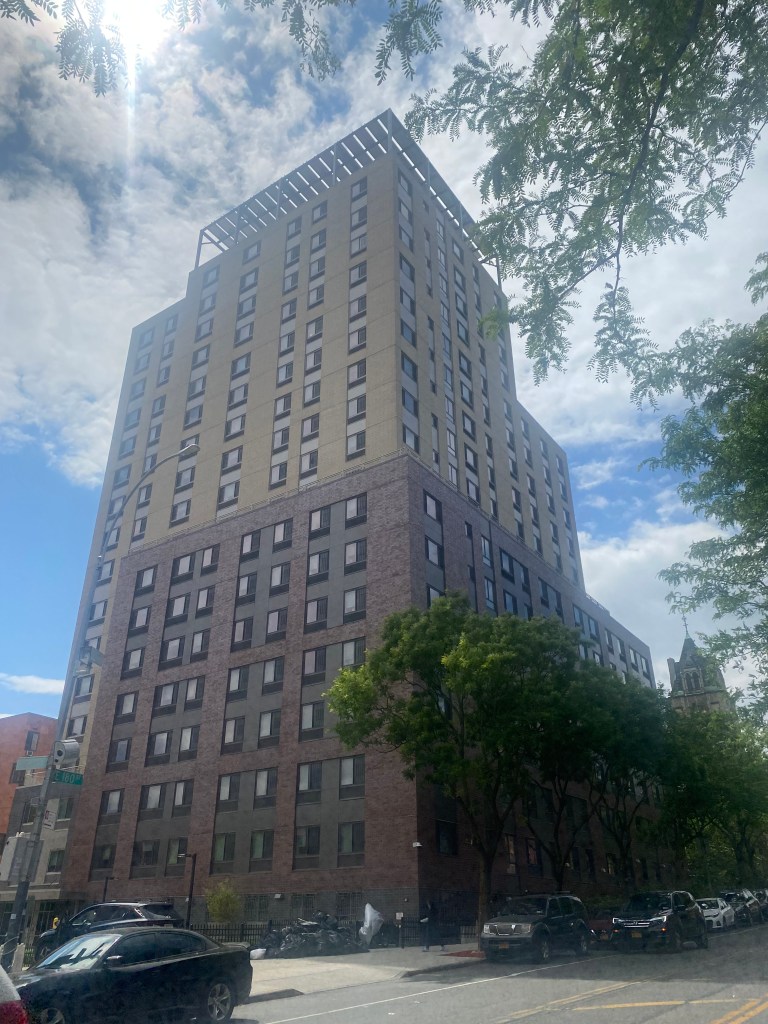
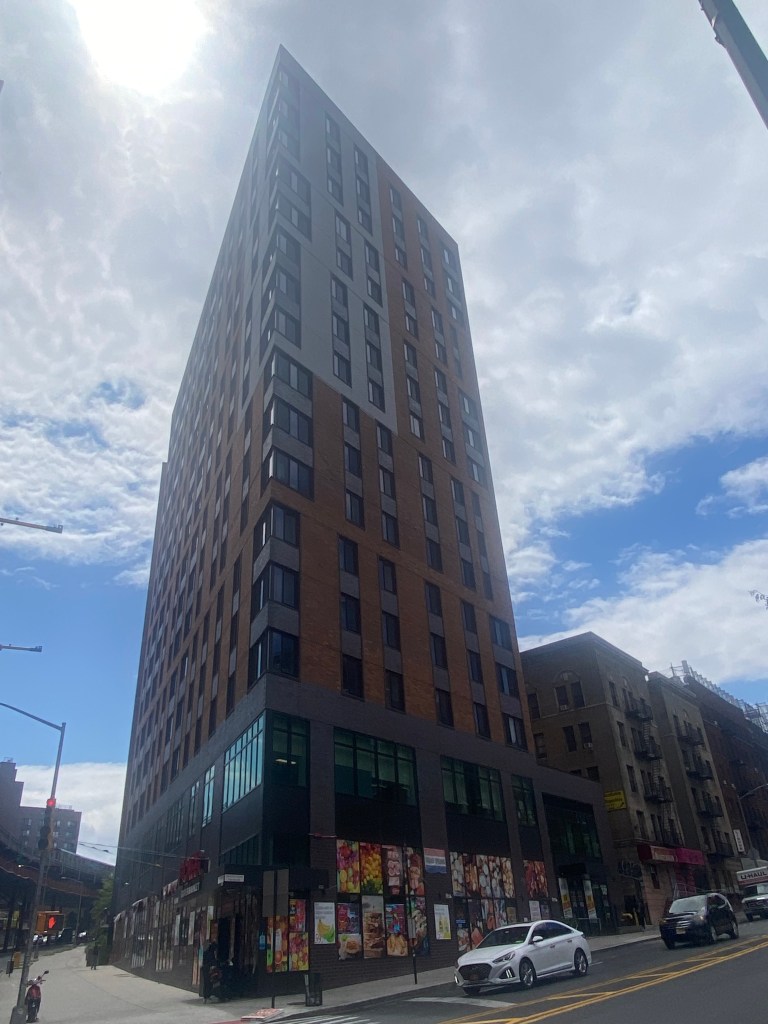
Thus, Phipps Houses is currently working on a 15-year, $600 million redevelopment of the complex to replace all of the buildings in the Lambert Houses complex with larger and more modern buildings to make for a better housing complex for residents. The number of affordable homes in the Lambert Houses will increase by nearly 1,000 to 1,665, and current Lambert Houses residents will be relocated to new buildings as well as throughout the development as the construction process continues. 728 of the units will be reserved for households that qualify for Section 8 rent assistance, while the rest will be available for those at various levels of the area median income(AMI). The first phase was already completed in August 2019 with an 18-story, 163-unit building at East 180th St between Boston Rd and Vyse Avenue at 988 E 180th St. The building includes 113 units reserved at the time by previous Lambert Houses residents and another 49 for other low-income households selected by the Housing Connect lottery. According to an NYC Department of Housing Preservation and Development(HPD) press release, this building was financed through the HPD and the NYC Housing Development Corporation(HDC)’s ELLA program for extremely low-income households in addition to the Mandatory Housing Inclusion program so that the homes will be permanently affordable to residents.
988 E 180th St as seen from the intersection of E 180th St/Bryant Av.
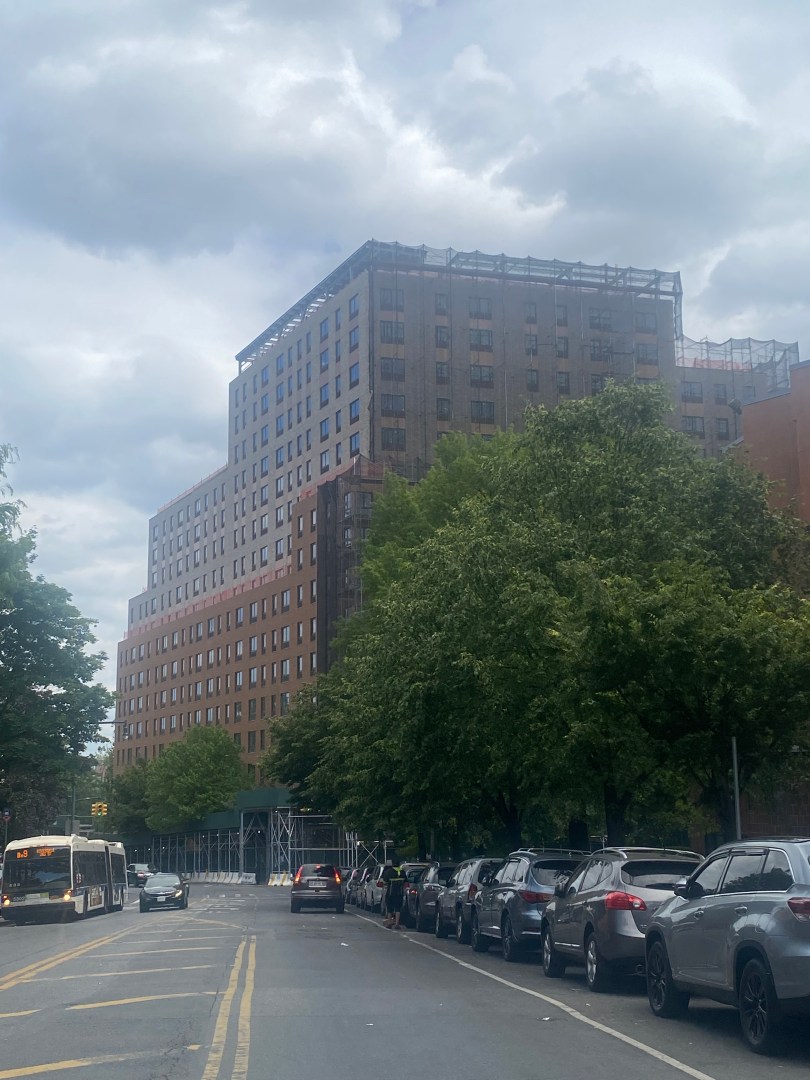
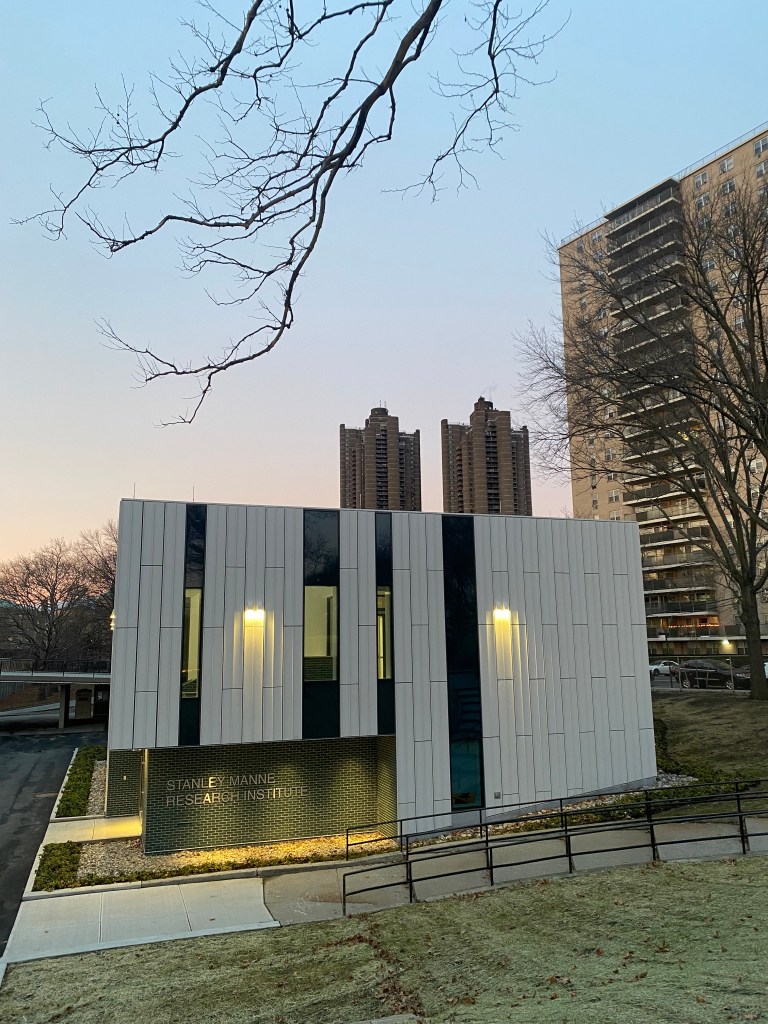
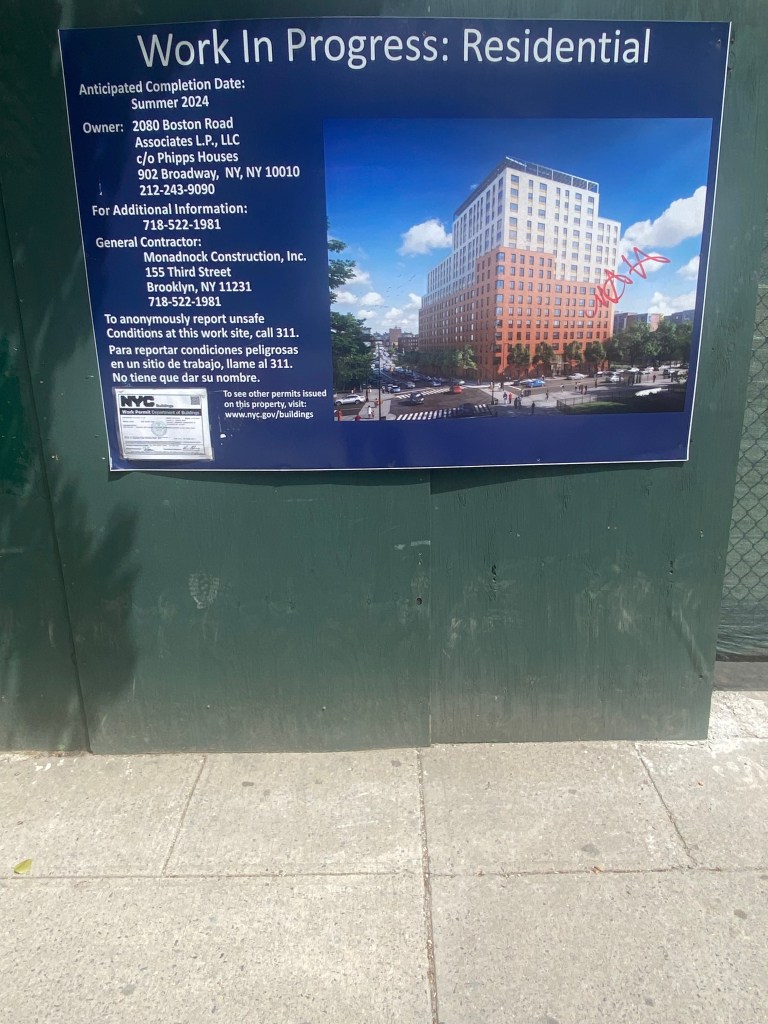
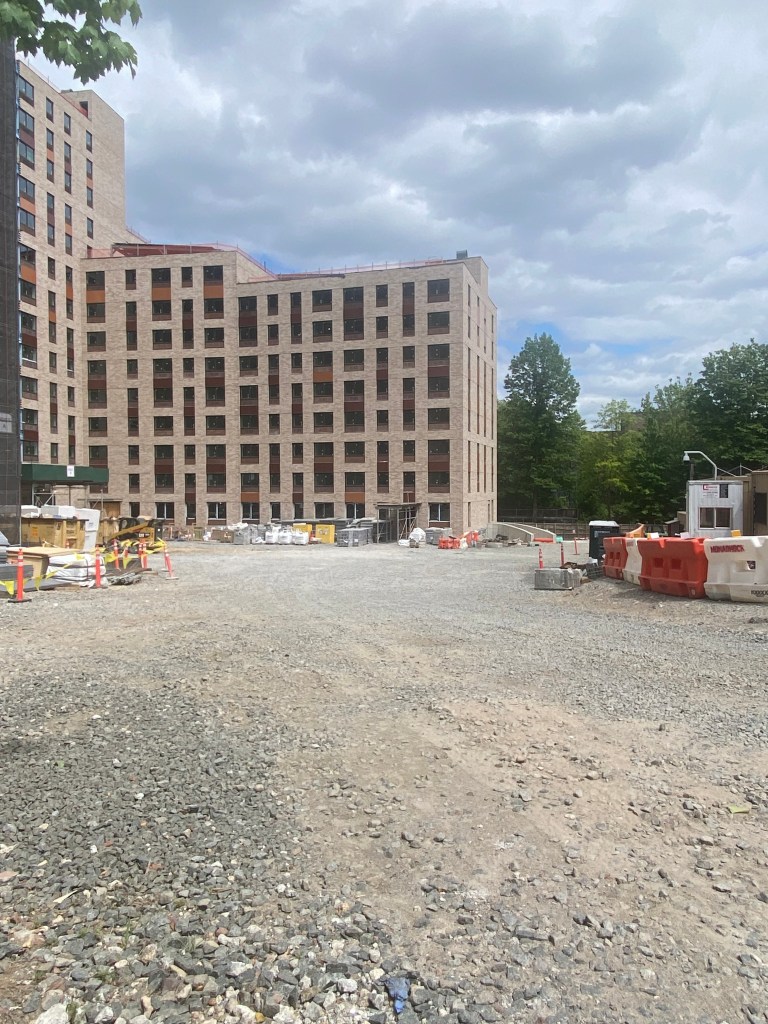
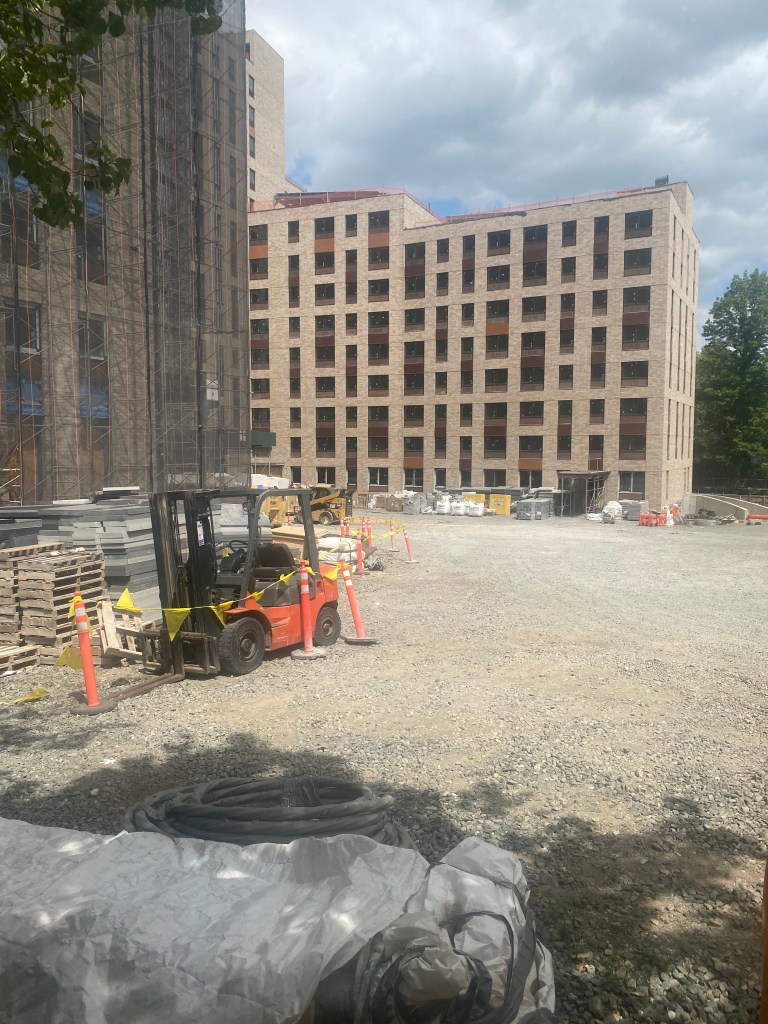
Now, Phipps Houses is working on the second phase of the project, which includes the construction of a 16-story, 321-unit residential building on Boston Rd between E 179th and E 180th Sts at 2080 Boston Rd with 279 units for current Lambert Houses residents and 42 units for those who have recently homeless. The building will include several amenities such as a gym, children’s room, bike room, and more. The first phase of the project, along with this phase, is, being designed by Dattner Architects, who have designed several notable Bronx buildings such as the Bronx Library Center on Kingsbridge Rd, the state-of-the-art research building known as the Manne Institute at the Bronx High School of Science and the Second Farms residential building just blocks from the Lambert Houses. Monadnock Construction, Inc, which has been operating for 48 years and considers affordable housing “a cornerstone of our work” according to its company profile, was responsible for building phase 1 and will also be responsible for building phase 2 of the project.
The Stanley Manne Research Institute at The Bronx High School of Science as seen above was designed by Dattner Architects.Poster details work being done on the second phase of the Lambert Houses redevelopment on 2080 Boston Rd.Construction site of second phase of Lambert Houses Redevelopment at 2080 Boston Rd.A view of the construction site of the second phase of the Lambert Houses Redevelopment at 2080 Boston Rd.2080 Boston Rd as seen from E 180th St/Bryant Av.
In addition to providing better homes for residents, the project aims to better integrate the development into the streetscape and make the environment as a whole better for both residents and visitors. This will occur through the inclusion of new retail and community facilities. However, it has yet to be specified as to when, how, or where in the redevelopment most of this will take place. The only non-residential facility that space has been allotted for the construction of is a space for the School Construction Authority(SCA) to build a school should the need come to fruition.
Streetscape improvements will help to improve mobility around the neighborhood, not only for residents but for anyone who traverses the area. This is because it would help people feel safer and increase the neighborhood’s economic vitality should new retail facilities attract customers. In addition, the improvements would help area businesses to take better advantage of the benefits of being close to a mass transit hub and a major cultural institution in the Bronx Zoo. Additionally, if more people feel safe and comfortable walking in the community, they may be more inclined to visit the Bronx Zoo using mass transit. This might lead to increased zoo patronage and less congestion since the zoo is visited by people from across the city and region.
This project has the potential to not only be an incredibly critical social infrastructure project, but it has the opportunity to be a model to other cities around America as to how to construct affordable transit-oriented development that people from a diverse range of incomes can benefit from. Transit-oriented development is a form of development that is centered around public transport and can consist of residences, businesses, and other destinations that can all be accessed within walking distance of each other. Affordable transit and commodities are critical for residents of New York City and especially The Bronx, where there is a poverty rate of 26.4%, according to U.S Census figures. In addition, since many Bronxites and other lower-income New Yorkers work blue-collar jobs with inflexible and odd hours, having transit and basic needs within walking distance of home is critical to ensure that these New Yorkers can access necessities and mobility given their busy schedule.
While other locations in New York offer convenient access to a subway or bus line or even both, most locations are not accessible by multiple lines, express subway services as well as multiple bus routes that traverse different parts of the city, including a limited stop and select bus service route. The select bus service route available in West Farms is unlike other routes as the Q44-SBS travels well into Queens from The Bronx, providing residents with access to another borough in which one other bus route travels to and from The Bronx. That route, the Q50-LTD, travels to Queens from the Eastern Bronx and would likely not be a practical commuting option for West Farms residents.
The premium transportation access offered near the Lambert Houses compared to similarly affordable neighborhoods is not only premium, but it is also almost unheard of as a lot of housing offered near subway stations featuring even one line is often higher than rents in other places. According to SpatilityBlog, median rents decrease between 9-15% in all boroughs when one lives at least a 10-minute walk from a subway station. It is important to consider data for all boroughs, as when one is looking for affordable housing, the process is often selective. This is because often, there are thousands of applications for affordable units at any given location, making affordable housing difficult to obtain regardless of transit access in the area. When looking up options to apply for any affordable housing lotteries on the NYC Housing Connect website, I found that only 38 rental properties were available to apply to, with 11 in The Bronx, 18 in Brooklyn, 3 in Manhattan, 6 in Queens and none in Staten Island as of June 30th, 2023. Competition in reference to purchasing an apartment is also typically stiffer in Real Estate for apartments closer to the subway. Thus, it would not be surprising if it was even more challenging to find affordable housing in these areas.
Many(but not all) NYCHA(New York City Housing Authority) developments are located in close proximity to subway stations across the five boroughs. However, not only are they also difficult to get into with the Coalition For The Homeless saying on their website, “…it is impossible to predict how long an applicant might be on the waiting list before being reached for an apartment offer,” but they are notorious for poor living conditions such as leaking issues, dilapidated heating systems, mold, unreliable elevators and countless other issues throughout residences.
The only thing that some residents might dislike that will be different in the new development, with the exception of taller buildings, will be that there will be 265 fewer parking spots in the new development than there are currently. As 36% of residents in the PUMA(Public Use Microdata Area) in which the development is located have a car, and new residents may be entering from throughout the borough and the city, they may have a variety of mobility needs and thus parking may be hard to come by, particularly with the new and existing businesses, schools and the Bronx Zoo leading to a high demand for parking in the area. Despite the plethora of transit access in the community, many might still use private vehicles to get to places inaccessible by transit, such as much of New York’s suburbs, to run errands or to transport younger children and older people, among other purposes. The complex is also located in close proximity to several major roadways, such as the Bronx River Pkwy, Cross Bronx Expwy, and Sheridan Blvd, which provide ample access to many regional destinations via automobile. However, both current NYC Mayor Eric Adams and former mayor Bill De Blasio’s affordable housing plans “Get Stuff Built” and “Housing New York: A Five-Borough, Ten-Year Plan,” respectively, both call for reductions of stringent parking requirements that increase construction costs and often go unused, particularly in areas with convenient transit access. Hence, it will be interesting to see what happens to the new parking spaces and whether this will lead to parking issues as the construction of the development continues.
The Lambert Houses redevelopment is one of multiple significant affordable housing developments that have or will take place in the West Farms area. The Second Farms Building, also known as 1932 Bryant, is a 15-story, 319-unit affordable housing building located on a large land parcel directly between Bryant Ave, E Tremont Ave, and Boston Rd. The building also includes a Pioneer Supermarket and shared co-working space for tenants, which can be useful during the era of working from home. 50% of the housing units are for neighborhood residents, while 5% are reserved for those with mobility disabilities and municipal employees, respectively, and 2% are for the visually impaired. While it is good that housing is reserved for those with mobility disabilities as many apartment buildings are without elevators in NYC, unfortunately, the West Farms Sq-E Tremont Av station is not ADA-accessible, and there is no immediate plan to make it accessible as part of the MTA’s 2020-24 capital plan. However, these residents are still a short 10-minute bus ride away from the ADA-accessible E 180th St station, which is one subway stop away via the Bx40/42 or Bx21 buses, which still provides them with more convenient access to an ADA-accessible subway station than many locations. There is also storage in the building for up to 160 bicycles, making it convenient bike storage for anyone who wants to take advantage of the numerous bike trails in the area, such as the nearby Bronx Park, Crotona Park, and Starlight Park, which provide connections to other communities throughout The Bronx. The building also includes outdoor recreation spaces for the enjoyment of residents. Several other developments with over ten stories, 100 affordable housing units, and resident amenities similar to the others mentioned have also opened in the area in recent years, such as 1923 West Farms Rd and 913 E Tremont Avenue.
Second Farms building as seen on the corner of Boston Rd/E Tremont Av. Note: Building is significantly wider than what is seen from this perspective.
The West Farms neighborhood has come a long way since affordable housing developments began to be built in droves throughout the community. As an indicator, these Google Street View images show the neighborhood as seen from the Cross Bronx Expwy in August 2016 compared to March 2022. When comparing the images, you can see several notable structures such as P.S 6X The West Farms School, a portion of the 1010 E 178th St NYCHA Development, and even the elevated subway line above Boston Rd where the 2 and 5 trains run are no longer visible. As the neighborhood population increases in density due to the influx of affordable development, the neighborhood can become an example where residents can enjoy convenient access to transit, quality residential amenities, and the benefits of a walkable community at an affordable price. It may even be possible that more developments like the Lambert Houses and the other developments in the West Farms community can be the key to solving New York’s housing crisis.
White Plains is the County Seat of Westchester County which is a densely populated suburban county north of New York City home to about 1 million residents. It is also has a population of around 60,000 and is a major reverse commute destination. Thus, it is no surprise that Downtown White Plains has been one of the county’s major commercial centers known for its plethora of retail, dining and entertainment options as well as offices; including government offices and the offices of major corporations.
It is also one of the main transit hubs in Westchester County, being served by many Bee-Line Bus routes that traverse the county as well as a CTTransit bus to Stamford, CT as well as several HudsonLink bus routes to Rockland County. In addition, it is home to the White Plains Metro-North(MNR) station, which provides both local and express service on the MNR Harlem Line to Grand Central Terminal in Midtown Manhattan as well as as far north as Wassaic, New York in Dutchess County. The station is about 40 minutes to Grand Central Terminal, making Manhattan very accessible from White Plains. Given the amount of activity in White Plains as well as proximity to other activity centers throughout the region including NYC, White Plains is the busiest MNR station in Westchester County and is one of the busiest MNR stations in the Metro-North system.
With all of these favorable transportation connections, White Plains wants to capitalize on it by developing a transit-oriented development(TOD) scheme that will help to increase economic growth and liveliness in the Downtown area. They will do this by creating a transit district in the immediate vicinity of the White Plains MNR station that emphasizes the principles of quality placemaking, open space, cycling/pedestrian infrastructure, sound economic development and parking.
The Bedford Park-Lehman College area is one of the largest transit hubs in The Bronx. The area has access to 6 bus lines as well as the 4, B and D trains also within a 10 minute walk. Many of the major destinations here are educational institutions including the Bronx High School of Science, Lehman College and High School Of American Studies at Lehman College. Transit is very important to the community thriving as many students who attend these schools come from all over the city and use transit to get to the area.
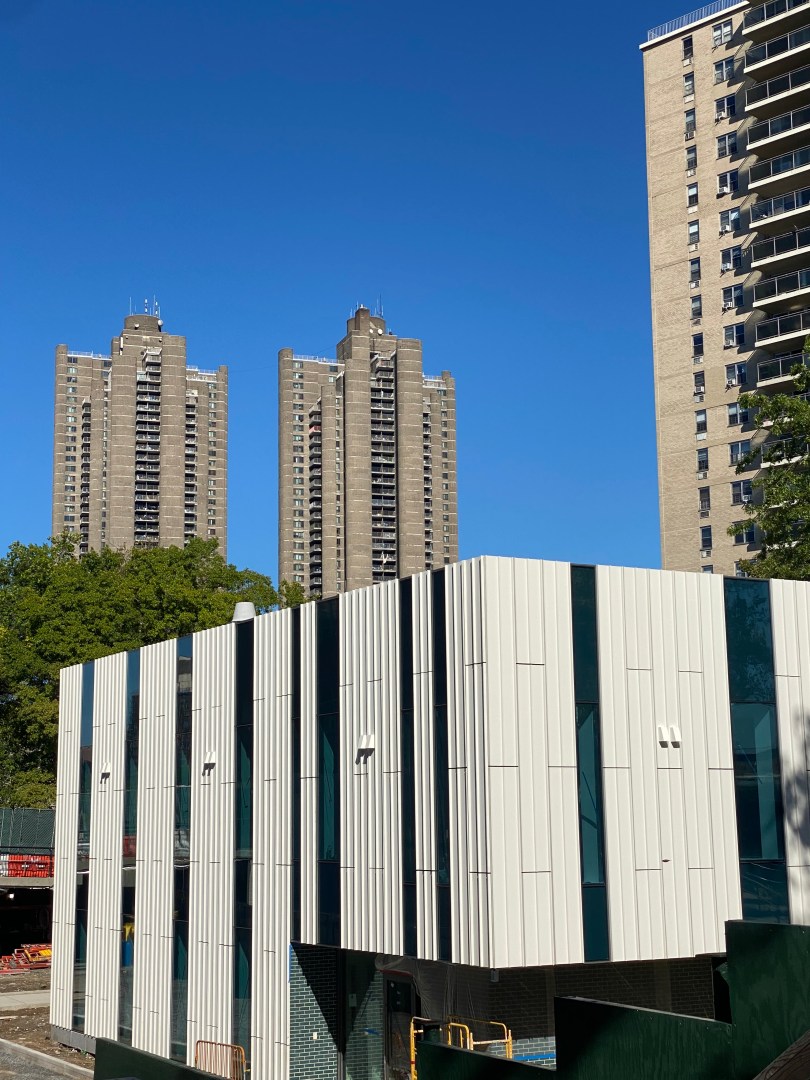
Outside of students, the area is largely frequented by those transferring from bus to bus. When transferring at the Paul Av/W 205th St stop, across the street from The Bronx High School Of Science, many riders may notice what appears to be a massive construction site. Look a little closer, and you will notice a unique, modern building with glass windows around it. So many riders may wonder, what will this building be used for?
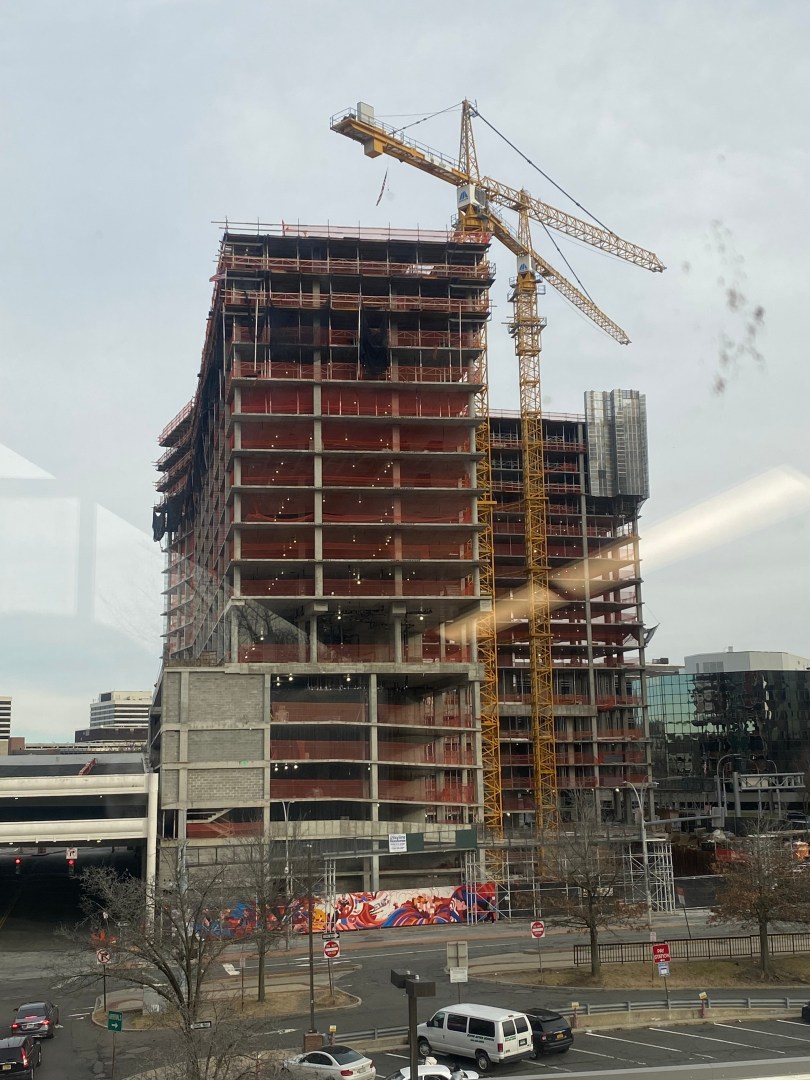
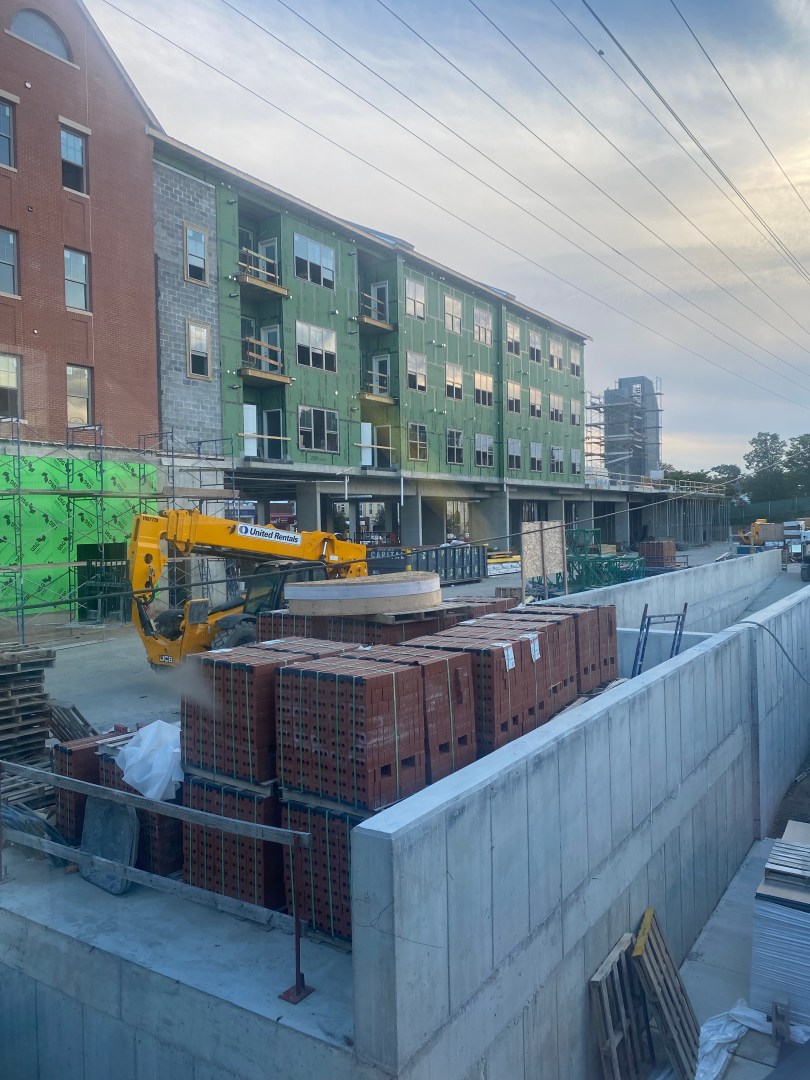
Downtown Harrison, NY is a part of the Town Of Harrison and has very strong connections to regional transportation routes. With 3 interstate highways nearby as well as being a 35-40 minute Metro-North ride from Manhattan, Downtown Harrison has the transportation connections to be a vibrant suburban downtown and be attractive to both visitors and residents alike. However, between the nearby Downtowns of Rye and Port Chester having some of the same services and then some as Downtown Harrison along with the cities of New Rochelle, White Plains and Stamford, CT all being with a 10-20 minute drive from Downtown Harrison, Harrison has felt the need to set itself apart from these areas. This task is made even more imperative by the fact that Harrison is the 326th most wealthy municipality in the U.S. and most residents have access to a car, so residents have many choices on where to spend their money. Thus, Harrison is now attempting to revitalize its Downtown primarily by increasing the variety of businesses, increasing the amount of residential presence Downtown and creating a stronger sense of place. While Transit-Oriented Development may support these goals to an extent, it may have some shortcomings.



 Transit Central