Several Stations Along the Jamaica Line Are Getting Substantial Improvements

By Joseph Morales

      The Jamaica Line(J, Z trains) is a critical transportation asset in Brooklyn and Queens, connecting parts of Southern Queens and Northern Brooklyn with Lower Manhattan, serving thousands of riders daily.

             Most of the line is elevated except the two stations(Sutphin Blvd-Archer Av-JFK Airport and Jamaica Center Parsons/Archer) and its eastern terminus. Much of this elevated portion runs above Jamaica Ave between the Cypress Hills station in Brooklyn and the 121st Street station in Queens. Most stations along this portion of the line were opened between 1917 and 1918 except for Cypress Hills, which opened in 1893 as it was originally constructed under the Brooklyn Elevated Railroad’s extension of its Lexington Avenue Line. In contrast, the other stations in Queens were opened by a separate company known as the Brooklyn Union Elevated Railroad. During this era, all subway lines were run by private companies with their own fare payment systems.

Read More »

CBTC Installation Might Be Icing On The Cake For Recent G Train Upgrades

By Joseph Morales

The G Train(Brooklyn-Queens Crosstown Line) is unique because it is the only subway line outside of shuttles that does not enter Manhattan. Nevertheless, it serves some of the busiest and fastest growing neighborhoods in Brooklyn and Queens, connecting Long Island City to Williamsburg, Downtown Brooklyn, Park Slope and more. Long perceived as a low ridership route with trains having only 5 cars versus the typical 8-10, ridership has increased as neighborhoods have grown and residents and jobs came with it. According to census data obtained by Spectrum News 1, state assembly districts the G passes through  have seen an increase in population between 3.7 and 22.3% between 2011 and 2021. The population of Williamsburg/Greenpoint which is along along the G train grew by 26% between 2010 and 2020. Also, in the five years prior to the pandemic G train ridership rose 15%.  Thus, the need for travel is increasing along the line and the G train will continue to be an important connector between some of the most rapidly growing areas of the city.

Read More »

What Is The Future of the Abandoned BallPark SIR station? Could It Reopen Full Time Some Day?

By Joseph Morales

    The BallPark Station on the Staten Island Railway(SIR) is a station north of the SIR’s terminus at the St.George Ferry Terminal next to the Richmond County Bank Ballpark and the Empire Outlets. This station had opened on June 24, 2001 in coordination with the beginning of the season for the now defunct  Staten Island Yankees baseball team, the former Short Season A affiliate of the New York Yankees, that served to transport riders to baseball games at the 7,000-seat stadium. The station only served trains on game days.

Read More »

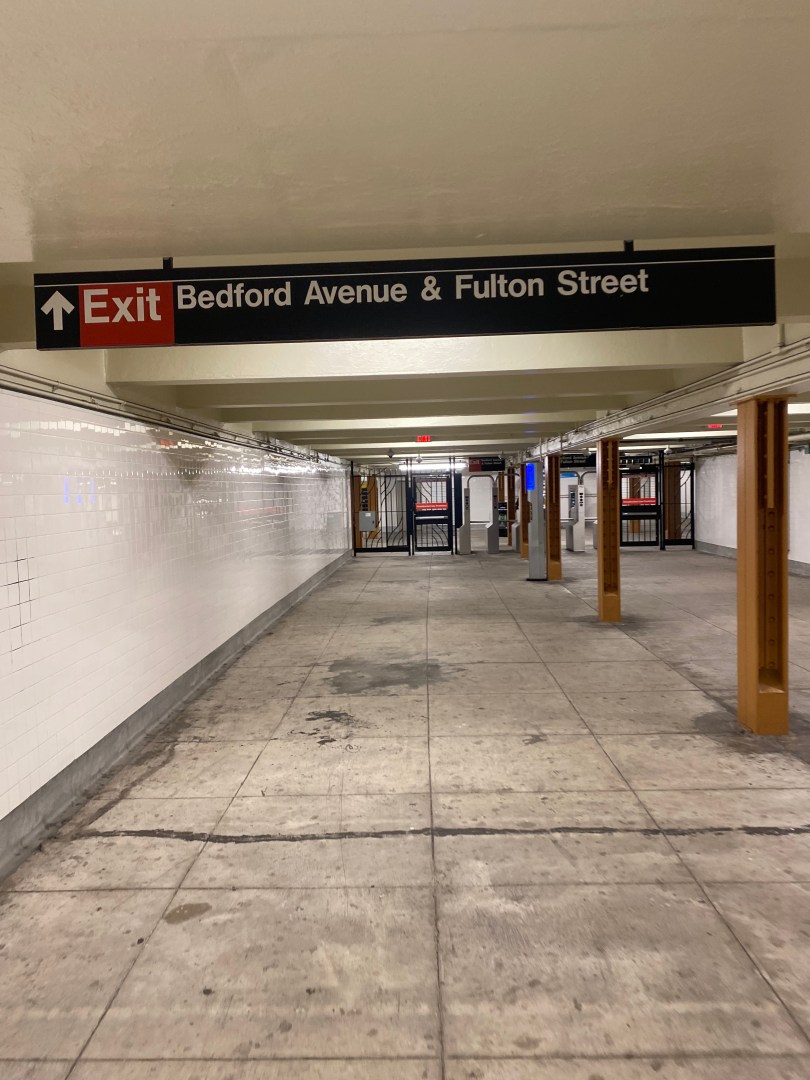
Station Entrances to Busy Nostrand Ave Station Opened 2 Years Ago A Day From Today. What Might Happen To Other Entrances Closed During The Same Era?

By Joseph Morales

The Nostrand Avenue Station on the Fulton Line(A,C trains) is located under Fulton St between Nostrand and Bedford Avenues in the Bedford-Stuyvesant section of Brooklyn. The area immediately surrounding the station is known for being a busy commercial strip with a combination of high-density residential buildings and retail stores. The station also provides transfer between local and express trains along the Fulton Line as well as the Eighth Avenue Line in Manhattan, in addition to transfers to the B25 and B26 buses along with the B44-LCL/SBS. The station is also a short walk away from the Nostrand Ave LIRR station.

                 Though the station and surrounding community have always been extremely busy, two spacious entrances on Bedford Ave/Fulton St had been closed and abandoned between 1991 and 2021 after the NYPD Transit Bureau determined that they could not provide enough police in the entrances in order to protect straphangers when subway crime was considered out of control in New York City. 

Read More »

Washington Heights Subway Station Entrance Gets Total Facelift From NYCDOT.

By Joseph Morales

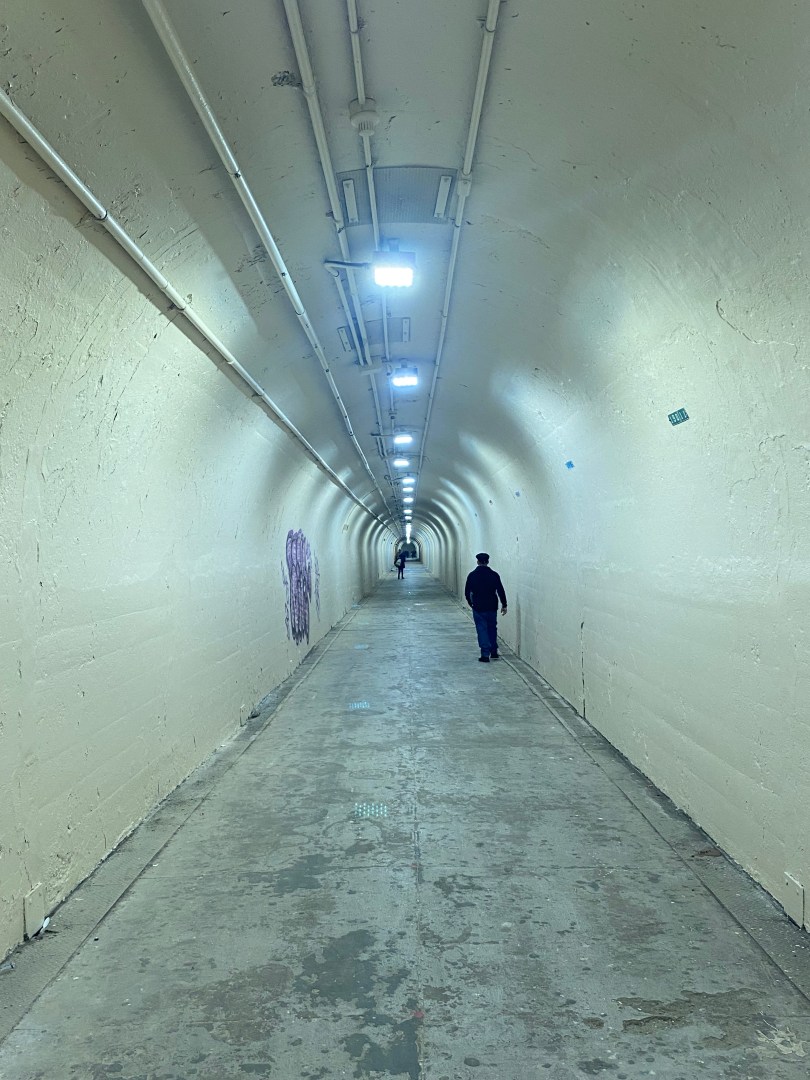
The 191st St Station on the 1 Train is known for its dilapidated and even dangerous conditions by some. This is largely because of the poor condition of a 1,000 foot long tunnel that serves as the entrance to the station from Broadway and West 191st Street. In addition to serving as a subway entrance, many walking in the community use it to get between Broadway and St. Nicholas Ave to avoid having to walk through steep hills on Fairview Ave or the desolate Gorman Park as one does not need to pay the subway fare for the sole purpose of using the tunnel. It is also worth noting that since the tunnel is technically considered a “tunnel street” it is controlled by the NYCDOT rather than the MTA. It is the only street of its kind in NYC.

Read More »

The MTA Is Evaluating Subway Extension to Red Hook That Could Drastically Improve Mobility In The Area

By Joseph Morales

  Red Hook, Brooklyn is an area with a very rich history as one of the busiest industrial neighborhoods in NYC. Now, it is a densely-populated residential community with a growing arts scene and a wide variety of businesses including an IKEA store. A substantial number of Red Hook residents live in the Red Hook East and Red Hook West NYCHA complexes, which is the largest public housing development in Brooklyn and one of the largest public housing complexes in New York City.

             Unfortunately, Red Hook can be a difficult place to travel to and from via public transportation. Red Hook is one of the few Western Brooklyn neighborhoods to not have subway access and bus service is limited. There are two MTA bus routes that operate in Red Hook, the B61 which travels from Park Slope through Red Hook to Downtown Brooklyn as well as the B57 which goes from the IKEA store in Red Hook to Maspeth, Queens primarily via Court Street through Red Hook and Cobble Hill and Flushing Avenue from Downtown Brooklyn to Maspeth. Despite being overcrowded sometimes, the B57 and B61 are not very frequent.(You can check out the schedules for these buses here:(B57)https://new.mta.info/document/7121 (B61) https://new.mta.info/document/7131These routes are also considered to be slow and unreliable. The B57 averaged speeds of 6.5-7.0 with a CJTP(Customer Journey Time Performance) of 56.2-70.6% each month between July 2021-2022. These numbers are lower than the Brooklyn averages of 7.0-7.3 mph and 65.5-74.8% each month in the same timeframe. While the B61 averaged higher speeds than the Brooklyn average of 7.3-7.8 mph each month as well as a pretty much average CJTP of 65.4-78.6%, it received a D on its latest report card from the Bus Turnaround Coalition, an advocacy group that fights for better bus service in NYC. This was in large part due to its 1 in 8 bunch rate, which was higher than 88.5% of NYC bus routes. A bus is considered bunched if it arrives within 25% of the bus that is supposed to come after them on its route. In addition, this route had a 53% on-time rate which was worse than 73.5% of NYC bus routes. CJTP measures what percentage of buses arrive at key destinations along its route within five minutes of its schedule. 

Read More »

MTA Is Working To Make Two Busy Bronx Subway Stations Accessible

By Joseph Morales

           The New York City Subway is among the busiest subway systems in the World. During 2021, the system served approximately 2.4 million riders daily, though this total represented only about 45% of pre-pandemic levels.  NYC’s Subway system provides the freedom for most of its riders to get around to many points of the city through its 472 stations across its 24 subway routes and 3 shuttle services. 

             Unfortunately, for those with mobility disabilities only 24% of these stations are ADA-accessible. This tally might even include stations that are only accessible in one direction or do not allow for ADA-Accessible transfers or the ability for one to use every route in a station. This forced many with accessibility needs to take buses to and from accessible stations, use the woefully unreliable Access-A-Ride system or skip out on their trips entirely. This leads to many people missing out on jobs , recreation and other opportunities as well as other daily activities.

Read More »

  The Train Of Many Colors Is Back On The NYC Subway

By Joseph Morales

            The New York City Transit Museum ran its first run of The Train of Many Colors this year on the 1 line between 137th St-City College and Chambers St in Manhattan. The train features subway cars with multiple different colors that were manufactured in the 1960’s and served through different eras of the New York City Subway system and were retired as recently as 2003. These cars were the R-33, R-33WF(World’s Fair) and R-36 cars. Cars with the Kale Green “Green Machines”,“Tartar Red” and “Gunn Red” Redbird, two-tone robin’s egg blue and cream “Bluebird” as well as the blue-and-silver “Platinum Mist” color schemes were all featured on the train and these schemes are all likely familiar to most adult New Yorkers. The train also featured special holiday decorations which included some paper snowflakes on the windows as well as a special snowflake designed wreath at the front of the train. 

Read More »

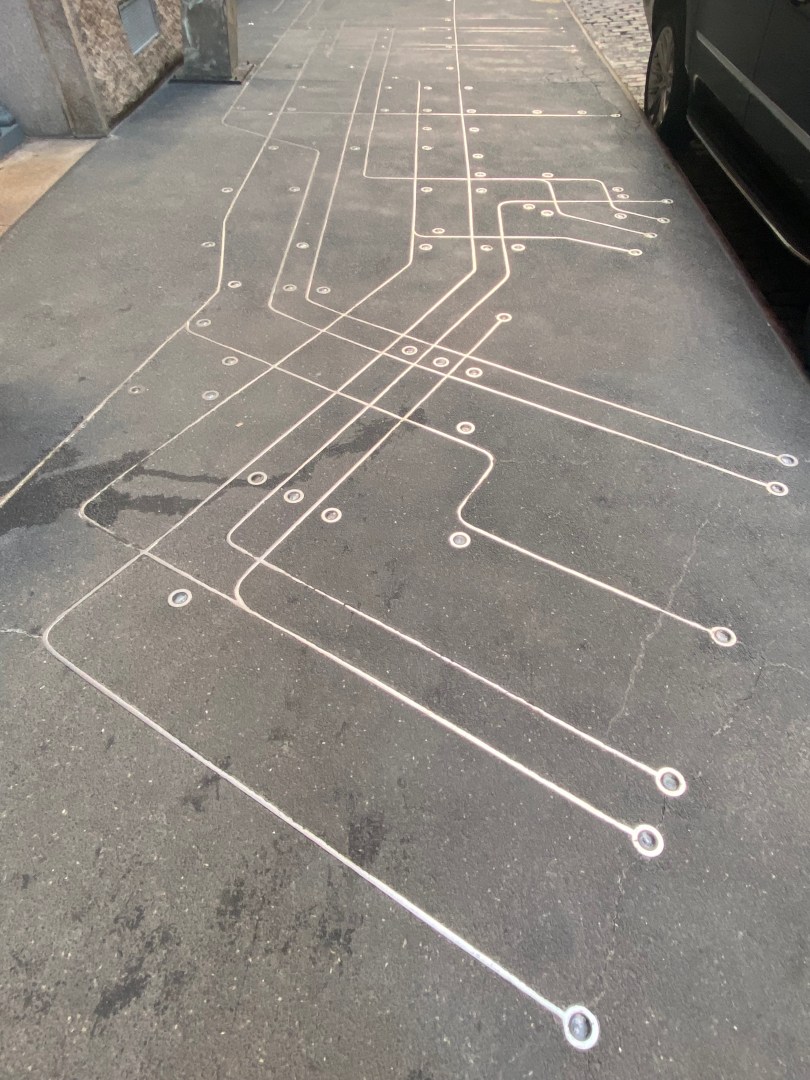
Story of Sidewalk Subway Map in SoHo

By Joseph Morales

  SoHo is a unique and vibrant neighborhood full of designer boutiques, high-end chain stores and countless compelling art galleries. If you walk around long enough, you may notice what appears to be a floating subway map on the sidewalk on Greene Street between Prince and Spring Streets outside of the SoHo building, just blocks from the Apple Store as well as multiple subway stations. This distinguished and relatable work of art for many New Yorkers has a rich history that started when a building owner wanted to help make a difference with a city and subway system in crisis during the late 1970’s.

Read More »

The Fair Fares Program Provides Half-Priced Transit Fares to Low-Income New Yorkers. Why Haven’t More People Signed Up?

By Joseph Morales

(Link to sign up for Fair Fares is at the bottom of the article upon pressing Read More)

In 2019, NYC Mayor Bill De Blasio and the New York City Council announced the Fair Fares Program to make the MTA’s subway and bus services as well as Access-A-Ride affordable to low-income New Yorkers by offering riders either half-priced MetroCards or Access-A Ride fares to help cover daily transportation costs. The city currently has about $75 million dollars targeted to the program which gives New Yorkers living below the federal poverty threshold the opportunity to obtain half-priced MetroCards with all fare options available(Pay-Per Ride, 7 and 30 day unlimited, etc.) The program which has been fully operational for almost the last two and a half years has been able to serve over 270,006 riders according to the fair fares website. It has changed the lives of many, take for instance Derek Jimenez, an East Harlem resident who works a maintenance job that pays about $1,000 a month($12,000 a year) who told the New York Times in February that now his money stretches further. He told them that though he was able to afford certain things like a guitar he got on sale, that he mostly saves the money. “I hold onto it for now, for rainy days. The economy is really hurting.”  Though the program has had some success, it is astonishing that only 270,006 people are enrolled out of the approximately 700,000 people eligible, which is less than half of all eligible New Yorkers. That is up from only 257,004 as of January 2021. There are a number of reasons, but many are rooted in the systemic inequities that low-income residents of New York City continue to persevere through on a daily basis.

Read More »