The 68th St-Hunter College station on the 6 train is one of the busier subway stations on Manhattan’s Upper East Side(UES). The station is the primary station serving its namesake Hunter College and its tens of thousands of students and faculty. Outside of the college, the station is within walking distance of several important destinations such as the Central Park Zoo, the Asia Society and Museum and the Hospital for Special Surgery. The station is also located in one of NYC’s most populated and congested residential communities. In addition, data from the NYC Department of City Planning shows that only 30% of UES residents own cars. This coupled with the various destinations the station serves leads to 20,000 riders relying on it daily based on MTA figures.
Church Avenue is one of the busiest commercial corridors in Central Brooklyn. The street is lined with a plethora of retailers and restaurants. They include everything from large national chains to ethnic offerings from around the world. The corridor also sits just two blocks away from Prospect Park and its largest cluster of sports fields in the Prospect Park Parade Grounds.
The J and Z trains(Jamaica Line) is an important line in the NYC Subway System. They are among the primary routes connecting some of Brooklyn’s busiest neighborhoods such as Bedford-Stuyvesant, Bushwick and Williamsburg to each other and Manhattan. In addition, the line travels into Queens, also serving densely populated communities along Jamaica Ave. Also, the Jamaica Line serves the Broadway Junction/East New York and Downtown Jamaica Commuter Hubs, which provide riders a plethora of connections for travel across the NY Region. As a result of these factors, the Jamaica Line serves over 62,000 riders daily.
The Fulton Line(A,C) is a critical subway line that runs through the heart of Brooklyn. One of only two east-west lines in the borough, the Fulton Line runs across Fulton St in Brooklyn from Jay St-MetroTech to Euclid Ave before entering Queens and traveling to the Rockaways. In Brooklyn, the line connects several of the borough’s most densely populated neighborhoods, such as East New York, Bedford-Stuyvesant, and Downtown Brooklyn. The line also provides riders with access to various parts of Manhattan and Queens. In addition, riders can make connections to many other subway and bus routes. This includes some of Brooklyn’s busier bus routes, such as the B44-SBS(Bedford/Nostrand Ave), B46-SBS(Utica Ave), and the B60(Rockaway Ave).
Entrance to Nostrand Ave(A,C) station in Bed-Stuy, Brooklyn.Signage directing riders to trains at Nostrand Av(A,C) station.Read More »
Manhattan, the most transit-dependent borough in New York City, is a hub of activity. Its relentless gridlock makes the NYC Subway critical for the mobility of New Yorkers and tourists alike. According to data from the NYC Department of City Planning, 77% of Manhattanites and 54% of all NYC residents do not own a car, making the subway not just a more convenient option but a necessity for a significant portion of Manhattan and the city’s population.
The Nostrand Avenue Line is a busy subway line in Brooklyn. The line runs from Franklin Ave-Medgar Avenue College and Flatbush Av-Brooklyn College and is served by the 2 and 5 lines. The Nostrand Avenue Line connects several densely populated neighborhoods in Central Brooklyn, such as Midwood, Flatbush, and Prospect Lefferts Gardens. Additionally, the line provides connections to both local and express service on the Eastern Pkwy Line(2,3,4,5), which provides access to even more destinations across Brooklyn and Manhattan. Overall, the line served over 35,000 riders per day in 2022 according to MTA statistics.
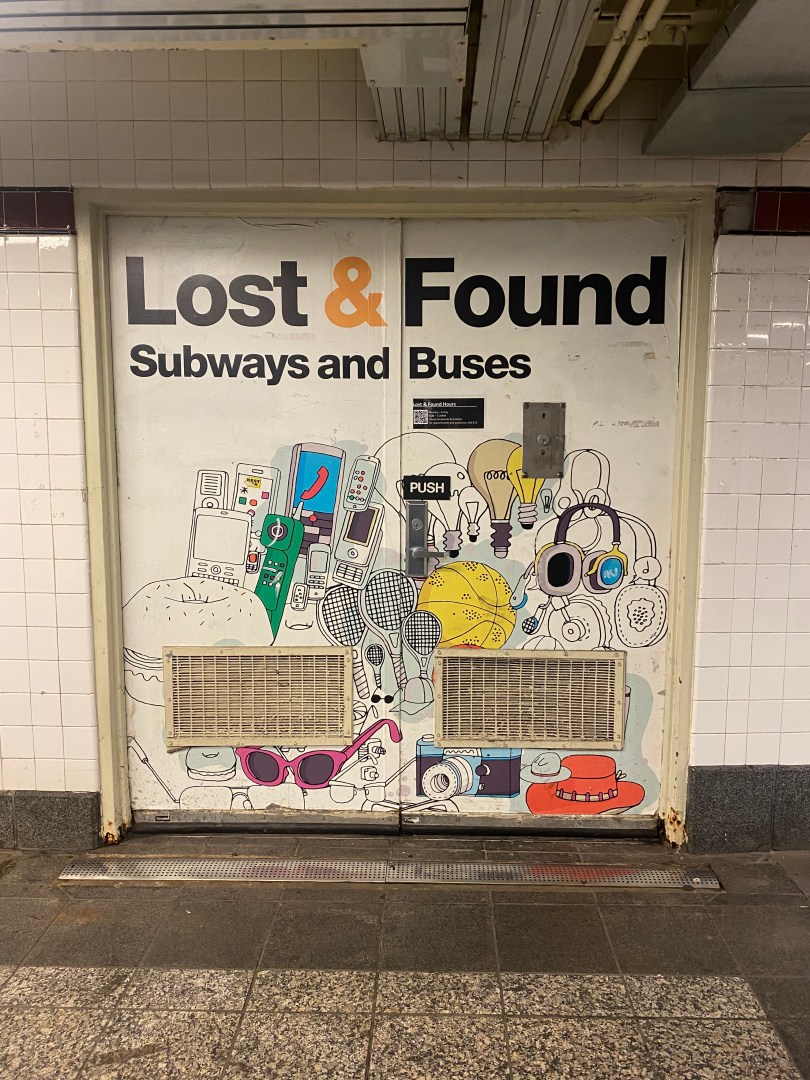
The buses and subways are crucial to mobility in New York City, serving millions of passengers daily. Given the size of the system, people generally keep their personal belongings safe, fearing they will not be able to retrieve an item if it is lost. When most people do lose something, they almost always think there is zero chance of getting it back.
This is absolutely not the case, as the MTA actually has a robust lost-and-found system that not many people know about. In this tutorial, I’ll show you how to retrieve items lost on mass transit and where to go to get your stuff back!
The Queens Boulevard Line(QBL) is a busy subway line running along Queens Blvd in Queens. It serves four subway routes and connects several densely populated areas of Queens such as Jamaica, Jackson Heights and Long Island City. In addition, each subway route provides unique connections to parts of Manhattan and Brooklyn. The subway is critical for mobility along Queens Blvd as only 41-56% of households in most community districts surrounding Queens Blvd have a car. Even those who do drive may opt for the subway due to the congestion and parking difficulties associated with driving into Manhattan and even parts of Queens. For these reasons and more, almost 257,000 riders rode the Queens Blvd Line daily in 2022.
Columbus Circle is one of Midtown’s several large public spaces with a subway station directly in its name. The 59th St-Columbus Circle station serves five subway routes providing both local and express service on the West Side of Manhattan. Additionally, the station provides direct connections to many areas of the city in the outer boroughs. While Columbus Circle isn’t known for glaring lights or iconic ice skating rinks the way other spots are, Columbus Circle does have several special places to visit.
The NYC Subway is the lifeblood of New York City and one of the primary ways people get around. In 2022, 3.2 million people rode the subway daily in 2022 despite hybrid/remote work being more common. While the subway is often the best way to travel, many New Yorkers hate riding it due to delays, cleanliness and a slew of other issues. On top of that, New Yorkers are considered by some to be among the most stressed out people in America. A study from the research firm William Russell considered the NYC the most stressed city in America for several reasons including its high cost of living. A TimeOut article on the topic even mentioned “perennial subway delays” in a sentence on stressors that are just so common here in our city. You can check out that article here: https://www.timeout.com/newyork/news/nyc-is-officially-the-most-stressed-out-city-in-the-united-states-011222
Given these circumstances, you might think New Yorkers would love a coffee, donut or even bacon egg and cheese sandwich to start their work day. It turns out, Dunkin Donuts has this figured out, with locations adjacent to many subway stations throughout the boroughs. They even have three locations within Penn Station and another one in Fulton Center.
These strategic locations are no accident and Dunkin’s franchise selection strategy along with other aspects of its business allow it to take advantage of locations adjacent to transit. For one, out of the donut chain’s five criteria for selecting locations, four of them are directly connected to the transportation infrastructure around them. These include an available drive thru, one parking space per three seats, an easy entrance and exit and having a highly visible location. As for drive thrus and parking spaces, these are likely not weighed as heavily in New York City due to the high percentage of residents that do not drive. However, subway stations definitely support the latter two, as stations tend to be in walkable locations with high foot traffic.
In addition to location itself, the cost and space required to open a Dunkin Donuts is considerably less compared to other fast food chains. This allows the chains to multiply faster in the areas both Dunkin and franchisees see fit. As for cost, the initial investment for a Dunkin Donuts can be anywhere from $121,400-$1,809,500 according to the company website. This is in comparison with $297K-$2.1M for Pizza Hut, $575,600 to $3,370,100 for Taco Bell and $1,314,500 and $2,313,295 for McDonalds. Lower costs are especially beneficial for Dunkin Donuts franchisees given what may be higher rents near subway stations.
Outside of initial costs, Dunkin locations are generally much more flexible as far as space is concerned than other fast food restaurants. Since many Dunkin customers take coffees and small treats to go, there can be varyings eating levels if there is seating at all. There are even Dunkin Donuts locations that function primarily as kiosks such as the one in Fulton Center. Others are standing room only locations such as the one in Marble Hill, Manhattan, and some offer limited seating such as the one on Eastern Pkwy adjacent to the Franklin Av-Medgar Evers College(2,3,4,5) station in Brooklyn. On the other hand, other chains such as McDonalds and Taco Bell need a certain amount of seating and space to accommodate their respective functions as a lunch/dinner spot. In fact, Taco Bell only recently opened a new restaurant variant known as Taco Bell Cantina that is designed to better spatially accommodate urban areas. Taco Bell Head of Public Relations Matt Prince told CNBC in 2019, “So typically when you think of Taco Bell’s you think of suburban and rural areas with drive thru. These are very different. These are in walkable downtown spaces.“ He also stated, “We want to make sure that they feel like they’re part of the community that they’re in and so people come in and feel like they have a unique experience.” With flexible locations in urban areas, Dunkin Donuts had already achieved for years what Taco Bell set out to achieve in 2019 with its Taco Bell Cantina locations.
Dunkin Donuts in smaller storefront adjacent to the Franklin Av-Medgar Evers College(2,3,4,5) station in Brooklyn.Neighborhod-specific signage at Dunkin Donuts in Marble Hill, Manhattan.
While Dunkin’s business model often brings it near subway stations, what has really driven Dunkin’s subway-side boom is what matters most to businesses. This business driver is indeed the customer! Dunkin Donuts are unique in that its business caters directly to the needs of the commuter. In the morning, a subway rider who just had a long commute might want to grab a cup of coffee or a small breakfast item. At the end of the day, a commuter might be in the mood for a donut or one of the chain’s other dessert offerings. The same cannot be said for Popeyes, Taco Bell or most other fast food chains, that specialize in a smaller range of meal options. The closest chain to Dunkin Donuts as far as product diversity is McDonalds with its all-day breakfast as well as lunch/dinner options. However, besides some breakfast items, most of its products are associated with full meals rather than quick bites that could be had before getting on the train. Additionally, while subway stations can help drive traffic for any fast food establishment, these businesses often need other business drivers such as nearby employment and recreational destinations. On the other hand, Dunkin Donuts can cater to a commuter in any community.
As Dunkin Donuts is really popular amongst New Yorkers, it is interesting to think about what allows a business to perform well in any given market. With Dunkin, it’s impressive how their restaurant concept fits perfectly into the needs of New Yorkers and the challenges of operating a business in the city. Thanks to the chain’s versatility, it has been successful near NYC subway stations and across the United States. As a result, Dunkin Donuts has told Americans since its 2006 rebranding, “America Runs On Dunkin!”




 Transit Central