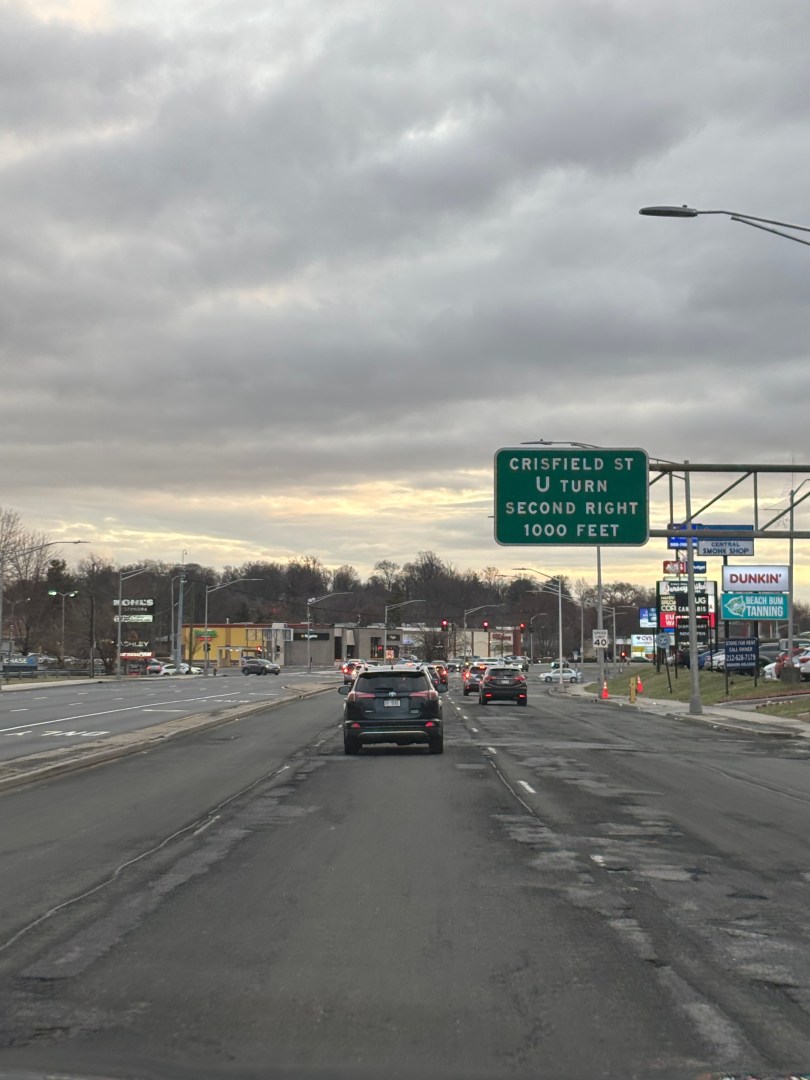
Central Park Avenue is one of the busiest streets in the New York Region outside of New York City. It starts at the Bronx-Westchester line in Yonkers before traversing Lower Westchester to the county seat of White Plains. The street is often referred to as Central Ave and the street is known for being a major shopping corridor with large retail plazas flanking both sides of the roadway. Central Ave also provides direct connections to Ridge Hill and the Cross County Shopping Center, which are among the largest outdoor shopping malls in the New York Metropolitan Area. Non-retail destinations include the Westchester County Center, Empire City Casino and the Nature Center at Greenburgh.
Westchester County is one of the most populated counties in New York’s suburbs. The county is home to almost 1 million residents and features a range of communities. This includes charming villages like Tuckahoe and Ardsley and more bustling urban centers like Yonkers and Mount Vernon. The county also features a plethora of major shopping and recreation hubs. These include New Roc City, Ridge Hill and Downtown White Plains.
The Metro-North Railroad is a commuter rail network with three main lines connecting New York’s northern suburbs with The Bronx and Manhattan. Countless suburban downtowns across the Mid-Hudson Region and Connecticut have been built around Metro-North stations. The network’s hub at Grand Central Terminal gives riders access to Manhattan’s Central Business District. It is here where riders can also transfer to the NYC Subway and the Long Island Rail Road in order to make trips across NYC and the NY Metro region. Overall, the Metro-North has served an average of roughly 230,000 riders daily according to data from October 2024.
Connecticut’s highways are among the busiest in the Northeast. Data from fleet management company, Coast, shows that five of the ten northeast cities with the busiest highways are located in the Constitution State. This makes sense as the state’s highway arteries such as Interstate 95 and 91 are the primary means most have to get between cities or travel significant distances. These also serve as critical travel nodes for anyone trying to traverse the Northeast as CT is directly in between New York and Boston.
The New Haven Line(NHL) of the MTA’s Metro-North Railroad(MNR) is one of the busiest commuter rail lines in the New York area. The NHL is the line that connects Connecticut and parts of Westchester County near the Long Island Sound to New York City. In addition to getting to NYC, many use the line to travel to other growing cities such as New Rochelle, Stamford, and Bridgeport. The line has three branches in addition its main branch that run to Waterbury, New Canaan and Danbury, making the line essential for commuter travel across the state of Connecticut. The operating costs for the main NHL are split between the Connecticut Department of Transportation(CTDOT) and the MTA by a 65%/35% split, respectively. The CTDOT fully bears the cost of operating the line’s branches. In 2023, the NHL was the MTA’s busiest Metro-North Line, with 26.1 million trips despite many people still working from home.
With this high ridership in mind, the MTA and the Connecticut Department of Transportation(CTDOT) worked together to make major service improvements to improve commutes for riders. The most significant of which was the addition of super express trains from New Haven to Grand Central Terminal. These trains run three times during the AM and PM peak periods in the peak direction and only make stops at New Haven, Bridgeport, Stamford and Grand Central. This turned a trip that would almost always take over two hours to one that could be completed in just an hour and 39 minutes when people need to get into Manhattan the most. In comparison, a transit trip from many parts of NYC to Grand Central could take a similar amount of time.
New Haven Line train parked at Grand Central Terminal.
In addition to express trains, the Metro-North added seven more trains a day to the Waterbury Branch, a 47% service increase as a result of infrastructure improvements made to the branch. These new trains have led to service beginning earlier in the morning and there being more trains available during the off-peak hours. This flexibility makes it easier for those with nontraditional work schedules and other obligations in New York City to get there using mass transit. Infrastructure improvements that allowed for the service increase included new signals and tracks, replaced railroad ties and repaired grade crossings.
With both projects being almost two years old, riders definitely seem to be benefiting from the added rail services. A ridership overview given by the MTA during their most MNR/LIRR joint committee meeting partly attributes increased Metro-North ridership to both the new Super Express Trains and Waterbury Branch trains running on the NHL. It is clear that when riders have service options that fit their needs, they utilize them and reap the benefits of faster, easier, and cheaper commutes. This is especially true for Manhattan-bound commuters, given the challenges and costs of driving into the Central Business District. According to a report from the NYC Department of City Planning in 2011, 35% of those who drove into Manhattan did so because of transit schedules, and another 13% did so due to transit stops. These were both among the leading reasons for driving into Manhattan amongst suburban drivers. Hence, the recent Metro-North improvements can go a long way toward continuing to increase transit ridership and reducing congestion in Manhattan as well as major roads such as the Connecticut Turnpike(I-95). Since congestion pricing is on the way, the new services will likely also help CT residents save money on congestion pricing tolls.
Despite these additions being a game-changer for riders, there are numerous signs that even more substantial service upgrades are coming. Both Super Express service and increased Waterbury Branch service were included in some of Governor Ned Lamont’s state budgets and are a part of Lamont’s TIME FOR CT rail initiatives. TIME FOR CT is Governor Lamont’s plan to save CT riders 25 minutes by 2035 through a massive $10-12 billion investment throughout Connecticut’s rail infrastructure.
The plan is split into three major components: service, infrastructure, and “a rail fleet for everyone”. Service essentially includes projects like the Super Express service and the increased Waterbury branch service that provide more travel options to commuters. Infrastructure improvements enhance the systems necessary for quality train service to operate, including tracks, signals, and bridges. Projects under this category include several bridge replacements on the NHL along with the addition of a fourth track near the Milford station. Connecticut’s goal is to allow for train speeds of 90-110 mph while sparking employment and economic growth throughout the state. While 90-110 mph is not the speed of high-speed rail seen across the world, it is still substantially better than the line’s current top speed of 80 mph. Hence, riders will be able to travel much further faster, allowing them to get to more places and access more opportunities. Lastly, “a rail fleet for everyone” will allow for better trains that fully serve the needs of those riding them. This will include ensuring that all trains are fully accessible to riders along with adding dual-mode locomotives to run on NHL branches that would allow for more one-seat rides between branch lines and NYC.
The Time for CT plan has the potential to dramatically change rail travel in the state of Connecticut. As the most recent service changes have already had a major impact on riders, there is no telling how much better the system will become once all projects in the plan are completed. In addition to travel improvements, Connecticut is likely to see transformative economic benefits, too. According to the American Public Transportation Association, every $1 invested in public transportation results in $5 in economic value. Additionally, every $1 billion in transit investment creates about 50,000 jobs. The economic impact could be recognized through various means, such as increased sales for small businesses, new corporations moving into the state, and new transit-oriented developments. Transit-oriented developments are mixed-use developments that include commercial and residential spaces within walking distance of a transit station. Some transit-oriented developments include Darien Commons near the Noroton Heights NHL station and Avalon Harrison, located near the Harrison NHL station, three stops from the CT state line.
Connecticut has and is continuing to show how commuter rail investment can lead to great things on so many levels. It will be interesting to see the full effects of the Time for CT plan, given how it is such a large-scale, comprehensive investment into the New Haven Line. Given the early successes of the plan, optimism is brewing for a new era for commuter rail and enhanced economic activity in the state of Connecticut.
Fazzalaro, James J. “SUMMARY OF MAJOR PROVISIONS OF CONNECTICUT/METRO NORTH RAIL CAR PURCHASE AGREEMENT.” ct.gov, 17 November 2006, https://www.cga.ct.gov/2006/rpt/2006-R-0678.htm. Accessed 8 May 2024.
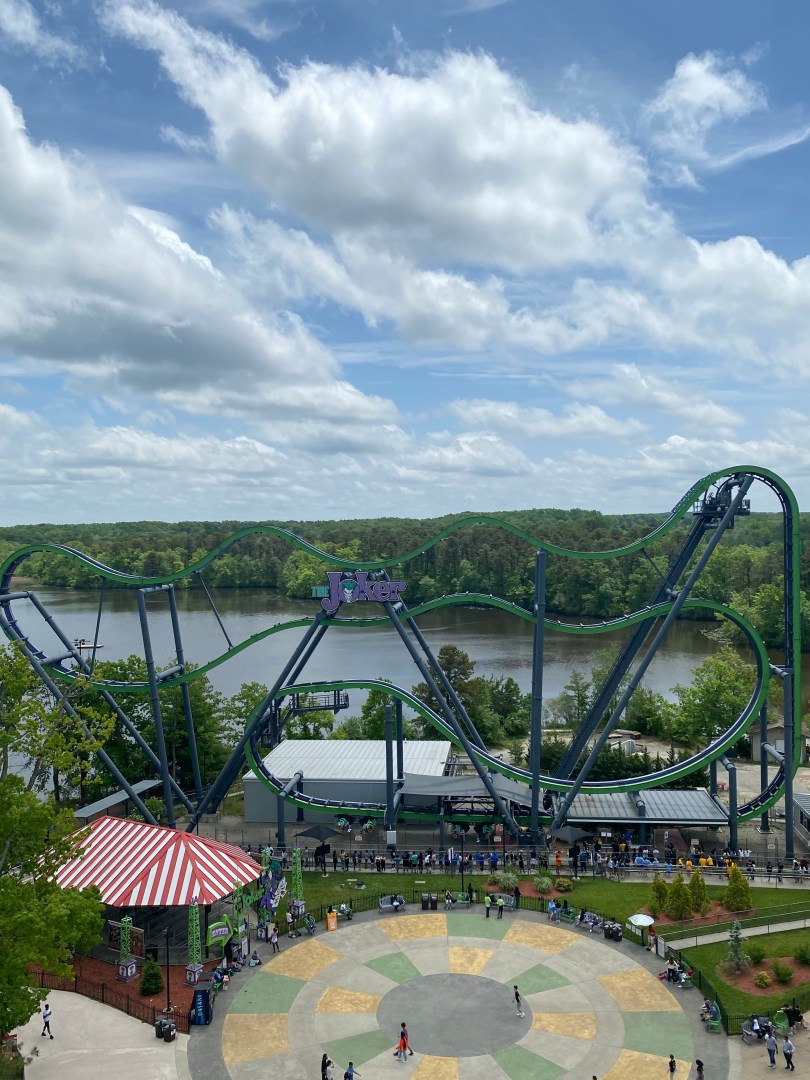
Six Flags Great Adventure is by far one of the most popular amusement parks in the Northeast. Located about 70 miles from NYC, the park is known for its jaw-dropping roller coasters and fantasy-themed rides. In 2021 according to AECOM, Six Flags Great Adventure attracted more than 2.9 million visitors, making it a premier family recreation destination. As COVID-19 concerns have eased since then, the number of visitors in 2022 and 2023 was likely higher.
*Rail service in Rockland/Orange County is run by NJ Transit through a contract with the MTA Metro-North Railroad. Hence, the rail stations in both counties are Metro-North stations despite being served by NJ Transit.
Rockland and Orange Counties are two densely populated suburban counties on the west side of the Hudson River in New York State. Together, the two counties have a population of about 1.7 million residents. As these counties are all suburbs of NYC, many residents commute into the city for work. According to a report from the NYC Department of City Planning, 17% of Rockland County residents and 11% of Orange County residents commute into NYC. The salaries these workers earn in NYC are critical for the economies of their home counties. The same report states that more than a quarter of all wages in Rockland County come from jobs worked in NYC. In Orange County, the percent of wages earned in NYC is 17%.
Unfortunately for these residents, transit options into the city are relatively scarce compared to the rest of the region. Rockland and Orange Counties have no direct commuter rail links to Manhattan. As a result, these rail commuters are forced to transfer to other trains at either Hoboken or Secaucus Junction. Given how infrequent trains are, this leads to commute times being substantially longer for residents of these counties than other NY suburbs. Additionally, commutes to Manhattan are especially tedious given the number of transfers required between commuter rail, subway, bus, and/or taxi modes to get to many destinations.
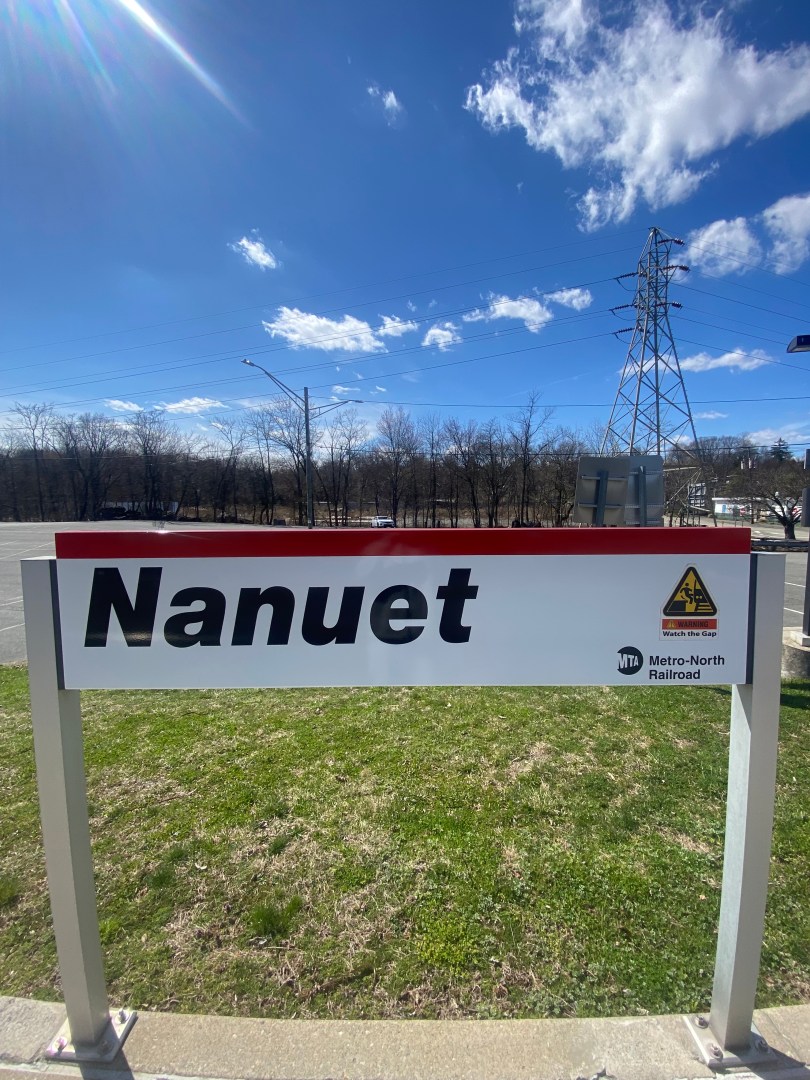
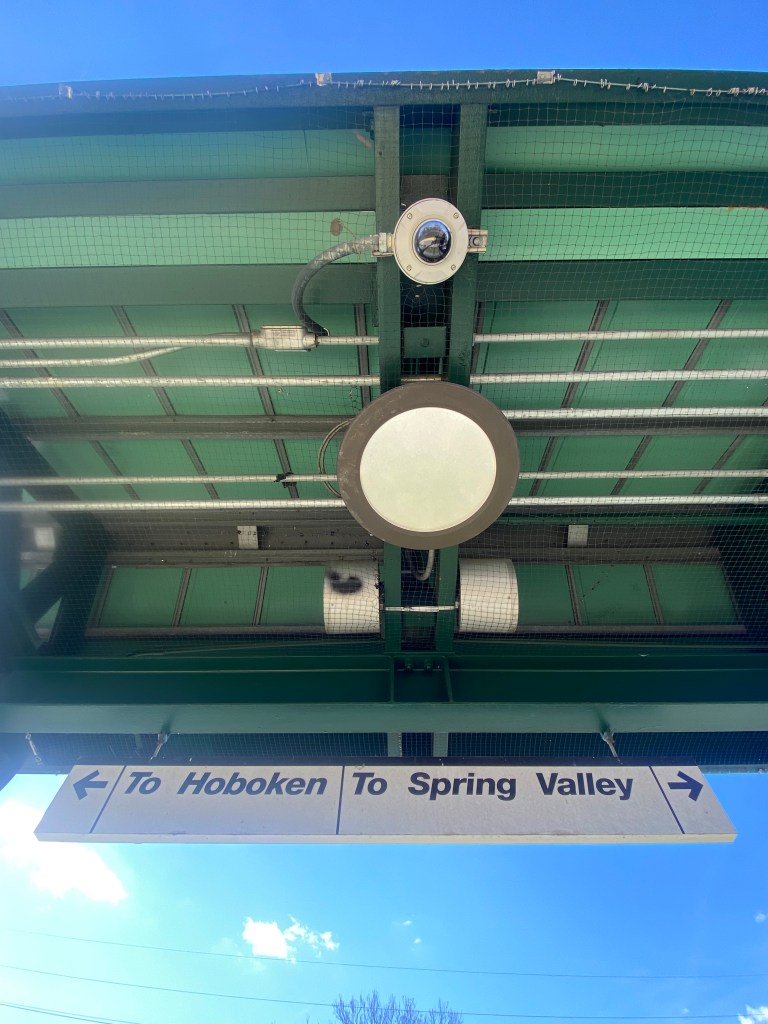
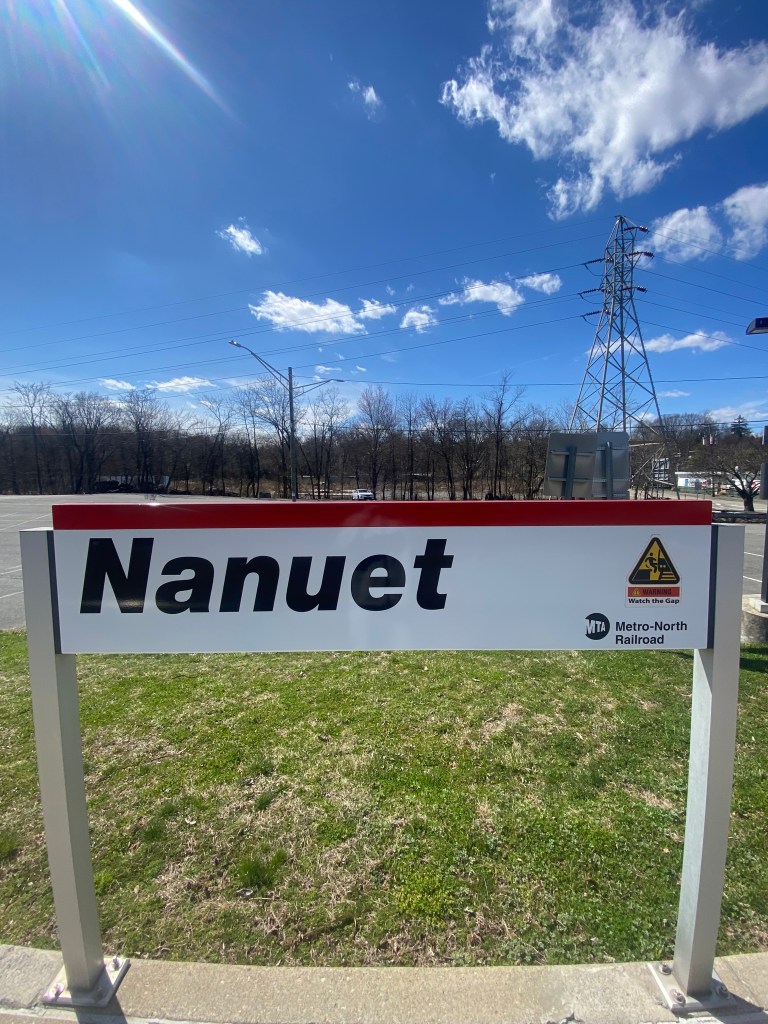
Signage at Nanuet Metro-North station indicating destinations of trains.Station sign at Nanuet Metro North Station.
The only form of direct transit between Rockland and Orange Counties and Manhattan are private coach buses primarily run by CoachUSA. CoachUSA buses are often infrequent and, in many cases, only provide peak-directional trips during rush hours. Hence, CoachUSA is not an option for many who have non-conventional or varying work schedules. In addition, these buses make many stops sometimes even in multiple counties. Whether or not a bus is private or public, these buses are often slowed down by heavy congestion on the George Washington Bridge, Lincoln Tunnel, or Holland Tunnel. Many bus commuters whose buses use the GW Bridge often face long subway rides to get into Midtown or Lower Manhattan.
Due to the lack of convenient travel options, many residents opt to drive into Manhattan. In fact, Rockland and Orange County are home to the only areas of the NY region where more residents who commute into NYC do so by car than any other mode. This leads to tedious trips for many drivers to congestion especially at crossings into New York and on major highways such as the Garden State Pkwy.
This is a large part of why Rockland County has sued the MTA over its proposed congestion pricing plan. Some Orange County legislators have joined Sullivan County lawmakers in another suit. Congestion pricing is a plan to charge drivers who drive below 60th Street in Manhattan a $15 toll. The purpose is to raise money for mass transit improvements and reduce congestion in the busiest parts of Manhattan. In addition to lacking transit options, Rockland County argues that congestion pricing violates the Equal Protection Clause of both the NYS and U.S Constitutions by discriminating against drivers from outside of the CBD by having them by a toll as opposed to those driving within the CBD who would not pay. This is despite both groups contributing equally to congestion according to a Rockland County press release.
There are many arguments that could be made over the validity of the claims made in the lawsuits. However, it is clear that residents of Rockland and Orange Counties do not have the same mass transit options for getting into Manhattan as other residents of similar communities. Additionally, the mass transit that congestion pricing would fun is primarily subway and buses, are located out of the way for many of these residents, given how they do not have a rail link to Manhattan. Nevertheless, these residents would still be expected to pay for these improvements as they will only receive a $5 discount on the toll provided they use the Lincoln or Holland Tunnel. They would still wind up paying about $25 per round trip entering Manhattan.
While the dissent from Rockland County is understandable, congestion pricing is expected to do a lot to improve travel in New York City. Besides needed transit investments, congestion pricing is expected to dramatically reduce traffic which should lead to faster travel times and less carbon emissions in the Manhattan CBD.
So, how could the MTA and/or other agencies improve Rockland/Orange County-Manhattan transit to make travel easier and make the impact of congestion pricing more equitable? There are multiple potential solutions but actually implementing one may be harder than you think.
The first and most ideal solution is for direct rail links between Rockland/Orange Counties and Manhattan. Several Rockland County politicians have made this proposal, such as State Sen. Elijah Reichlin-Mendick and House Rep. Pat Ryan This would most likely be via extensions to both the Port Jervis and Pascack Valley Lines into Manhattan. However, these lines currently terminate at Hoboken due to there simply being no way for these trains to access NJ Transit’s tracks leading to Penn Station from their routes to Rockland and Orange Counties. The solution to this issue would be a rail loop that would make this connection near Secaucus Junction, where riders currently transfer to get on other trains to Penn Station. This loop has already been proposed as part of the massive Gateway Project. The Gateway Project is a plan to repair the existing tunnels between NYC and NJ that are in decrepit shape and increase rail capacity between the two states. In addition to the loop, the project would include new tracks between Newark and NYC, a new tunnel underneath the Hudson River and an expansion of Penn Station. Unfortunately, due to a myriad of delays, cost overruns, and the engineering challenges associated with such a project, the new tunnel and rehabilitation of the current one is not expected to be completed until at least 2038. A Penn Station expansion will also take years to finish. While smaller Gateway projects will likely be completed before then, the Bergen Loop will likely not be one of them as there needs to be more tunnel space between NY and NJ and platform space for more trains at Penn Station for a direct rail link to occur. Hence, this will be a major improvement likely at least 15 years down the line.
If a direct rail connection will take so long, how about short term improvements? Another option could be to enhance existing bus services. This could include simply offering more routes, from more places at more times. Due to lower population densities in parts of Rockland and Orange Counties, it may be hard to justify more buses making stops throughout suburban neighborhoods. Hence, bus companies might want to utilize existing park and rides which are located throughout these counties. Companies can also consider constructing new ones or sharing ones owned by the New York State Department of Transportation for its HudsonLink bus system. HudsonLink connects various parts of Rockland County with Westchester County on the east side of the Hudson River.
In addition to improving bus service to Manhattan, counties can take more actions to increase connections to these buses. As these buses often serve park and rides, drivers must often drive to the bus. This can lead to increased congestion on local roads along with additional travel costs for drivers in the form of gas and parking fees. Hence, Transit Orange and Transport of Rockland can consider increasing bus frequency along lines that also serve these park and rides. As many buses run at headways of every 30 min and even less frequently, these are often not viable options for those needing to connect to longer-distance buses to get to Manhattan.
Also, the counties can consider operating microtransit in areas with lower population density but close proximity to a Park & Ride. Microtransit works similarly to rideshare only with fixed stops and a fare the same as a typical public bus ride. Essentially, one makes a reservation and is placed on a small bus with other people going in the same direction. Many parts of America with similar population densities, such as Dallas/Fort Worth, Valdosta, Georgia, and parts of Washoe County, Nevada. In Washoe County, which includes Reno, transit ridership nearly tripled with the introduction of microtransit. Washoe County’s microtransit is successful in a county with similar car ownership rates than the Northwestern Suburbs and no CBD everyone is trying to get to. Hence, microtransit likely has even greater potential in the Northwestern Suburbs.
‘ Regardless of the quality of transportation, it will need to be affordable and competitive with the costs of driving. Right now, the cost of driving into Manhattan is competitive with mass transit, even with congestion pricing tolls taken into account. For instance, most bus trips from Rockland and Orange Counties cost between $20-30 round trip. Additionally, a study from the NYC Department of City Planning shows that 44% of car commuters in Manhattan had parking subsidized by their employer. Hence, there are likely many Rockland/Orange County residents for whom driving will continue to be less expensive than public transportation.
In addition, many residents simply cannot afford the higher costs of mass transit. According to U.S. Census data, 14.4% of residents in both Rockland and Orange Counties respectively live below the federal poverty line. Since the cost of living is higher in these countries than in most of the countries, the number of residents who struggle to make ends meet is likely higher.
Thus, county governments and the MTA can take numerous steps to help reduce the cost of transit for residents. One is the implementation of a fair fares program similar to the one that exists for subways and buses for NYC residents. This would provide residents below the poverty threshold for their municipality with half fares on commuter rails, local buses, private buses, and NYC Transit. For private buses, the customer would pay the company half of the fare, and their county’s government would cover the rest. This type of program could help these residents tremendously to afford mass transit and provide more people with better access to opportunities in Manhattan. Additionally, with one company running most of the private bus service, it would be much easier for Rockland and Orange counties to facilitate such a program.
Another idea could be for counties to subsidize the companies outright to reduce fares for all. Governments subsidize private companies all the time in order to lead to increased job creation and tax revenue in their respective municipalities, counties and states. A larger example is Michigan’s $1.7 billion deal with the Ford Motor Company to help with the construction of its electric vehicle battery power plant. Closer to home, Nassau County has a nearly $1.3 billion contract with the company Transdev to operate its NICE bus system. County and state governments could financially incentivize private bus companies in multiple ways. One would be to private tax incentives for them to lower fares the other would be to pay the companies directly for whatever revenue they would lose. The governments would have to work out a deal that works best for them, its residents, and companies trying to profit. However, if it can be done, it can make a major difference for commuters.
Rockland and Orange Counties have the least options for getting into Manhattan than almost anywhere in the New York Metropolitan area. It would take significant investments to improve and/or expand public transportation to make it the most convenient and affordable way for residents to get to Manhattan. With congestion pricing on the horizon, improved public transit can help residents feel less of a burden from congestion tolls. Hopefully, investments of some kind can be made so that Rockland and Orange Counties can continue to thrive as commuter suburbs to New York City.
Works Cited
CBS New York. “NYC congestion pricing plan passes final vote, will bring $15 tolls for some drivers.” YouTube, 27 March 2024, https://www.youtube.com/watch?v=tRl7Cxwv_xc. Accessed 1 April 2024.
The Hartsdale Metro-North(MNR) station on the Harlem Line is the main commuter rail station serving the Hamlet of Hartsdale with a population of 2,964 residents according to Niche.com. The station is also the closest station for some Scarsdale residents, given its proximity to the Scarsdale Town Line. In addition to being a major transportation asset for the community, the station is also on the National Register of Historic Places.
The State of Connecticut is a small state with a very diverse set of landscapes. Much of the state composes of small, but densely populated urban areas such as Hartford, New Haven, Bridgeport and Stamford. The state also has a plethora of smaller suburban cities and towns along with some rural areas. Many parts of the state are within commuting distance of New York City and 43,000 people commute from Connecticut into the city daily according to NYC Department of City Planning numbers. While the reverse commuting numbers are lower, 9,000 people also commute from NYC to Connecticut on a daily basis.
*The survey is open until November 17th and is for county residents only.
Westchester County is a county with very diverse landscapes as well as substantial socioeconomic diversity amongst its residents. Parts of Westchester range from having an urban character comparable to adjacent parts of The Bronx to having a more rural feel, like the communities generally associated with those in Upstate New York far from New York City.
As a result, people get around using various modes. While 85% of county residents own cars, the percentage of residents who take public transit is substantially higher in the more urban small cities in the southern portion of the county, such as Yonkers, Mount Vernon, and New Rochelle. Other small cities that have higher transit ridership than other areas in Westchester include White Plains, Ossining, and Peekskill.




 Transit Central