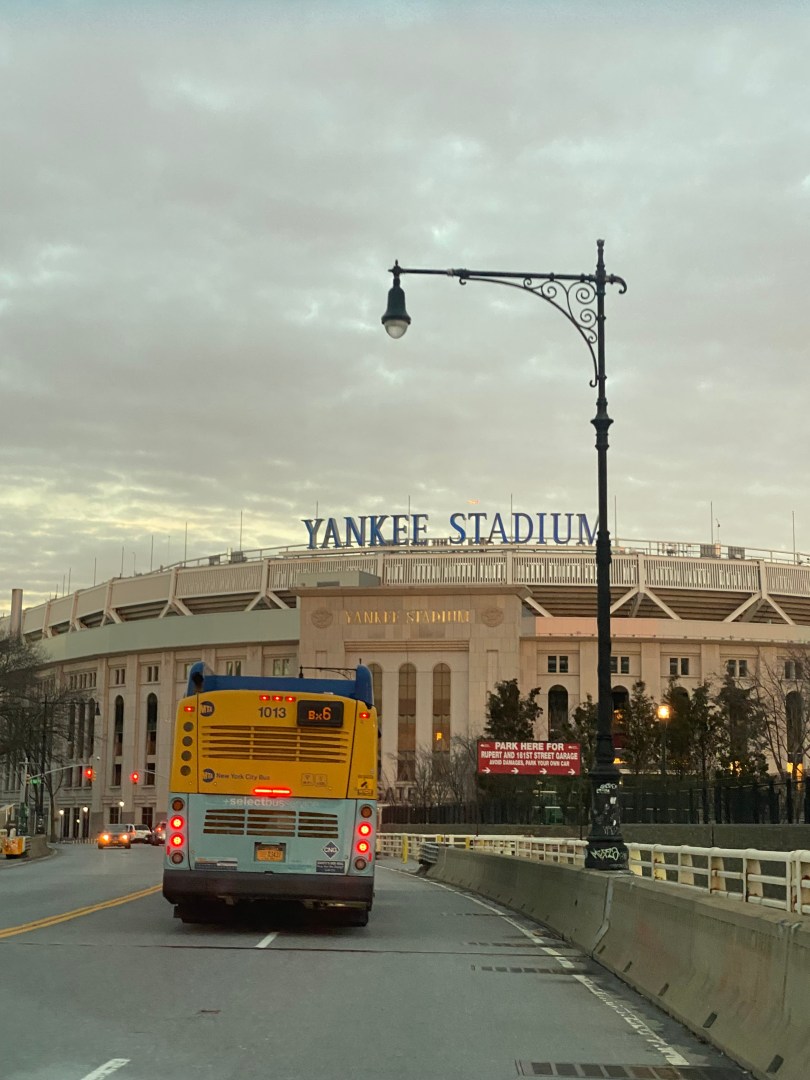
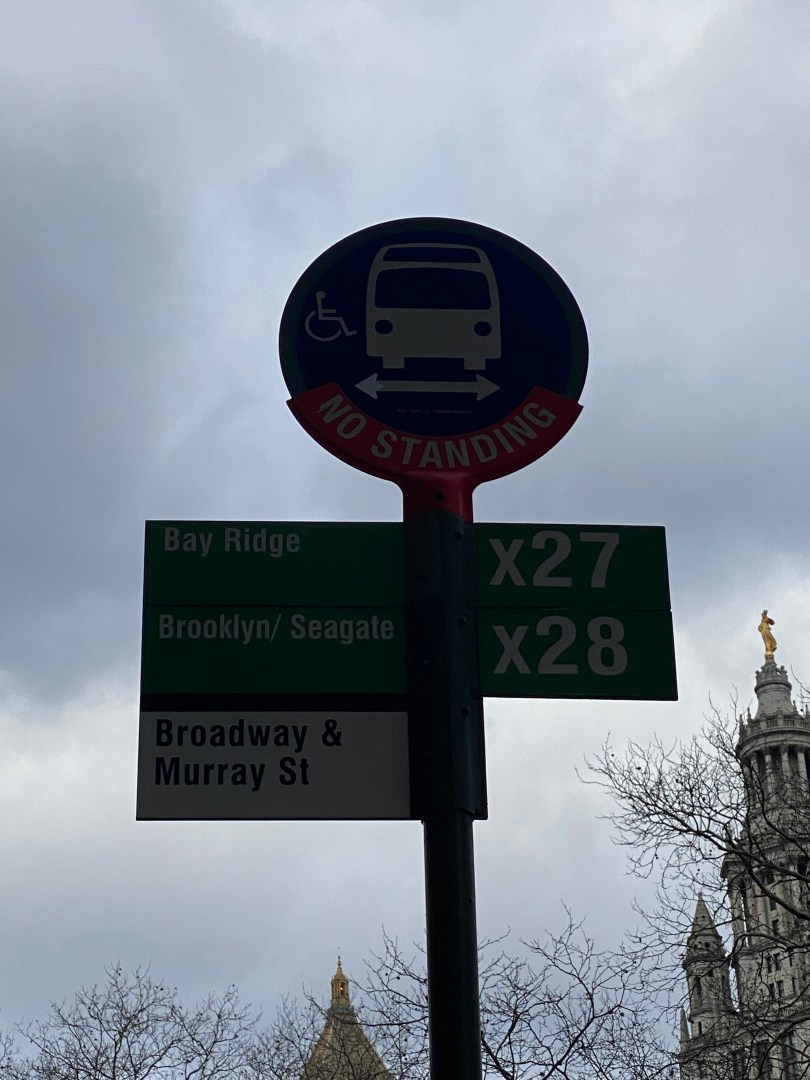
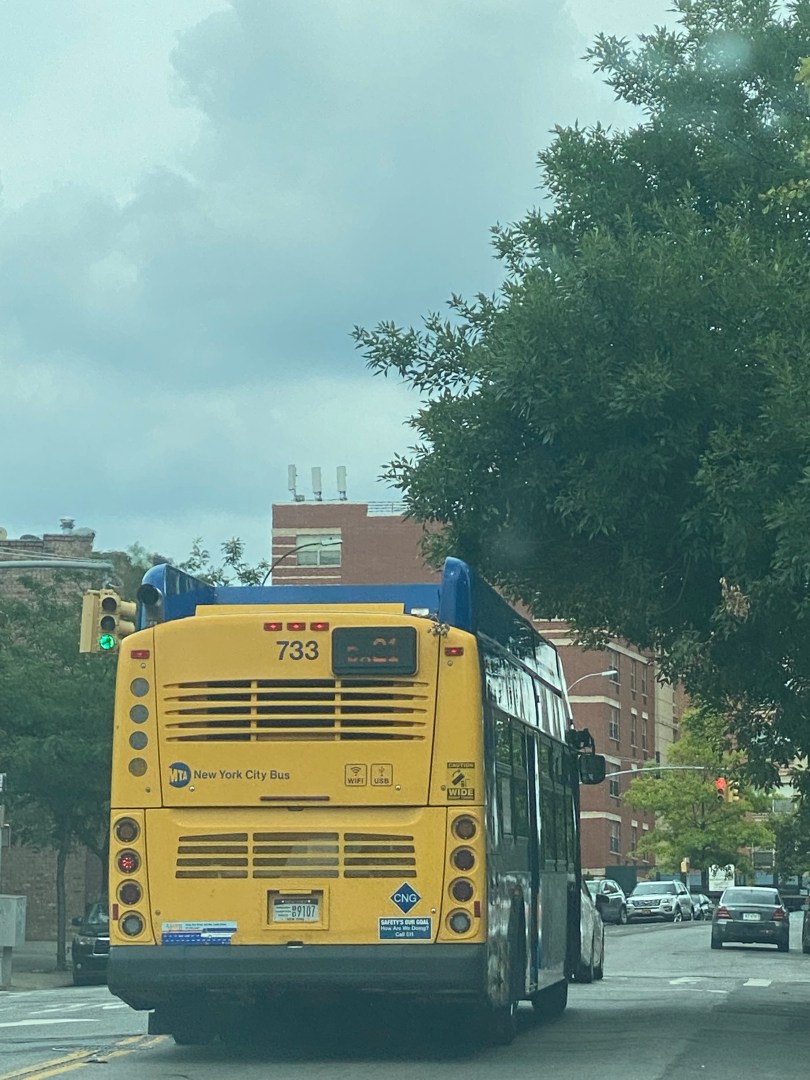
The Bx6-SBS/LCL is one of the most critical bus routes in The Bronx. This route traverses 163rd/161st Sts in The Bronx before connecting to 155th St in Harlem via the Macombs Dam Br. Commercial areas served by the route include Concourse Village and the area surrounding the Hunts Point Av(6) station. In addition, the Bx6-SBS serves major destinations such as Yankee Stadium, the Hunts Point Terminal Market and Bronx County Courthouses. This route also provides connections to nine subway routes, two Metro-North lines and a plethora of bus routes. Overall, the route served over 6,300 riders on an average day in 2024.
Express buses are critical transportation assets for residents of the outer boroughs. In areas far from Manhattan, subway service, or both, express buses are often the only direct mass transit link between many communities and Manhattan. As congestion pricing nears, many may turn to express buses to avoid the even higher costs associated with driving in Manhattan. In February 2020, about 42,000 riders took express buses daily, according to the Gothamist.
While express buses are important citywide, they are especially critical in The Bronx. Here, express buses serve many riders across the borough who live far from the subway, particularly in the East Bronx. Even in places with nearby subway service, many use express buses to get where their subway route may not take them. For example, a Parkchester resident commuting to work on the West Side of Manhattan may ride the BxM6 instead of the 6 train as the 6 train only serves Lexington Av while the bus serves 5th Avenue. In addition, only 45-66% of households in Bronx Community Districts with express bus routes have a car. Hence, express buses serve as one of the few transportation options for many residents, particularly those without access to subway service.
Outside of commuting into Manhattan, many people in Manhattan use express buses to reverse commute to destinations in The Bronx. For instance, the BxM10 stop adjacent to the Albert Einstein College of Medicine in the Morris Park neighborhood is always bustling with commuters every morning. In 2019, according to the site Pedestrian Observations, almost 32,000 people commuted from Manhattan to The Bronx for work. Additionally, many tourists likely ride the BxM11 to visit the iconic Bronx Zoo and New York Botanical Gardens.
Given the systems’ use and growth over the years, one would have expected substantial improvements to the express bus network as part of the recent Bronx Bus Network Redesign. The MTA did propose a plethora of changes to express bus routes. The most notable included a new route between Co-Op City and Lower Manhattan and more direct service on many routes. However, many Bronxites were furious at some proposed changes, which reduced operating hours and service frequency on almost all express bus routes. This led to all proposed express bus changes being revoked before the implementation of the bus network redesign.
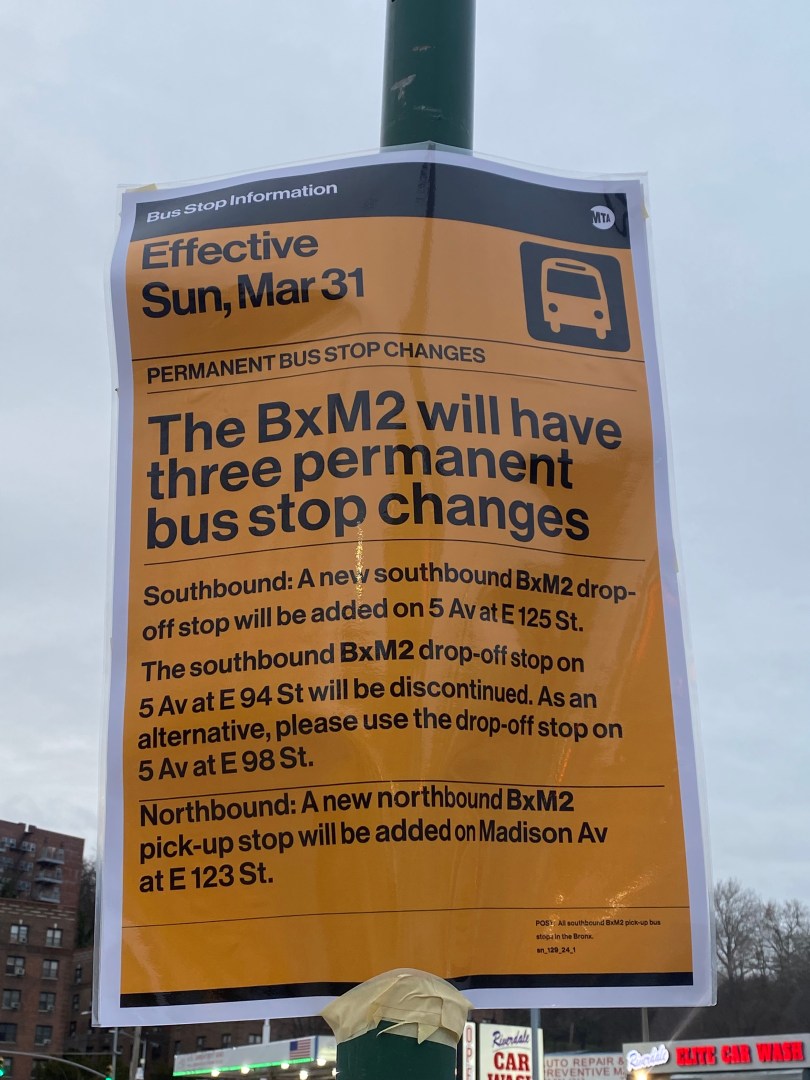
Despite this, the MTA has made some small but considerable express bus improvements for Bronx Express Buses within the last few months. On several routes, the MTA has added a new stop at 96th St in both directions for riders on the BxM10. This provides riders with new connections to parts of the Upper East Side as the next closest stop was at 5 Av/E 85th St. Additionally, the MTA added a new stop at 125th St on the BxM2, which did not have a stop in Harlem, providing new connections there as well. For reverse commuters, the MTA added a stop at Morris Park Ave/1300 Morris Park Ave on the BxM10 to better serve commuters headed to the Albert Einstein College of Medicine.
Signage indicating bus stop changes on BxM2 at the intersection of W 230th St/Tibbett Av.
With these small improvements, should we see more significant changes to the express bus system? If so, what changes should those be? To answer these questions, we have to look at the things express bus riders want from the system. There have been few major calls for specific express bus improvements during the bus network redesign process beyond what already exists. However, one can think about what the subway system provides(connections to different places, frequent service) and infer that express bus riders would the same.
Hence, express bus service improvements could include more service to Lower Manhattan, which only one peak-hours-only route provides. Also, since many are concerned about crime in the subways and the subway is the primary way to get to Lower Manhattan via a transfer, this may encourage more Lower Manhattan trips. Additionally, more bus routes could have stops on 96th St on the Upper East Side(UES) due to the noticeable service gap on the UES and in East Harlem. On most express bus routes, the only stops on the UES are at 5th Ave/85th St and below, making trips between 90th and 116th Sts more difficult. Both of these proposals were pursued to an extent in the Bronx Bus Network Redesign Draft Plan. There, the MTA proposed that almost all routes have a stop at E 96th St in both directions. The MTA also proposed a new route, the BxM17, to connect one of the most densely populated sections of the East Bronx, Co-Op City, with Lower Manhattan.
Another significant addition Bronx Express bus riders would love to see is more frequent service. Currently, most express bus routes only run every 30-60 min, leaving riders little flexibility when it comes to travel times. Between this and how often buses get stuck in Manhattan/Bruckner Expwy traffic, this leads to express bus riders having some of the longest and most stressful commutes out of all transit riders. In addition, many express bus riders are deterred from taking the subway due to fears of subway crime and still want to take the subway into Manhattan. At the final hearing for the Bronx Bus Network Redesign in November 2021, several Bronxites expressed this concern despite it already being announced that express bus changes were canceled. Karina Hammer of University Heights told MTA officials, “I refuse to take the subways due to the high crime we are facing with people getting attacked and mugged. I feel so much safer when I use the express bus.” Another bus rider, Patricia Nunez from Riverdale, also shared concerns, saying, “It’s been a horrible year on the subway with violent crime increases, mentally ill people pushing people onto the subway tracks, we cannot take the subway, we really need the BxM1 and the BxM2.
Outside of more frequent service, the MTA can also tweak routes to avoid highly trafficked areas in its nonstop segments. As many still work from home, Manhattan car traffic is less than it was prepandemic. Now, the primary source of express bus trip delays comes from nonstop segments on highways. The most substantial of such is on the BxM6, 7, 8,9, and 10 during the PM peak on the eastbound Bruckner Expwy. Here, buses have been dealing with congestion due to the recent construction projects on the highway. In this case, the MTA can consider rerouting express buses to run on Bruckner Blvd underneath the expressway instead during certain times. This will lead to faster and more reliable service for a substantial number of riders.
In addition, routes could also be adjusted to provide more reliable service and service to areas that do not currently have it. Before express bus service changes were paused, the MTA proposed to shorten the BxM4 only to serve the Grand Concourse and Bedford Park and create a new BxM5 to directly serve Woodlawn, Wakefield, and the city of Mt Vernon. This proposal would have substantially reduced travel time for Woodlawn riders as their routes would not have to spend 5 miles on the oft-congested Grand Concourse. The new routing alignment will also provide a more direct bus option for Wakefield riders and provide service for Mt Vernon riders who do not have express bus service. However, in addition to the alignment the MTA initially proposed, the MTA can also consider extending the proposed BxM5 further down 3rd St and to the Mt.Vernon East MNR station. The MTA could also provide weekend service at a reasonable frequency for both routes, which was not proposed in the redesign plan.
The extension of the BxM5 would provide direct transit service to Manhattan for a densely populated community that lacks quality transit options. Despite being denser than many Bronx neighborhoods, routes run only a few times a day during rush hours to Bronx subway stations. This is despite Mt Vernon being directly adjacent to The Bronx and not far from subway stations in comparison to other Bronx neighborhoods that are well served by subway-connecting bus routes. The only other transit service to Manhattan is the Metro-North at Mt Vernon East, which is infrequent and expensive. According to a city document, the Southern side of Mt Vernon, where the rail station is located, has many census tracts with a median income of $39,999 or less and a poverty rate above 25%. Hence, a lower-cost express bus route can be a significant mobility improvement for Mt Vernon residents.
While these improvements could be huge for riders, there are significant barriers to implementing any of them. The most considerable constraint is undoubtedly cost. According to data from the Gothamist, express buses receive a public subsidy of $11.79 per person, higher than the next highest subsidy of $6.07 per person for the LIRR. Given how these buses get fewer riders than other modes, it may be hard for the MTA to justify increasing service. This is likely a large part of why they initially planned to cut service on express bus routes during the Bronx Bus Network Redesign.
Nonetheless, increasing service and making routing adjustments could benefit MTA finances in the long run if it encourages more ridership. In much of the U.S., a significant issue with public transit is when there is less ridership due to infrequent service, leading to even more reduced service. This is often known as the transit “death spiral.” It is unknown whether this is precisely what’s happening to Bronx express buses as most commuters going into Manhattan go via mass transit regardless of whether or not they own a car. However, it is also worth noting that many are avoiding the subway and even working in person due to crime concerns. Additionally, $15 congestion pricing tolls for Manhattan drivers below 60th St is on the horizon. Hence, better express bus service may generate more trips into Manhattan, making the costs of operating buses more practical while improving the transit experience for many riders.
As the redesign of Bronx Express bus routes was stopped suddenly, people may wonder when and if any changes will come to the network. The MTA has not said much about express bus redesign except that “There are currently no changes to express routes at this time.” in the Bronx Bus Network Redesign Final Plan Addendum. Hopefully, any changes made to the express bus network can improve connections to Manhattan for Bronx commuters for years to come.
Works Cited
Howard, Shawyn Patterson, and Dr. Darren Morton. “Draft 2020-24-Analysis of Impediments To Fair Housing Choice Plan.” City of Mount Vernon, 10 February 2020, https://cmvny.com/ArchiveCenter/ViewFile/Item/114. Accessed 7 April 2024.
Metropolitan Transportation Authority. “The Bronx Bus Network Redesign Final Plan Addendum.” MTA, November 2021, https://new.mta.info/document/63526. Accessed 7 April 2024.
Queens is New York City’s largest borough by land area and second in population, far surpassing that of Manhattan, The Bronx and Staten Island. Given its size and proximity to both Long Island and Manhattan, neighborhoods in Queens can range from suburban-like in Little Neck to Manhattan-like in Long Island City. Therefore, getting around Queens by public transit can mean traveling by various modes. In some parts of Central and Western Queens, the subway can easily be used in order to get from point A-point B east to west, while other trips require slower bus rides. In Eastern Queens, residents almost always have to rely on buses to get anywhere including to the subway. Many residents who can afford it can take the faster LIRR, however this may be prohibitively expensive for some even with the CityTicket. While buses in Eastern Queens do tend to be faster than other places, the length riders have to travel from here to subway stations still contributes to neighborhoods here having some of the longest commutes in the city.
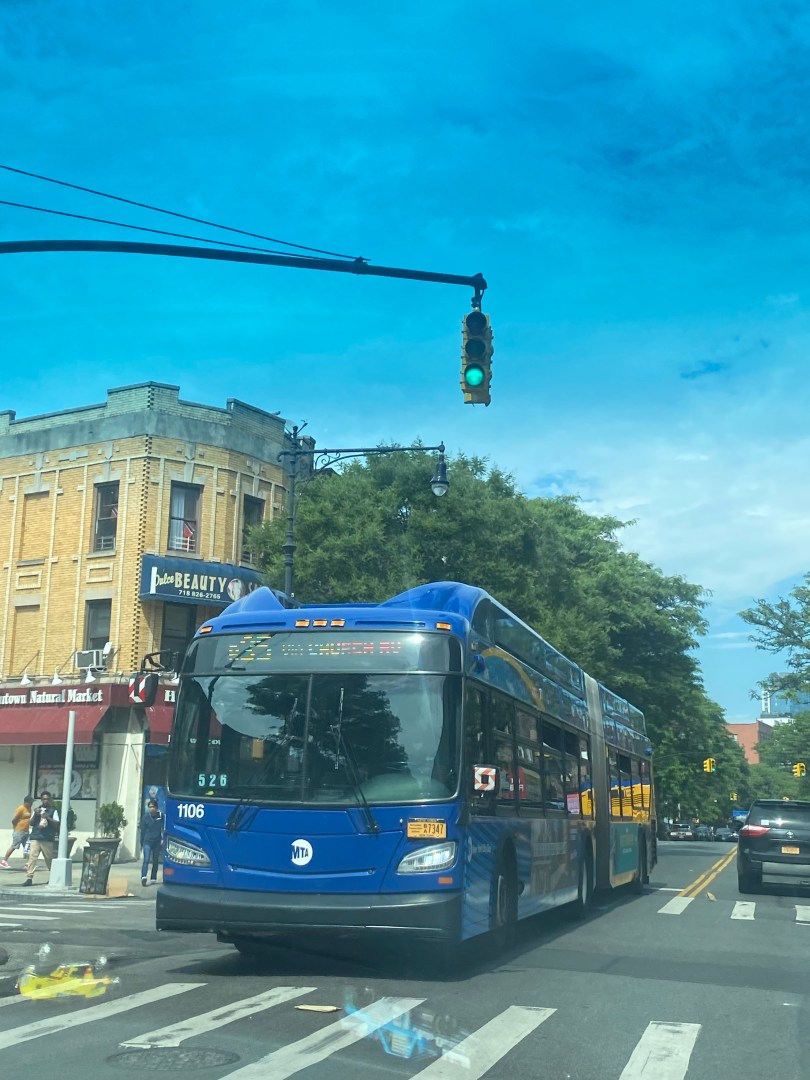
Church Ave is a major residential and commercial corridor that runs about 4 miles east-west through Central Brooklyn between the Kensington and Brownsville neighborhoods. In addition to traversing several busy neighborhoods, the corridor traverses several busy streets and roadways such as Ocean Pkwy/Prospect Expwy, Flatbush Ave, Nostrand/Bedford Ave, and Utica Ave, providing connections for motorists to travel to numerous destinations throughout Brooklyn. In addition, the street is home to several key destinations such as Prospect Park, SUNY Downstate Medical Center, and the Erasmus Hall High School Campus, which currently has about 1,994 students according to data on campus schools from MySchools NYC though the building once served over 7,000 students as a larger high school.
Queens is the largest borough in New York City by land area; and is estimated to be the second most populous borough, according to 2021 data from the U.S Census Bureau. Population and employment density in the borough varies substantially, from the hustle and bustle of Long Island City to the cosmopolitan streets of Jackson Heights and Corona to the suburban-style areas of Bayside and everything in between.
The MTA is redesigning the Brooklyn Bus Network with the intention of creating a new bus network with simpler, more direct routes as well as to adjust frequencies on bus routes in order to match current demand. The MTA is also adjusting or even creating new bus routes to match the travel needs of Brooklyn bus riders.
While this project may seem like one riders are looking forward too, express bus riders may or may not be so excited. Express buses are typically but not always designed for the purpose of getting people to and from Manhattan from areas of the city that are not served by the subway. Getting to Manhattan without these express buses would likely result in many people having to take bus rides to subway stations, which vary in length depending on where one’s starting point. As areas served by express buses in Brooklyn generally tend to be areas with higher rates of car ownership, many Brooklynites who would otherwise take these buses are likely to drive into Manhattan which can lead to more congested streets in Brooklyn as well as Manhattan. Therefore, express buses are a critical part of a Brooklyn bus network to ensure that all residents have the opportunity to conveniently travel into Manhattan without driving.
Linden Boulevard is an interborough street that travels from the Cambria Heights section of Queens through the neighborhoods of St.Albans, South Jamaica and South Ozone Park. It is like many other stretches in the outer boroughs with a combination of businesses and single-family residences. In Queens Community Districts 10 and 12, which comprise much of the corridor, average commute times are 46.9 and 48.4 minutes respectively, which are among the longest commutes in the city. In both districts , about half of the residents have car-free commutes meaning mass transit is a major part of how people get around. Unfortunately for communities that rely on mass transit as much as these Southern Queens neighborhoods, there is no bus or subway route that travels straight along the Linden Blvd corridor. Currently, a trip across the corridor would require a diversion from Linden Blvd onto Merrick Blvd and into Downtown Jamaica, which is one of the busiest transit hubs in the entire city. Afterwards, a rider must transfer to another bus for a trip that can easily take over 2 hours during rush hour.
Westchester County arguably has more diverse travel markets than anywhere in New York State. The majority of Westchester County is full of suburban communities similar to those you’d see throughout America, where most residents own cars. However, Westchester County is also home to a few mid-sized cities and even slightly larger urban areas, particularly in the southern portion of the county. The cities of Yonkers, Mount Vernon, New Rochelle and White Plains contain 40% of the county’s population. Many, though not the majority of residents in these cities and in other areas are low-income and rely on public buses to get around the county as well as to get into The Bronx. Other residents of both the cities and the rest of the county may use public transit solely for connecting to Metro-North trains to get to Manhattan. Overall according to video by the Westchester County Government, 85% of Westchester County residents own cars. While this rate may seem high to city-dwellers, this is still less than the U.S rate of 91.5% of Americans owning cars according to the U.S Census.
Unfortunately, due to this level of diversity when it comes to travel demand, Westchester County has struggled to find ways to serve those who use mass transit, particularly in mid-sized areas. This is in part because mass transit is very expensive to operate and rarely turns a profit. Thus, the Bee-Line system needs a certain number of riders on its buses to justify running frequent service. This puts mid-sized cities such as Port Chester in a difficult position. According to the Urban Action Agenda’s Port Chester Community Profile in 2018, 14% of the population of about 29,000 took public transit to work. While this is a significant portion of the city’s population, this only equates to about 4,060 transit riders not including those who primarily use Metro-North rather than Bee-Line buses, making it hard to justify frequent transit service here.
After an almost two year delay caused by the COVID-19 pandemic and the budget woes that came along with it, the MTA has finally implemented the final plan for the Bronx Bus Network Redesign. Bronxites have waited patiently for this day in order to have a faster and more reliable system for many years. Many Bronxites who rely on buses live in areas that lack subway service or make crosstown trips for which there is no subway service except for at almost the very southernmost point of the borough. Since about 60% of Bronxites do not own cars,(not including middle/high school students between the ages 12-18), buses are a critical part of mobility in the borough. Bronx Borough President Vanessa Gibson said this in a recent video on the redesign published on the mtainfo youtube channel, “People want to get to their destination safely, they want it to be efficient services, reliable and affordable. If you check all of those boxes, you will have happy commuters in our borough.”
(Link to information on bus routes discussed in article located at the bottom after Works Cited section)
The MTA’s Bronx Bus Network Redesign is a plan to redesign the Bronx’s bus system to meet the needs of its riders and become a faster and more reliable system. Even though The Bronx has developed and evolved in many ways, the bus network has not been reevaluated in many years. With many bus routes still running the routes of old trolley lines, a redesign of the bus system is crucial to push bus operations in The Bronx into the 21st century. One of the biggest changes to the system in the redesign, are the restructuring of the Bx11, Bx35 and Bx36, routes which travel east-west across The Bronx from points in West Farms and Soundview across different corridors to W 181st St in the Washington Heights section of Manhattan. In addition, the Bx40 and Bx42 routes that run between the Throggs Neck section of the Bronx and the Highbridge area of the borough are also being restructured. The purpose of this route restructuring is to reduce the number of turns and avoid slow speed corridors and improve bus stop spacing. This might make bus trips across the corridors faster and more direct and make it easier for Bronxites to get across the borough to high density areas without subway service, as well as to transfer to other subway and bus routes which is a common purpose of crosstown bus routes.