Top 10 Things Public Transit Makes Possible in NYC

By Joseph Morales

    New York City is the largest city in the United States and is one of the most vibrant and eclectic places in the World. The city is also among the world’s financial, cultural and commercial centers. Given the city’s immense population density and traffic, many residents rely on the city’s subways and buses to get around. Even as many New Yorkers continue to have hybrid schedules, subways and buses averaged 3.2 and 1.4 million daily riders respectively in 2022. As much as New Yorkers hate them, the transit system has afforded them with many things that other U.S Cities can only dream of. Today, we dive in to the Top 10 Things that Public Transit Makes Possible in NYC.

Read More »
MTA Debuts New Type of Bus Route in Queens Bus Network Redesign

By Joseph Morales

    Queens is New York City’s largest borough by land area and second in population, far surpassing that of Manhattan, The Bronx and Staten Island. Given its size and proximity to both Long Island and Manhattan, neighborhoods in Queens can range from suburban-like in Little Neck to Manhattan-like in Long Island City. Therefore, getting around Queens by public transit can mean traveling by various modes. In some parts of Central and Western Queens, the subway can easily be used in order to get from point A-point B east to west, while other trips require slower bus rides. In Eastern Queens, residents almost always have to rely on buses to get anywhere including to the subway. Many residents who can afford it can take the faster LIRR, however this may be prohibitively expensive for some even with the CityTicket. While buses in Eastern Queens do tend to be faster than other places, the length riders have to travel from here to subway stations still contributes to neighborhoods here having some of the longest commutes in the city.

Read More »

Could the 9 Train Come Back? What about Skip-Stop Service in General?

By Joseph Morales

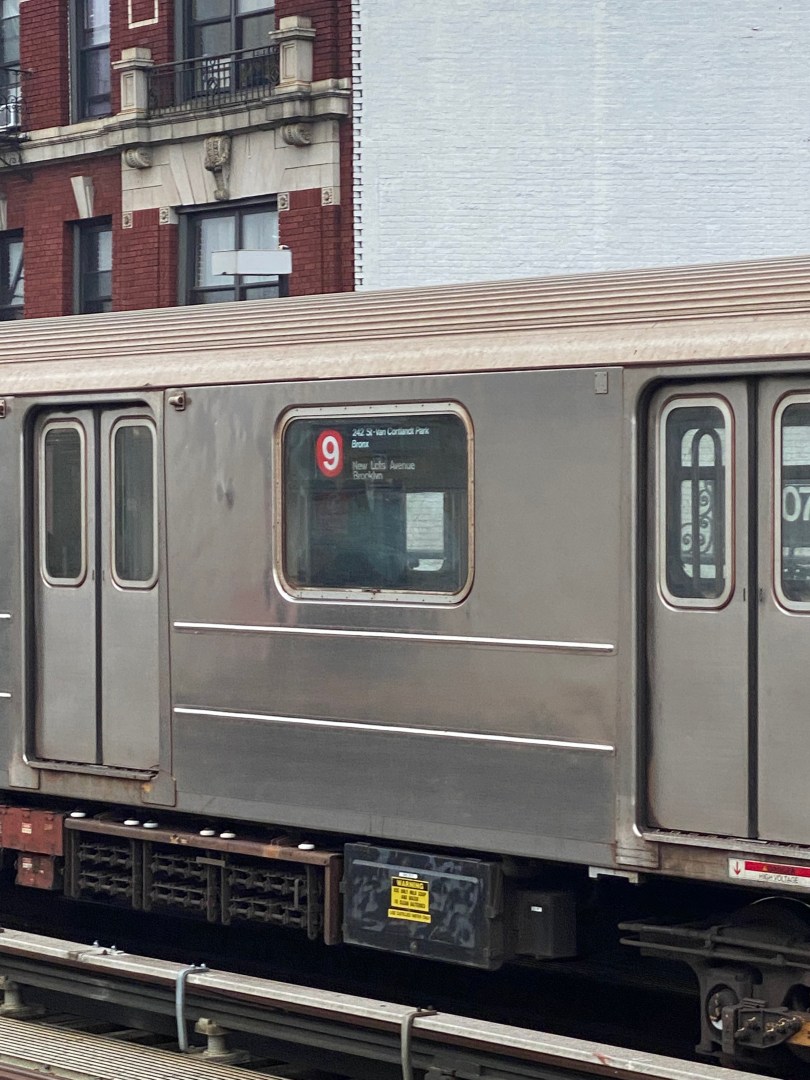
                   The 9 Train is a defunct New York City Subway line that used to be a skip-stop version of the 1 line that made select stops north of 137th St-City College, while the 1 train made other stops. Particularly busy stations such as 181st Street, were all-stop stations where both the 1 and 9 train stopped to provide adequately frequent service to a large number of riders. This is different than traditional express service, where only one or more train routes skips stops on a line while another route or routes makes all stops on a line(Ex: 4,5,6 Lexington Avenue Line, B,D,F, M Sixth Avenue Line). The purpose of this route configuration was to provide subway riders in the Northwest Bronx and Upper Manhattan with faster trips, as no matter what train they rode, it would not make all stops. In addition, the MTA wanted to decrease wait times at particularly busy stations that would be become all-stop stations. The service ran from 1989 to 2005 until it was ultimately discontinued due to less riders benefiting from the service as a result of the longer wait times it caused at many stations.

Read More »

As Citibike and E-Scooter Share Expands, Could Micromobility Come to Staten Island?

By Joseph Morales

 Staten Island is the southwestern most borough of New York City. Despite frequently being considered “suburban” by New Yorkers, Staten Island is home to just under 500,000 residents and some areas have population densities that put them in line with parts of the Bronx, Queens and Brooklyn. 

              Unfortunately, the Island’s non-vehicular transportation options are rather scarce and do not always reflect the needs of Staten Island’s urban population. It’s most glaring transportation deficit of course is that Staten Island is the only borough not connected to the NYC Subway system. In addition, many of the Island’s buses are extremely infrequent with only 25% of routes maintaining frequent service during the morning peak, compared to 52% being the next lowest rate in Queens.

Read More »

Historic Washington Heights Subway Station is Now Fully Accessible

By Joseph Morales

Washington Heights near 181st St is arguably one of the busiest and most vibrant areas of Upper Manhattan. The area is home to variety of chain retailers, small businesses and restaurants along with a high residential density. The area also has ample access to mass transit, with 181st St having stations for both the 1 and A trains. Several Bronx bus routes also serve 181st St and provide access to destinations throughout The Bronx. As a result, many Bronxites from areas with little access to subway service use these buses to get to stations on 181st St. All forms of public transit on 181st St are also important to Washington Heights residents, as only 24% of households in the community district in which Washington Heights is located in own a car.

Read More »

Could Recent Initiatives Encourage Transit Use in Connecticut?

By Joseph Morales

The State of Connecticut is a small state with a very diverse set of landscapes. Much of the state composes of small, but densely populated urban areas such as Hartford, New Haven, Bridgeport and Stamford. The state also has a plethora of smaller suburban cities and towns along with some rural areas. Many parts of the state are within commuting distance of New York City and 43,000 people commute from Connecticut into the city daily according to NYC Department of City Planning numbers. While the reverse commuting numbers are lower, 9,000 people also commute from NYC to Connecticut on a daily basis.

Read More »

The MTA Is Looking To Welcome New Businesses to Multiple Busy Subway Stations

By Joseph Morales

The NYC Subway is by far the busiest subway system in the United States. Despite ridership still being below pre-pandemic levels, 3.2 million people rode the rails in the city in 2022. That is about 500,000 more people than there are residents in the City of Chicago. 

                 The NYC Subway has so many riders in large part because of how transit-dependent the city is. According to data from the NYC Department of City Planning, only 46% of households in the city have cars. Even for households that do have cars, most people still rely on the system to get into Manhattan due to the time and money associated with congestion and parking in the core of the city. The number of subway riders going into Manhattan will likely only rise even more once congestion pricing is implemented, where motorists are expected to be tolled $15 to drive in Manhattan below 60th Street. 

Read More »

Queens’ Busiest Subway Station Receives Massive Renovation

By Joseph Morales

The Flushing Main-St(7) subway station is the busiest subway station in Queens and is one of the busiest stations in the entire city, with ridership ranking 11th out of all 472 subway stations in 2022. It is likely also the busiest station in the subway system that is served by a just a single line. This makes sense as the station is located directly in the heart of Downtown Flushing, one of Queens’ most vibrant residential and commercial destinations attracting visitors from across the city. In addition, given the lack of subway coverage in Northern and Eastern Queens, many Queens residents take the bus to the Flushing-Main St(7) in order to take the train to Western Queens and Manhattan. Inversely, many from Western Queens ride the subway here to transfer to buses that traverse Queens and/or enter Nassau County.

Read More »

Bronx Metro-North Station Is Finally Accessible To Pedestrians

By Joseph Morales

The Riverdale station on the Metro-North’s Hudson Line is located in the serene Riverdale section of The Bronx. The station is the closest rail station of any kind to the College of Mount Saint Vincent. As the station is nearly two miles from the subway, many Riverdale residents rely on the Metro-North in order to get to Manhattan. In addition, the line also provides direct access to nearby Westchester County and popular reverse commuting destinations such as Yonkers and Tarrytown.  

Read More »

Park Slope Subway Station Becomes Accessible After Years of Community Advocacy

By Joseph Morales

Park Slope is a densely populated neighborhood in Western Brooklyn that is one of if not the most well known neighborhoods in Brooklyn. Just a 15 min subway ride from Lower Manhattan, the neighborhood is famous for its brownstone residential buildings, which are considered part of quintessential Brooklyn and New York. Park Slope is also adjacent to the popular Prospect Park, which is one of New York City’s largest parks with a plethora of green space and sports fields. The neighborhood is well served by mass transit with the D, N, R, F and G trains stopping in the area along with several bus routes.

Read More »