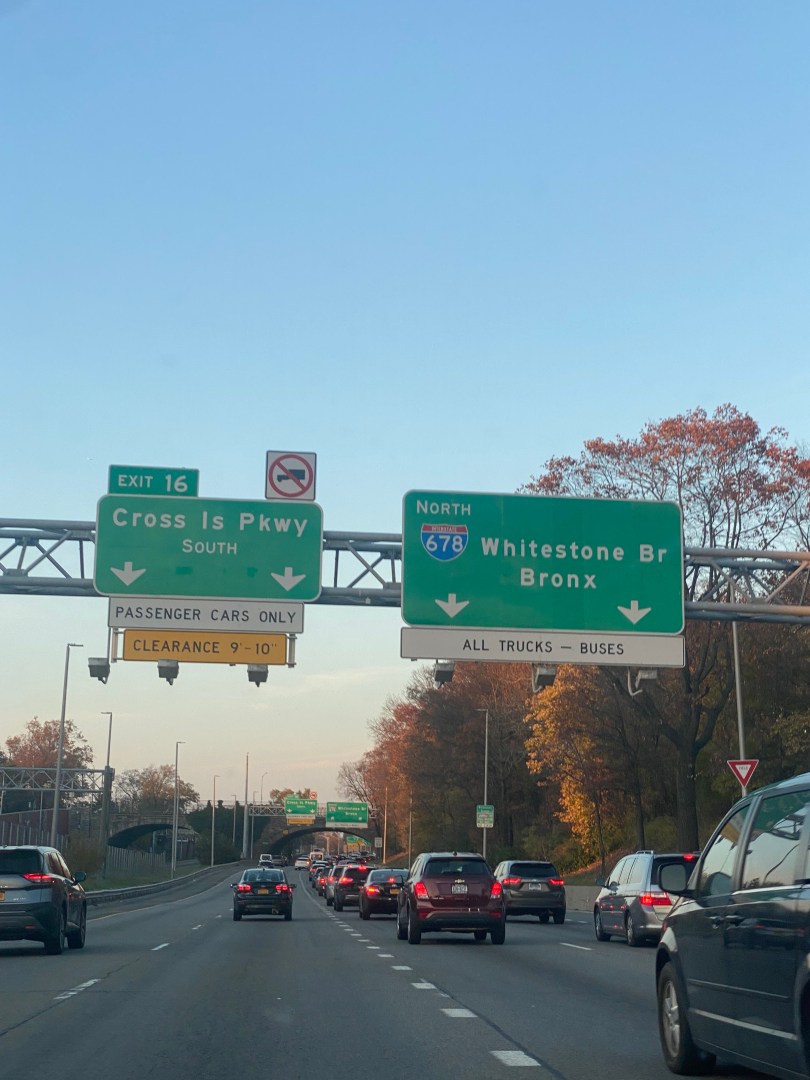
The highway interchange between the Whitestone Expwy(I-678) and the Cross Island Pkwy near the Whitestone Bridge is one of Queens’s most critical highway interchanges. The two highways provide critical connections between areas of Queens and Nassau County, along with the Whitestone Bridge to The Bronx. In addition, the Q44-SBS and Q50-LTD buses pass through the interchange and cross the bridge, carrying tens of thousands of riders between Queens and The Bronx daily. Additionally, in the community district nearest the interchange, 65% of households have a vehicle, and there are numerous stops for the Q44-SBS and Q50-LTD bus routes. Hence, the interchange is not only an essential regional connector, but it is also heavily relied on by those who live nearby.
*In this article, West Bronx will refer to communities in The Bronx west of Webster/Melrose Ave from 161st St to 238th St. This includes parts of Bronx Community Districts 4, 5, 7 and 8.
MOBILITY CONTEXT
Like most of New York City, the West Bronx is full of vibrancy and diversity. Neighborhoods range from the bustling areas of Highbridge and Mount Eden to the quaint suburban-like communities of Spuyten Duyvil and Riverdale. The West Bronx is known for several of its most famous locations, including Yankee Stadium and the official birthplace of hip-hop at 1520 Sedgwick Avenue in the Morris Heights neighborhood.
Most parents would agree that parenting a young child is no easy task. However, there are some unique parenting tasks that are especially unique for NYC parents. These include but are not limited to long commutes, the city’s nonstop nature, and the complicated admissions system for public schools.
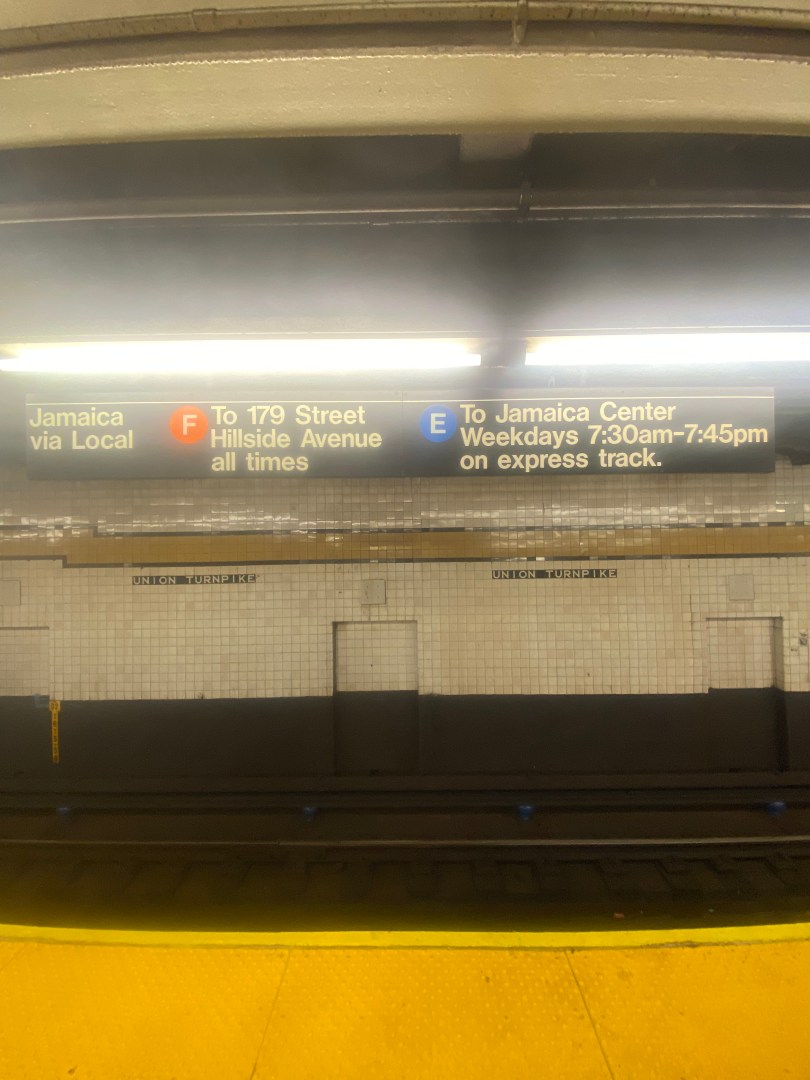
The Queens Boulevard Line(QBL) is a busy subway line running along Queens Blvd in Queens. It serves four subway routes and connects several densely populated areas of Queens such as Jamaica, Jackson Heights and Long Island City. In addition, each subway route provides unique connections to parts of Manhattan and Brooklyn. The subway is critical for mobility along Queens Blvd as only 41-56% of households in most community districts surrounding Queens Blvd have a car. Even those who do drive may opt for the subway due to the congestion and parking difficulties associated with driving into Manhattan and even parts of Queens. For these reasons and more, almost 257,000 riders rode the Queens Blvd Line daily in 2022.
Columbus Circle is one of Midtown’s several large public spaces with a subway station directly in its name. The 59th St-Columbus Circle station serves five subway routes providing both local and express service on the West Side of Manhattan. Additionally, the station provides direct connections to many areas of the city in the outer boroughs. While Columbus Circle isn’t known for glaring lights or iconic ice skating rinks the way other spots are, Columbus Circle does have several special places to visit.
The bus system on Staten Island is critical for the mobility of residents. Despite the borough being known for its car dependency, 17% of households do not have access to a car. Even in households that do, many young people rely on public buses to get to school as most youth under 18 cannot drive in New York State. Additionally, 11.2% of Staten Islanders live below the federal poverty line according to US Census data. This makes the bus essential to those who cannot afford alternate means of travel. Even for residents who can drive, many residents ride buses in some capacity to get to Manhattan. This is the case whether they take an express bus direcly to Manhattan or they take a local bus to the Staten Island Ferry. Many commuters also take the bus into Brooklyn to ride the subway, or to Staten Island Railway stations to get to the Ferry. Commuters to Manhattan are the reason why in Staten Island Community District 3 where only 8% of households are without a car, 21% of residents still had a car-free commute in 2021.
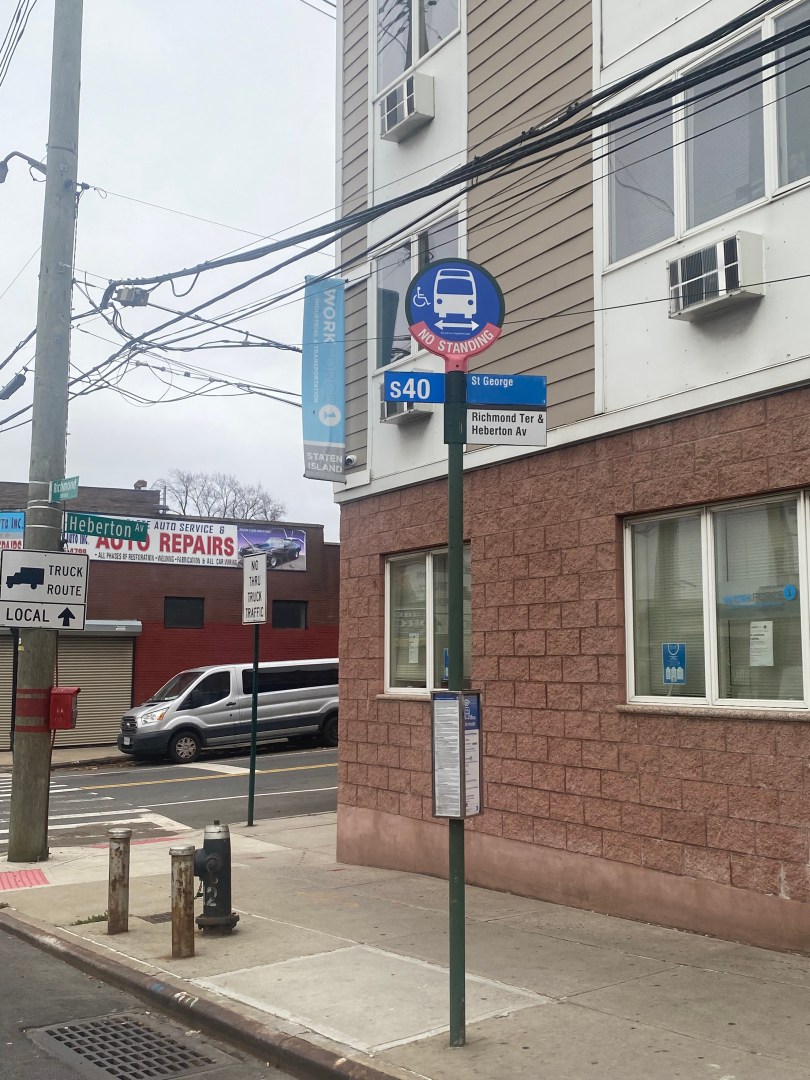
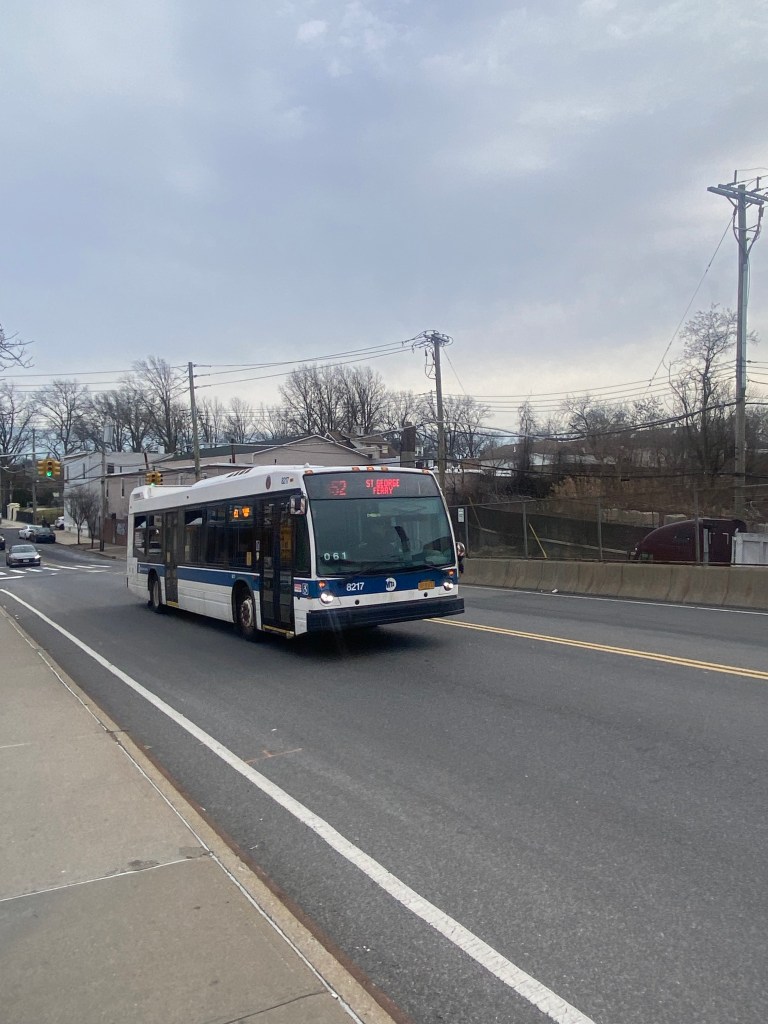
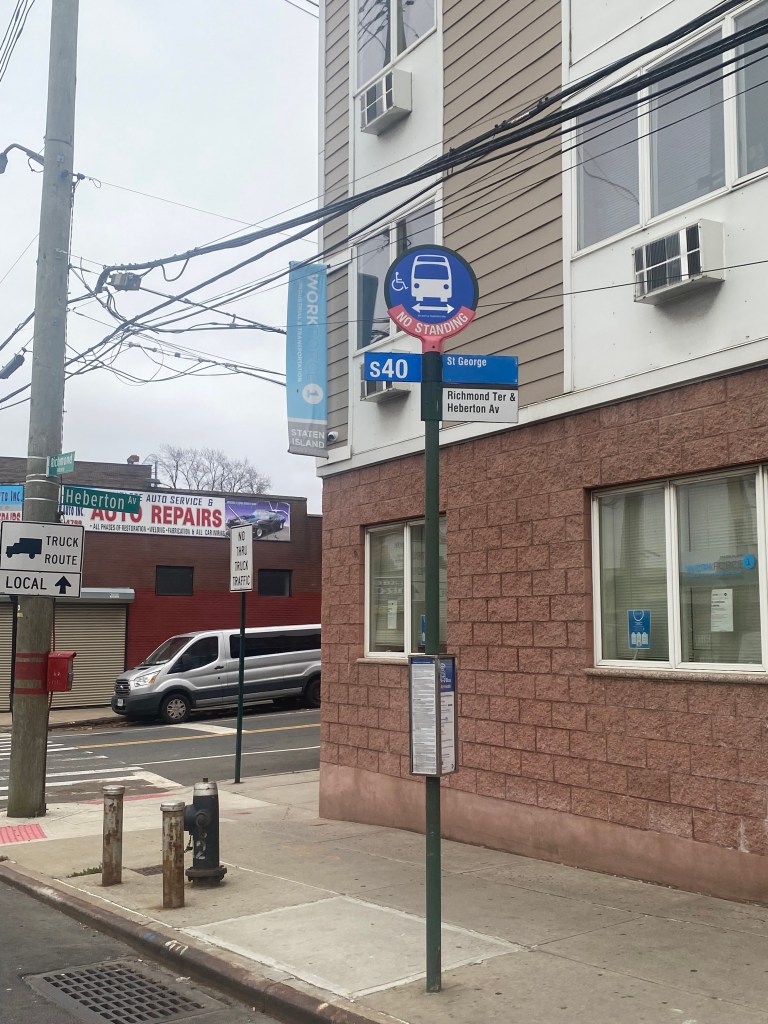
S52 bus toward St George Ferry Terminal on Tompkins Avenue in the Rosebank section of Staten Island.Bus stop for S40 toward St. George Ferry Terminal at Richmond Terrace/Heberton Ave.
Unfortunately, buses on Staten Island are known for unreliable service. While they tend to be significantly faster on the road than buses in other boroughs, they are still plagued with unexpected delays and infrequent service on some routes. For example, the S59, one of the few buses running between the North and South Shores of Staten Island, has headways of every 15-20 min all day including during rush hours. On top of this, these headways are assuming every bus that is scheduled actually runs. According to MTA statistics, service delivered on Staten Island local/limited and select buses has only averaged 87.7% each month over the past year compared to a 95.6% citywide average. Since July 2023, service delivery has been even more abysmal with monthly service delivered rates only ranging between 81.7-87.6% with the 81.7% being the number just last month.
Since buses on Staten Island are infrequent and often no-show when scheduled, less residents are likely to ride them. This can be detrimental for bus service as low ridership could be mistaken for low demand rather than choice of more reliable travel modes. If the MTA perceives lower demand on Staten Island routes, the borough could be targeted for even less frequent service when the MTA has budget issues or when the borough’s bus network is redesigned. This is similar to what happened with the initial Queens Bus Network Redesign Draft Plan in 2020 that called for low frequency service in communities similar to those on Staten Island. The plan got so much backlash that it was pulled and a new draft plan was prepared and published in March 2022 following pandemic-related delays. A proposed final plan was published in Dceember 2023.
The cycle of low ridership on unreliable bus service followed by service cuts is all too common in American cities, which is part of why about 76% of Americans drive alone to work. Many might make the case that Staten Island does not need more transit service because of its lower population density than the other boroughs. While many New Yorkers view Staten Island as a suburban enclave, the borough has a population of nearly 500,000 and a population density higher than both Houston and Los Angeles. Additionally, more frequent transit in areas with densities similar to and even less than Staten Island can work. In Toronto, a city with a population density about half of Staten Island’s, buses come every 5 minutes, 24 hours a day. As a result of this frequent service, many people including car owners ride them. So, having more frequent buses on Staten Island is largely a matter of funding, resources and political will.
Speaking of funding and resources, these things may make it difficult for the MTA to run more frequent service. The MTA recently received state funding back in 2023 to address its budget shortfalls that could have led to higher than expected fare increases and service cuts systemwide. Additionally as mentioned earlier, the MTA struggles to service the existing schedule as service delivery rates on Staten Island are the worst in the city. In 2022, the MTA attributed the lower rates to lower staffing levels and higher rates of driver absences. Back then, MTA spokesperson Sean Butler told the Staten Island Advance that the MTA was performing “‘aggressive efforts’” to hire new bus operators. This included initiatives such as larger bus training classes and creating step by step guides to help interested applicants. Now in 2024, the MTA is still hiring bus operators and you can find more information on becoming a bus operator here:https://new.mta.info/careers/bus-operator.
As for increasing service beyond existing schedules, there have not been substantial efforts to do this yet on Staten Island. The last documented time bus frequencies were increased on Staten Island was in response to a surge in employment at an Amazon Facility in Bloomfield. There is a bill in the State Legislature known as the MTA Freeze Fares, Fund Frequency and Free Bus Act that would increase bus headways to every 6 minutes on the 100 busiest routes in the system for 17 hours a day. Despite lower ridership on Staten Island than in other boroughs, busy routes such as the S79-SBS on Hylan Blvd, along with the S46/96 and S40/90 on the busier North Shore may qualify. Ultimately, it will require substantial funding and political committment to increase bus service.
Outside of frequencies, another area Staten Island buses particularly struggle in is additional bus stop time. Additional bus stop time refers to the additional amount of time buses wait at each stop prior to departing than scheduled. On Staten Island, the average additional bus stop time each month over the past year was 2 minutes, 50 seconds which is higher than the 1 minute, 56 second citywide average. There are several reasons this can be the case. One is a higher rate of MetroCard and exact change use to board the bus, as these payment methods take longer than the OMNY contactless system. According to data from the Urban Institute in 2013, 7.2% of Staten Islanders are unbanked including 15.1-20% on the North Shore where bus ridership is likely highest. As OMNY almost always requires the use of a bank card, many Staten Island riders must use the other fare systems. In addition, most Staten Island buses make stops in either the St. George Bus Terminal, Eltingville Transit Center or both. This may increase bus dwell times as buses have the unique tasks of picking up/dropping off large quantities of riders at one stop. In addition, most bus routes on Staten Island have at least one stop near a large high school, which could mean high rates of passengers getting on and off near schools.
To address these issues , the MTA can increase the availability of the OMNY Card and improve bus boarding conditions near busy stops. The OMNY Card allows riders to preload a card with cash similar to how they would a MetroCard. Currently, the OMNY Card is only available at nine retailers on Staten Island. Of these nine, three of them are located within blocks of each other in the Great Kills neighborhood and two are in and around the Staten Island Mall. None of them are on the North Shore which has the highest rate of both unbanked residents and residents without a car on Staten Island. In addition to limited availability, purchasing a card requires a $5 fee at time of purchase, making it a less competitive compared to the $1 fee for a new MetroCard and no additional charges for the use of exact change.
Once more bus riders use OMNY, MTA officials may want to consider all-door boarding on buses which should help reduce dwell times at busy stops. When asked about the idea by advocates, MTA Chairman Janno Lieber said that more bus riders must use OMNY before all-door boarding is considered. This is because fewer than 20% of riders citywide utilize the contactless payment method as of March 2023. When more bus riders use OMNY, transit officials will likely have to consider how fare evasion may be affected as this has been their chief concern for implementing all-door boarding in the past. One can argue that fare evasion will decrease as rider who would otherwise pay currently board on back doors without paying due to lines to pay at the front door. On the flipside, fare evasion may increase due to riders being allowed to board without making contact with the bus operators. The MTA’s decision on whether to allow all-door boarding with more OMNY use will likely be based on their risk-benefit analysis of what would lead to more fare evasion. Regardless, more OMNY use will reduce additional bus stop time due to it being a faster fare process.
While Staten Island may not be as congested as the rest of the city, its bus network still has its fair share of flaws. It is clear that addressing these flaws will lead to a better transportation network that is more suitable for the urban travel needs of Staten Island. Hopefully, the MTA can develop solutions to improve Staten Island bus service to enhance the mobility of all Staten Islanders.
Metropolitan Transportation Authority. “Queens Bus Network Redesign Proposed Final Plan.” MTA, 12 December 2023, https://new.mta.info/document/129216. Accessed 28 February 2024.
The NYC Subway is the lifeblood of New York City and one of the primary ways people get around. In 2022, 3.2 million people rode the subway daily in 2022 despite hybrid/remote work being more common. While the subway is often the best way to travel, many New Yorkers hate riding it due to delays, cleanliness and a slew of other issues. On top of that, New Yorkers are considered by some to be among the most stressed out people in America. A study from the research firm William Russell considered the NYC the most stressed city in America for several reasons including its high cost of living. A TimeOut article on the topic even mentioned “perennial subway delays” in a sentence on stressors that are just so common here in our city. You can check out that article here: https://www.timeout.com/newyork/news/nyc-is-officially-the-most-stressed-out-city-in-the-united-states-011222
Given these circumstances, you might think New Yorkers would love a coffee, donut or even bacon egg and cheese sandwich to start their work day. It turns out, Dunkin Donuts has this figured out, with locations adjacent to many subway stations throughout the boroughs. They even have three locations within Penn Station and another one in Fulton Center.
These strategic locations are no accident and Dunkin’s franchise selection strategy along with other aspects of its business allow it to take advantage of locations adjacent to transit. For one, out of the donut chain’s five criteria for selecting locations, four of them are directly connected to the transportation infrastructure around them. These include an available drive thru, one parking space per three seats, an easy entrance and exit and having a highly visible location. As for drive thrus and parking spaces, these are likely not weighed as heavily in New York City due to the high percentage of residents that do not drive. However, subway stations definitely support the latter two, as stations tend to be in walkable locations with high foot traffic.
In addition to location itself, the cost and space required to open a Dunkin Donuts is considerably less compared to other fast food chains. This allows the chains to multiply faster in the areas both Dunkin and franchisees see fit. As for cost, the initial investment for a Dunkin Donuts can be anywhere from $121,400-$1,809,500 according to the company website. This is in comparison with $297K-$2.1M for Pizza Hut, $575,600 to $3,370,100 for Taco Bell and $1,314,500 and $2,313,295 for McDonalds. Lower costs are especially beneficial for Dunkin Donuts franchisees given what may be higher rents near subway stations.
Outside of initial costs, Dunkin locations are generally much more flexible as far as space is concerned than other fast food restaurants. Since many Dunkin customers take coffees and small treats to go, there can be varyings eating levels if there is seating at all. There are even Dunkin Donuts locations that function primarily as kiosks such as the one in Fulton Center. Others are standing room only locations such as the one in Marble Hill, Manhattan, and some offer limited seating such as the one on Eastern Pkwy adjacent to the Franklin Av-Medgar Evers College(2,3,4,5) station in Brooklyn. On the other hand, other chains such as McDonalds and Taco Bell need a certain amount of seating and space to accommodate their respective functions as a lunch/dinner spot. In fact, Taco Bell only recently opened a new restaurant variant known as Taco Bell Cantina that is designed to better spatially accommodate urban areas. Taco Bell Head of Public Relations Matt Prince told CNBC in 2019, “So typically when you think of Taco Bell’s you think of suburban and rural areas with drive thru. These are very different. These are in walkable downtown spaces.“ He also stated, “We want to make sure that they feel like they’re part of the community that they’re in and so people come in and feel like they have a unique experience.” With flexible locations in urban areas, Dunkin Donuts had already achieved for years what Taco Bell set out to achieve in 2019 with its Taco Bell Cantina locations.
Dunkin Donuts in smaller storefront adjacent to the Franklin Av-Medgar Evers College(2,3,4,5) station in Brooklyn.Neighborhod-specific signage at Dunkin Donuts in Marble Hill, Manhattan.
While Dunkin’s business model often brings it near subway stations, what has really driven Dunkin’s subway-side boom is what matters most to businesses. This business driver is indeed the customer! Dunkin Donuts are unique in that its business caters directly to the needs of the commuter. In the morning, a subway rider who just had a long commute might want to grab a cup of coffee or a small breakfast item. At the end of the day, a commuter might be in the mood for a donut or one of the chain’s other dessert offerings. The same cannot be said for Popeyes, Taco Bell or most other fast food chains, that specialize in a smaller range of meal options. The closest chain to Dunkin Donuts as far as product diversity is McDonalds with its all-day breakfast as well as lunch/dinner options. However, besides some breakfast items, most of its products are associated with full meals rather than quick bites that could be had before getting on the train. Additionally, while subway stations can help drive traffic for any fast food establishment, these businesses often need other business drivers such as nearby employment and recreational destinations. On the other hand, Dunkin Donuts can cater to a commuter in any community.
As Dunkin Donuts is really popular amongst New Yorkers, it is interesting to think about what allows a business to perform well in any given market. With Dunkin, it’s impressive how their restaurant concept fits perfectly into the needs of New Yorkers and the challenges of operating a business in the city. Thanks to the chain’s versatility, it has been successful near NYC subway stations and across the United States. As a result, Dunkin Donuts has told Americans since its 2006 rebranding, “America Runs On Dunkin!”
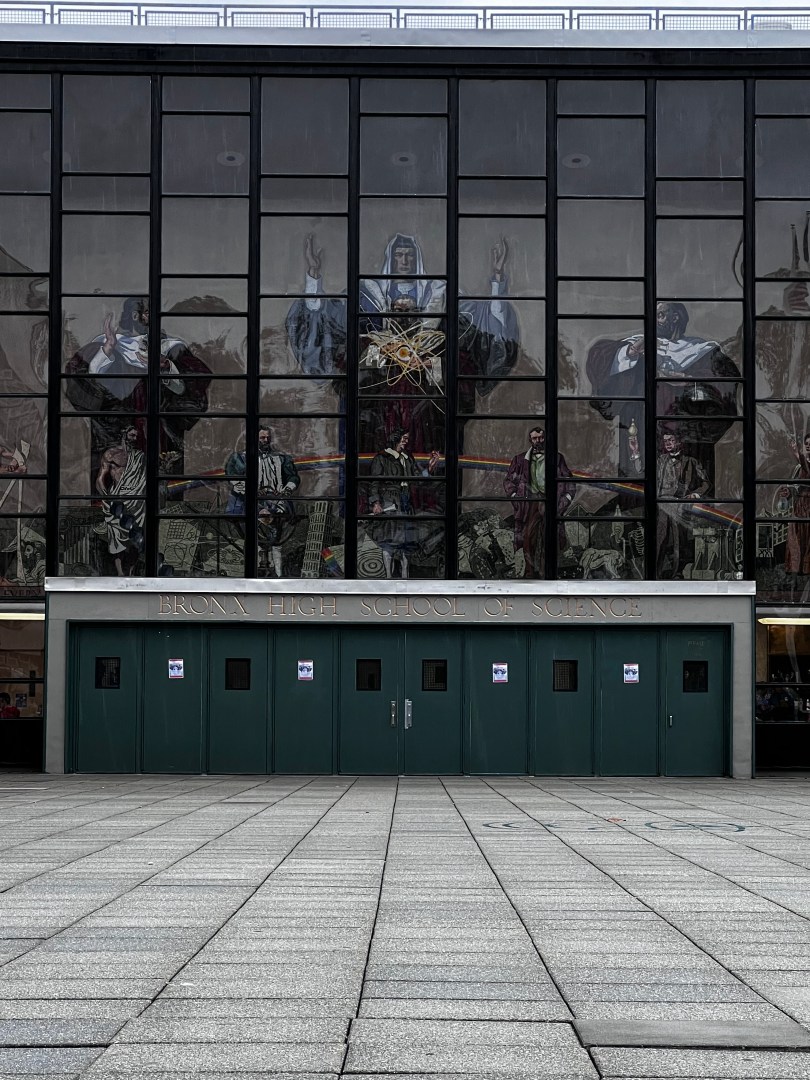
Bronx Science and the High School for American Studies(HSAS) are two of the most prestigious high schools in New York City, with a total of about 3,500 students. Both are located just blocks away from each other in the Bedford Park section of the Northwest Bronx. As a result of both schools’ prestige, thousands of students prepare vigorously for the SHSAT each year for a coveted spot at one of the two schools. The acceptance rates for Bronx Science and HSAS are a minuscule 3 and 0.4% respectively, lower than Ivy League Colleges such as Yale and Harvard.
The L Train is one of the busiest and most critical lines in the NYC Subway system. The route connects some of Brooklyn’s rapidly growing neighborhoods such as Williamsburg, Bushwick and East New York to each other and Manhattan. Additionally, key transfer points at Myrtle-Wyckoff Av and Broadway Junction provide riders with a plethora of connections to areas of Brooklyn, Queens and Long Island via other subway routes and the LIRR. In Brooklyn, only 45% of households have a car according to data from the New York City Department of City Planning. Hence, many people rely on the L Train and mass transit as a whole as their primary mode of transportation.
Public transportation is the backbone of New York City. Due to the city’s congestion and limited parking space, many take public transportation to avoid the hassles associated with driving. Given the city’s high cost of living, many find driving to be prohibitively expensive and hence also decide to opt for transit. As a result of these factors and others, 46% of New Yorkers do not own a car and hence rely on public transit to get wherever they need to go. This tally does not include suburbanites who take mass transit in New York City in lieu of driving for the same reasons as residents.





 Transit Central