Washington Heights Subway Station Entrance Gets Total Facelift From NYCDOT.

By Joseph Morales

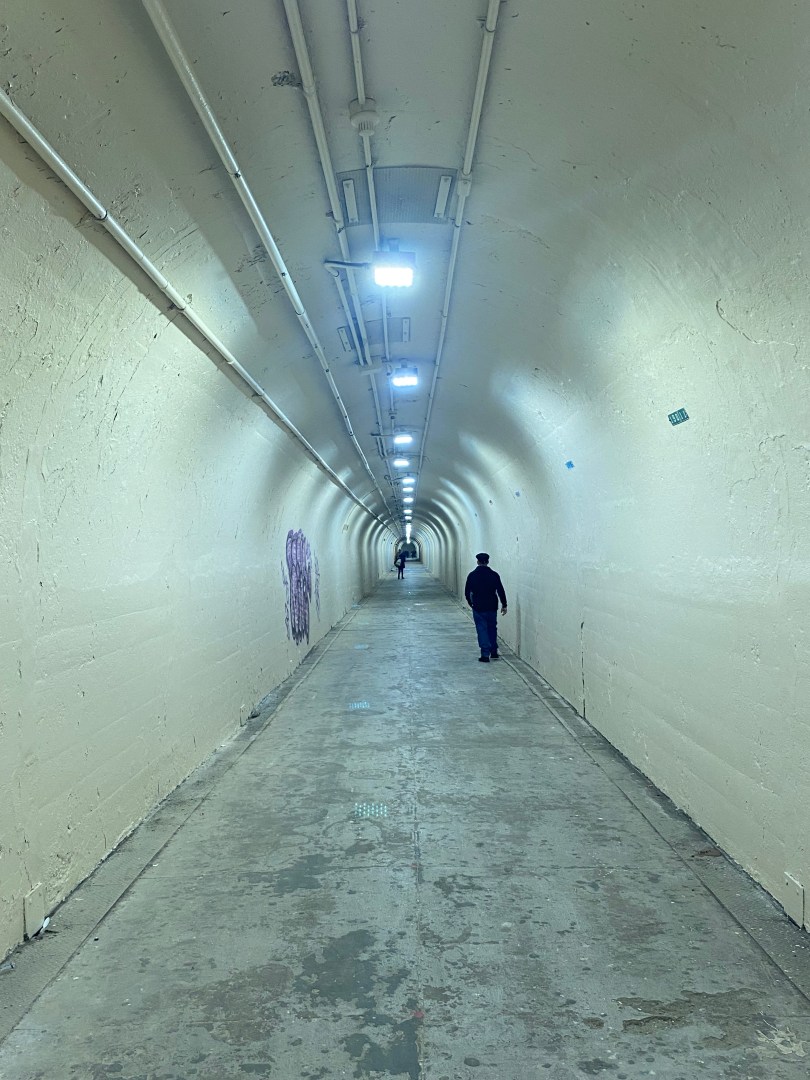
The 191st St Station on the 1 Train is known for its dilapidated and even dangerous conditions by some. This is largely because of the poor condition of a 1,000 foot long tunnel that serves as the entrance to the station from Broadway and West 191st Street. In addition to serving as a subway entrance, many walking in the community use it to get between Broadway and St. Nicholas Ave to avoid having to walk through steep hills on Fairview Ave or the desolate Gorman Park as one does not need to pay the subway fare for the sole purpose of using the tunnel. It is also worth noting that since the tunnel is technically considered a “tunnel street” it is controlled by the NYCDOT rather than the MTA. It is the only street of its kind in NYC.

Read More »

The City Has Recently Completed A Unique Bus Improvement Project Near The Pelham Bay Park Subway Station In The Bronx

By Joseph Morales

  The Pelham Bay Park station area in the Northeast Bronx is a major transit hub for people traveling throughout the borough. It provides connections to the 6 train at the Pelham Bay Park station as well as 5 other bus routes including the Q50-LTD to Downtown Flushing, Queens and the Bx12-LCL/SBS which was the second busiest bus route in the city as of 2021. Many Bronxites take buses here in order to get to the subway station as many of the buses traverse areas that lack subway service. Many also use the buses to get throughout the borough and to major destinations such as the Bay Plaza Shopping Center, City Island, the Fordham Rd Business District and more. According to a presentation from the NYCDOT, 55,000 bus riders passed through the area on an average weekday pre-pandemic. The area also tends to be busy with automobiles too, as the area is near several major highways and streets including Interstate 95 and the Hutchinson River Pkwy. 

                     Therefore, it is no surprise that congestion slows down both motorists and bus riders alike. The street layout of the area has been known to exasperate the issue, with slow downs being very common along Amendola Pl and Bruckner Blvd respectively, especially at the three-way intersection of Amendola Pl, Wilkinson Av and Bruckner Blvd where the bus routes all make their stops and attempt to reenter what is already busy traffic.  The layout also forces the eastbound Bx12-SBS toward Bay Plaza to have an unnecessary long circuitous route segment, which increases travel time for riders. The westbound and eastbound Bx12-SBS stops which are both heavily used were also on the same side of the street, causing confusion for those trying to board a bus in a particular direction.

                      The NYCDOT has recently implemented several solutions to the issue. The improvements include a protected bus lane for the eastbound Bx12-SBS on Westchester Avenue so that it can make a stop on Westchester Ave and take a more direct route to Interstate 95 North rather than use its previous routing via Wilkinson Ave. This not only saves riders time, but since many Bx12-SBS riders board at Pelham Bay, this will provide riders of both buses more space to comfortably wait for the bus. It will also be easier to differentiate the eastbound and westbound stops. The NYCDOT has also implemented a protected bus lane on Wilkinson Ave for the westbound Bx12-SBS as well as all other buses headed for Bruckner Blvd North and I-95 so that they can move faster. The bus lanes also help to organize traffic and ensure that motorists do not get stuck behind buses that are making stops or that just take up more space in general, which may help to reduce congestion as a whole. 

Read More »
Southern Brooklyn SBS, 4.25 Years Later

By Joseph Morales

The B82-SBS is New York City’s newest select bus service route which began service in October 2018. The route runs along Kings Hwy, which is among the busiest roads and travel arteries in Southern Brooklyn to the Canarsie and Starrett City areas and it has done so for little more than 4 years. The bus connects many areas without subway service to the L, B, Q, D, N and F trains as well as 21 bus routes including the B44-SBS(Nostrand/Bedford Av) and B46-SBS(Utica Avenue) which are also among the city’s busiest bus routes. The route contains many large high school campuses such as the Canarsie Educational Campus , South Shore Educational Campus, and James Madison High School. There are also multiple hospitals such as Mt Sinai Brooklyn, The New York Community Hospital and Midwood Medical Center. A large number of residents in communities along this corridor have a car free commute as per the NYU Furman Center such as Flatlands/Canarsie 52.1%, Flatbush/Midwood 73.5% and 67.8% Bensonhurst. Thus, many rely on that bus to get to the many subway stations on the route as well as across Brooklyn. Therefore, access to quality transit across this corridor is crucial to ensure that people have equitable access to transportation. The B82-LCL/SBS was the 7th busiest bus route in all of New York City and the 3rd busiest in Brooklyn in 2021 with a ridership of 5,287,019.

        The purpose of a select bus service route is to provide rapid transit service to areas without subway service that can benefit from subway-like service. Rather than spending years constructing a subway or light rail, the MTA can choose to create a select bus service route in its place. That is exactly what happened with the B82-SBS. 

Read More »

New Bus Lane Enforcement Measures Are Set To Speed Up Some Of The Bronx’s Busiest Bus Routes

By Joseph Morales

The Bronx is a very busy borough and thus many of its residents rely on its bus system to get around, especially in areas that lack subway access. More Bronxites in low-income communities throughout the borough tend to rely on buses more often than those in other areas as residents there are less likely to own vehicles and more likely to live in the most dense areas of the borough. As shown in the graphs below, this is a mostly hard and fast rule with the exception of the northwestern corner of the Bronx in the Kingsbridge/Riverdale areas. Thus, the Bronx Bus Network is truly an engine of opportunity and equity in the borough.

Read More »

White Plains Is The County Seat Of Westchester County And May Be Becoming A Regional Seat For Transit-Oriented Development

By Joseph Morales

White Plains is the County Seat of Westchester County which is a densely populated suburban county north of New York City home to about 1 million residents.  It is also has a population of around 60,000 and is a major reverse commute destination. Thus, it is no surprise that Downtown White Plains has been one of the county’s major commercial centers known for its plethora of retail, dining and entertainment options as well as offices; including government offices and the offices of major corporations. 

                     It is also one of the main transit hubs in Westchester County, being served by many Bee-Line Bus routes that traverse the county as well as a CTTransit bus to Stamford, CT as well as several HudsonLink bus routes to Rockland County. In addition, it is home to the White Plains Metro-North(MNR) station, which provides both local and express service on the MNR Harlem Line to Grand Central Terminal in Midtown Manhattan as well as as far north as Wassaic, New York in Dutchess County. The station is about 40 minutes to Grand Central Terminal, making Manhattan very accessible from White Plains. Given the amount of activity in White Plains as well as proximity to other activity centers throughout the region including NYC, White Plains is the busiest MNR station in Westchester County and is one of the busiest MNR stations in the Metro-North system.

                        With all of these favorable transportation connections, White Plains wants to capitalize on it by developing a transit-oriented development(TOD) scheme that will help to increase economic growth and liveliness in the Downtown area. They will do this by creating a transit district in the immediate vicinity of the White Plains MNR station that emphasizes the principles of quality placemaking, open space, cycling/pedestrian infrastructure, sound economic development and parking. 

Read More »

North Shore BRT and What It Would Mean For All Of Staten Island

By Joseph Morales

        The North Shore of Staten Island has the highest population density of anywhere on Staten Island, with its density being twice that of Staten Island and similar to population densities in certain parts of Brooklyn, Queens and The Bronx. In addition to its population, the North Shore boasts many key destinations for people in the borough such as St. George(which includes the Staten Island Ferry Terminal), Richmond University Medical Center, the Staten Island Zoo and two large high schools(Curtis and Port Richmond). According to data from the New York City Department of City Planning, 37% of North Shore residents travel by public transportation to work and 27% of North Shore residents do not have access to a car. While these numbers are lower than those in many neighborhoods citywide, they are still much higher than national statistics, indicating that public transportation plays a major role in how people get around on the North Shore of Staten Island. In 2019, according to data from the NYU Furman Center, the median income in Staten Island Community District 1 that consists of North Shore neighborhoods was $79,000 with a poverty rate of 13%, indicating that for many residents they may not be able to afford other modes of transportation.

Read More »

New Clifton Maintenance Shop Is More Sustainable and Will Help To Improve Service Throughout The Staten Island Railway

By Joseph Morales

                 The Staten Island Railway(SIR) is the sole passenger rail line in Staten Island. It runs from from the southwestern tip of Staten Island at the Tottenville station northeast to the St. George Ferry Terminal in the St. George section of the borough. According to the American Public Transportation Administration, almost 2.8 million people rode the Staten Island Railway in 2021. The MTA recently completed the construction of a brand new Clifton Maintenance Shop, which replaces the old one as the sole maintenance shop for SIR trains. This new shop will help the MTA better service on the rail line as well as keep protect the shop from numerous environmental threats.

Read More »

1st Avenue Bus Lane Upgrades Could Speed Up The Entire M15-SBS Route

By Joseph Morales

    The M15 is one of if not the busiest bus route in New York City. The M15-LCL/SBS has consistently ranked 1st in the MTA’s ridership totals in recent years averaging millions of riders annually. This is likely because the M15-LCL/SBS runs from East Harlem to the southern tip of Manhattan and runs along First and Second Avenues, which both offer extremely limited subway access. The recently constructed Second Avenue Subway(SAS) only serves Second Avenue between 96th St and 72nd St and a proposed phase 3 of the project that would send the SAS down to Houston Street is in the MTA’s 20 year needs assessment to be evaluated for completion between now and 2044. Therefore, people needing to get around on the Far East Side of Manhattan will be relying on the M15 for some time to get them around.

Read More »

The MTA Is Beginning Work To Improve Accessibility At Auburndale LIRR Station, Which Can Hopefully Set Precedent For Station Improvements Across the Commuter Rail System

By Joseph Morales

                The Auburndale station is a station on the Long Island Rail Road(LIRR) Port Washington Branch in the Auburndale section of Queens. As this area has no subway service, many residents rely on the LIRR in order to get to Western Queens as well as Manhattan in order to avoid having to take the bus to the subway and transfer at the often extremely congested Flushing-Main St(7) station.

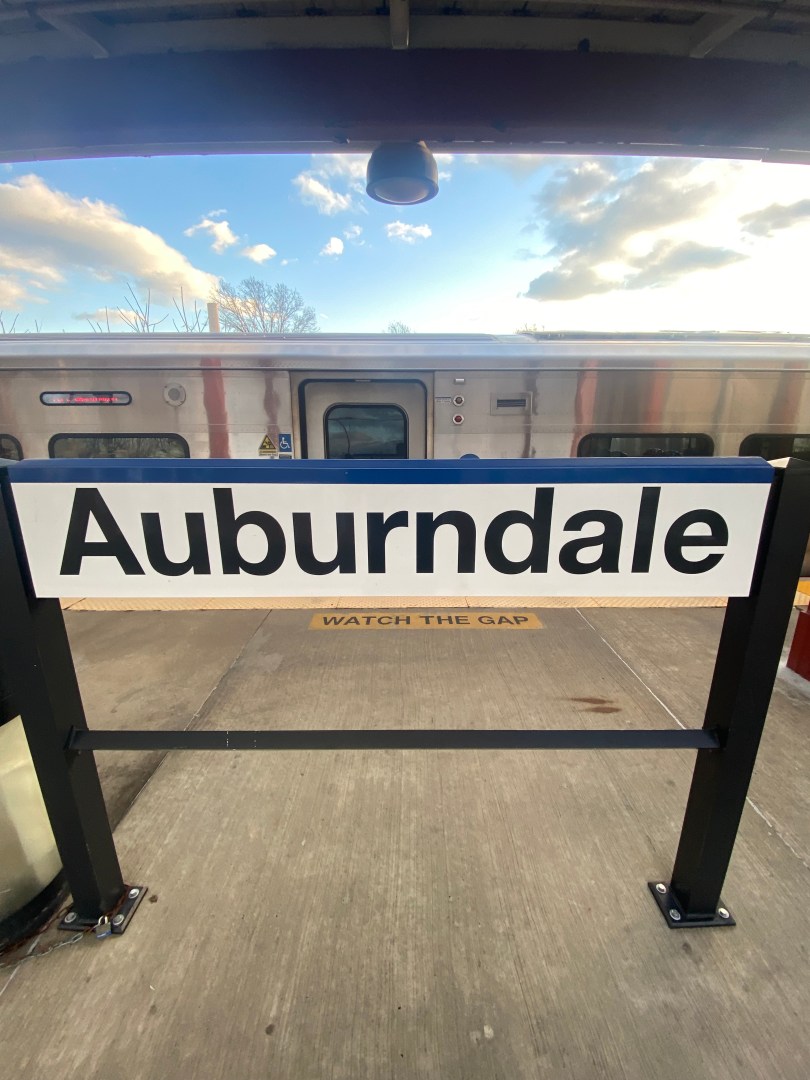
Station sign at Auburndale LIRR Station.

 Thus, the MTA is planning to make the station more pleasurable for riders as well as ensure the station is fully accessible for those with mobility disabilities. While this may not seem like a major project or may even seem like a routine one, projects like these are essential to encouraging those who live in the outer boroughs of New York City as well as its suburbs to use  commuter rail instead of driving into Manhattan especially ahead of the implementation of Congestion Pricing which will charge all drivers entering Manhattan below 60th street a toll between $5-$23 with limited exemptions. This will not only help Queens residents traveling into Manhattan avoid tolls but also reduce emissions and road congestion.

Read More »

This Year’s Holiday Fair At Grand Central Terminal Is A Huge Success

By Joseph Morales

      All year round in addition to being one of the largest transportation hubs in the city as well as the country, Grand Central Terminal hosts a plethora of special events and exhibitions for visitors in its Vanderbilt Hall. Vanderbilt Hall, which was once the main waiting room in Grand Central,is now a world-famous event space with a 6,000 foot raw space with five chandeliers that 200,000 people pass through daily when entering and exiting the terminal. Events at Vanderbilt Hall Make for amazing experiences to have upon entering and exiting the city or even when someone is not traveling and is looking for fun things to do and see. Such events have included art and historical exhibitions, professional squash tournaments and it’s Annual Holiday Fair.

Read More »