Widely Unknown Fuel Management System Could Make MTA Buses More Efficient And Cut Costs

By Joseph Morales

     The New York City Bus system is the busiest and largest in the United States. The system serves millions of riders annually across all five boroughs among over 200 bus routes. 

           The buses used in New York City are held at one of the MTA’s 29 bus depots in all five boroughs, with one depot being located in nearby Yonkers, New York. As the MTA has made significant upgrades to its bus fleet in recent years, different buses use have been using different types of fuel. Significant portions of the bus fleet use either Diesel, CNG(Compressed Natural Gas), Battery Electric or a combination of diesel and electric power. Other secondary fluids go into powering a bus for operation.

Read More »

How Has Crosstown Travel Changed on 42nd Street Over The Years?

By Joseph Morales

    42nd Street is by far one of the busiest and most famous streets in New York City. Its streets are regularly lined with tourists, office workers, and others daily. 42nd Street also connects  Times Square and Bryant Park, both world-renowned attractions that draw millions of visitors annually. The street is also filled with theaters, offices, retail, and almost everything else one can imagine. Almost every line in the subway system, minus the L, G, and certain shuttles, all stop on 42nd Street along with many express buses, connecting the heart of Midtown Manhattan to almost every corner of New York City and beyond. 42nd Street is also home to the world-famous Grand Central Terminal, which serves both the Metro-North and Long Island Railroads, connecting riders to destinations throughout New York’s suburbs. According to a Forbes article, 500,000 people pass through GCT daily, and about a million people pass through GCT during the holiday season. These numbers were taken before the opening of Grand Central Madison, which now serves LIRR trains.

Read More »

The Flushing Line Is Getting A Slew Of Upgrades That Will Improve Every Aspect of The Rider Experience

By Joseph Morales

  The Flushing Line(7 Train) is a critical transportation link between Manhattan and Queens. The Flushing Line connects Midtown with many of Queens’ busiest neighborhoods, such as Long Island City, Jackson Heights, and Flushing. The Flushing Line also connects with multiple north-south subway lines in Manhattan, the N, W to Astoria, Queens, the E, F, M, R(Queens Boulevard Line), and the G Train(Brooklyn/Queens Crosstown). The subway line also connects to various bus lines, including several routes to LaGuardia Airport and many bus routes in Downtown Flushing, where 173,000 bus riders passed through daily pre-pandemic, with around 28,000 of them making transfers to the Flushing Line.

                      Thus, it is no surprise that the Flushing Line is an extremely busy line, with trains running as frequently as every 2-3 minutes in both directions at certain parts of the AM/PM peak hours. The MTA had already significantly upgraded the line in recent years by installing CBTC(Communications-Based Train Control) to replace the fixed-block signaling on the line used since the early days of the NYC subway system. This led to weekday on-time performance on both the Flushing Line and the Canarsie Line(L) where CBTC was also installed, increasing from a combined 68.1% in 2018 to 90.5% post-CBTC installation. In addition, as the new signaling system does not require trains to be as far apart from each other as fixed block signaling, trains can be run more frequently, which can help to reduce overcrowding and improve convenience for Flushing Line riders. 

  After such dramatic service improvements, the MTA aims to build upon its CBTC success by improving stations across the line and performing additional infrastructure upgrades.

Read More »
New Electric Truck Charging Facility Will Be The First of Its Kind In The South Bronx

By Joseph Morales

                 The Hunts Point neighborhood of The Bronx is one of the busiest industrial communities in New York City. It is home to the largest food distribution center in the world, known as The Hunts Point Cooperative Market, which is home to three major markets serving various types of food items. The market is home to over 155 companies, generating over $3 billion in annual revenue and 4.5 billion pounds of food annually. In addition, 60% of NYC’s produce and 50% of its meat and fish pass through Hunts Point for sale and distribution to individuals, making Hunts Point a critical point for food distribution within New York City.

Read More »

CBTC Installation Might Be Icing On The Cake For Recent G Train Upgrades

By Joseph Morales

The G Train(Brooklyn-Queens Crosstown Line) is unique because it is the only subway line outside of shuttles that does not enter Manhattan. Nevertheless, it serves some of the busiest and fastest growing neighborhoods in Brooklyn and Queens, connecting Long Island City to Williamsburg, Downtown Brooklyn, Park Slope and more. Long perceived as a low ridership route with trains having only 5 cars versus the typical 8-10, ridership has increased as neighborhoods have grown and residents and jobs came with it. According to census data obtained by Spectrum News 1, state assembly districts the G passes through  have seen an increase in population between 3.7 and 22.3% between 2011 and 2021. The population of Williamsburg/Greenpoint which is along along the G train grew by 26% between 2010 and 2020. Also, in the five years prior to the pandemic G train ridership rose 15%.  Thus, the need for travel is increasing along the line and the G train will continue to be an important connector between some of the most rapidly growing areas of the city.

Read More »

What Is The Future of the Abandoned BallPark SIR station? Could It Reopen Full Time Some Day?

By Joseph Morales

    The BallPark Station on the Staten Island Railway(SIR) is a station north of the SIR’s terminus at the St.George Ferry Terminal next to the Richmond County Bank Ballpark and the Empire Outlets. This station had opened on June 24, 2001 in coordination with the beginning of the season for the now defunct  Staten Island Yankees baseball team, the former Short Season A affiliate of the New York Yankees, that served to transport riders to baseball games at the 7,000-seat stadium. The station only served trains on game days.

Read More »

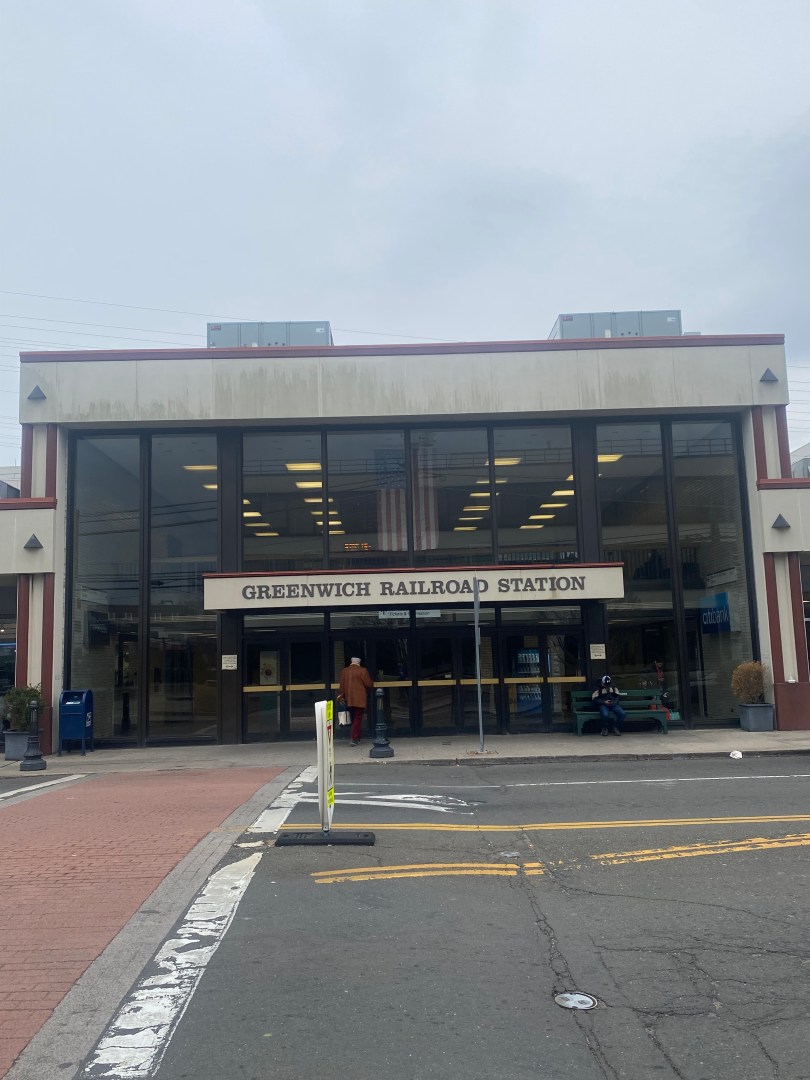
The Town of Greenwich Wants To Revamp The Area Around Its Metro-North Station

By Joseph Morales

  The Town of Greenwich is a large town in the State of Connecticut with a population of around 63,500 according to the page on the U.S Census Bureau’s QuickFacts regarding Greenwich. Downtown Greenwich is located directly off the NY-CT border and is about a 50 min- 1 hour train ride to Grand Central Terminal. In addition to the railroad, Interstate 95, the Merritt Parkway and multiple CT Transit bus routes are located near Downtown as well. It is known for being a vibrant, walkable downtown with a variety of shops and restaurants including an Apple Store on Greenwich Avenue. 

                      Now, the town of Greenwich wants to utilize its assets in order to modernize the Greenwich Metro-North Railroad(MNR) station in Downtown Greenwich and its surrounding areas well as to create an inviting and accessible retail and restaurant complex. They will do this through utilizing their existing public-private partnership with the GP Holding Inc. who owns Greenwich Plaza. 

Read More »

Station Entrances to Busy Nostrand Ave Station Opened 2 Years Ago A Day From Today. What Might Happen To Other Entrances Closed During The Same Era?

By Joseph Morales

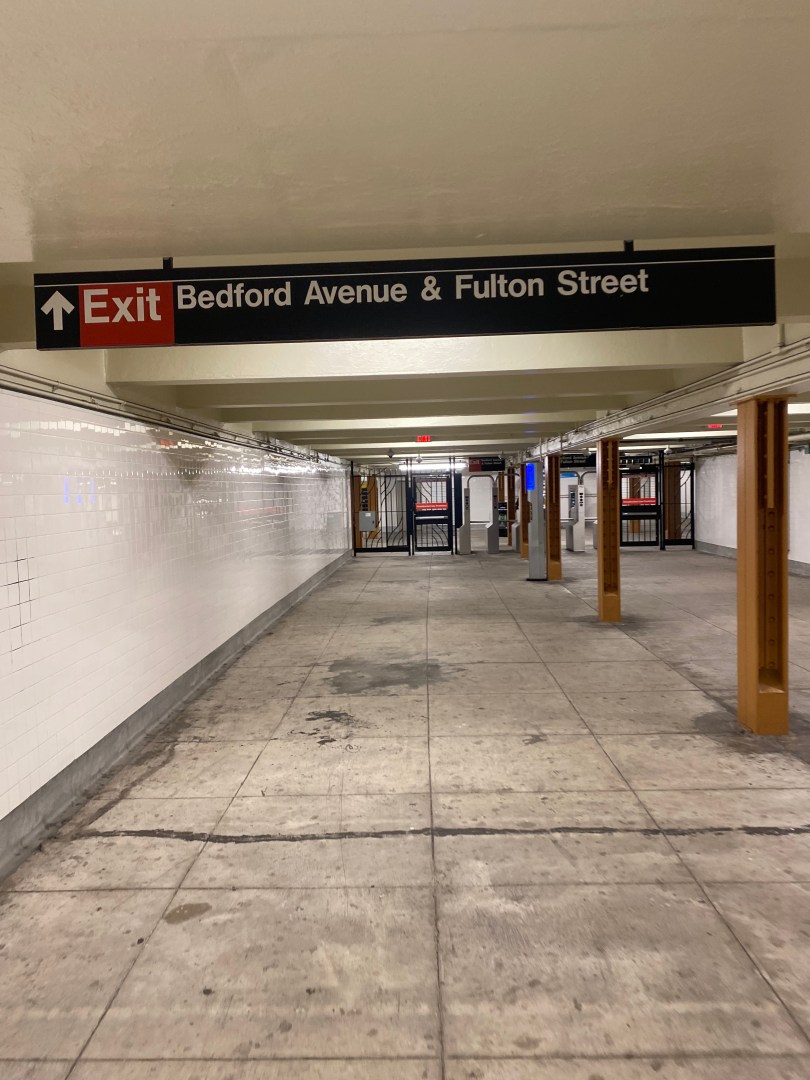
The Nostrand Avenue Station on the Fulton Line(A,C trains) is located under Fulton St between Nostrand and Bedford Avenues in the Bedford-Stuyvesant section of Brooklyn. The area immediately surrounding the station is known for being a busy commercial strip with a combination of high-density residential buildings and retail stores. The station also provides transfer between local and express trains along the Fulton Line as well as the Eighth Avenue Line in Manhattan, in addition to transfers to the B25 and B26 buses along with the B44-LCL/SBS. The station is also a short walk away from the Nostrand Ave LIRR station.

                 Though the station and surrounding community have always been extremely busy, two spacious entrances on Bedford Ave/Fulton St had been closed and abandoned between 1991 and 2021 after the NYPD Transit Bureau determined that they could not provide enough police in the entrances in order to protect straphangers when subway crime was considered out of control in New York City. 

Read More »

What has the NYCDOT Done to Improve Queens Blvd Over The Years?

By Joseph Morales

Queens Blvd is one of the busiest streets in all of Queens, stretching from Downtown Jamaica in Southern Queens, about 7.5 miles to the Ed Koch Queensboro Bridge, which connects Queens to Midtown Manhattan and is the only way to get to Queens to Manhattan by car without paying a toll. Along the way, the Boulevard passes through many diverse neighborhoods with high population densities such as Forest Hills, Elmhurst, Woodside and Long Island City. Many major destinations are located along the corridor as well such as the Queens Center Mall and Queens Borough Hall. Many schools, hospitals, retail stores and other facilities are located along or off the bustling street as well. 

Read More »

With The Brooklyn Bus Network Redesign Draft Plan, Express Bus Riders Will Probably Have Mixed Emotions About Proposed Changes

By Joseph Morales

The MTA is redesigning the Brooklyn Bus Network with the intention of creating a new bus network with simpler, more direct routes as well as to adjust frequencies on bus routes in order to match current demand. The MTA is also adjusting or even creating new bus routes to match the travel needs of Brooklyn bus riders. 

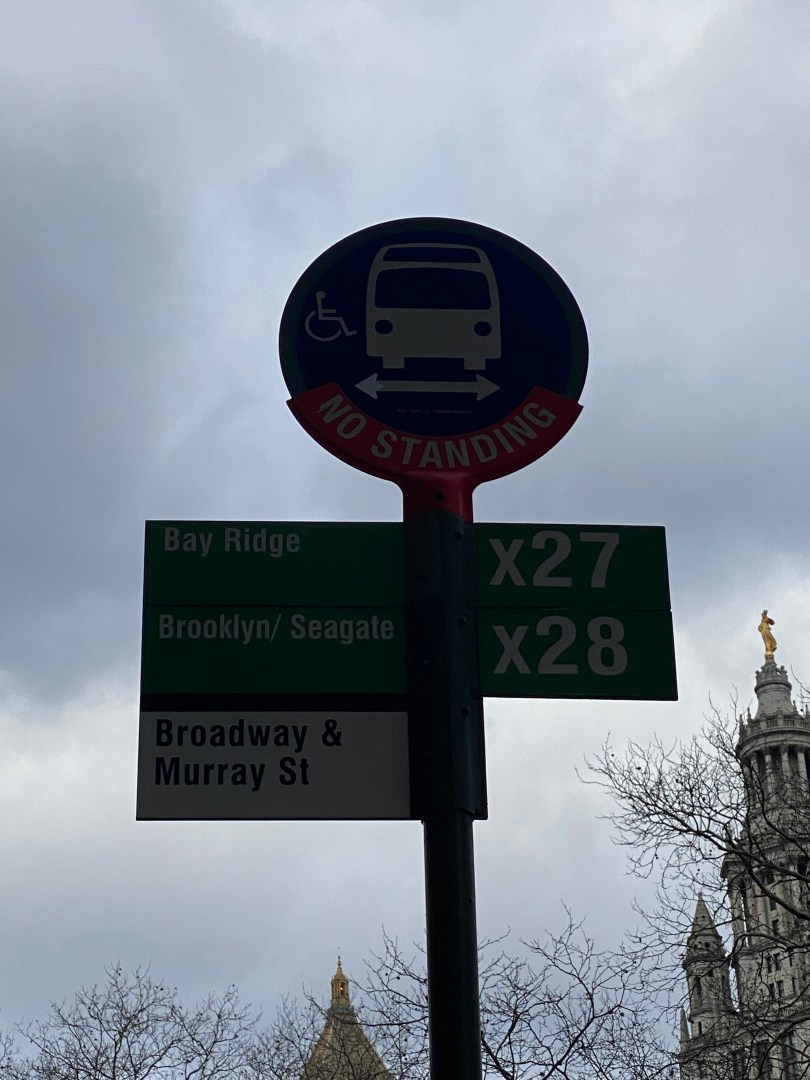
                While this project may seem like one riders are looking forward too, express bus riders may or may not be so excited. Express buses are typically but not always designed for the purpose of getting people to and from Manhattan from areas of the city that are not served by the subway. Getting to Manhattan without these express buses would likely result in many people having to take bus rides to subway stations, which vary in length depending on where one’s starting point. As areas served by express buses in Brooklyn generally tend to be areas with higher rates of car ownership, many Brooklynites who would otherwise take these buses are likely to drive into Manhattan which can lead to more congested streets in Brooklyn as well as Manhattan. Therefore, express buses are a critical part of a Brooklyn bus network to ensure that all residents have the opportunity to conveniently travel into Manhattan without driving. 

Read More »