By Joseph Morales
SOUTHERN WESTCHESTER’S BUSIEST THOROUGHFARE
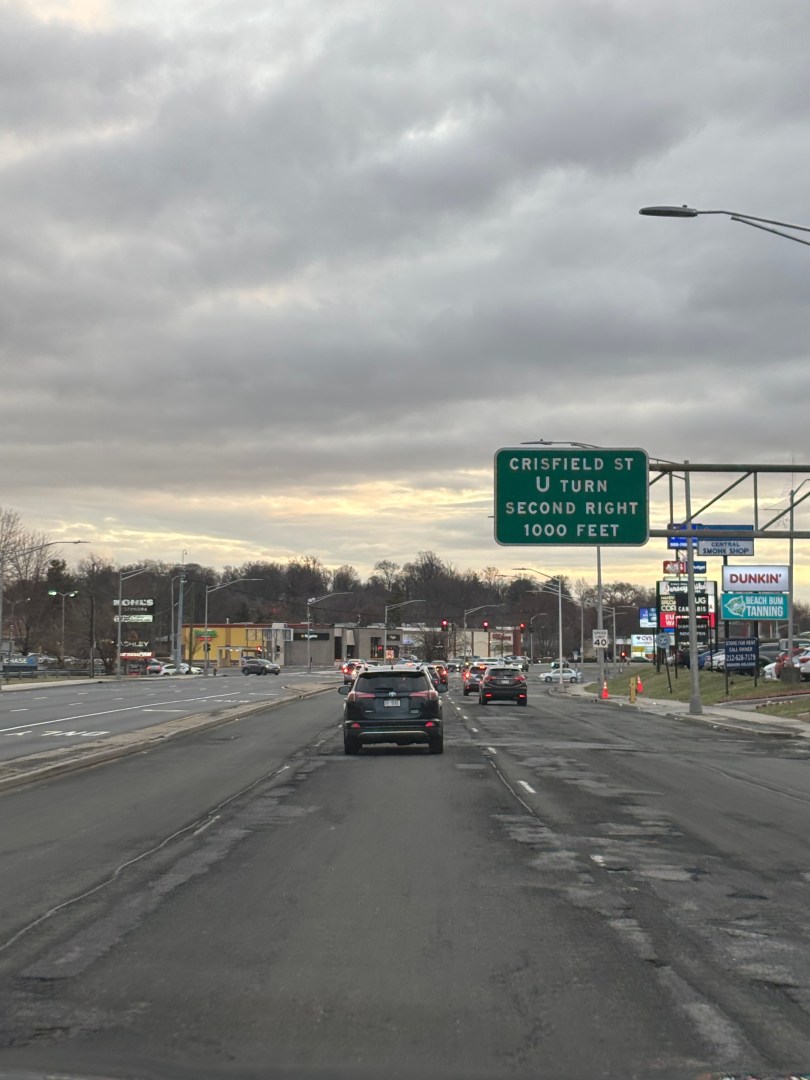
Central Park Avenue is one of the busiest streets in the New York Region outside of New York City. It starts at the Bronx-Westchester line in Yonkers before traversing Lower Westchester to the county seat of White Plains. The street is often referred to as Central Ave and the street is known for being a major shopping corridor with large retail plazas flanking both sides of the roadway. Central Ave also provides direct connections to Ridge Hill and the Cross County Shopping Center, which are among the largest outdoor shopping malls in the New York Metropolitan Area. Non-retail destinations include the Westchester County Center, Empire City Casino and the Nature Center at Greenburgh.
In addition, Central Ave is also a major regional travel corridor for both motorists and transit riders. The corridor connects to multiple major highways including the Sprain Brook Pkwy, I-287 and the Cross County Pkwy. As for mass transit, the street is served by the Bee-Line 20 and 21 bus routes. Both routes link the corridor to Downtown White Plains and the Bronx. This provides riders with connections to a plethora of other Bee-Line buses, the Metro-North and the NYC Subway. Central Ave is also served by the BxM4C, which provides riders with express bus service to Midtown Manhattan. Overall, the corridor averaged over 12,000 daily weekday riders in 2007. That number is almost certainly higher in 2025.
Given how many people use mass transit along Central Ave, the Westchester County Department of Transportation and Public Works has considered and/or implemented different strategies to speed up bus service. This has included adding transit-signal priority(TSP) at 46 intersections and bus-jump signals at another three. The bus-jump signals allow buses to start moving before other traffic so that they can move faster. Across the county, they have also pondered other strategies to speed up buses such as bus lanes and transit priority corridors. Transit priority corridors combine a range of strategies to both speed up and improve the overall quality of bus service. Some corridors are full Bus Rapid Transit lines and prohibit vehicles. Others operate on traditional roadways and combine treatments such as TSP, bus lanes, bus shelters and more to create a better bus experience.
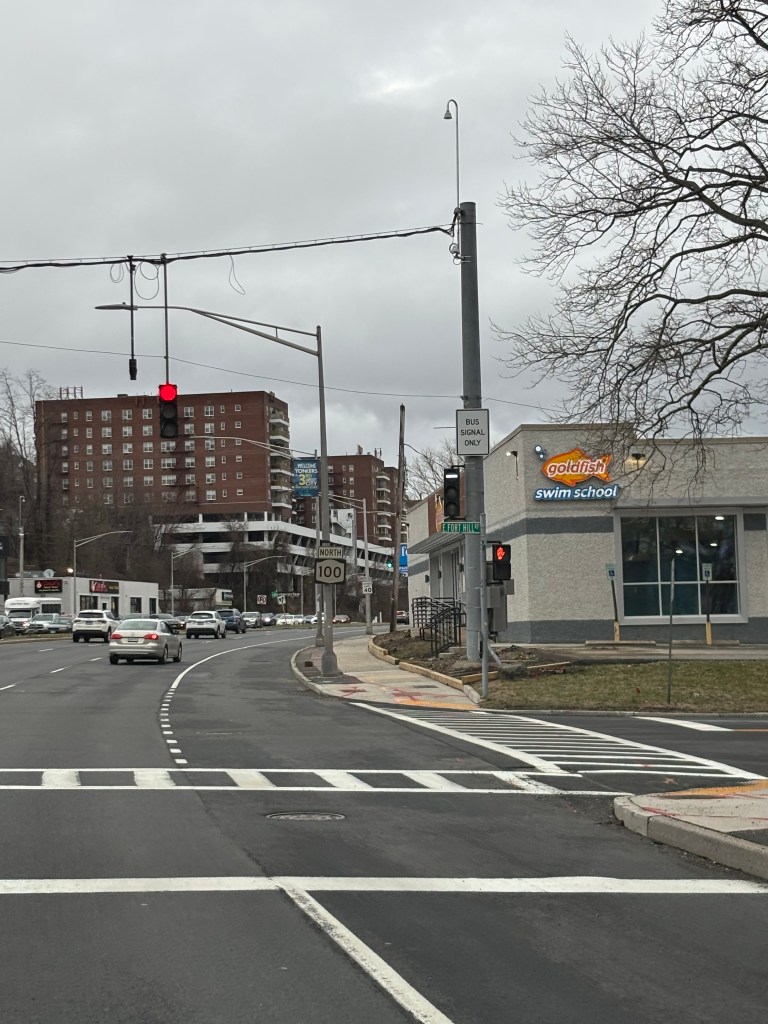
The most ambitious transit improvement discussion for Central Ave was a feasibility study for BRT service in 2009. This service would run from the Bedford Park Blvd(4) subway station in The Bronx north to Downtown White Plains. While it likely would not have been a BRT where cars were prohibited, it would provide a substantial upgrade to existing transit services. The proposed service would essentially make Central Ave a transit priority corridor with as many treatments as possible including bus lanes. BRT would have also included stations and features such as off-board fare collection, visible stations and all-door boarding. In addition, stations would be spaced further apart so that buses can move faster and the local Bee-Line 20 bus would fill in the gaps. This project could have led to speed improvements of 25-40% along the corridor.
WHY NO CENTRAL AVE BRT?
So, with growing congestion and a goal of improving mass transit, why hasn’t Westchester County moved forward with the project in nearly 20 years? There have been no formal announcements and the study basically occurred without any public action happening afterward. The proposal was also not mentioned in the recently published Westchester County Mobility and Transit Plan, which included numerous policies to improve alternative travel modes in Westchester. This may come as a surprise to some given not only the transit propensity on Central Ave but also because the county plans to add an additional bus route to the corridor that could benefit from BRT features. That route would be the Bee-Line 105 bus that would connect the Bronx with the bustling Ridge Hill Shopping Center for the first time.
There are likely a number of reasons why Westchester County hasn’t indicated plans to start the project. Starting at the present moment would likely be impossible due to Westchester County’s budget cuts made in response to funding conditions created by the federal government. Therefore, this analysis will consider the history of Central Ave BRT and how the county could move forward with the project under more stable circumstances.
In June 2009, the feasibility study for Central Ave BRT was published directly after the Great Recession caused financial difficulties that led to Bee-Line service cuts in 2010. This meant that the project was introduced at a time where it was hard to provide existing transit service let alone discuss a new project. Even with a more stable budget, the project would still be a massive undertaking and will likely cost the county about $48.3M in today’s dollars based on figures provided in the study. Also, data shows that 85% of Westchester County residents have access to a car. Such a high car ownership rate might make it difficult for county leadership to sell improvements such as bus lanes and increased TSP that would prioritize buses on the street.
BALANCING DIFFERENT TRAVEL NEEDS
So, what would need to happen for BRT on Central Ave to possibly become a reality? One of the most significant things is simply for transit to be prioritized while not making it too much harder to drive on the corridor. It is important to note that Central Ave is a critical regional travel corridor and there is both high car ownership in the county and high transit ridership on Central Ave. These needs will need to be balanced well in order for the project to be successful and for drivers to not feel burdened on their trips.
The good news is that the bus lanes would not need to be implemented on the entire corridor for substantial benefits to be realized. In fact, the study from 2009 indicated that speeds could still increase 25-40% despite bus lanes not being feasible in much of White Plains and all of Greenburgh due to there being no shoulder on Central Ave. This would likely reduce potential opposition from car owners who would not be losing as much road space for their trips. Also, the main place where bus lanes would make the most difference is in Yonkers, which has some of the highest rates of transit use in the county. The presence of a wide roadway will also help given motorists should still have substantial space to drive unlike with many bus lane projects in NYC. In addition, the TSP can also help Central Ave motorists move faster as they would receive more green time at locations when buses are around.
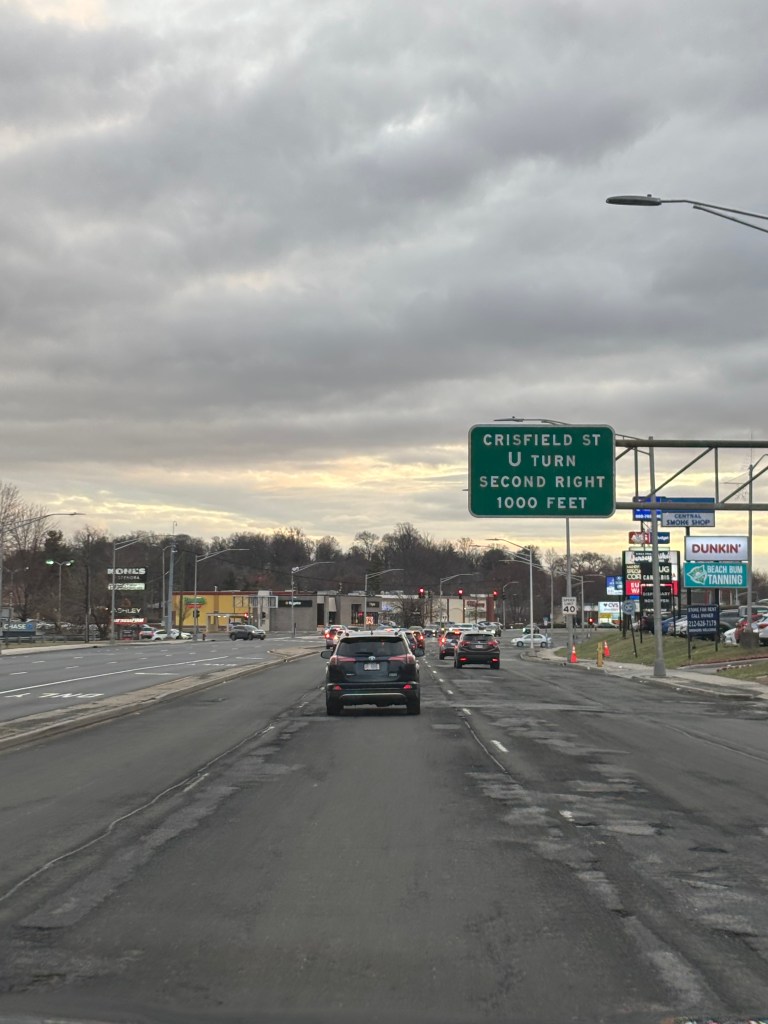
Another way that BRT can substantially and directly benefit motorists is by reducing congestion on the road. This would allow people that absolutely need to drive to better utilize the road space and make faster trips. A study done by researchers at SUNY Buffalo and the World Bank found that traffic speeds increased by 24% as a result of BRT projects done around the world. In order for this benefit to be realized, the service would need to be at a level that is competitive to driving. Running competitive service would mean that bus lanes would need to be clear and a frequent bus schedule would need to be maintained. Failure to meet these conditions could result in the infrastructure being built and then being underused, which could lead to dismay from motorists and taxpayers. Different methods the county can use to ensure competitive service include but are not limited to automated bus lane enforcement and making sure there are enough bus drivers to run the service. It can also include ensuring good performance on connecting Bee-Line bus routes so that BRT riders can use the BRT to access more destinations across Westchester County.
BRT may also draw support amongst all road users because it will serve trips that often lead members of car-owning households to ride the bus. The main destinations for these trips are Downtown White Plains and the NYC Subway in The Bronx. These are both popular places for bus travel due to congestion in those areas. If the BxM4C that runs to Manhattan can use BRT lanes, that would also add to the number of choice riders that would benefit from the project. A new BRT may also be popular amongst car-owning households with youth that are not old enough to drive.
With all of this in mind, the county has also been setting some ambitious goals for improving alternative transportation modes. This has included and is not limited to, a bus network redesign, a proposed microtransit program and an e-bike share program in multiple municipalities. This level of transportation improvements makes it seem like a Central Ave BRT program may be something the county wants to consider in the near future.
CROSS COUNTY MALL STATION
Outside of balancing different travel needs, there is also the challenge of constructing the infrastructure elements necessary for BRT service. The most significant challenge would likely be building a station at the Cross County Shopping Center. $15M or 31% of the costs associated with constructing the BRT would be dedicated to this one station. The primary reason behind this cost is that a footbridge would need to be constructed over the NYS Thruway(I-87) in order for southbound buses to serve the mall. Considering the overpass would be part of the station, it would need to include elements like a roof and elevators not usually seen in footbridges. Building the bridge is necessary because the bus would otherwise lose significant travel time having to go into the shopping center to get back to Central Ave. While this is already the case with local buses, such a deviation would negate much of the time savings a multimillion dollar BRT could generate. Additionally, challenges with building the bridge are likely greater than they were in 2009 due to supply chain issues along with compounded environmental and accessibility considerations. All of these things will need to be addressed for a BRT to be successful given how important of a destination the Cross County Shopping Center is.
FARE COLLECTION AND EVASION
Another significant challenge for implementing the BRT will be having an off-board fare payment system with all-door boarding that can reduce bus dwell times. The estimated time savings of 25-40% for a potential BRT were based on the assumption that the BRT would include off-board fare payment. It would likely be relatively simple in comparison to other things for the county to set up machines at stations. However, it may be challenging for Westchester County to then stop fare evasion. As it stands, fare evasion on Bee-Line buses cost the county $1 million a month as of July 2025. Implementing a BRT-style fare system would likely require the county to hire fare enforcement agents and/or utilize local/county police in order to enforce fares. This could become controversial and create debates over equity and social cohesion. All of those were hot topics in NYC when the MTA raised its fares from $2.90 to $3 this year. Since a BRT would likely carry a substantial portion of Bee-Line riders, the topic would almost certainly need to be addressed in some way if a BRT were to be constructed.
WHAT CENTRAL AVE BRT COULD BECOME
BRT on Central Ave could be a boon for the thousands of transit riders who rely on buses there daily. It would also be the first bus rapid transit line to be built in New York’s suburbs. This could make it a model for suburbs across the country who want to build better transit lines without greatly compromising vehicular traffic. Hopefully, whether it’s BRT or something else, transit improvements can make travel easier for Central Ave riders for years to come.
Works Cited
Anas, Alex, et al. “Bus Rapid Transit versus road expansion to alleviate congestion: A general equilibrium comparison.” ScienceDirect, 3 August 2021, https://www.sciencedirect.com/science/article/abs/pii/S2212012221000253. Accessed 28 December 2025.
“Central Avenue Bus Rapid Transit Study.” Westchester County Department of Planning, https://planning.westchestergov.com/initiatives/overview?view=article&id=2625:central-avenue-bus-rapid-transit-study&catid=208. Accessed 28 December 2025.
Loria, Keith. “Passengers Buzzing about Bee-Line Changes.” 2 April 2010, https://patch.com/new-york/larchmont/passengers-buzzing-about-bee-line-changes. Accessed 28 December 2025.
Nelson Nygaard Consulting Associates, and Foursquare Integrated Transportation Planning. “Westchester County Mobility and Transit Plan.” Westchester County Department of Planning, March 2023, https://planning.westchestergov.com/images/stories/pdfs/wcmfr.pdf. Accessed 28 December 2025.
“New Law Introduced to Help Curb Fare Evasion on Bee-Line Buses.” Westchester County, 7 July 2025, https://www.westchestergov.com/all-press-releases/new-law-introduced-to-help-curb-fare-evasion-on-bee-line-buses. Accessed 28 December 2025.
STV Incorporated. “Central Avenue Bus Rapid Transit Assessment Study-Final Report.” Westchester County Department of Transportation, June 2009, https://transportation.westchestergov.com/images/stories/pdfs/BRT_FinalReport.pdf. Accessed 28 December 2025.
Westchester County Government. “Westchester County Mobility & Transit Plan.” YouTube, 13 October 2021, https://www.youtube.com/watch?v=koZjq7AJoRA. Accessed 28 December 2025.
 Transit Central
Excellent article! I would love to see full BRT on this corridor. In the end, I think having more TSP and tweaks to existing service is more likely, if any improvements are made at all
LikeLike