By Joseph Morales
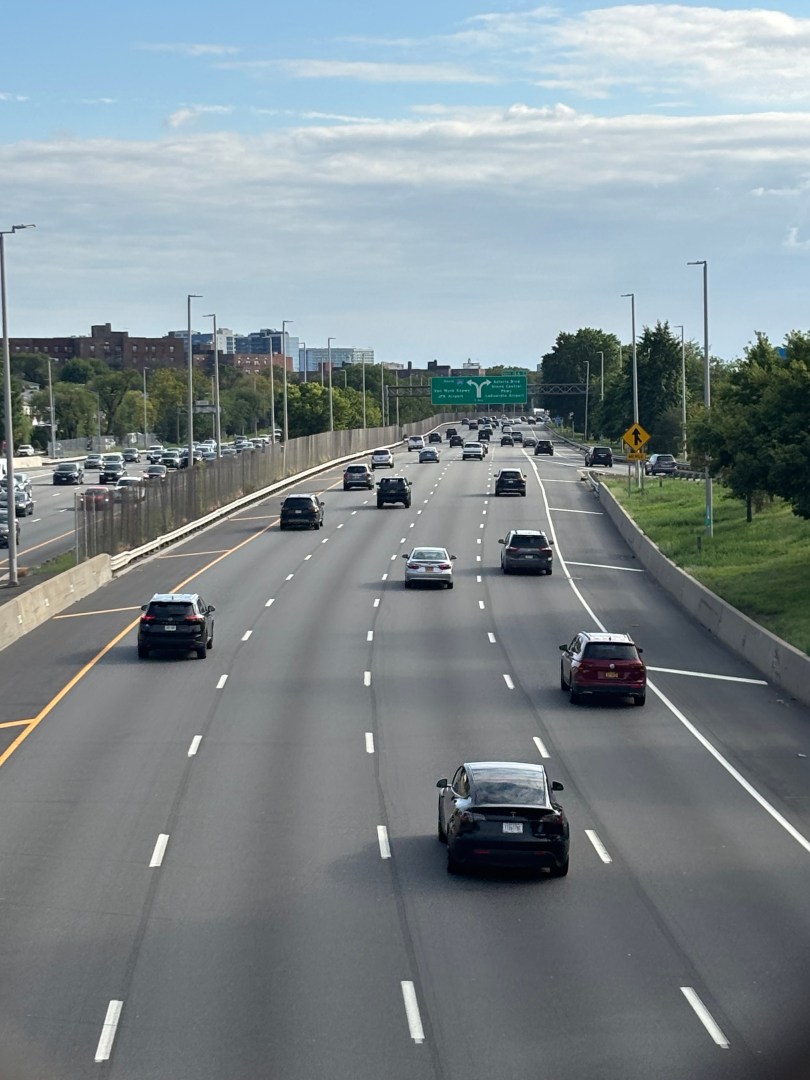
College Point is a residential neighborhood in Northern Queens located just west of the Whitestone Expwy(I-678). This area of the expressway is often known as the Van Wyck Expwy, which is also the official name for I-678 south of Northern Blvd. The community is known for its urban-suburban blend that offers larger homes and still includes access to a variety of amenities. Shopping strips on both College Point Blvd and 20th Ave offer residents the ability to run errands without leaving the neighborhood. 20th Ave includes popular grocery and big box stores including Target, ShopRite and BJ’s. On the other hand, College Point Blvd hosts more of the small businesses you would typically expect on a NYC commercial corridor.
Besides a strong network of local businesses, the neighborhood also boasts a few strong transportation assets. College Point’s vicinity to I-678 and the Cross Island Pkwy provides residents with direct access to destinations across Queens and Long Island. In addition, the neighborhood is just minutes away from the Bronx-Whitestone Bridge. This bridge allows residents to get to The Bronx along with multiple regional highways such as I-95. Outside of highways, there are also multiple bus routes in the area that connect to many destinations around NYC. These routes include QM2/QM32 along with the Q50-LTD. The two QM routes connect the neighborhood to Manhattan while the Q50 connects riders with The Bronx. College Point is also served by three local bus routes in the Q20, Q26 and Q76. Each route connects riders to different communities across Queens along with at least one major downtown in Flushing or Jamaica.
With a plethora of neighborhood amenities and quality transportation infrastructure, one may think that College Point is a great place to build some affordable housing. In fact, the old site of the Flushing Airport on 20th Ave provides the perfect amount of space for a significant housing development. This location is also directly across the street from the larger retailers on 20th Ave and is near robust transit options including the QM buses and the Q20 bus route. The Flushing Airport was once one of New York’s busiest airports before the larger LaGuardia Airport rose to prominence. LaGuardia’s rise coupled with the Flushing Airport’s infrastructure challenges led the airport to close in 1984. It has been abandoned ever since.
Now, a little more than 40 years after the airport’s closure, NYC Mayor Eric Adams and the NYC Economic Development Corporation are proposing a massive housing development where the airport used to be. This development will include a range from “‘deeply affordable’” to market-rate homes. The complex is set to include 3,000 housing units along with walking paths and lawns within the wetlands. Mayor Adams’ office says that this project will lead to $3.2 billion in economic activity over the next 30 years. There will also be 1,830 jobs created as part of the project including 530 permanent ones.

Despite the development’s potential benefits, it has drawn strong pushback from locals. Opposition has come on a variety of grounds but they mainly have to do with infrastructure constraints. Neighbors are particularly concerned that such a large development can lead to things such as schools, sewers and roads not being able to meet all residents’ needs due to capacity constraints. Indeed, College Point’s unique mobility context can lead to transportation challenges that may have varying effects on both current and future residents alike.
For starters, there is no subway service of any kind and the closest subway station is the Flushing-Main St station on the 7 line. Many neighborhoods across the city lack subway access and thousands of New Yorkers rely on buses or taxis to reach the subway daily. However, College Point’s situation is compounded by the fact that its closest line does not provide north-south service in Manhattan. This means that riders must take a bus to the 7 train and then transfer to another line at Queensboro Plaza or a Manhattan station, leading to tedious commutes.
Both of the neighborhood’s express bus routes stop next to the development on the Whitestone Expwy service road and could be a convenient option for residents going to Manhattan. Unfortunately, many future residents in the new affordable units will likely be unable to afford the higher express bus fares and will resort to the more tedious bus/subway options. The cost issue is likely to be compounded even more as the MTA’s biennial fare increases will likely lead to express bus fares being north of $7.25 by the time the project is completed.
The lack of subway access leads in part to a high rate of car ownership in College Point. Data from the NYC Department of City Planning says that 65% of households in College Point’s community district own a car. This number is likely weighed down by the fact that the district includes Downtown Flushing, which has one of the highest activity densities in NYC outside of Manhattan. Even at 65%, the district still has a car ownership rate much higher than the city average. High car ownership in College Point and surrounding areas already leads to high parking demand across the neighborhood. This is evident by the scores of parked cars in the shopping centers on 20th Ave or on College Point Blvd any day of the week.
Parking issues could be greatly exacerbated by a large number of residents moving in on what is likely the neighborhood’s busiest stretch of roadway. It is particularly likely to be an issue of some magnitude since the current plans do not call for added parking of any kind. There is also no parking on 20th Ave due to curb regulations. How many cars need parking spaces in the development will likely depend on a combination of factors. One of the most significant factors for parking demand is how many lower-income residents will live in the complex that are less likely to own cars. Statistics from the Hunter College Urban Policy and Planning Department state that average car owners in NYC make twice as much as average non-car owners. Since there is no set income range yet for apartments, there is no way of knowing what level of financial resources future residents will have. It is also unclear at which income levels residents would be looking to own cars given the limited regional transit options in College Point.
Another problem that residents are concerned about with the new development is increased congestion on 20th Ave. As it stands, 20th Ave is often a busy road at all times of day with motorists trying to get to the highways and the shopping center. 20th Ave is also one of only two streets that exit the neighborhood to the east. It is worth noting that this is not the first time that a development proposal has sparked congestion concerns amongst community members. In 2004, former NYC Mayor Michael Bloomberg proposed a corporate park for the same site the housing is now planned for. The park would have been used by 200 wholesalers and the project was cancelled due to traffic-related backlash.
So, how could the transportation issues that may face College Point be addressed? There are many challenges associated with what would be considered significant solutions to these problems.
For parking, it would likely be really hard to add spaces as part of the development since the wetlands have already limited the amount of land on the site that can be developed. Street space on 20th Ave may be able to be slightly reconfigured so that there can be some curbside parking available. However, this will likely only be able to go so far considering the complex will include 3,000 housing units. City officials may want to consider downsizing the development a bit considering how it may be near impossible for people to park in such a car-dependent neighborhood. Reducing vehicle congestion may also be a challenge considering how 20th Ave cannot be widened due to the existence of both the shopping centers and the site.
As for mass transit, there is not much that could be done to dramatically expand transit options in the immediate future. This is because College Point already has multiple bus routes and building a subway line could take many years. The Regional Plan Association(RPA) proposed a subway line along Northern Blvd that would include a branch to College Point as part of its Fourth Regional Plan published in 2017. For context, the RPA is an extremely influential organization whose ideas and opinions on a range of policy issues have been implemented throughout the Tri-State area. Transportation examples include the Interborough Express, the George Washington Bridge and the Merritt Parkway in Connecticut. While College Point probably has the density to support the subway branch, there are a host of other subway extension ideas that the MTA has considered that would likely get construction attempts first. These ideas include further extensions of the Second Avenue Subway and a Utica Avenue Line in Brooklyn. With all of this, it could possibly be decades before a subway route to College Point is even discussed by transit officials and politicians.
Therefore, improving alternative modes of transportation will likely consist of small bus service improvements along with enhancements to pedestrian conditions. Changes in these areas should make it easier to get around College Point without a car and hopefully lead to less car dependency. This will also make the community better to live in for all residents.
For buses, the most significant upgrade that may be feasible is an increase in bus frequencies. This is in part because the main route that runs adjacent to the site, the Q20, saw its frequencies reduced as part of the Queens Bus Network Redesign. The decision was likely due to lower ridership numbers and hence a desire to reallocate resources to other parts of the bus network. However, if ridership increases enough with the new development, perhaps the MTA can consider increasing service to meet the needs of new riders. Since the Q20 is the route that connects to both Flushing and Jamaica, there is a good chance it will be popular amongst new residents who will have direct access to it.
In addition, improvements can be made within College Point to make the neighborhood a better place to walk. On 20th Ave, multiple enhancements can be made to prepare the street to welcome more pedestrians once apartments get built. One of the most significant of these enhancements would be a widening and paving of the sidewalk on 20th Ave where the development will be. The current sidewalk is narrow and has some deformations that can make it less pleasant to walk on. Another good addition to 20th Ave would be repainted crosswalks at the intersection with the entrance to the Triangle Center. This would help motorists to better recognize where pedestrians are crossing and help make crossing the street here safer. Data from the Federal Highway Administration, high-visibility crosswalks can reduce crashes with a pedestrian injury by up to 40%. Hence, a repainting here would go a long way towards helping people to safely get to and from significant neighborhood businesses.
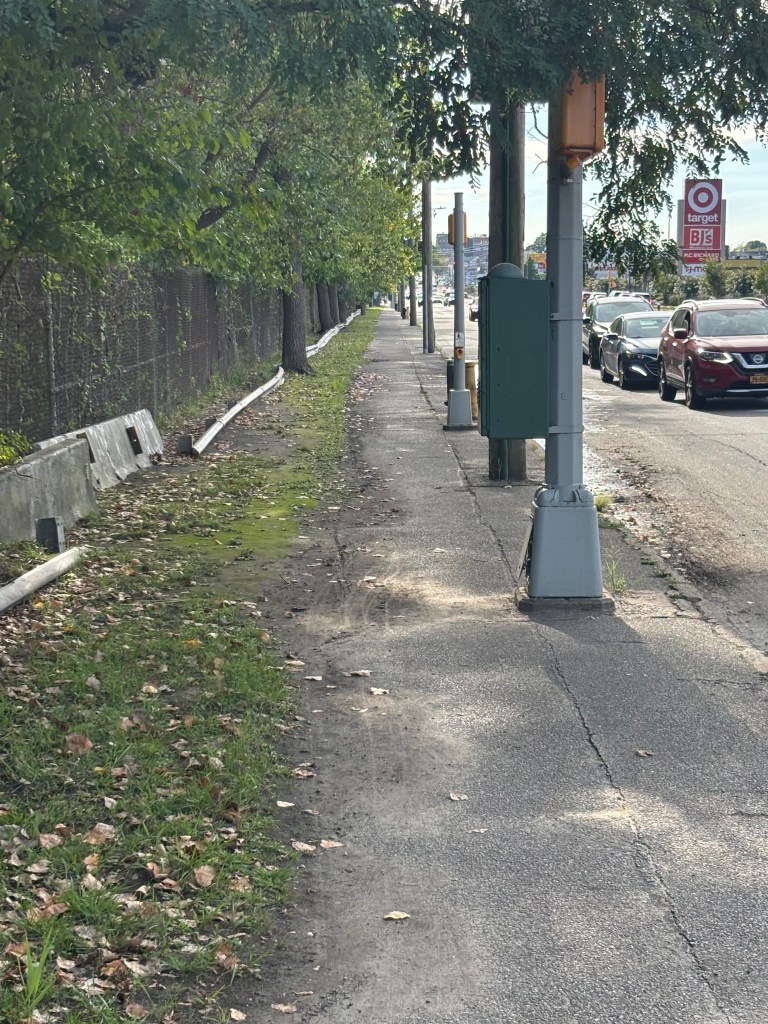

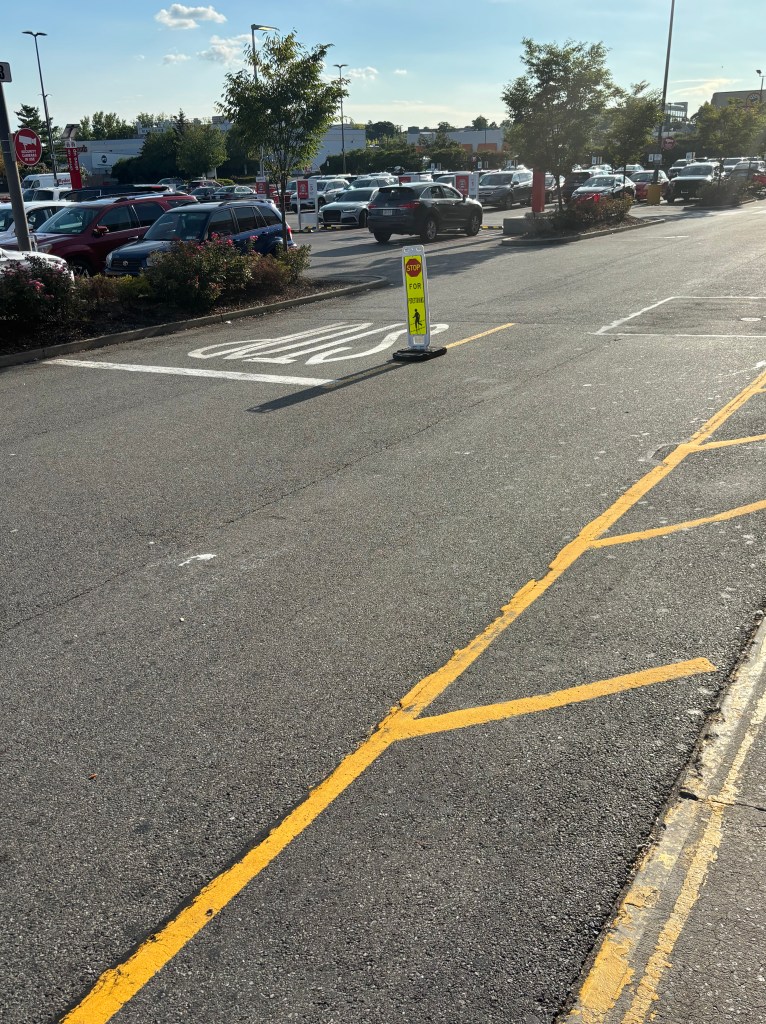
In addition to 20th Ave, pedestrian conditions can be improved in the shopping centers as well. Pedestrian space in these areas often lacks and pedestrians often have to utilize narrow sidewalks or walk on the roadway whilst trying to get across large parking lots to storefronts. A narrow sidewalk is present in the College Point Shopping Center where Target is and there is no sidewalk leading to the ShopRite. This is not only dangerous, but it can also deter people from walking to the stores. The issue could be fixed by expanding sidewalks and adding pedestrian space wherever feasible. Additionally, the Target parking lot could benefit from more visible stop signs on the front roadway near the store. Stop signs can also work where the sidewalk cuts off near ShopRite, between the road and the interior parking lot if adding pedestrian space is not possible. These signs will help to clarify where vehicles should stop and give pedestrians clearer areas to cross into the store. Overall, pedestrian improvements can make College Point a better place to walk and make it much easier to enjoy local amenities without having to drive.

The lack of affordable housing is one of New York City’s most significant challenges. That is why proposals like the one for the Flushing Airport site seek to use vacant land to develop housing in neighborhoods with access to quality local amenities. However, issues and constraints with transportation infrastructure can very well impact the success of such a project. As the process goes on, transportation will undoubtedly need to be considered as planning continues so that new and current College Point residents can get around in a reliable manner. Hopefully, solutions are reached so that good development can occur that the entire community can benefit from for years to come.
 Transit Central