By Joseph Morales
The Metro-North Railroad is a commuter rail network with three main lines connecting New York’s northern suburbs with The Bronx and Manhattan. Countless suburban downtowns across the Mid-Hudson Region and Connecticut have been built around Metro-North stations. The network’s hub at Grand Central Terminal gives riders access to Manhattan’s Central Business District. It is here where riders can also transfer to the NYC Subway and the Long Island Rail Road in order to make trips across NYC and the NY Metro region. Overall, the Metro-North has served an average of roughly 230,000 riders daily according to data from October 2024.
Like all rail systems, the Metro-North relies on signals to ensure that trains run safely and reliably. Signals can truly make or break a day’s operations on a railroad. There is a plethora of evidence showing that quality signals can be the difference as to whether or not riders can rely on trains daily. On the nearby NYC Subway, signal problems were the direct cause of 25% of major delays in 2022 and 2023. However, the L and 7 trains that have more modern signal systems, have consistently had on time rates of above 90% since the system’s installation. Service on these lines has also been faster and more frequent thanks to the signals’ new capabilities.
Though the Metro-North has not had nearly the same signal woes as the subway, quality upkeep of signals is critical to ensuring signal-related delays do not arise. Much of the Metro-North’s signals were installed over 30 years ago when the MTA took over the operation of rail lines from private company, Conrail. According to the MTA, many of these signals are nearing the end of their useful life. In comparison, NYC Subway signals have a useful life of 50 years and many have outlasted this period with varying results. The age and performance of some subway signals has led the MTA to develop a rigorous plan to replace them.
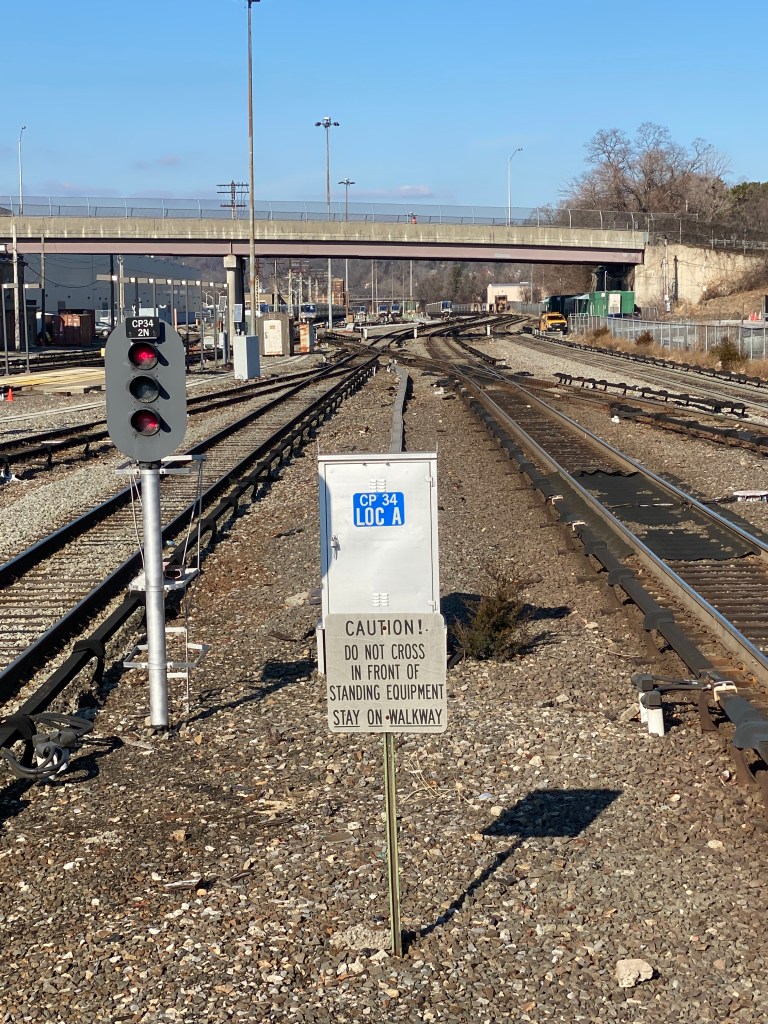
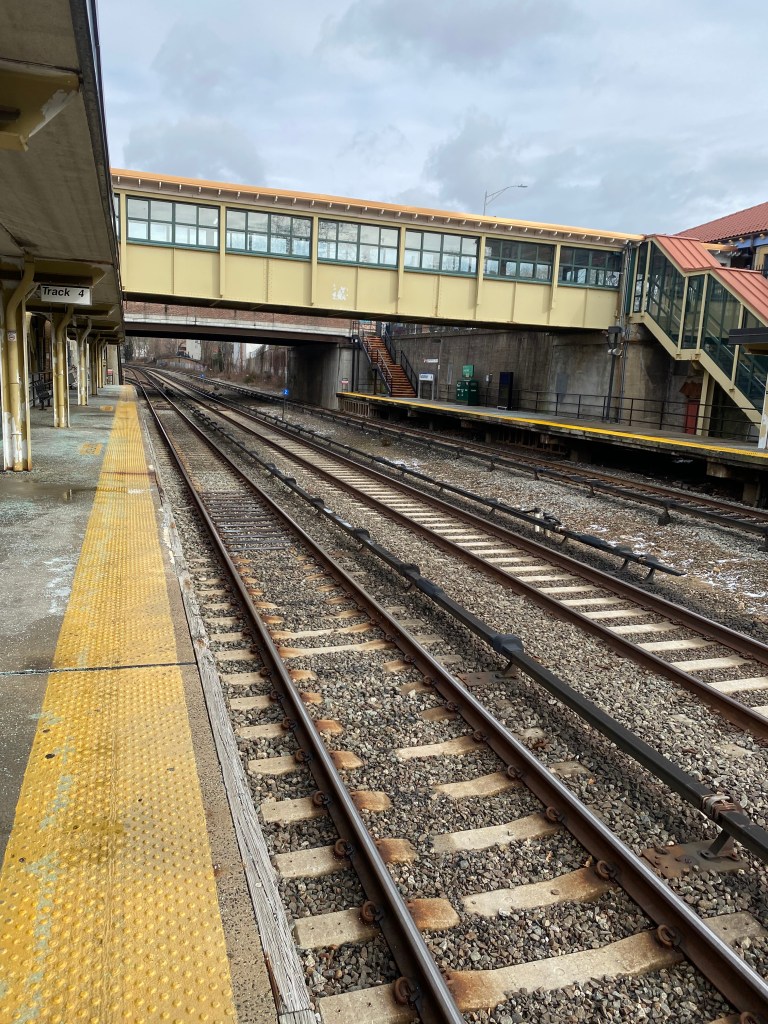
Given how important signals are to Metro-North operations, the MTA is planning on continuing an initiative to replace signals on the Harlem and Hudson Lines. Specifically, this involves the continuation of plans to replace signals on the Hudson Line and design signal replacements for the Harlem line. This is critical given how 93% of Hudson Line signals and 53% of Harlem Line signals were classified as being in “Poor/Marginal Condition” by an MTA assessment.
While it is not clear what the phases are of each program, there are some hints as to what they may include. Other project goals were already announced in the MTA’s 2025-29 Capital Plan. The MTA’s 20-Year Needs Assessment used to select projects for the capital plan has a list of signal upgrades that the Harlem and Hudson Lines needed. The signals will likely be replaced with a system that uses microprocessors as opposed to the signal relay system the rail lines currently use. Florida-based Tech company, PSA has done work for major clients like Disney and Abbott, and has an article detailing substantial benefits to microprocessor signalling. These benefits include faster train operations and a better ability to diagnose any issues that may arise. This can go a long way in reducing train delays.
In addition, the new signals can also make it easier to update and receive new features. Ease of updates is important given how parts for many signals tend to be off the market before the signals have reached the end of their useful life. Situations like this often lead the MTA and other rail agencies to receive custom support services, which are likely expensive. Given how New Yorkers are often discontent with the MTA’s spending, riders and the MTA will likely appreciate it if the new signals reduce the need for custom support.
In addition to replacing the signals themselves, the MTA plans to replace other important parts of the signal system such as Centralized Train Control(CTC) and SCADA systems. CTC is a system that centralizes dispatch operations in a central location rather than assigning these duties to local signal operators.This method increases efficiency and safety by reducing the number of staff required for dispatch operations. In turn, this allows the MTA to prioritize recruitment for other operations-related positions. It is important that CTC equipment is up to date as there are a plethora of intricate technical parts required for CTC to operate smoothly. In addition to CTC, SCADA also helps the railroad operate safely. SCADA systems can control and monitor many critical rail components such as signal statuses and train speeds. This helps the MTA to ensure all important rail equipment is functioning normally.
Other important technical and safety improvements are also being made. As part of the project, the MTA will make upgrades to Positive Train Control(PTC) equipment. PTC prevents unsafe train movements and incidents by stopping trains automatically if there is danger or they are moving in an unsafe manner. The National Transportation Safety Board(NTSB) concluded that PTC could have prevented the 2013 Hudson Line Derailment that killed four and injured at least 61 near the Spuyten Duyvil Station in The Bronx. The PTC equipment that may be upgraded and/or replaced include wayside signal, radio office and field equipment along with office control systems. Outside of signals, the MTA is planning to make safety improvements at grade crossings.
Work will also occur to replace older communications systems with a new radio control system and modern network infrastructure. This can enable more seamless communications between staff and hence lead to more seamless railway operations. In addition, it will be much easier for customers to receive relevant train information during their commutes. The improvements will likely include work on the PBX telephone and voice recorder systems along with copper and fiber communication cables.
Without a question, the proposed project to improve signals and related infrastructure on the Metro-North is critical to the system’s continued success. However, the project along with the MTA’s entire 2025-29 Capital Plan is in a tough position due to a lack of funding. A $33 billion funding gap led the state legislature’s Capital Program Review Board to veto the plan. This is leading the legislature to consider new taxes in order to fund the capital program. If you’re wondering, congestion pricing money is currently delegated to projects from the 2020-24 capital plan. New taxes being considered have included a Millionaire’s Tax and/or an increase in the existing mobility tax paid for by employers.
If no deal could be reached on new revenue streams, it is possible the MTA could have to shrink the scope of its capital plan. Even so, this project may be a favorite to be prioritized as much of it includes a state of good repair work. These types of projects continued across all MTA services even when congestion pricing was up in the air. Whether it is prioritized would likely be determinant on if immediate work is considered necessary to address signal issues for the safety of riders. It is also possible that the project is initially downsized if some aspects are critical to safety and others are not until more funding is available. The cost of this project is marked at $598M according to the MTA’s 2025-29 capital plan.
It takes a plethora of working components for rail signals and communication technology to work at the level required for operations on New York’s commuter railroads. The MTA planned this project to ensure that these components include up-to-date technology to allow for dependable and efficient rail services. Hopefully, solutions are reached so that the MTA can advance its goals and keep the Metro-North running reliably for years to come.
Works Cited
Aijaz, Syed. “What is SCADA and how is it used in Rail Operations.” ExtrenetWorks, 2023, https://blog.externetworks.io/how-scada-is-used-in-rail-operations/#:~:text=SCADA%20systems%20used%20in%20rail,signal%20status%2C%20and%20traction%20power. Accessed 11 January 2024.
Cotey, Angela. “CTC: Remotely directing the movement of trains.” Trains, 3 November 2020, https://www.trains.com/trn/train-basics/abcs-of-railroading/ctc-remotely-directing-the-movement-of-trains/. Accessed 11 January 2025.
Fitzsimmons, Emma G. “Key to Improving Subway Service in New York? Modern Signals.” The New York Times, 1 May 2017, https://www.nytimes.com/2017/05/01/nyregion/new-york-subway-signals.html. Accessed 11 January 2025.
“How do I choose the right Rail Signaling Solutions in the Digital Age?” PSA, 29 July 2022, https://www.psa.inc/company/news/how-do-i-choose-the-right-rail-signaling-solutions-in-the-digital-age/. Accessed 11 January 2025.
Kramer, Marcia. “New Yorkers to face new taxes as MTA confronts $33 billion shortfall, even with congestion pricing.” CBS News New York, 8 January 2025, https://www.cbsnews.com/newyork/news/mta-33-billion-shortfall-even-with-congestion-pricing/. Accessed 11 January 2025.
Liebman, Samantha. “State leaders reject MTA’s $65B capital plan.” Spectrum News NY1, 25 December 2024, https://ny1.com/nyc/all-boroughs/traffic_and_transit/2024/12/25/state-leaders-reject-mta-s–65b-capital-plan. Accessed 11 January 2025.
Metropolitan Transportation Authority. “CBTC: Upgrading signal technology.” MTA, 28 May 2024, https://new.mta.info/project/cbtc-signal-upgrades. Accessed 11 January 2025.
Metropolitan Transportation Authority. “Metro-North Railroad-20 Year Needs Assessment Appendix.” MTA, 4 October 2023, https://future.mta.info/documents/20-YearNeedsAssessment_Metro-NorthRailroad.pdf. Accessed 11 January 2025.
Metropolitan Transportation Authority. “MTA 2025-29 Capital Plan-The Future Rides With Us.” MTA, 18 September 2024, https://new.mta.info/document/151266. Accessed 11 January 2025.
Metropolitan Transportation Authority. “MTA to Purchase Grand Central Terminal, Harlem Line and Hudson Line for $35 Million.” NY.gov, 13 November 2018, https://apps.cio.ny.gov/apps/mediaContact/public/view.cfm?parm=92FAF7B8-02CA-E021-4E8F8DF271CEA0AD_74898BB8-5056-9D2A-10F7020A8F081395. Accessed 11 January 2025.
MTA Live. “MTA Board Meeting – 06/26/2024.” YouTube, 26 June 2024, https://www.youtube.com/watch?v=YZ0hXrUHkO4. Accessed 11 January 2025.
National Transportation Safety Board. “Railroad Accident Brief-Metro-North Railroad Derailment.” NTSB, https://www.ntsb.gov/investigations/accidentreports/reports/rab1412.pdf. Accessed 11 January 2025.
Office of the New York State Comptroller. “A Review of Capital Needs at the Metropolitan Transportation Authority.” NY.gov, 2024. Accessed 11 January 2025.
“Our Clients.” PSA, https://www.psa.inc/. Accessed 11 January 2025.
“Positive Train Control.” MetroLink, https://metrolinktrains.com/rider-info/safety–security/positive-train-control/. Accessed 11 January 2025.
“Railway and IoT Development Company.” PSA, https://www.psa.inc/company/. Accessed 11 January 2025.
Thomas, Prasanth Aby. “The importance of communications systems in rail.” Asmag, 20 October 2020, https://www.asmag.com/showpost/28437.aspx. Accessed 11 January 2025.
 Transit Central