By Joseph Morales
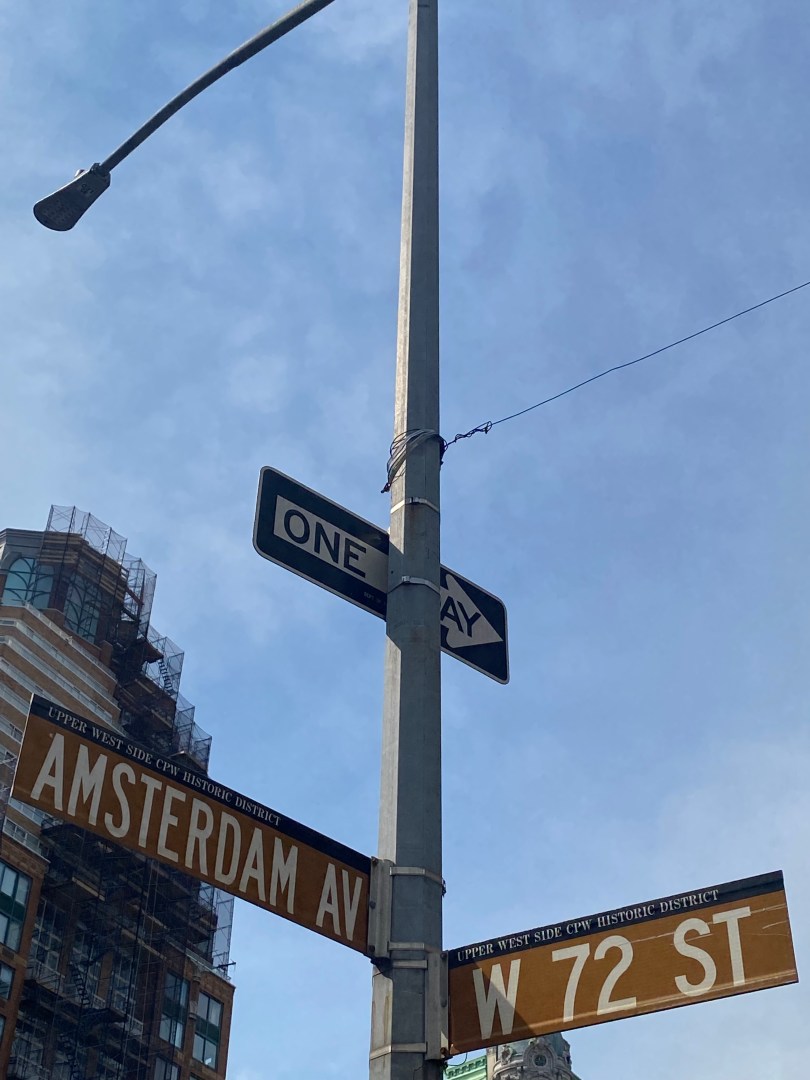
The Upper West Side is one of New York City’s most well known and vibrant neighborhoods. This section of Manhattan is home to major destinations such as the American Museum of Natural History, the Beacon Theatre, and a roughly half of Central Park. In addition, the neighborhood has a plethora of restaurants, cultural institutions and other places that cater to New Yorkers and tourists alike. The UWS is also among the most densely populated residential neighborhoods in NYC with a density of 76,600 people per square mile and a population of about 227,000. For reference, the UWS has a higher population than cities like Baton Rouge, Birmingham, and Providence.
Due to its location in Manhattan, it is no surprise that only 27% of households in the neighborhood own a car. Hence, most residents rely on the neighborhoods’ plethora of bus and subway lines to get around. Some might also choose to cycle on one of the area’s several protected bike lanes or use one of the many yellow cab or rideshare vehicles that circle the community.
Despite the limited use of private vehicles, curb space on the UWS is still at an extreme premium for several reasons. For example, while only 27% of UWS households have cars, the sheer population of the neighborhood still means there are a lot of cars on the road. It is worth noting that rather than daily commuting, many residents use their cars solely to get to places on the outskirts or outside of NYC that are not well served by mass transit. Hence, there are likely more parking spots that remain occupied for longer periods of time than in other communities. Also, the UWS is one of NYC’s most popular neighborhoods for outdoor dining and many streets are often lined with outdoor dining sheds. Couple these things with a surge in online shopping, food delivery and rideshare in such a dense area, and the UWS has among the most dynamic curb space use of any NYC neighborhood.
With limited space and a range of curb uses, one may wonder how space can be better managed to fit the needs of various road users. This is why the New York City Department of Transportation(NYCDOT) chose the UWS as the first place to run its Smart Curbs Pilot Program. The program aims to better manage curb space and designate more areas for various purposes. The Smart Curbs program is also set to help mitigate certain neighborhood transportation issues such as double/illegal parking and unsafe street conditions. Different portions of the initiative are broken into short, medium and long term projects depending on their significance. The boundaries of the pilot program are 86th St to the North, 72nd St to the South, Broadway to the West and Central Park W to the East. No matter how large, each step taken as part of the Smart Curbs initiative can have a significant impact on how curbs are used on the UWS.
The short term initiatives mainly consist of ways to increase parking turnover and loading space for businesses. This will ensure that more parking is available for the many residents, workers and visitors that need it. These initiatives may become more critical if and when congestion pricing is implemented and drivers park on the UWS to avoid paying tolls. The short term initiatives are expected to begin at some point this year.
The plan includes adding 23 loading zones for businesses which are known to decrease double parking by up to 73%. This in of itself should be able to make business operations easier and substantially increase business efficiency. Additionally, less double parking will enable faster traffic times and enable safer trips. For delivery vehicles, the plan also calls for three freight microhubs to be constructed in order to assist with package transloading in safe locations. At these hubs, delivery drivers would be able to transfer packages to smaller and/or lower emissions modes such as cargo bikes and hand carts for more seamless deliveries. These modes will also help substantially reduce the street space that delivery drivers take on UWS roads. This is especially important given the neighborhood’s highly populated but extremely narrow residential east-west streets.
Outside of deliveries, personal vehicles should stand to benefit from the addition of 80 new metered parking spaces to the community. These metered spaces are intended to increase vehicle turnover so that more people can park their cars in order to patronize small businesses. In addition to car parking, five bike parking corrals will be added at five locations on or adjacent to Columbus and Amsterdam Avenues. The corrals will allow cyclists to park closer to the curb and have direct access to protected bike lanes in the north and south directions. Given how much easier it can become to store a bike, it may encourage more cycling on the UWS to small businesses.
There are also plans to enable more curb usage in areas where curbs cannot be used at all. Another short-term proposal includes eliminating No Standing restrictions on Columbus Avenue on weekdays between 7AM-10AM to allow for potential curb use. Whether the space becomes parking, loading zones or something else, any increase in curb space will be a boon for all road users. The NYCDOT also plans to add new parking regulations on W 83rd St likely to increase parking turnover. This will help to increase parking availability near the Children’s Museum of Manhattan, a regional recreation destination that averages 350,000 guests annually according to its website.
While the short-term initiatives aim to make more out of existing curb space, the medium term initiatives primarily aim to add curb space while improving streets more broadly. These are set to start in the Winter of 2025. The main medium term initiative is a redesign of Columbus and Amsterdam Avenue to improve safety for pedestrians and cyclists. These streets both have protected bike lanes(PBL) but they also have what are known as “mixing zones” where cars making left turns merge with the PBLs. Here, the NYCDOT plans to replace as many zones as possible with either offset crossings or bike-only signals that give bikes a separate green light to prevent conflicts. These redesigns will also add even more curb space to be used for a variety of purposes. The innovative street design changes being proposed are unique in solving multiple transportation issues by rethinking traffic patterns at intersections. Given the density of the UWS, moves like this can be a model to cities across the world on how to manage street space with many different road uses.
As for long-term initiatives, they are composed of policies that can change the way people choose to use curbs on the UWS. The main proposal is for demand-based parking fees for motorists. The pilot would include either different fee amounts based on the day or rates that were adjusted 2-4 times a year. Demand-based parking has been a major success in other cities such as San Francisco. According to the United States Department of Transportation(USDOT), demand based parking in San Francisco, reduced time spent searching for parking by 43% and reduced double parking by 22%. This is a great sign for NYC given how San Francisco is the second most densely populated city in the country, behind only New York.
Another larger policy change being proposed is to allow parking meters on Sundays in higher demand locations to operate by changing the current city law prohibiting it. This is because the NYCDOT says that weekends represent the highest passenger parking demand and the lowest parking space availability. It’s not the first time the NYCDOT has pursued this policy in other communities. Back in 2005, there were 32,100 parking meters that operated on Sundays in NYC. When City Council Legislation was brought up to stop Sunday parking meter operation, former Mayor Michael Bloomberg and NYCDOT Commissioner Iris Weinshall opposed it due to how they help facilitate parking turnover. The bill, written by former Brooklyn City Councilman Vincent Gentile was written due to his constituents’ opposition to Sunday meter operation and the fact that Sunday parking fees only made the city $12 million that year. UWS resident and 40-year car owner at the time Paul Engel told the NY Times that many people would benefit from not paying for parking on Sunday and said “‘It’s very difficult to run out every hour to put quarters in the meter when you’re in the movies or eating dinner.’”
While it does make sense why many were opposed to Sunday meter operation back then, a lot has changed in how meters work that could make things different today. For one, parking meters no longer require coins and allow you to pay via Credit/Debit/Apple Pay. You can even pay without returning to your car via the ParkNYC app that was released in 2022. As parking turnover would increase, the idea is that metered parking can lead to more spot availability which will make it much easier to visit the UWS via car for any purpose. However, a move to change the bill may garner some pushback depending on how much fees are and whether or not congestion pricing below 60th St is implemented when a decision is made. Between this and demand-based parking, only time will tell how these parking policies work in tandem.
The Smart Curbs program is New York’s newest initiative in order to address some of the city’s biggest transportation problems in one of its most dense neighborhoods. If all goes well, Smart Curbs may expand to other places including the outer boroughs. As conditions are different on the UWS than in the rest of the city, the chosen initiatives would likely vary in many places. However, this method of innovation and consideration of many travel needs could become a model for how cities around the world manage curb space. Hopefully, Smart Curbs can become that model and help road users get around dense environments safely and seamlessly on the UWS, in NYC and the world.
Works Cited
“City and Town Population Totals: 2020-2023.” U.S. Census Bureau, 16 April 2024, https://www.census.gov/data/tables/time-series/demo/popest/2020s-total-cities-and-towns.html. Accessed 17 June 2024.
Confessore, Nicholas. “City Council’s Meter Plan Restores Free Sunday Parking.” The New York Times, 28 July 2005, https://www.nytimes.com/2005/07/28/nyregion/city-councils-meter-plan-restores-free-sunday-parking.html. Accessed 17 June 2024.
New York City Department of Transportation. “NYC DOT Kicks off Public Outreach for ‘Smart Curbs’ Pilot, Launches Online Feedback Portal to Reimagine City’s Curb Space.” NYC.gov, 20 December 2023, https://www.nyc.gov/html/dot/html/pr2023/nyc-dot-public-outreach-smart-curbs-pilot.shtml. Accessed 17 June 2024.
New York City Department of Transportation. “Smart Curbs Upper West Side-Community Board 7.” NYC, 11 June 2024, https://www.nyc.gov/html/dot/downloads/pdf/smart-curbs-upper-west-side-jun2024.pdf. Accessed 17 June 2024.
United States Department of Transportation, and San Francisco Municipal Transportation Agency. “Implementation of demand-based pricing parking management to San Francisco on-street and off-street parking resulted in a 43 percent decrease in time searching for a parking space and a 30 percent decline in greenhouse gas emissions. | ITS …” ITS Deployment Evaluation, 25 January 2024, https://www.itskrs.its.dot.gov/2024-b01818. Accessed 17 June 2024.
“Upper West Side Neighborhood Profile – NYU Furman Center.” NYU Furman Center, 21 May 2024, https://furmancenter.org/neighborhoods/view/upper-west-side#development. Accessed 17 June 2024.
 Transit Central