
By Joseph Morales
Manhattan, the most transit-dependent borough in New York City, is a hub of activity. Its relentless gridlock makes the NYC Subway critical for the mobility of New Yorkers and tourists alike. According to data from the NYC Department of City Planning, 77% of Manhattanites and 54% of all NYC residents do not own a car, making the subway not just a more convenient option but a necessity for a significant portion of Manhattan and the city’s population.
Unfortunately, much of the NYC subway system is not accessible for everyone. Data from the NY Times shows that just 27% of NYC subway stations are fully accessible for those with mobility disabilities. Additionally, about 12% of New York State residents have a mobility disability, and 18.4% of Manhattan residents are above the age of 65, according to data from both the CDC and the NYU Furman Center, respectively. With Manhattan’s elderly population, it has the largest share of residents over age 65 of any of the five boroughs. As a result, many of these individuals rely on much slower local bus or Access-A-Ride service, which makes it much harder to experience all of what Manhattan has to offer.
This is why the MTA has made a massive commitment to making more stations accessible across the system. In its current capital plan, the MTA has invested a historic $5.2 billion in making subway stations newly accessible. As a result, thus far, they have made more than 20 subway stations accessible citywide, with 6 of them in Manhattan.
Now, the MTA recently started the process of making five more Manhattan stations fully accessible in December 2023. These stations include 96th St and 81st St(B,C), Harlem-148th St(3) and 86th St(4,5,6). Accessibility at these stations will provide subway riders access to many key destinations such as the American Museum of Natural History, City College, the E 86th St Shopping Corridor, and so much more. Additionally, it will provide those with mobility disabilities access to a plethora of jobs along with access to subway service for thousands of Manhattan residents. The stations will also provide access to critical crosstown bus lines, including the M86-SBS, allowing for even more connections to destinations and residences. As the Uptown 6 train at 86th St is already accessible, riders will also have a new option to transfer to express and Bronx-bound trains that they do not have currently.
Currently, transportation options for those with mobility disabilities to get to places near the subway stations becoming accessible are scarce. For all the stations, getting to them currently requires a bus ride from accessible stations multiple stops down the line. Given Manhattan traffic, these buses are often slow and unreliable. Unfortunately for riders at 86th St(4,5,6), their bus ride is likely the longest, with the closest, most convenient accessible stations being 125th St or 51st St, depending on the direction of travel. To make matters worse, getting to either station would require a bus ride on the oft congested 3rd or Lexington Avenues.
When considering which stations to prioritize for accessibility, the MTA considers numerous factors. These include coverage, destinations, ridership, demographics, and transfers. Given how many key destinations the stations serve and how far they are from other stations, it’s easy to see why these Manhattan subway stations were chosen. In addition, many Manhattan subway stations in residential communities, such as 96th St(B,C) are also likely receiving priority as Manhattan has the highest proportion of elderly residents with mobility disabilities out of all five boroughs.
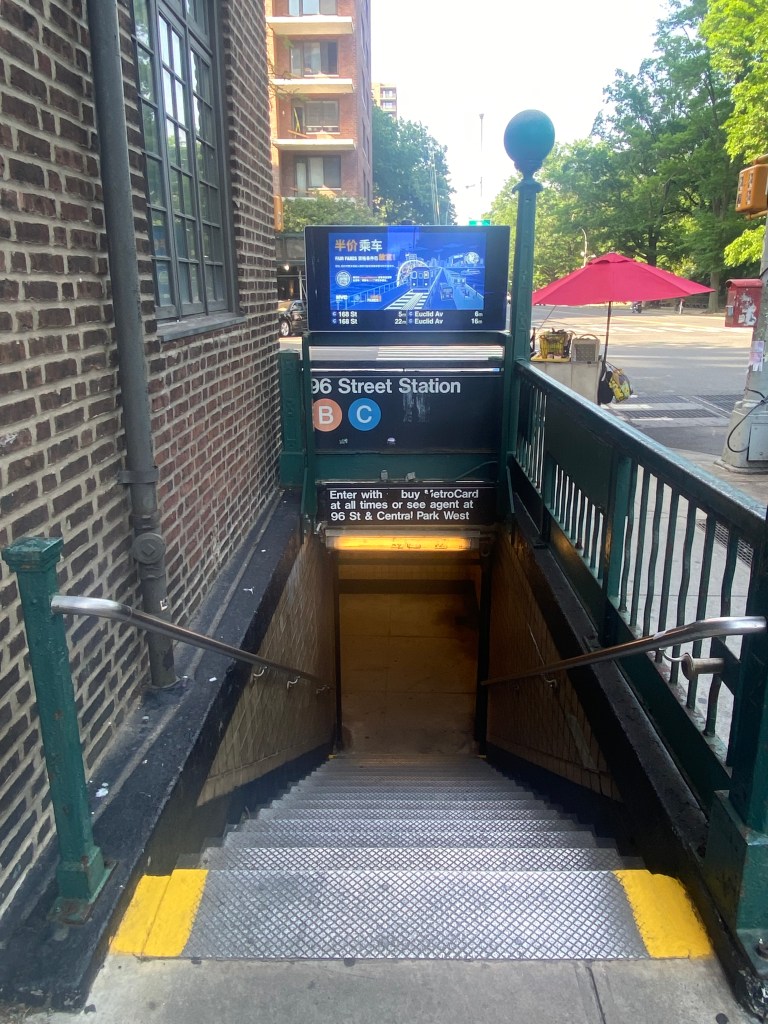
Another one of the MTA’s priority factors and a major consideration when building elevators is constructability and cost. Building elevators in subway stations is truly a complex and expensive undertaking. There are three main constraints to building elevators, commonly referred to as the three S’s by the MTA. The three S’s are Space, Subsurface, and Structure. Space refers to finding space in and around subway stations to build the necessary elevators and make the station fully accessible. Given how old many subway stations are, many were built directly on top or against buildings, making the placement of elevators a challenge. In addition, the subsurface, or what lies beneath a station, can also greatly impact how elevators can be built. This is because the MTA must identify and divert utilities along with unmapped underground infrastructure in order to properly place the elevator. Also, the MTA also faces the challenge of structure, which includes building the necessary walkways, mechanical rooms, and other structures needed for safe elevator operation. Most of the time, the construction must occur while the station is in use.
The three S’s apply in unique ways to the Manhattan subway stations with elevators under construction. Given the density of larger buildings around the subway stations, space, and subsurface will undoubtedly be a more significant challenge than in most places. Also, the stations being in some of NYC’s oldest and most densely populated neighborhoods means there is likely to be more underground infrastructure and unmapped infrastructure that needs to be researched and taken into account. Also, since Manhattan has a diverse range of buildings and spaces, the spatial and subsurface constraints for every station may be unique.
For instance, 96th St(B,C), it may appear that space is less of a concern because there is only a building on one side of the street. However, since there is only a platform entrance on the building side of the street, building an elevator on the other side would require an entirely new platform entrance with fare turnstiles. Additionally, at 81st St-Museum of Natural History(B,C), while the museum the station is named after does not appear to be near the main station entrance, foundations and other infrastructure associated with the large museum may cause constraints in the subsurface. On the Upper East Side, 86th St(4,5,6), is completed surrounded by several commercial and residential buildings. In addition, Harlem-148th St is not only is built directly underneath a high school, but it also used to be part of the adjacent Lenox Train Yard. Hence, this station may have unique spatial constraints due to the distinct structural components associated with both the yard and the school. Also since this station is at-grade, there may need to be different engineering and construction practices to make this station accessible than others.
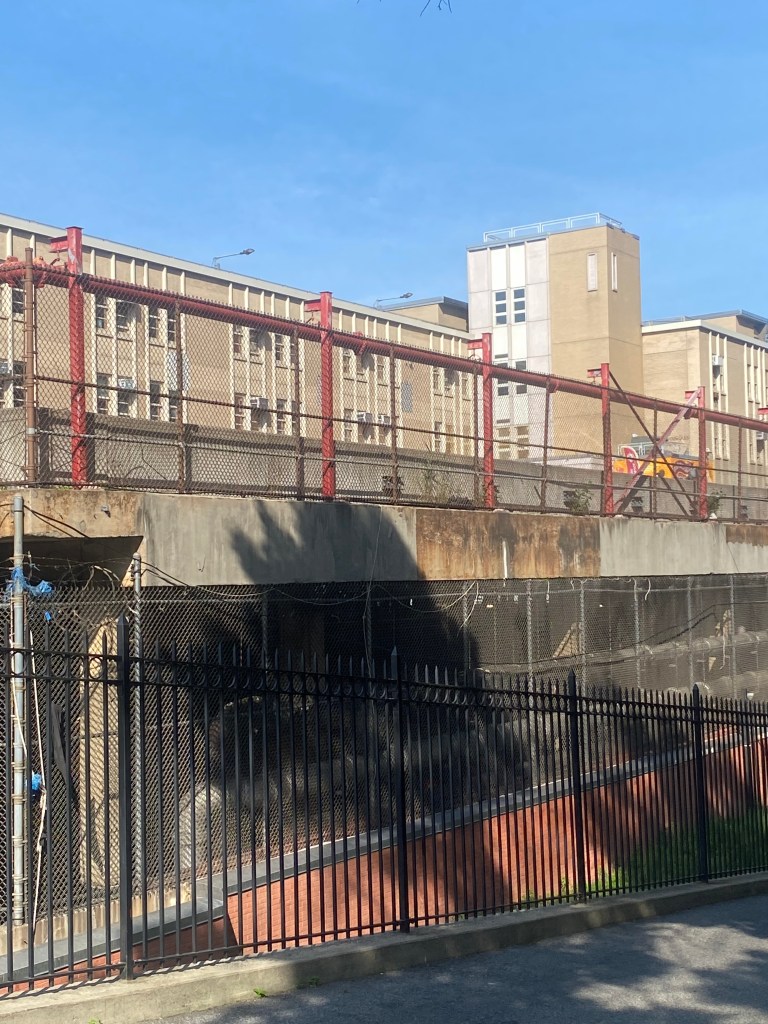
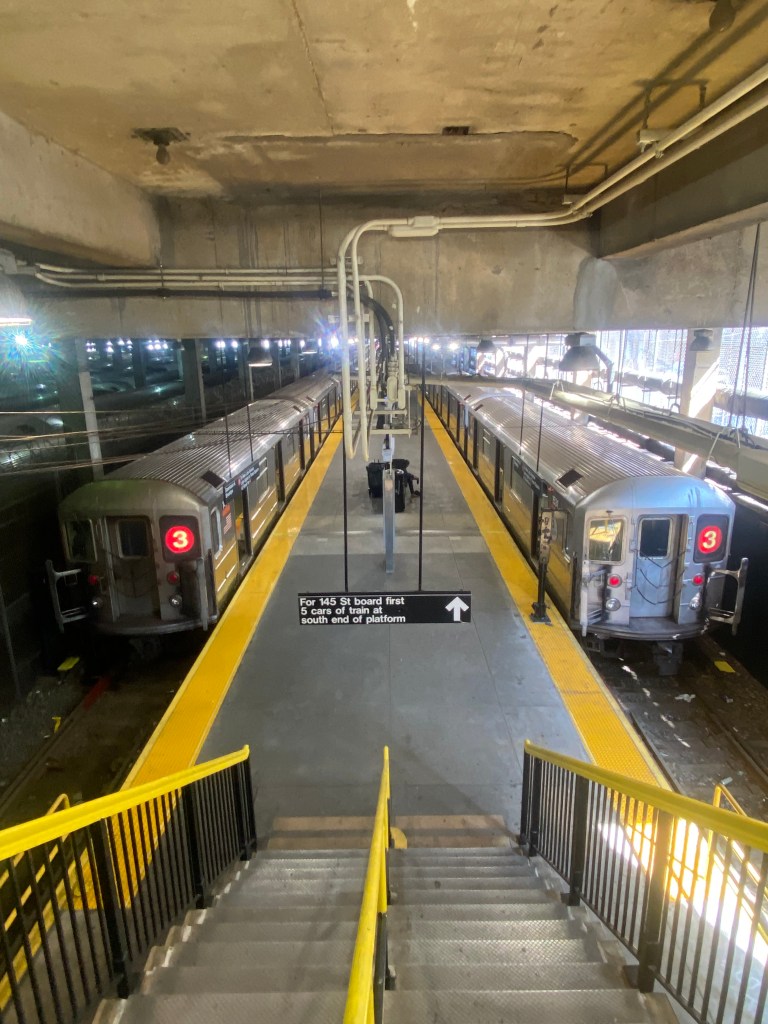

The diversity of constraints that are associated with building elevators at existing subway stations also leads to diversity in the cost and competition times for accessibility projects. Project budgets range from about $27M at Harlem-148th St(3) to almost $50M at 96th St(B,C),$60M at 81st St and $68M at 86th St(4,5,6). To help alleviate the costs and expedite completion, the MTA awarded a $577M design-build contract to Judlau Contracting that included all of the stations along with others throughout the city. Design-build contracts help the MTA by consolidating nearly full responsibility for both the design and construction of the projects to a single company rather than multiple. Based on MTA data, this has saved the agency $244 million on project costs and shaved four months off of project times in 2022. Despite each station’s unique characteristics, the set of stations that started construction in December 2023 are all set for completion in December 2026. With the December 2023 start time, all of the projects in the design-build package are 2% complete which likely only accounts for preliminary work.
Without a doubt, an accessible subway system is one of the main ways to make public transit equitable in NYC. Despite its complexity, its always good to see progress being made of one day having a subway system where as many subway stations as possible are available to everyone. With the completion of these projects, the MTA will make the subway accessible for thousands of more riders who will have access to a completely new dimension of mobility once the elevators are open for use.
Works Cited
Ley, Ana. “Disabled New Yorkers Face Long, Uncertain Timelines for Accessible Transit.” The New York Times, 31 August 2023, https://www.nytimes.com/2023/08/31/nyregion/nyc-subway-accessible-disabled.html. Accessed 25 May 2024.
“Manhattan.” NYU Furman Center, 21 May 2024, https://furmancenter.org/neighborhoods/view/manhattan#demographics. Accessed 25 May 2024.
Metropolitan Transportation Authority. “Capital Plan Dashboard.” MTA, Q1 2024, http://web.mta.info/capitaldashboard/CPDPlan.html?PLN=8&AGY=a. Accessed 25 May 2024.
Metropolitan Transportation Authority. “MTA Accessible Stations.” MTA, 16 May 2024, https://new.mta.info/accessibility/stations. Accessed 25 May 2024.
Metropolitan Transportation Authority. “MTA Station Accessibility Projects.” MTA, 16 May 2024, https://new.mta.info/project/station-accessibility-upgrades. Accessed 25 May 2024.
Metropolitan Transportation Authority. “Selecting subway stations for accessibility upgrades.” MTA, https://new.mta.info/accessibility/selecting-subway-stations-for-upgrades. Accessed 25 May 2024.
mtainfo. “What does it take to install an elevator in a subway station?” YouTube, 21 October 2019, https://www.youtube.com/watch?v=DveunMW9_bU. Accessed 25 May 2024.
MTA Live. “MTA Joint Committee Meeting 1/30/2023.” YouTube, 30 January 2023, https://www.youtube.com/watch?v=nK0EBkwC1_o&t=7996s. Accessed 25 May 2024.
National Center on Birth Defects and Developmental Disabilities, and Centers for Disease Control and Prevention. “Disability & Health U.S. State Profile Data: New York.” CDC, 12 May 2023, https://www.cdc.gov/ncbddd/disabilityandhealth/impacts/new-york.html. Accessed 25 May 2024.
New York City Department of City Planning. “Car Ownership in NYC.” Tableau, 24 November 2022, https://public.tableau.com/app/profile/dcptransportation/viz/ACSProfiles/Dashboard1. Accessed 25 May 2024.
 Transit Central