By Joseph Morales
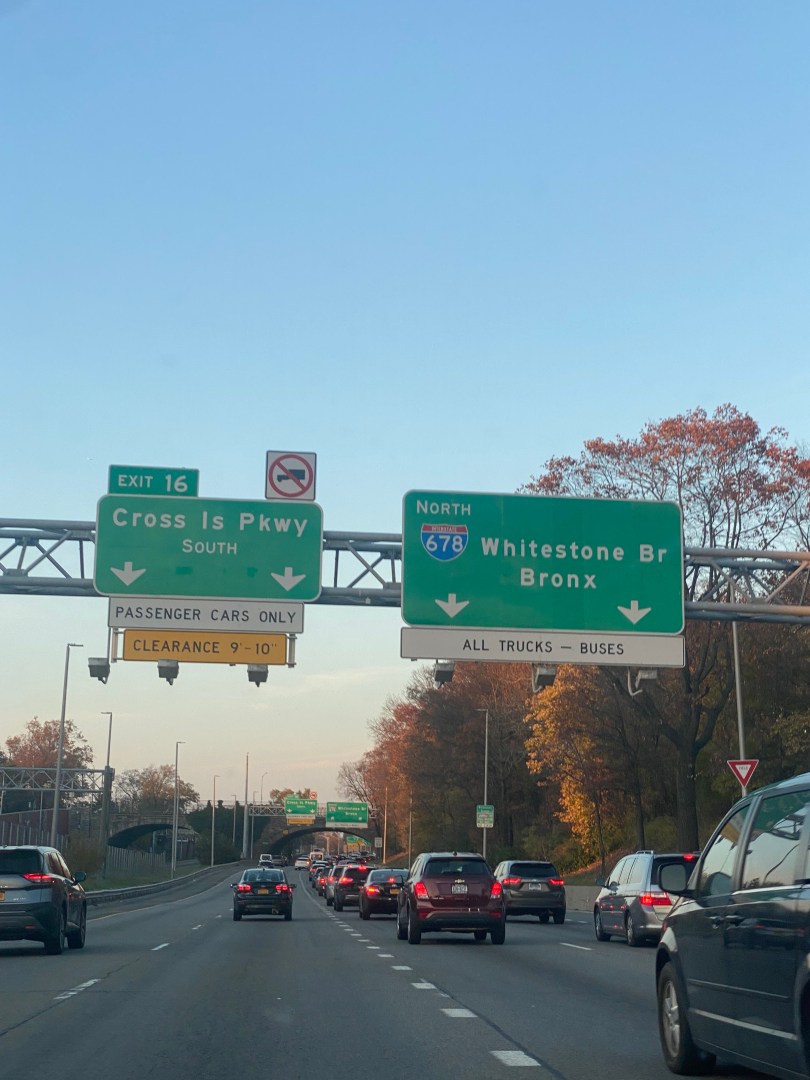
The highway interchange between the Whitestone Expwy(I-678) and the Cross Island Pkwy near the Whitestone Bridge is one of Queens’s most critical highway interchanges. The two highways provide critical connections between areas of Queens and Nassau County, along with the Whitestone Bridge to The Bronx. In addition, the Q44-SBS and Q50-LTD buses pass through the interchange and cross the bridge, carrying tens of thousands of riders between Queens and The Bronx daily. Additionally, in the community district nearest the interchange, 65% of households have a vehicle, and there are numerous stops for the Q44-SBS and Q50-LTD bus routes. Hence, the interchange is not only an essential regional connector, but it is also heavily relied on by those who live nearby.
Unfortunately, this interchange is also one of Queens’s most congested traffic arteries despite cashless tolling on the Whitestone Bridge. On the northbound I-678, it is not uncommon for traffic to stretch as far south as Linden Pl leading up to the Whitestone Bridge, even on weekends. As for I-678 traffic coming southbound from The Bronx, not only do these motorists face congestion in Queens, but the typical traffic on I-678 in The Bronx is also considered horrendous. Traffic there is so slow that the stretch of I-678 in The Bronx had the eighth spot on Yahoo Finance’s top 20 most congested highways in the U.S. in December 2023.
As a result, the MTA completed a $5.6 million traffic redesign of the interchange to improve both safety and traffic flow for motorists. This included a new lane from the bridge to the Whitestone Expwy and a new exit ramp leading to the Cross Island Parkway. They even completed the project four months ahead of schedule in June 2020 due to the lower traffic volumes caused by the onset of the COVID-19 pandemic.
The MTA also considered designing a new lane to the southbound Whitestone Expwy for 0.5 miles between the bridge and the 20th Ave exit as part of its 2020-24 Capital Plan. The project would have been an MTA project likely due to its proximity to the Whitestone Bridge, one of the MTA’s eight bridges and tunnels. However, the plan to design this new lane was canceled in June 2023 due to the success of the MTA’s previous project at the interchange.
Indeed, the MTA’s first interchange project did have some success. The widening of the expressway undoubtedly provides a safer and more seamless way to either continue on the Whitestone Expressway or exit to the Cross Island Pkwy. Before this project, the expressway only had two lanes and an exit bay for the Cross Island Pkwy after cars arrived in Queens from the Whitestone Bridge. Hence, drivers had to know which highway they were using before arriving in Queens or merge against oncoming traffic from either the right or left-handed directions. This caused traffic bottlenecks and, hence, slower travel speeds. The new lane and entry ramp addressed these issues to give motorists more space to maneuver safely and switch lanes if they needed to get somewhere else. They can also now move faster since there is adequate space for all vehicles. While congestion is still an occurrence, the interchange moves faster and, most importantly, is safer.
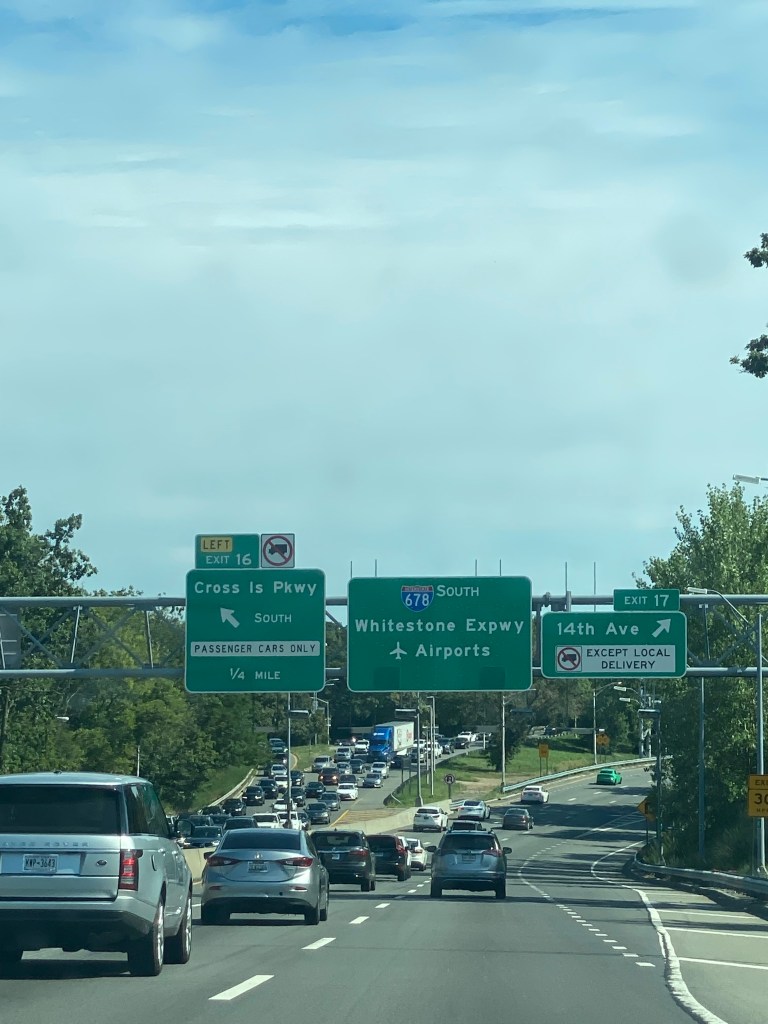
The MTA likely did not see the need for a new lane to the 20th Ave exit, as congestion is rarely an issue in this segment of the highway. Once the northbound Cross Island Pkwy meets the southbound Whitestone Expwy, the highway expands to three lanes anyway. In addition, the project closer to the interchange fixed the main bottleneck, which was the primary driver behind congestion issues was fixed Hence, adding a new lane after that would not have done much to improve what still is the primary driver of congestion on the highway despite it being significantly improved.
For the most part, it seems like the MTA has done what it could to improve congestion on the Whitestone Expwy/Cross Island Pkwy interchange going southbound. The biggest issue, however, is the congestion on the northbound Whitestone Expwy leading up to the Cross Island Pkwy interchange and the Whitestone Bridge to the Bronx. This is by far one of the most congested highway segments in the city, as heavy traffic conditions are typical, sometimes as far south as the Linden Pl exit in Flushing. Most of the highway between this point and the bridge is your typical 3-4 lane highway. However, the Whitestone Expwy narrows to just two lanes entering the Whitestone Bridge, a pinch point that has ripple effects on a large stretch of the expressway.
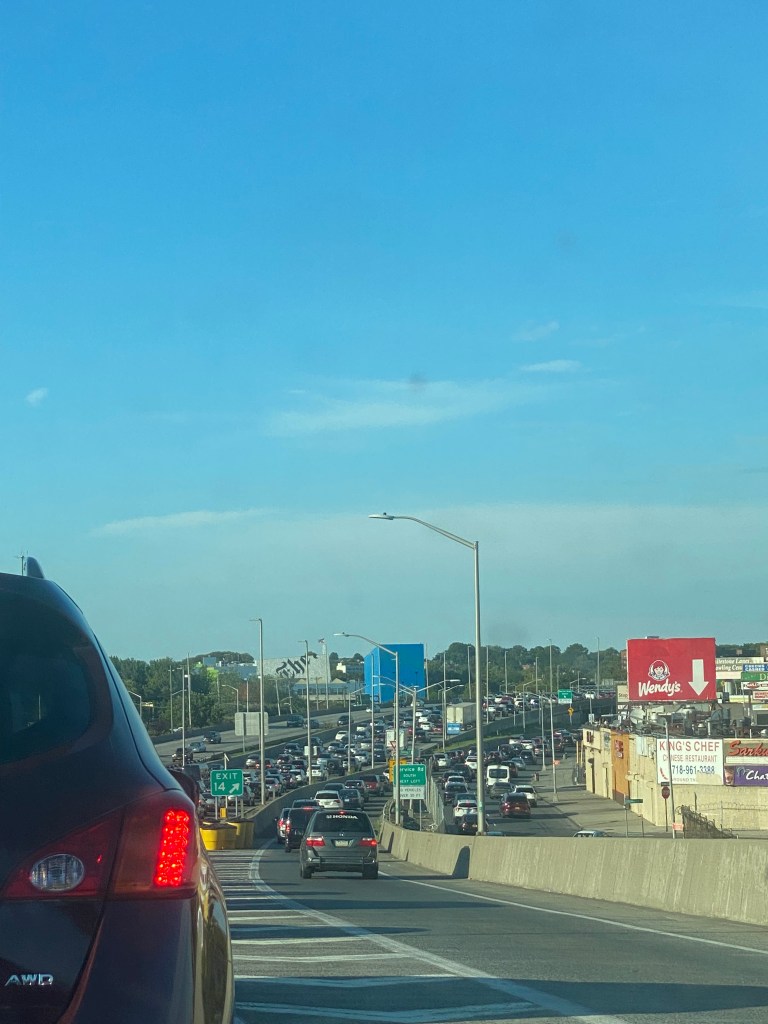
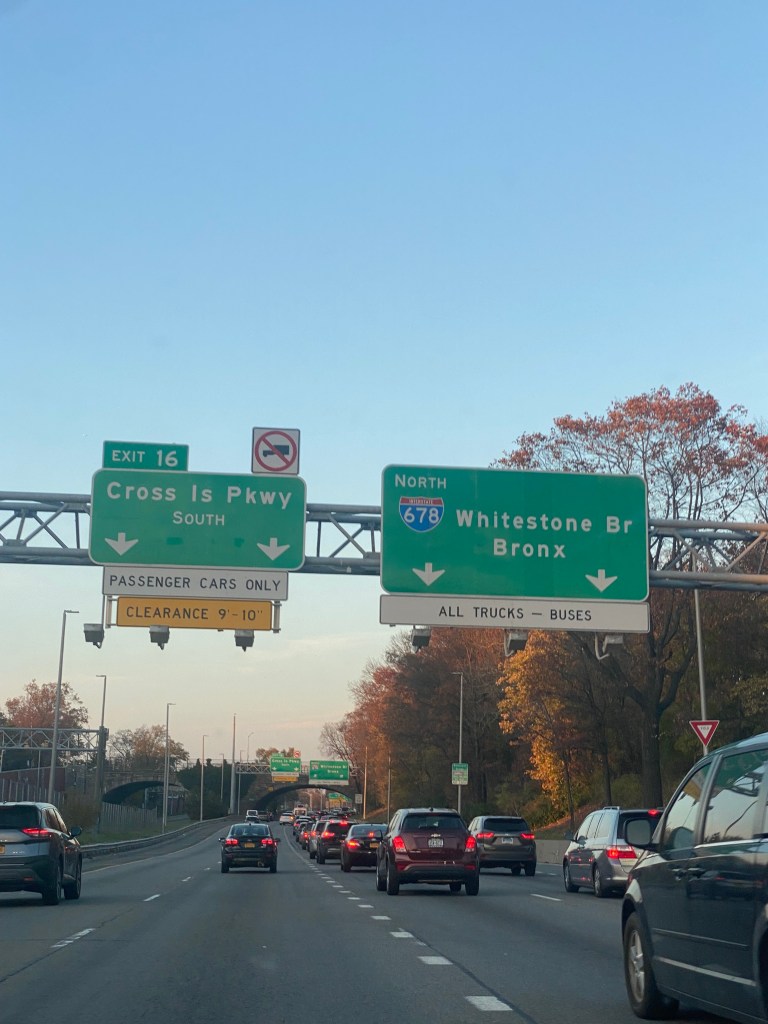
Improving this area would be a much more arduous task. As the approach is directly adjacent to the southbound expressway on one side and a slope leading to the Cross Island Pkwy on the other, widening the expressway here would be a feat of engineering almost unheard of. For the MTA or any agency to do such a project for this kind of pinch point would likely not be the best use of limited resources compared to other projects regionwide.
Even if it would lead to initial improvements, there would also be questions about whether or not these congestion gains could be sustained. This is because of induced demand, which is the theory that adding lanes to a highway will ease traffic at first, only for it to increase later on if more people drive. If the MTA wanted to widen this segment, it would not be the first time a highway widening project in New York was scrutinized due to induced demand concerns. In July 2021, the MTA was criticized for widening a small 2.0-mile section of the Belt Pkwy in Brooklyn near the Verrazano Bridge to improve safety at a merge between the bridge exit and the parkway. Both the city and state have also been criticized for plans to widen small sections of both the BQE and other sections of the Van Wyck Expressway, respectively. According to research from UC Davis, a 10% increase in traffic volume eventually leads to a 10% increase in car traffic. While the Belt Pkwy project may alleviate congestion due to the elimination of the merge, this study suggests that the same will not be true for the BQE and Van Wyck Expwys.
So, if the highway can’t be expanded, what else can be done to improve congestion near the Whitestone Bridge? There are not too many traffic mechanisms outside of highway expansion that are known to decrease congestion caused by traffic volume. Hence, the best strategy would be to get more people to travel over the bridge via non-car modes.
For the most part, non-car modes would mean public transportation. This public transportation would not only need to get people across the bridge but also connect people to destinations they want to go to in both Queens and The Bronx. The Q44-SBS does provide connections to Flushing and Jamaica along with Bronx transit hubs West Farms and Parkchester. The Q50-LTD also serves a good portion of the East Bronx along with the Pelham Bay Park transit hub and Downtown Flushing in Queens. However, people also utilize the Whitestone Bridge to access destinations in the suburbs along with the Bronx and Queens that are hard to reach by existing transit. Many who use the Whitestone Bridge also often start their trips from areas not adjacent to the bridge. Hence, any transit would need to connect to the bridge itself along with more destinations on both sides.
One possible solution the MTA plans to implement is an extension of the Q50-LTD from Downtown Flushing to Citi Field and LaGuardia Airport as part of the Queens Bus Network Redesign. This can help alleviate congestion by reducing the number of people from the East Bronx who choose to drive to the major Queens destinations served by the Q50-LTD. The MTA also plans to substantially increase frequencies on the route at all times, which could help more people to be compelled to ride. Additionally, the MTA can also consider extending the Q44-SBS to Fordham Plaza from the Bronx Zoo. This would provide riders access to one of The Bronx’s busiest commercial hubs, many more bus routes, and the Metro-North Railroad. The MTA did have this proposal in their draft plan for the Queens Bus Network Redesign. However, they did not include it in the final plan, likely due to a potential adverse impact on service reliability due to the longer travel distance and congestion on Bronx streets. This is why they rejected public requests for a Q44-SBS extension to the Bronx High School of Science in Bedford Park, not far from Fordham Plaza.
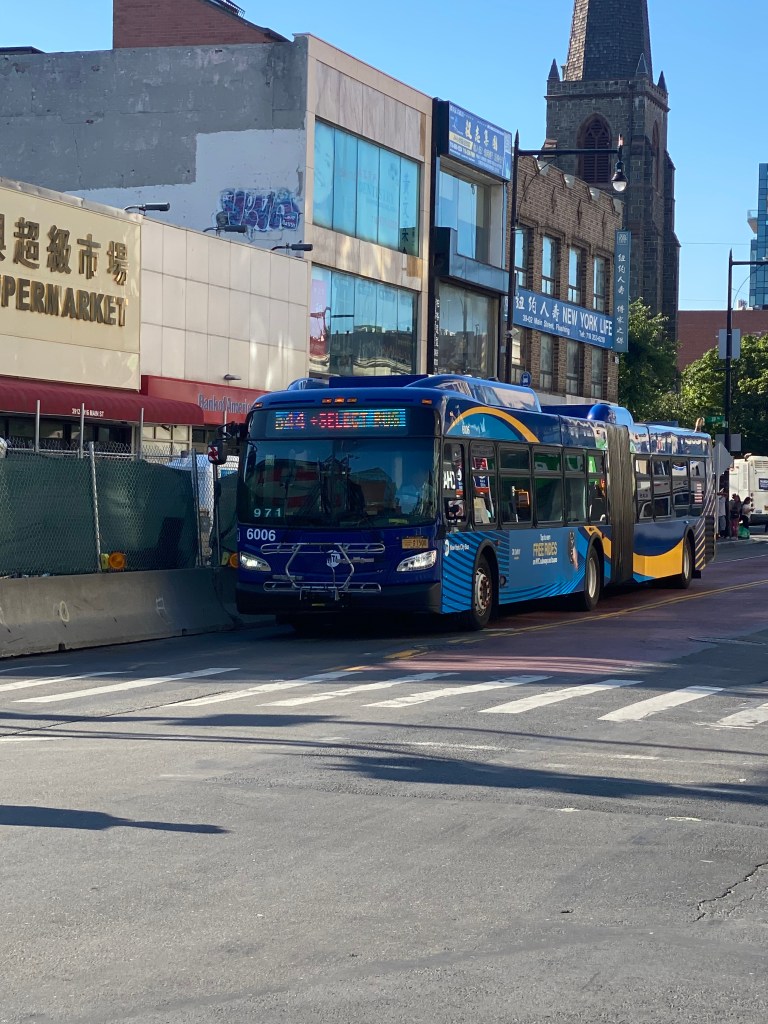
Any other transit expansions over the Whitestone would likely include the addition of new routes and/or the extension of other existing ones. This would require significant demand for access to a particular Bronx or Queens destination or transit hub from residents in either borough. As the Queens Bus Network Redesign is in its finishing stages, the only major request was for the Q44-Bronx Science link, which the MTA rejected. The lack of explicit demand is a significant constraint for expanding transit as the MTA is unsure how much ridership and fare revenue new transit would receive.
Outside of public buses, the city can consider adding a new NYC Ferry Route connecting Soundview and Throggs Neck to Downtown Flushing via the East River and Flushing Creek. The route would make an additional stop in College Point. This route could reduce vehicular traffic and create a new transit connection for Soundview residents who do not have a direct bus link to Queens. In addition, many people may ride the ferry route solely for recreation which could lead to increased ridership and financial viability for the service.
Besides mass transit, the MTA can also consider constructing a bike/pedestrian path over the Whitestone Bridge. This would be extremely difficult for multiple reasons. For one, it may be hard to justify the need for such a bike path given that the bridge only connects to two primarily residential communities on each side in Throggs Neck, Bronx, and Whitestone, Queens. Additionally, building a bike path on a bridge constructed mainly for cars would be a massive engineering task. An MTA report on increasing cycling access on bridges and mass transit said that adding bike paths to bridges, especially ones like the Whitestone, “is a complex, longer-term undertaking requiring feasibility review and major investments.” The MTA does plan to continually evaluate the possibility of improving bicycling and pedestrian access across all its bridges. However, the odds of a bike/pedestrian path on the Whitestone are low given the probable high cost combined with lower demand.
As time goes on, people may ask how congestion near the Whitestone Bridge can be improved. Given the practical constraints and limitations of highway expansion, any initiative to reduce congestion would likely involve alternatives to driving across the bridge. Hopefully, state and city agencies can find solutions to reduce congestion and make traveling between The Bronx and Queens easier for years to come.
Works Cited
Anderson, Jocelyn. “Does Widening Highways Ease Traffic Congestion?” UC Davis Magazine, 20 February 2024, https://magazine.ucdavis.edu/does-widening-highways-ease-traffic-congestion/. Accessed 22 March 2024.
CBS New York. “MTA Plans To Widen Parts Of Belt Parkway While Mayor De Blasio Pushes For Congestion Pricing.” CBS News, 15 July 2021, https://www.cbsnews.com/newyork/news/mayor-de-blasio-mta-congestion-pricing/. Accessed 22 March 2024.
Colon, Dave, and Gersh Kuntzman. “MTA’s Queens Bus Redesign: $30M in Service, 8 More Routes, Skepticism from Brooks-Powers – Streetsblog New York City.” Streetsblog NYC, 12 December 2023, https://nyc.streetsblog.org/2023/12/12/mtas-queens-bus-redesign-30m-in-service-8-more-routes-skepticism-from-brooks-powers. Accessed 22 March 2024.
Griffin, Allie. “MTA Completes $5.6M Improvements to Whitestone Bridge.” Jackson Heights Post, 2 July 2020, https://jacksonheightspost.com/mta-completes-5-6m-improvements-to-whitestone-bridge. Accessed 22 March 2024.
Hamid, Zarah. Yahoo Finance, 3 December 2023, https://finance.yahoo.com/news/20-most-congested-highways-america-223337290.html?guccounter=1&guce_referrer=aHR0cHM6Ly93d3cuZ29vZ2xlLmNvbS8&guce_referrer_sig=AQAAALTMDhBcok8PcKfobgjJYLW4ge5kzMpUdV0NvVzasyR7LnJWUkU0TGi89QKLDJ_mrtCF9hx2Gdwzgqo2j4YEiohIO7bUy3. Accessed 22 March 2024.
Lind, Sara. “City May Restore BQE to Six Full Lanes of Nastiness, Sources Say – Streetsblog New York City.” Streetsblog NYC, 13 December 2022, https://nyc.streetsblog.org/2022/12/13/city-may-restore-bqe-to-six-full-lanes-of-nastiness-sources-say. Accessed 22 March 2024.
Metropolitan Transportation Authority. “Capital Plan 2020-2024.” MTA, Q4 2023, http://web.mta.info/capitaldashboard/CPDPlan.html?PLN=8&AGY=a. Accessed 22 March 2024.
Metropolitan Transportation Authority. “Extending Transit’s Reach: MTA’s Strategic Action Plan to Promote Bicycle, Pedestrian and Micromobility Access to MTA Facilities.” MTA, January 2023, https://new.mta.info/document/103751. Accessed 22 March 2024.
Metropolitan Transportation Authority. “Queens Bus Network Redesign-New Draft Plan.” MTA, 29 March 2022, https://new.mta.info/queens-bus-redesign-draft-plan-hi-res. Accessed 22 March 2024.
Metropolitan Transportation Authority. “Queens Bus Network Redesign-Proposed Final Plan.” MTA, 12 December 2023, https://new.mta.info/document/128476. Accessed 22 March 2024.
Metropolitan Transportation Authority. 2022 MTA Bus Tables_ul (2). 2023. MTA, https://new.mta.info/agency/new-york-city-transit/subway-bus-ridership-2022. Accessed 22 March 2024.
MTA New York City Transit. 2022 NYCT Bus Tables_ul (1). 2023. MTA, https://new.mta.info/agency/new-york-city-transit/subway-bus-ridership-2022. Accessed 22 March 2024.
New York City Department of City Planning-Transportation. “Car Ownership in NYC.” Tableau, 24 November 2022, https://public.tableau.com/app/profile/dcptransportation/viz/ACSProfiles/Dashboard1. Accessed 22 March 2024.
Ostadan, Bahar, et al. “State spending too much federal infrastructure money on NYC highways: Comptroller Lander.” Gothamist, 4 August 2023, https://gothamist.com/news/state-spending-too-much-federal-infrastructure-money-on-nyc-highways-comptroller-lander. Accessed 22 March 2024.
 Transit Central