By Joseph Morales
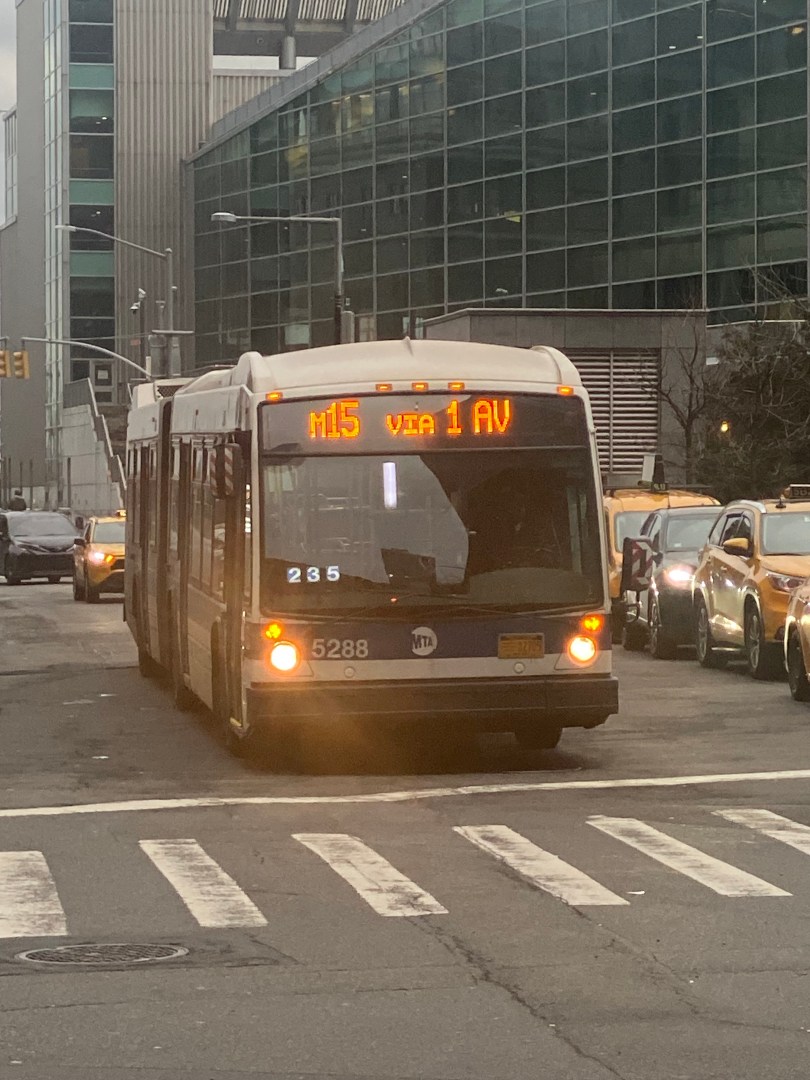
Public transportation is the backbone of New York City. Due to the city’s congestion and limited parking space, many take public transportation to avoid the hassles associated with driving. Given the city’s high cost of living, many find driving to be prohibitively expensive and hence also decide to opt for transit. As a result of these factors and others, 46% of New Yorkers do not own a car and hence rely on public transit to get wherever they need to go. This tally does not include suburbanites who take mass transit in New York City in lieu of driving for the same reasons as residents.
Unfortunately, public transit is often seen as synonymous to stress for New Yorkers. This is in large part due to infrequent and often delayed bus routes. According to a report from former NYC Comptroller Scott Stringer in 2021, high-ridership routes in the city can come as infrequently as every 30 minutes during the “early morning, afternoon and weekends.” Additionally, New Yorkers are often burdened by the costs of riding mass transit. Despite being more affordable than driving, the $2.90 bus/subway fare is often too expensive for many New Yorkers. A report done in 2016 by the Community Service Society when fares were lower showed that transit costs made up for 10% of low-income New Yorkers’ budgets. As 17.2% of New Yorkers live in poverty as of 2023 as per Census Bureau data, the cost of mass transit is adversely impacting many in the city. Since the 17.2% is based on the federal poverty line, the number of New Yorkers affected is likely higher due to the city’s higher cost of living.
As a result, several State Senators and Assemblyman from New York City are supporting a bill to address these issues. This bill was introduced by Senator Michael Gianaris(District 12-Queens) and Assemblyman Zohran Mamdani(District 36-Queens) proposed an Assembly version of the bill known as A. It is known as the MTA Freeze Fares, Fund Frequency and Free Bus Act. The Senate version has eight co-sponsors while the assembly version has a whopping twenty-six mulit-sponsors(which is similar to a cosponsor). The bill would halt MTA fare increases for the next three years, dramatically increase the number of free bus routes in the city, and run subways and the 100 most used bus routes every 6 minutes at least 17 hours a day. For reference, frequencies would likely only decline during the day from 12AM-6AM should this bill become law. Any of these changes would be huge for transit riders and the bill provides the framework and the funding for that to happen.
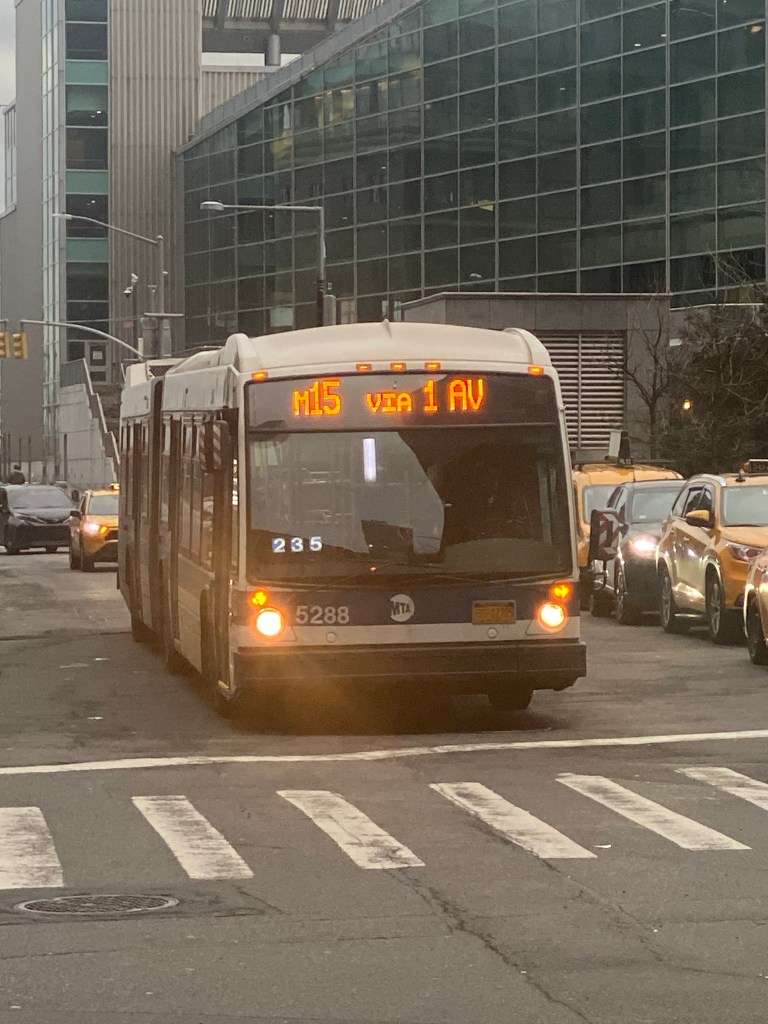

The bills appropriate $300M a year between tax years 2023 and 2026 for the purposes of the 6-minute service and $488M each year to increase bus service a total of 20%. A tax year or Fiscal Year(FY) in New York is from April 1st-March 31st, meaning we are still in 2023 for these purposes. In addition to service increases, there is also $150M a year dedicated to increasing the salaries of MTA workers during the three year period. The bill also included funds ranging from $714M in FY 2023 to over $2 Billion in FY 2026 dedicated to helping the MTA manage its debt without raising fares. To further improve affordability, the bill includes money from $147,800,000-$575,700,000 per borough for free bus routes. Free routes would be phased in each year by borough until 2027 in this order: Bronx, Brooklyn, Queens, Manhattan/Staten Island. The funding discrepancy is likely due to varied population densities, with boroughs with higher population densities having more funding. However, it is unclear how the MTA would split the $778M that would be allocated for both Manhattan and Staten Island combined between both boroughs.
Even if funding in the bill itself dosen’t not erase the agency’s debt, the spending the state would provide in other areas will help the MTA focus more of its fare revenue on managing debts. Overall, the package will help the MTA to improve service, lower costs to riders and stabilize itself financially. These three things have often not been synonymous for the transit agency in recent years.
So, what are the odds the bill might pass? There are numerous factors that can play a role in the outcome of this bill. The most significant MTA-related item to make it through the state legislature in recent years was congestion pricing. However, it passed as part of the state budget in 2019 as part of a slew of other items and the vote is not a great indicator on whether or not the legislators supported congestion pricing. This is because since the budget had items related and unrelated to transportation or even NYC, legislators likely would not have voted against it over one sticking point.
Whether or not this bill passes will almost certainly come down to individual politicians views on the content of the bill, the feasibility of its implementation, and if it is a good use of state funds. Unlike other issues such as gun control and abortion, public transit is less of a partisan issue and there will likely be a lot of bipartisan discourse on the MTA bill. For the bill to pass, it must first be released by its committee for a vote. Then, majorities in both the Assembly and Senate must vote to pass it. Both the Assembly and Senate may amend the bill and send it to each other for concurrence as part of the legislative process.
One thing working against the bill is that most Assemblymembers and State Senators do not represent any part of NYC. This means that since city dwellers don’t vote for them, they are less likely to prioritize NYC-centric issues. Eight out of 13 members of the committee do not represent parts of NYC and many represent more rural areas upstate. The Committee Chair Timothy Kennedy is from Buffalo and the ranking member Peter Oberacker represents rural areas in the Southern Tier and Mohawk Valley regions more than 3 hours north of NYC. The Assembly Transportation Committee also includes members from across the state.
The Senators and Aseemblymembers in their respective transportation commitees that introduced the bill may want to include funding for other transit agencies in the state in order to get other legislators on board. While no where is as transit-dependent as NYC, many other cities in the state have low car ownership rates such as Albany(80%), Syracuse(76%), Rochester(75%) and Buffalo(73%). In the Transportation Committee, there is one senator each from both Buffalo and Rochester.
However, just because the MTA does not run service upstate does not mean that state legislators there do not have a reason to support the agency. This is because the MTA fuels economic activity in both NYC and its suburbs and in turn, billions of dollars in state tax revenue. According to the Rockefeller Institute of Government, 78.9% of personal income tax revenue in New York State came from employees in both New York City and the Downstate Suburbs.
Additionally, the MTA also has an even more direct economic impact on the rest of the state than solely enabling tax revenue Downstate. For the MTA to complete projects as part of its capital plan, it relies on vendors from across the state and even the country to provide equipment, construction and engineering services. Data from the Partnership for New York City shows that the MTA Capital Plan was expected to generate $6.67 billion of value for regions outside of the city and about 1 in 4 related jobs would also be located outside of NYC. Each region of New York State outside of the NYC and its immediate suburbs received between $25M-$380M in direct GDP depending on the region as the result of this impact. This does not include money from non-MTA projects that these companies worked on as a result of relocating for the purpose of MTA contracts. The same report also showed that vendors on average had 50% more capacity at their companies than what was needed for MTA contracts. The report forecasted that this would lead to more than $700 million in additional sales for these vendors that would not have happened otherwise. The legislation providing more fiscal stability to the MTA will allow regions throughout the state to make the most of the economic opportunities brought on by the MTA.
As the bill sits in both the House and Assembly, it is hard to project how the bill might proceed in the legislature. This bill undoubtedly had the potential to greatly improve commutes while also making transit more affordable in a way that has never been done before. Only time will tell if that potential becomes reality.
Works Cited
“About Peter Oberacker | NYSenate.gov.” NYS Senate, https://www.nysenate.gov/senators/peter-oberacker/about. Accessed 17 February 2024.
Community Service Society. “Press Release: The Transit Affordability Crisis.” Community Service Society of New York, 10 April 2016, https://www.cssny.org/news/entry/press-release-the-transit-affordability-crisis. Accessed 17 February 2024.
“Economic impacts of the Metropolitan Transportation Authority’s 2020-2024 Capital Investment Strategy.” The Partnership for New York City, March 2019, https://pfnyc.org/wp-content/uploads/2020/01/MTA-Capital-Plan-2020-24-Econ-Impacts.pdf. Accessed 17 February 2024.
Gianaris, Michael. “NY State Senate Bill 2023-S4024.” The New York State Senate, 2 February 2023, https://www.nysenate.gov/legislation/bills/2023/S4024. Accessed 17 February 2024.
“Giving and Getting: Regional Distribution of Revenue and Spending in the New York State Budget, 2009-2010 – Rockefeller Institute of Government.” Rockefeller Institute of Government, December 2011, https://rockinst.org/issue-area/giving-getting-regional-distribution-revenue-spending-new-york-state-budget-2009-2010/. Accessed 17 February 2024.
Mamdani, Zohran. “NY State Assembly Bill 2023-A4122.” NYS Senate, 9 February 2023, https://www.nysenate.gov/legislation/bills/2023/A4122. Accessed 17 February 2024.
Metropolitan Transportation Authority. “MTA By the Numbers in 2023.” MTA, 27 December 2023, https://new.mta.info/press-release/mta-numbers-2023. Accessed 18 February 2024.
New York City Department of City Planning. “Car Ownership in NYC.” Tableau, 24 November 2022, https://public.tableau.com/app/profile/dcptransportation/viz/ACSProfiles/Dashboard1. Accessed 17 February 2024.
“Our District | NYSenate.gov.” NYS Senate, https://www.nysenate.gov/senators/peter-oberacker/district. Accessed 17 February 2024.
Paulus, Nathan. “Car Ownership Statistics in the US.” Money Geek, 16 March 2023, https://www.moneygeek.com/insurance/auto/car-ownership-statistics/. Accessed 17 February 2024.
“Senator Timothy M. Kennedy | NYSenate.gov.” The New York State Senate, https://www.nysenate.gov/senators/timothy-m-kennedy. Accessed 17 February 2024.
Stringer, Scott. “Beyond Rush Hour: COVID-19 and The Future of Public Transit.” New York City Comptroller, 10 October 2021, https://comptroller.nyc.gov/wp-content/uploads/documents/Beyond-Rush-Hour.pdf. Accessed 17 February 2024.
Our District | NYSenate.gov.” NYS Senate, https://www.nysenate.gov/senators/timothy-m-kennedy/district. Accessed 17 February 2024.
“U.S. Census Bureau QuickFacts: New York city, New York; United States.” U.S. Census Bureau, 1 July 2023, https://www.census.gov/quickfacts/fact/table/newyorkcitynewyork,US/PST045223. Accessed 17 February 2024.
Wang, Vivian. “New York State Budget Deal Brings Congestion Pricing, Plastic Bag Ban and Mansion Tax (Published 2019).” The New York Times, 31 March 2019, https://www.nytimes.com/2019/03/31/nyregion/budget-new-york-congestion-pricing.html. Accessed 17 February 2024.
 Transit Central