By Joseph Morales
Rosebank is a residential community on the East Shore of Staten Island. The neighborhood is directly adjacent to major thoroughfares such as Hylan Blvd and Bay St that connect residents to communities around Staten Island and even the region Additionally, Rosebank is just a 10 minute drive from the Staten Island Ferry and even closer to other busier neighborhoods such as Stapleton and Tompkinsville. The community is also adjacent to the Verrazano Bridge, providing seamless vehicular and transit connections to Brooklyn.
While Rosebank is well connected by roads and several bus routes, it is not connected to the Staten Island Railway(SIR). This is despite the community being located directly along the rail line and representing a glaring gap in the map. The closest stations Clifton and Grasmere, are both about 1.5 miles apart. Given the gap, many would be SIR riders opt instead for longer bus rides, walking to further rail stations, or even driving. For those who would have taken the train to the Staten Island Ferry, they may instead rely on more expensive express buses. Some may even choose to drive to Manhattan given the area’s proximity to Brooklyn and $2.75 Verrazano Bridge Toll. This type of commute may become financially burdensome for many residents once congestion pricing is implemented, a program that Staten Island Borough President Vito Fosella has sued to stop.
Transit for Rosebank residents did not always used to be this way. A Rosebank station used to exist until 1953 as part of a now demolished South Beach Branch of the Staten Island Railway. The South Beach Branch used to connect the northernmost portion of the existing SIR with the communities of Rosebank, Arrochar and Midland Beach. The line closed, the Baltimore and Ohio Railroad who owned the railroad wanted to stop service due to low ridership and profits. When the New York City Board of Transportation(now the MTA) lowered bus fares considerably, the railroads on Staten Island lost 60% of business. This led the company to close the South Beach and North Shore Branches but not the current SIR line as the city threatened to stop their subsidized and profitable freight service. Today, the current SIR carries 13,000 riders on any given weekday as of 2023.
Despite the old branch being demolished, there may be a way for a station to exist on the current SIR line. In 2008, data and transportation experts at the CUNY College of Staten Island(CSI) proposed a station between Reynolds and Fletcher Streets to serve Rosebank. CSI Professor of Finance Johnathan Peters told the Staten Island Advance in 2008, that the station could represent an immense improvement at a low cost to the MTA. Peters’ study of census data showed that 15,633 live within a 0.5 mile of the station as of 2008, a number that has likely increased due to significant population growth on Staten Island since then. Former City Councilman and current Staten Island District Attorney Michael McMahon said that sites that including the former DeJonge Paper Factory/American Self Storage on Tompkins Ave were “certainly worth considering”. At the time, a NYCT spokesperson told the Staten Island Advance that the MTA would discuss the feasibility of the experts’ proposal after the experts present it to the agency.
Unfortunately, there is practically no trail of what happened to the proposal fater 2008. In 2014, Peters wrote an Op-Ed in the Staten Island Advance title detailing why he thought a Rosebank station needs to exist. He describes it as “one of those strange and ironic Staten Island transportation stories”. He then goes on to discuss the history of how communities like Rosebank were designed to be walkable for the purpose of the railroad and how he believes it would come at a low cost just as he thought in 2008. However, it is important to note that the initial Rosebank SIR proposal was made in May 2008, just months before the start of the Great Recession. This led to a $400 million deficit for the MTA that led them to cut many services including two entire subway routes. While the subway routes were restored, many service cuts from back then are still impacting riders to this day. Hence, building a new station in a community that is less densely populated than other areas of the city was likely not the agency’s priority. Further financial crises such as the 2017 “Summer of Hell” and budget deficits caused by the COVID-19 pandemic likely have not helped things.
Even in a more ideal world, the MTA is unlikely to consider a new Rosebank stations simply because they have other projects that would recieve more ridership. In October 2023, the MTA completed its first ever comparative analysis where they weighed the costs and benefits of various projects to inform their priorities for the next 20 years. Projects scored points in areas such as projected ridership, sustainability, connections to other transit routes and more. The closest project to the Rosebank station was a Long Island Rail Road(LIRR) station in Elmhurst, Queens. It did not score well due to low ridership projections and it slightly increasing travel time for existing LIRR riders due to the extra stop . Given Elmhursts’ significantly higher population density, it is unlikely a Rosebank station could top Elmhursts’ estimated ridership and be considered more viable to build.
Outside of financial complications, how feasible would a new Rosebank Station be? The two most likely locations would either be the proposals of the former DeJong Paper Factory site or the CSI team’s recommendation of a station between Reynolds and Fletcher Streets. Both of these locations have considerable strengths and drawbacks for constructing a new rail station.
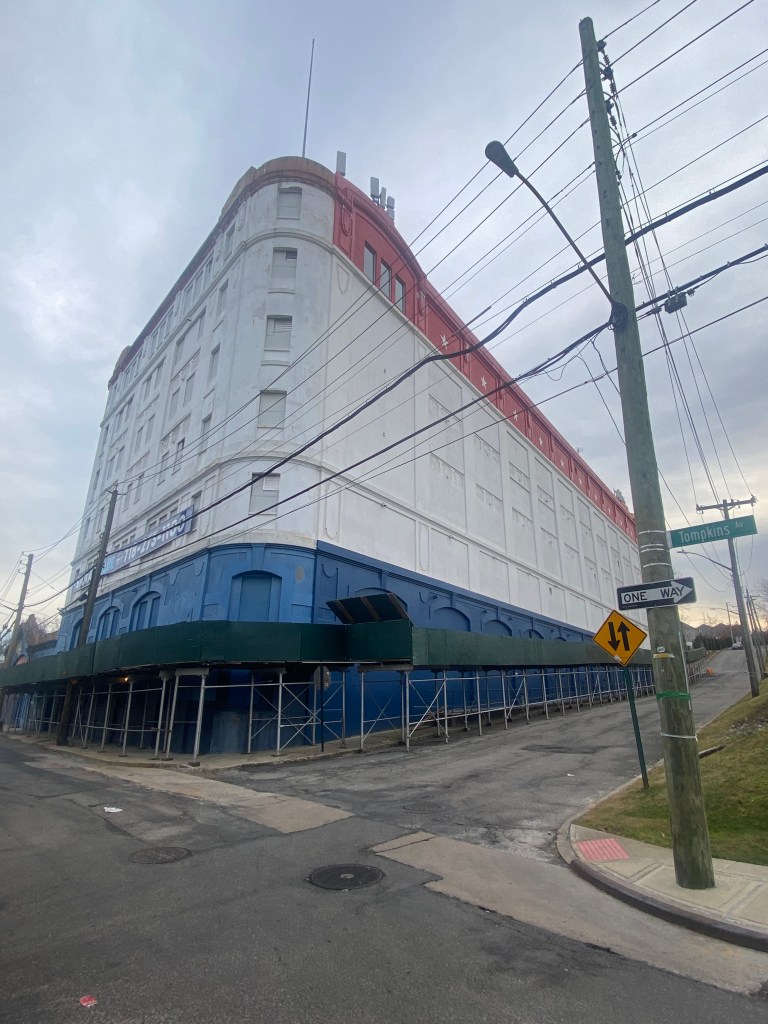
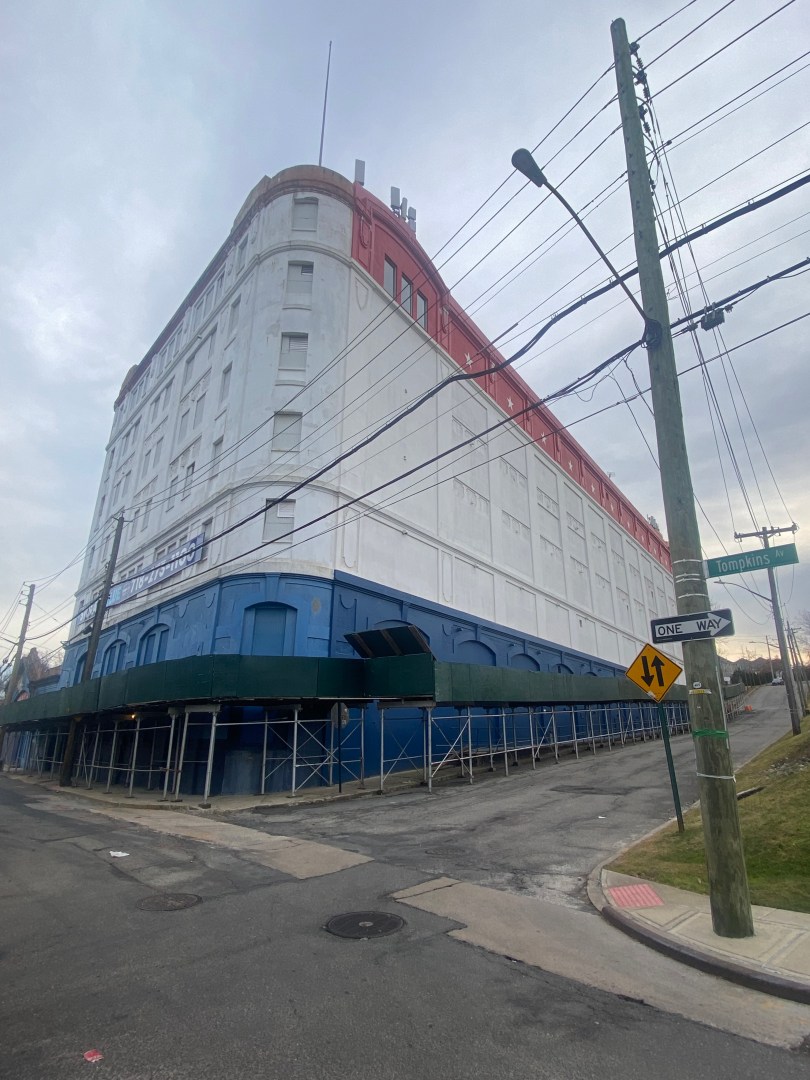
The good thing about the paper factory location is that the factory is unused and the southbound platform here would not impact existing land use. The area where a northbound platform would be is currently occupied by small trucking business that would likely need to be acquired due to its proximity to the SIR tracks for a station to be built. For a safe station, work would need to be done on surrounding electrical lines as pedestrians are currently prohibited in that area due to low hanging wires. Another significant constraint with the DeJong Paper Factory location would be the fact that the factory would need to be eased or even demolished in order to fit a southbound platform. Industrial buildings are particularly hard to retrofit with Industry Property Financier, Janover saying on its website that a significant amount of property traits make these buildings “essentially impossible to upgrade”. Hence, converting any part of the old factory into rail station infrastructure would likely be a herculean feat of engineering if it is even possible.


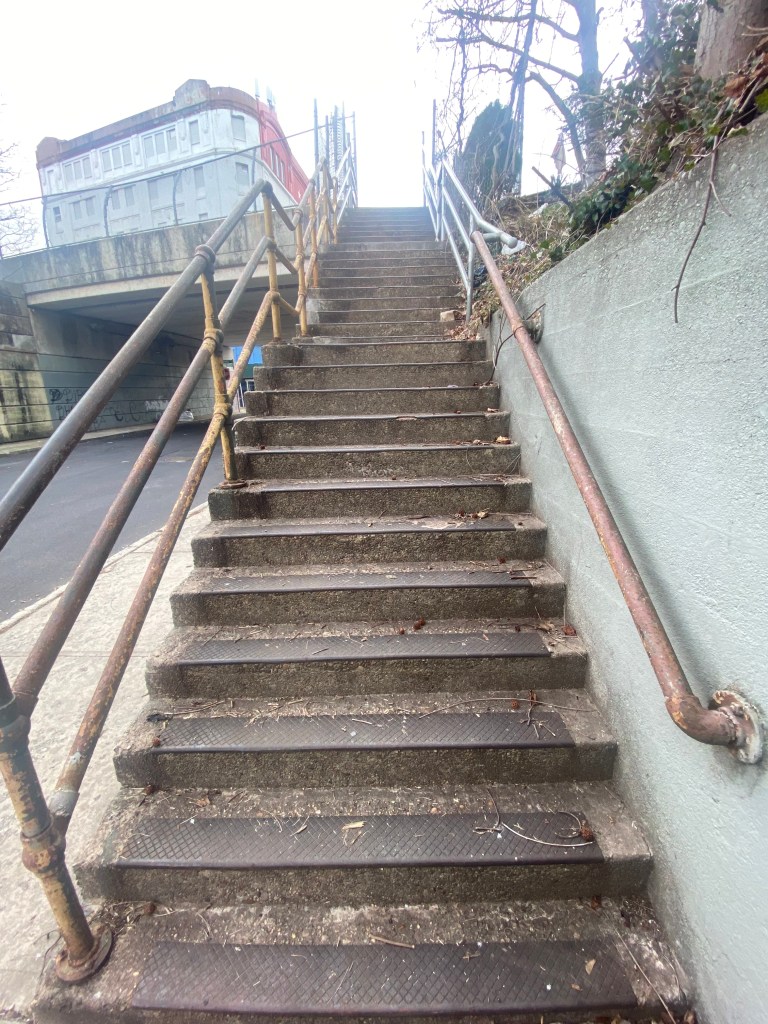
One advantage for this site is that there are already staircases leading from Tompkins Avenue, to Greenfield and Willow Avenues are that could be used to get to the would be platforms. This would limit the project cost for the MTA and may even reduce operating expenses as these are normally controlled by the NYC Department of Transportation. A similar structure helped the MTA elsewhere when in 2023, the New York City Department of Transportation(NYCDOT) paid for the construction of a new mural inside of an entrance to the 191st St(1) subway station in Washington Heights, Manhattan. The mural was completed at no cost to the MTA since the entrance was in the city’s jurisdiction. However, the MTA would be responsible for constructing and maintaining elevators from Tompkins Avenue to the platforms as per the Americans with Disabilities Act of 1990(ADA) to ensure the station is accessible for all. This would likely be a significant engineering challenge as none of the MTA’s commuter rail stations with entrances off a street overpass similar to Tompkins Ave are ADA-accessible.
As for the Reynolds/Fletcher St site, it has as simpler set of pros and cons. Here, the station could be built at a lower altitude and likely with ramps, making ADA-accessibility much easier to accomplish. However, the prevalence of private houses where the southbound platform would be make it all but certain that a station here would require significant property acquisition. On the south side, residents may not want higher foot traffic and potentially higher parking volumes associated with train stations adjacent to their homes.
With the MTA soon to prepare its 2025-29 Capital Program, one may wonder if a Rosebank SIR station will ever be considered. It is likely that the MTA has many other priorities for both Staten Island and the city as a whole and hence talks for a Rosebank station have not escalated. However, there is hope than one day, a station can be built to connect Rosebank residents to core business districts, the Staten Island Ferry and the rest of what Staten Island’s East Shore has to offer.
 Transit Central