By Joseph Morales
The Belt Parkway is one of the most utilized highways in New York City. Spanning roughly 25 miles, the Parkway runs from the Bay Ridge section of Brooklyn, to the Queens/Nassau County border. With this length, the parkway provides many regional connections such as to Ocean Pkwy, I-678(Van Wyck Expwy), the Southern State Pkwy and of course to I-278(Gowanus Expwy/Verrazano Bridge). The parkway also provides direct access to JFK Airport, New York’s main international airport and Coney Island, a regional recreation hub. In addition to connecting the region, the parkway provides access to many densely populated communities throughout Brooklyn, Queens and Staten Island. While much of New York relies on mass transit, most communities along the Belt have car ownership rates above 50%. Hence, more residents of surrounding communities rely on the Belt Parkway to get around versus residents around other highways in the city such as the FDR Drive and Bruckner Expressway.
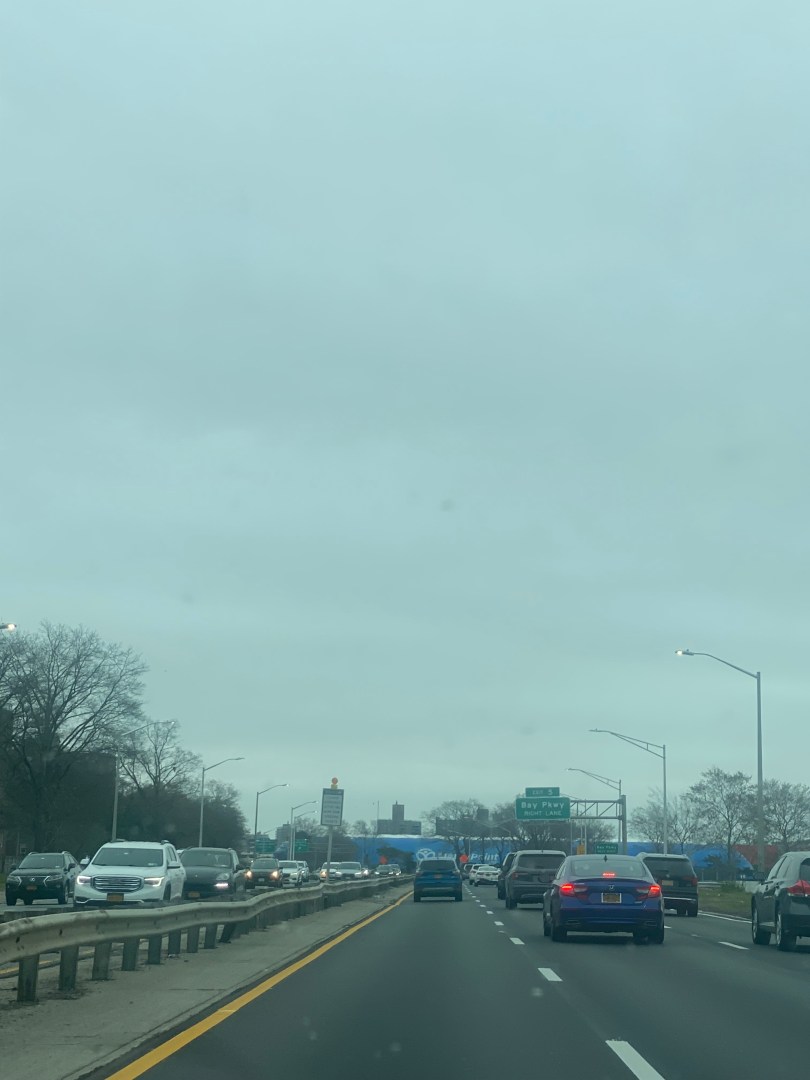
As a result, it is no wonder that the Belt Pkwy is among the most congested highways in New York City. While there are many factors to the congestion in different areas, the eastbound side of the highway just off the Verrazano Bridge is definitely one of them. This is in part because the number of lanes on the Belt suddenly drop from three to four with the bridge merging onto the parkway, leading to bottlenecks. This creates a chain reaction that impacts drivers across the Belt regardless of where they are going. In addition, it costs motorists significantly in fuel. According to The Zebra, driving two miles on the Belt Pkwy East near the Verrazano during the Monday AM Peak with the fuel efficiency of a typical new car costs $0.26 each time or $6.50 over 25 days. Given how the calculator doesn’t take congestion into account and many drive less fuel efficient vehicles, the cost per driver in the AM peak is likely higher.
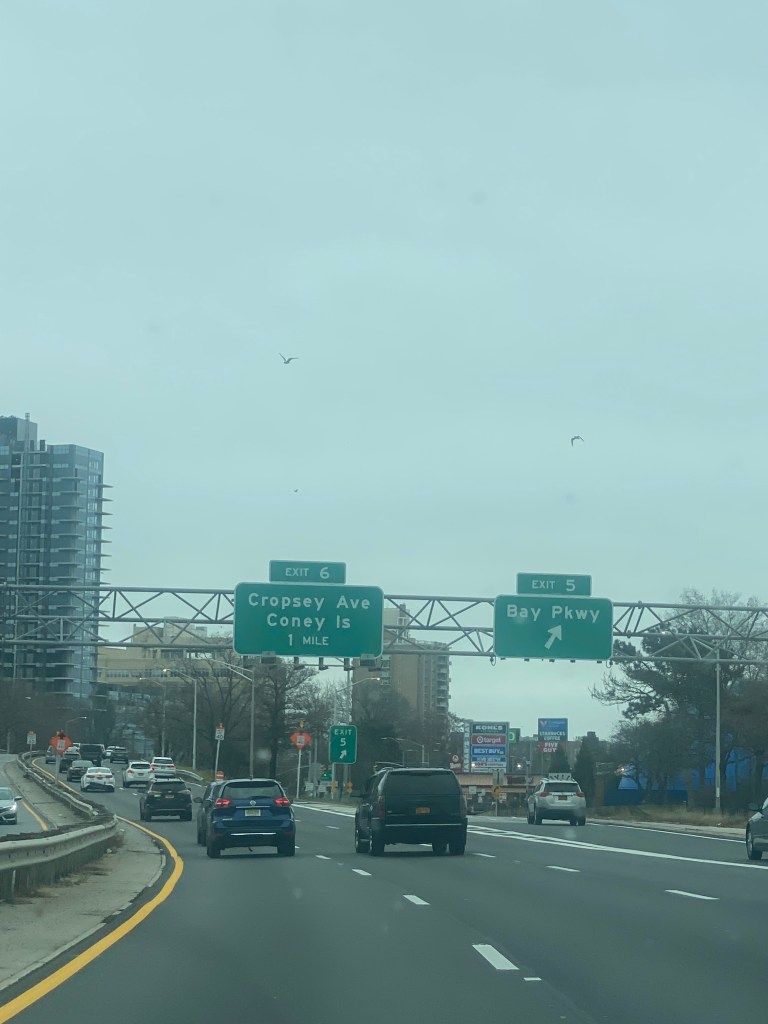
To help reduce congestion and increase vehicular safety, the MTA is adding a fourth lane to the Belt Pkwy between merge between the bridge and the parkway and Exit 5-Bay Pkwy. While the NYSDOT(New York State Department of Transportation) controls most highways, the MTA is likely performing this project due to its connection to the Verrazano Bridge, which is MTA owned. The agency says that the project will “improve traffic flow and reduce back-ups and collisions” in the project description on its Capital Plan Dashboard. As construction has been going for quite some time, the project is 15% complete and is expected to be completed by the end of this year. Additionally, the project is expected to be nearly 50% under budget with a cost of $40.4 million versus the originally budgeted $82 million.

Despite the MTA’s claims, not everyone is convinced the lanes will help improve travel conditions. Transit advocates feel that this will ultimately lead to increased congestion due to induced demand. Induced demand is when traffic increases because more people choose to drive once a roadway is widened. These advocates also believe that the project will further harm the environment and that the MTA should focus on other mass transit investments to combat climate change. Liam Blank of the Tri-State Transportation Campaign told amNewYork Metro, “If we’re going to be serious about addressing climate change, then we should put our money where our mouth is and encourage fewer people to drive.” Even some motorists were skeptical that the project won’t reduce congestion much in the long term. When asked if the extra lane will help before construction started, one motorist told CBS 2 New York’s Ali Bauman simply “It won’t help.”
So will the new lane improve congestion or should the MTA try other things? It is important to note that the lane is not being added to solely improve capacity, but also safety. Typically, the word “induced demand” is used to describe increases in congestion due to highway widening projects that were completed solely to improve congestion on an overcrowded highway. Examples of this include the Katy Freeway widening outside of Houston, TX and Interstate 405 in Los Angeles, CA. However, this project on the Belt is to eliminate traffic caused not by capacity constraints, but by the merge. If the bottleneck is eliminated, safety will improve as there will no longer be a conflict for road space regardless of what ultimately happens with congestion levels. As for congestion however, traffic flow will undoubtedly improve as vehicles would no longer have to slow down or even queue to proceed through. Even if initial congestion improvements are not sustained, the lane will definitely make driving in this portion of the Belt Pkwy easier and possibly faster for the long term due to a simpler traffic pattern.
Given the history of induced demand, is worth wondering if more people will use the Belt Pkwy because of the added lane and lead to more congestion overall. While induced demand is a thing, it is not a hard and fast rule every time a highway is widened. As for the Belt, the project near the Verazzano will likely have no significant impact on the Belt Pkwy’s congestion as a whole for all 25 miles. Hence, the extra lane probably won’t encourage many people to drive who would not have driven otherwise. The primary way congestion would increase there would be more vehicles and hence traffic congestion following the lane’s construction is due to population and/or car ownership growth. In this case, the lane would help so that more vehicles can be accommodated safely regardless of congestion levels.
Outside of the lane, there may be other solutions that can help work to reduce congestion on the Belt. While a CBS New York report from 2021 regarding the Belt discussed congestion pricing, congestion pricing likely won’t impact the Belt Pkwy much. This is due to the Belt going from east to west and not connecting to any Manhattan-bound highways except at its western end. To allveiate congestion, the MTA may want to consider expanding transit options between Staten Island and parts of Brooklyn along the Belt Pkwy. Currently, in order to get from the Rosebank section of Staten Island near the Verrazano Bridge to Gravesend in Brooklyn, it could take well over an hour and includes two buses. One of these buses, the B1, had a Customer Journey Time Performance rate of 71.3% with an average speed of 6.9 mph in December 2023 according to MTA metrics, making the bus substantially less reliable than driving. Getting to other parts of Southern Brooklyn require even more arduous commutes and getting to Queens could feel almost impossible. Queens-bound trips from Rosebank would requiring an express bus trip into Manhattan, followed by the subway and even an additional bus depending on the destination. Hence, better transit options could included expanded and more reliable bus networks and possibly ferry service between waterfront areas. Thanks to the NYC Ferry, many areas of the city are connected by mass transit that weren’t before the ferry such as Soundview, Bx/Lower East Side, Manh and St. George, SI/Midtown, Manh.
Outside of expanding transit options, the MTA could consider higher Verazzano Bridge tolls during rush hours or higher tolls altogether to discourage nonessential travel. This would be similar to how congestion pricing is beinging implemented in the Manhattan Central Business District where there will be lower tolls at night. However, this idea would almost surely be struck down by Staten Islanders whom the bridge is their only road connection to the other boroughs of New York City. Additionally, with the burden congestion pricing in Manhattan will already have on motroists, the MTA likely does not want to add or increase more tolls in an unpopular way. As it stands, a Staten Island resident driving to Manhattan will have to pay $24.69 to drive one-way into Manhattan between the Verazzano Bridge, Brooklyn Battery Tunnel and Congestion Pricing tolls. Thus, any additional costs would likely not be taken kindly to by motorists.
As the MTA moves forward with the project, it will be interesting to see how the parkway widening will effect Brooklyn-Staten Island commuters. According to the MTA Capital Plan Dashboard, the project is 15% complete and is expected to be done by the end of the year. Also, the project is expected to be nearly 50% under budget with a cost of $40.4 million versus the originally budgeted $82 million. Compared to the rest of the U.S, this project sparked a conversation about the impacts of highway widening that is not had often in New York. Hopefully, the MTA finds solutions that reduce congestion, increase safety and enable reliable regional travel for years to come.
Works Cited
Adcroft, Patrick. “MTA board approves congestion pricing plan.” NY1, 6 December 2023, https://ny1.com/nyc/all-boroughs/news/2023/12/06/congestion-pricing-new-york-city-next-phase-mta-board-vote. Accessed 3 February 2024.
Ahmed F-Operations Manager at LAPS. “What is the average miles per gallon (MPG) for new cars compared to older ones? Can you give an example of a modern car that gets good MPG but isn’t popular?” Quora, 6 February 2023, https://www.quora.com/What-is-the-average-miles-per-gallon-MPG-for-new-cars-compared-to-older-ones-Can-you-give-an-example-of-a-modern-car-that-gets-good-MPG-but-isnt-popular. Accessed 3 February 2024.
CBS New York. “MTA Plans To Widen Parts Of Belt Parkway While Mayor De Blasio Pushes For Congestion Pricing.” CBS News, 15 July 2021, https://www.cbsnews.com/newyork/news/mayor-de-blasio-mta-congestion-pricing/. Accessed 3 February 2024.
Cortright, Joe. “Reducing congestion: Katy didn’t.” City Observatory, 16 December 2015, https://cityobservatory.org/reducing-congestion-katy-didnt/. Accessed 3 February 2024.
Duggan, Kevin. “MTA’s highway-widening plan near Verrazzano Bridge draws heat.” amNewYork, 14 July 2021, https://www.amny.com/transit/mtas-plans-to-widen-belt-parkway-draws-heat/. Accessed 3 February 2024.
Mann, Adam. “What’s Up With That: Building Bigger Roads Actually Makes Traffic Worse.” WIRED, 17 June 2014, https://www.wired.com/2014/06/wuwt-traffic-induced-demand/. Accessed 3 February 2024.
Metropolitan Transportation Authority. MTA, 2024, https://metrics.mta.info/?bus/speeds. Accessed 3 February 2024.
Metropolitan Transportation Authority. MTA, 2024, https://metrics.mta.info/?bus/customerjourneytimeperformance. Accessed 3 February 2024.
Metropolitan Transportation Authority. “Car Toll Rates.” MTA, 6 August 2023, https://new.mta.info/fares-and-tolls/bridges-and-tunnels/tolls-by-vehicle/cars. Accessed 3 February 2024.
Metropolitan Transportation Authority. “MTA Capital Program Dashboard-Capital Plan 2020-24.” MTA, Q3 2023, http://web.mta.info/capitaldashboard/CPDPlan.html?PLN=8&AGY=a. Accessed 3 February 2024.
Meyer, Susan. “Fuel Cost Calculator.” The Zebra, 31 August 2023, https://www.thezebra.com/resources/driving/fuel-cost-calculator/. Accessed 3 February 2024.
New York City Department of City Planning-Transportation. Tableau, 24 November 2022, https://public.tableau.com/app/profile/dcptransportation/viz/ACSProfiles/Dashboard1. Accessed 3 February 2024.
New York State Department of Transportation. “About NYSDOT – Responsibilities & Functions.” NYSDOT, https://www.dot.ny.gov/about-nysdot/responsibilities-and-functions. Accessed 3 February 2024.
 Transit Central