
By Joseph Morales
For more information or to sign up to speak the MTA’s hybrid Capital Projects Hearing on February 6th, click here: https://new.mta.info/transparency/public-hearings/2024-capital-projects-hearing
In New York City, much of the population relies on mass transit run by the MTA(Metropolitan Transportation Authority)to get around. According to data from the NYC Department of City Planning, only 46% of city households own a car. Even vehicle owners often use mass transit to get to Manhattan due to traffic congestion and high parking costs. Additionally, hundreds of thousands of riders from outside of the city ride the Metro-North and LIRR commuter rails to get around the suburbs as well as into the city daily. Given how many people it moves, the MTA also plays a major part in New York’s economy. An NYU study from October 2020 found that a 40% reduction in bus/subway service and a 50% reduction in commuter rail service would cost riders more than $1.7 billion in lost time each year. This is only reflective of the impact of transit service reduction and does not reflect the impact of if mass transit were to not exist at all.
While MTA services are among the most robust in the world, it certainly has its flaws in the eyes of New Yorkers. Between subway signal malfunctions, older subway cars and faulty infrastructure, the MTA has a plethora of issues that are known to effect service reliability on a daily basis. In addition, since most of the subway system was built before the 1990 Americans With Disabilities Act, most stations are not accessible to those with mobility disabilities. According to MTA data, only 28% of subway stations are ADA-accessible. Even though, 85% of MNR and 68% of LIRR stations are accessible, riders near inaccessible stations often have less alternatives due to infrequent or nonexistent local bus service in the suburbs.
This is why the MTA completes capital projects to address these issues. The textbook definition of a capital project is “A long-term, capital intensive investment to build upon, add to, or improve a capital asset.” For the MTA, practically all of their infrastructure, publicly visible or not would be considered a capital asset. Non publicly visible infrastructure would include rail control rooms, bus depot equipment and anything else relevant to mass transit operations that the public does not see.
On February 6th, 2024 at 6PM, the MTA is holding a hybrid public hearing regarding the capital projects they are requesting federal grant money for this fiscal year. A fiscal year is a one year period companies and governments use for budgeting purposes. As for the MTA, their fiscal year is the same as the calendar year. You can find more information and how to sign up for the hearing here: https://new.mta.info/transparency/public-hearings/2024-capital-projects-hearing. In addition, to its website, hearing notices can be found in all subway stations and advertising will likely occur on bus information screens if it hasn’t already. You can speak either virtually or in-person at MTA headquarters in Lower Manhattan.

The agency requests money from the federal government to pay for projects in large part due to their astronomical $48 billion worth of debt. This debt is due to a combination of a plethora of loans taken out since the 1980s along with ridership that plummeted at the onset of the pandemic. While ridership is not as low as 2020 levels, it is still well below pre-pandemic levels. The last post-reopening ridership record was in May 2023 with 4.09 million riders as opposed to a 2019 daily average of 5.5 million according to MTA figures. This adversely impacts the MTA budget, where fare revenue accounts for 24% of funding as of November 2022.
The purpose of the public hearing is to gain input on the projects and the MTA’s request for federal funding according to the digital hearing notice. The projects include but are not limited to, new elevators at subway/LIRR stations, the purchase of new subway cars, work on Penn Station Access and more. Each project has its own dedicated page in the hearing book with a project description as well as it’s cost and the MTA’s funding request from the federal government. The list included a wide array of projects ranging in cost from $2.01 million for Station PA System Improvements to $1.4 billion for the purchase of new subway cars. Projects also include things like the Interborough Express and improving Broadway Junction.The reason the MTA requested varying amounts for different projects is unclear but it could be due to different funding levels in different subsidiaries(New York City Transit, Metro-North etc). The agency may also want to ask for more money for certain projects they perceive as having more risks for cost overruns to avoid as much spending on their part as possible. This may be the case as they asked for a significantly higher percentage of project costs for subway accessibility projects than MNR/LIRR accessibility projects. To make subway stations accessible, there is a lot more planning associated with elevators that must go underground and navigate existing infrastructure as opposed to reaching a station slightly above ground level with commuter rail.

Despite the public having such an opportunity to provide input on such important and high profile topics, they rarely ever do. While anyone can sign up, the last two of these hearings I attended had little attendance with only a handful of speakers showing up. This is despite the hearing being advertised on the electronic screens at both subway platforms and buses prior to the hearing. In addition, paper notices were posted inside the mezzanines of every subway station.
People may decide to not attend the hearing for many reasons. The first is likely that they feel as if they’re input is not heard by MTA officials. As high profile projects such as East Side Access and the Second Avenue Subway had astronomical and to some, unneccesary costs, individuals may feel as if there is nothing they can do to change the circumstances. Additionally, the MTA has in the past implemented policies against popular public opinion, such as its biennial fare increases.

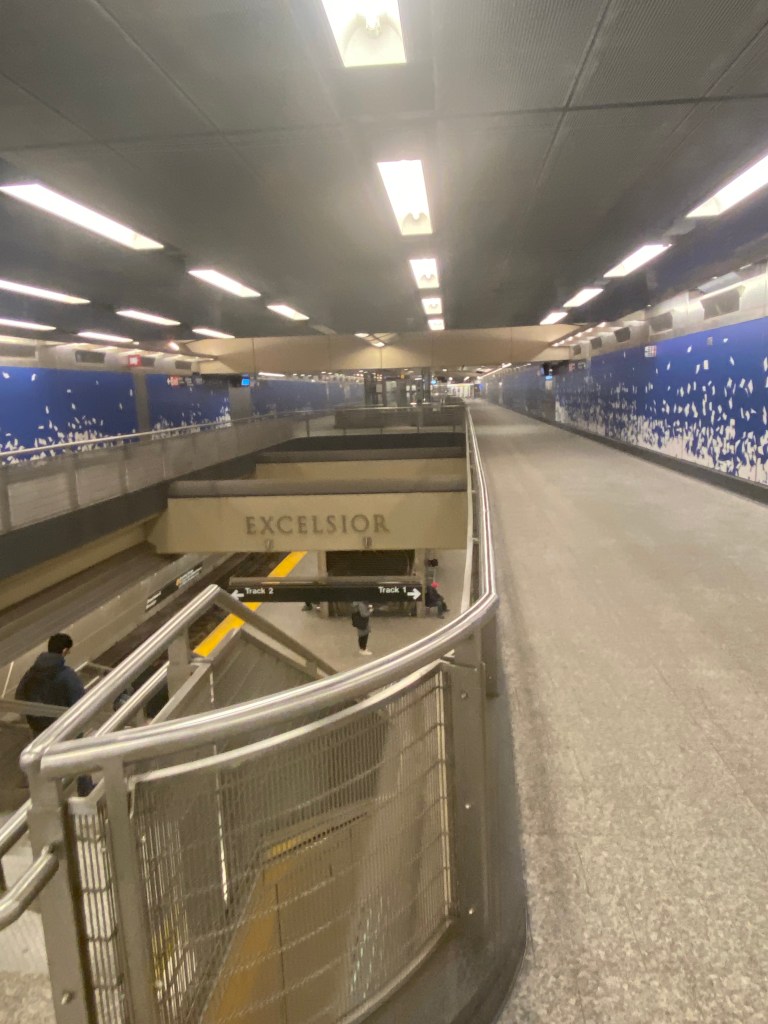
While many feel like their voices don’t matter, this is far from the truth. During a 2018 public hearing on Staten Island, former NYCT President Andy Byford was asked by the Staten Island Advance what he thought when people said public hearings were just a formality. He discussed an instance where the MTA was considering two options for a fare increase, but they added a third following public feedback. During the more recent Queens Bus Network Redesign, all but 3 of the comments the MTA received on its new draft plan for the 25 most popular Queens routes were fully reflected in the final draft plan. This signals that the public’s input does indeed have an impact on MTA operations.
Even though government is supposed to listen to the public, it may also be important for the public and the media to realize when the MTA is making unpopular but potentially necessary decisions. For example, the MTA’s dreaded biennial fare increases are meant so that the agency can increase its fiscal health and not have to rely on steeper and more abrupt fare increases down the line. The biennial increases are preferred so that households can plan for additional transportation costs, and not struggle as much to pay for transit when changes are made. In addition, a predictable revenue stream can help the MTA to better plan its fiscal future and when infrastructure improvements can be made across the system. By no means and I arguing for or against the implemented fare increases, I am solely giving an example whereas the benefits to an unpopular MTA decision may have been overlooked by many. Better communication between the MTA, the media and the public could help drive more citizen engagement which can result in more positive changes being made by the MTA on important issues.
Another major reason the Capital Projects Public Hearing gets low attendance because there is no policy at stake for people to oppose. It is human nature for one to speak when something is wrong, and to not say anything when they are content. In comparison, hearings for the controversial congestion pricing plan to toll drivers below 60th St often drew hundreds of speakers. As for the Capital Projects hearing, the MTA is holding a hearing on projects it is already committed to, meaning there is likely little controversy at this one. However, this is not saying the MTA does not listen to the comments given its track record of implementing customer requests from public engagement.
As this important public hearing nears, it is imperative that people speak so that the MTA has strong input as to what riders want to see in the agency’s capital projects. If more people speak up in and out of hearings, there will be more discourse amongst officials and citizens alike as to how to improve our transit system. Hopefully, these conversations will help the MTA to build the transit system New Yorkers need and desire, for years to come.
Works Cited
“Americans with Disabilities Act.” U.S. Department of Labor, https://www.dol.gov/general/topic/disability/ada. Accessed 26 January 2024.
Barone, Adam. “Capital Project: Definition, Examples, and How Funding Works.” Investopedia, 10 August 2022, https://www.investopedia.com/terms/c/capital-project.asp. Accessed 26 January 2024.
Brennan, Dick, and John Dias. “Hundreds sign up to speak at MTA’s first public hearing on congestion pricing.” CBS News, 25 August 2022, https://www.cbsnews.com/newyork/news/hundreds-sign-up-to-speak-at-mtas-first-public-hearing-on-congestion-pricing/. Accessed 26 January 2024.
Colon, Dave, and Gersh Kuntzman. “MTA’s Queens Bus Redesign: $30M in Service, 8 More Routes, Skepticism from Brooks-Powers – Streetsblog New York City.” Streetsblog NYC, 12 December 2023, https://nyc.streetsblog.org/2023/12/12/mtas-queens-bus-redesign-30m-in-service-8-more-routes-skepticism-from-brooks-powers. Accessed 26 January 2024.
Gonella, Catalina, and Elizabeth Kim. “A $48 billion debt is crushing the MTA. Paying it off could disrupt the future of NYC transit.” Gothamist, 21 June 2023, https://gothamist.com/news/a-48-billion-debt-is-crushing-the-mta-paying-it-off-could-disrupt-the-future-of-nyc-transit. Accessed 26 January 2024.
Gordon, Aaron. “New York City Completes Construction on Latest American Transit Disaster.” VICE, 25 January 2023, https://www.vice.com/en/article/xgybyz/new-york-city-completes-construction-on-latest-american-transit-disaster. Accessed 26 January 2024.
Hayes, Adam. “What Is Fiscal Year-End? Definition and Vs. Calendar-Year End.” Investopedia, 22 March 2022, https://www.investopedia.com/terms/f/fiscalyearend.asp. Accessed 26 January 2024.
Metropolitan Transportation Authority. “Budget Transparency.” MTA, http://web.mta.info/budgetdashboard/Budget_Transparencyd.html. Accessed 26 January 2024.
Metropolitan Transportation Authority. “Capital Projects Public Hearing.” MTA, https://new.mta.info/document/130451. Accessed 26 January 2024.
Metropolitan Transportation Authority. “MTA Announces New York City Subway Set Single-Day Ridership Record.” MTA, 18 May 2023, https://new.mta.info/press-release/mta-announces-new-york-city-subway-set-single-day-ridership-record. Accessed 26 January 2024.
Metropolitan Transportation Authority. “MTA By the Numbers in 2023.” MTA, 27 December 2023, https://new.mta.info/press-release/mta-numbers-2023. Accessed 26 January 2024.
Metropolitan Transportation Authority. “MTA Fare Change Public Hearing – 6/22/2023 ~ 6PM.” YouTube, 23 June 2023, https://www.youtube.com/watch?v=z5TsJYtG8kg. Accessed 26 January 2024.
Metropolitan Transportation Authority. “What does it take to install an elevator in a subway station?” YouTube, 21 October 2019, https://www.youtube.com/watch?v=DveunMW9_bU. Accessed 26 January 2024.
Metropolitan Transportation Authority. “Working together to expand transit accessibility.” MTA, https://new.mta.info/accessibility/zoning-for-accessibility. Accessed 26 January 2024.
Moss, Mitchell L., and Hugh O’Neill. “Economic Consequences of Proposed MTA Cutbacks in Transportation Services and Capital Spending.” NYU Wagner, October 2020, https://wagner.nyu.edu/files/faculty/publications/ECONOMIC%20CONSEQUENCES%20OF%20PROPOSED%20PANDEMIC-RELATED%20CUTBACKS%20IN%20MTA%20TRANSPORTATION%20SERVICES%20AND%20CAPITAL%20SPENDING%20.pdf. Accessed 26 January 2024.
New York City Department of City Planning. Tableau, 24 November 2022, https://public.tableau.com/app/profile/dcptransportation/viz/ACSProfiles/Dashboard1. Accessed 26 January 2024.
Woodhouse, Skylar, et al. “In NYC Subway, a Case Study in Runaway Transit Construction Costs.” Bloomberg.com, 23 February 2023, https://www.bloomberg.com/news/articles/2023-02-23/in-nyc-subway-a-case-study-in-runaway-transit-construction-costs. Accessed 26 January 2024.
 Transit Central