By Joseph Morales
The Borough of Manhattan is by far the most transit-dependent place in the United States. Given its status as the cultural and commercial hub of New York City, mass transit is essential to ensuring that people in Manhattan can get around quickly and reliably. As subways are faster than buses, most New Yorkers ride the subway when traveling in Manhattan. According to data from the NYC Department of City Planning, only 23% of Manhattan households have access to a car. Hence, public transportation is essential to the mobility of most Manhattanites. Even those that do own a car often do not drive within the borough due to Manhattan’s sheer congestion coupled with lack of street parking. Outside of residents, many from around the NY Metropolitan area enter Manhattan for work, recreation and other purposes on any given day. With how many people enter Manhattan coupled with its notorious gridlock, mass transit is truly essential to alleviating congestion.
With how reliant Manhattan is on public transit, quality infrastructure is critical to ensuring that New Yorkers can safely and comfortably ride the subway. The NYC Subway system is the oldest in the world, with some stations having opened as early as 1904. Thus, much of the NYC Subway’s infrastructure is outdated and/or dilapidated, both of which can cause an array of adverse effects. As congestion pricing that will charge motorists $15 below 60th St is on the horizon, fixing these issues is essential to ensuring that New Yorkers want to ride the subway and that more people utilize the subway system.
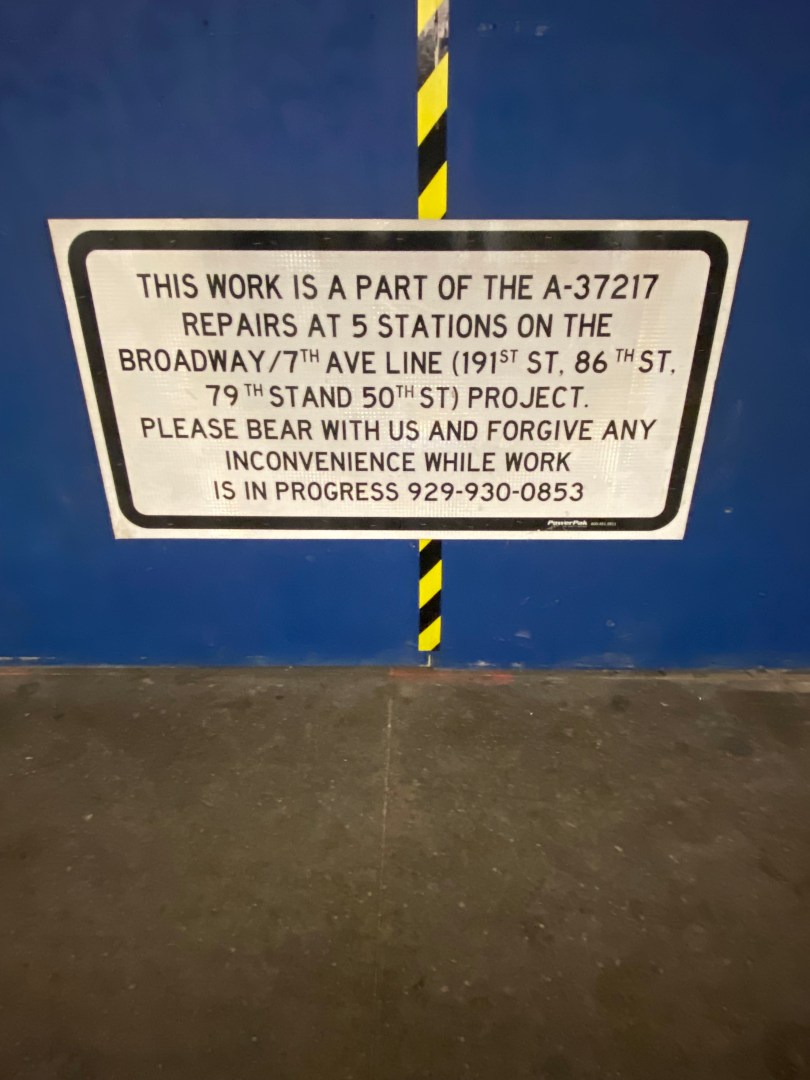
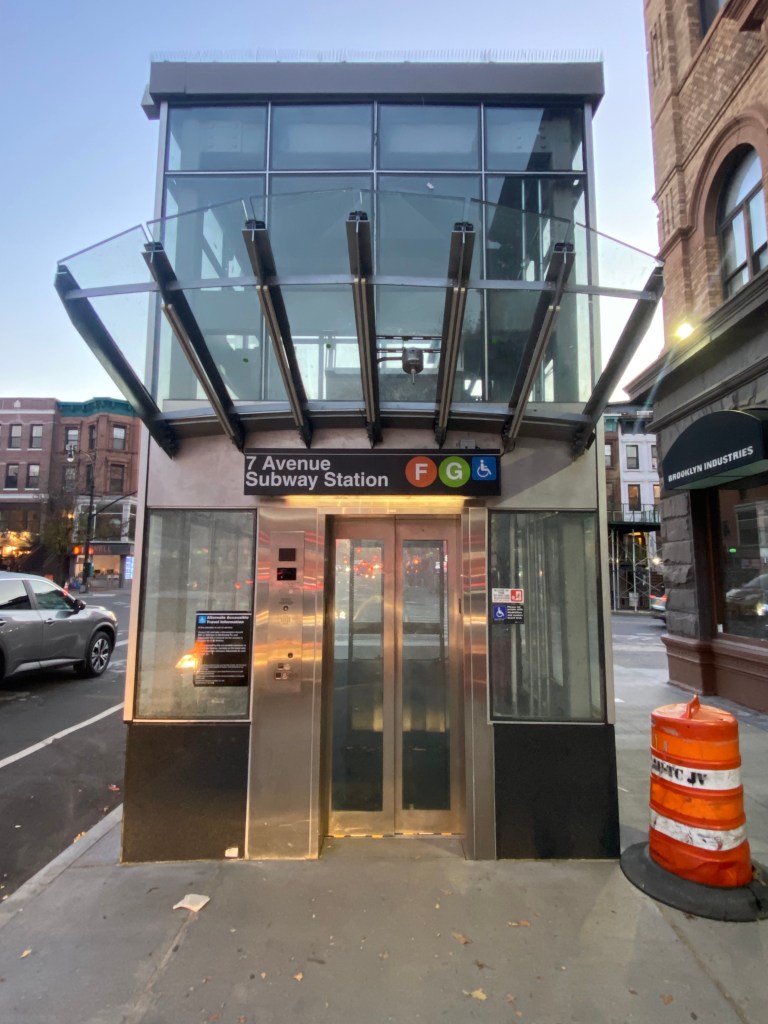
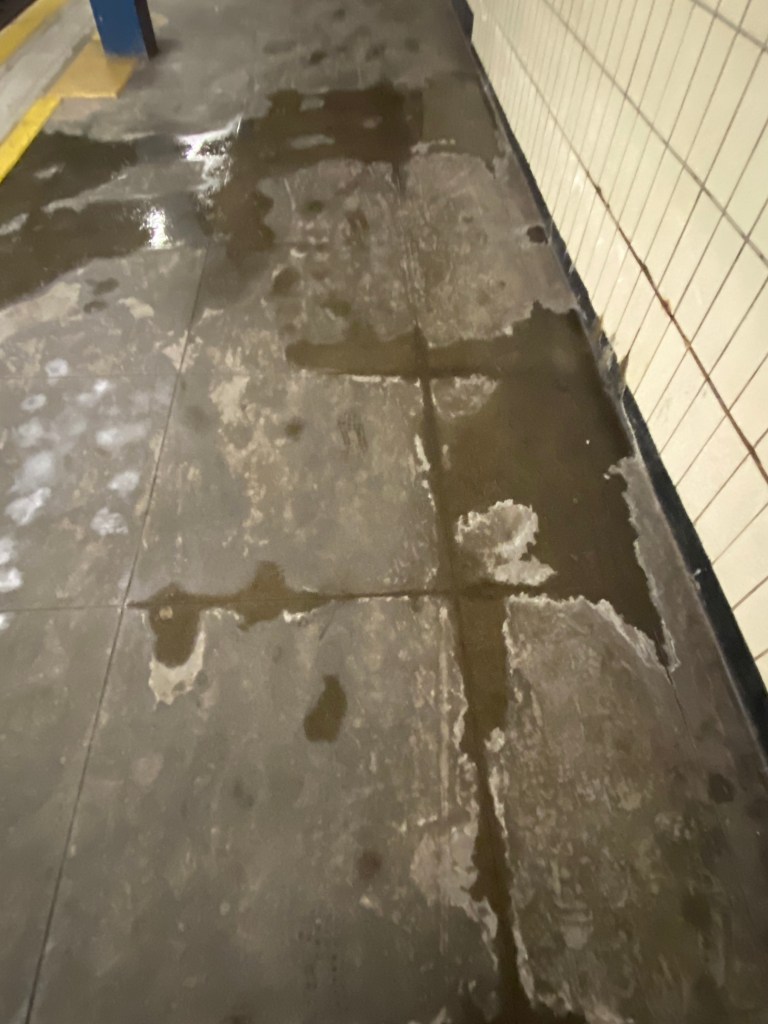
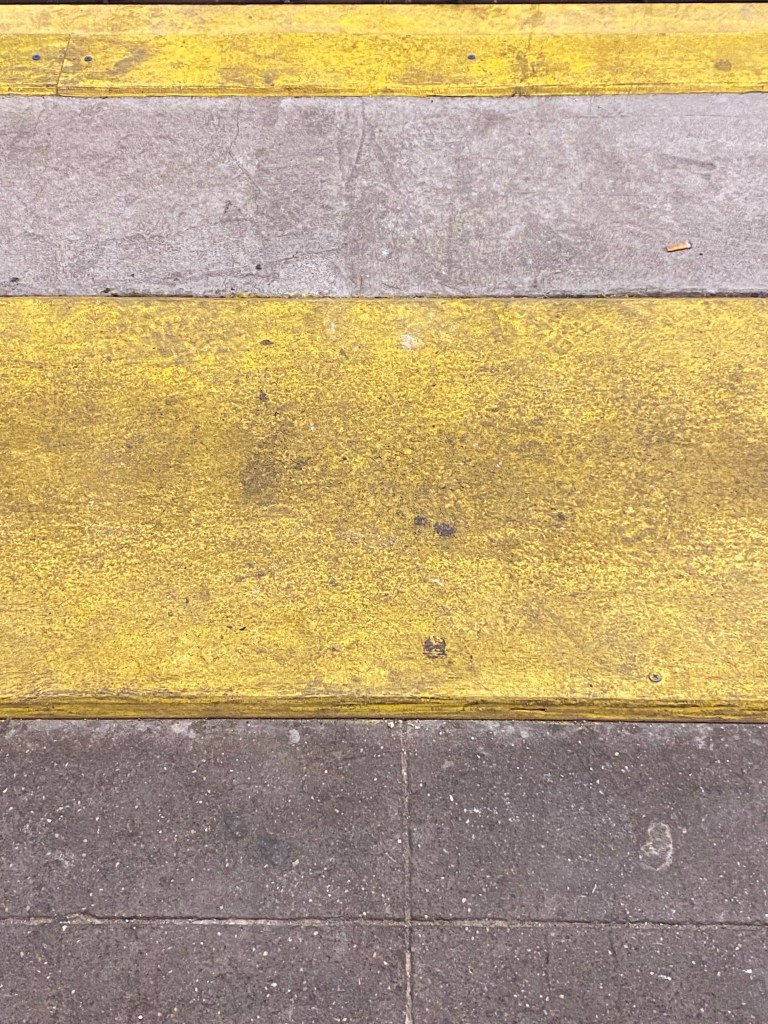
As a result, the MTA has and is taking many steps to improve Manhattan subway platforms in its 2020-24 Capital Program. As part of Platform Components projects, the MTA is making various improvements such as the repair/replacement of columns, wall tiles, floors and platform edges. Platform edges refer to the yellow strips at the front of platforms riders step over as they board the train. Two of the projects are for work at the 68th St-Hunter College(6) and East Broadway(F) stations respectively. The third is a project bundle with work being done at the 50th, 79th, 86th, 145th and 191st St Stations on the 1 line. The work at 68th St-Hunter College is being contractually combined with work to make the station fully accessible for those with mobility disabilities via elevators. This will likely help save the MTA money and get more work done faster, as has been proven with many other MTA subway station projects in recent years. This includes an ADA accessibility project where the MTA added elevators to eight subway stations including Dyckman St(1), E 149th St(6) and 7 Av(F, G). As the stations in the Platform Components projects have different structural needs and are in different communities, the work will have a variety of unique and similar impacts in all stations once complete.
The 68th St-Hunter College project is unique in that the platform improvements are being contractually combined with accessibility upgrades that include elevators. Hence, the project is a great opportunity for the MTA to ensure that all aspects of the station are suitable for those with disabilities. Even with more than 130 accessible stations, a lack of amenities such as designated boarding areas and smaller gaps between the platform and the train can make it hard to ride the subway. While its unclear exactly what improvements the MTA is making besides what has already been done, its possible that the agency can decide to address these issues.

While important everywhere, station accessibility is especially important on the Upper East Side According to data from the NYU Furman Center, 3.2% of Upper East Siders are disabled(6,600 residents) and 20.4% are age 65 and older(41,000 residents). Hence, accessibility improvements are essential to ensuring the residents can rely on the subway to get to their destinations. It is worth noting that the 68th St-Hunter College station is the closest station to the Julia Richman Educational Campus, which is home to three partially accessible high schools. These are important to serve as only 31% of NYC Public Schools are ADA-accessible. As many of these schools are located near inaccessible stations and NYC has a notoriously unreliable school bus system, students with mobility disabilities have substantially less school choices than others. The subway station here being accessible can possibly provide these students with three more.
As for the East Broadway station on the Lower East Side, improvements here are especially essential as it is the first station on the F line in Manhattan. Hence, improvements to infrastructure here will help all riders to have a good first impression of both the neighborhood and the borough even if they are not getting off. This is will especially be good for businesses in the adjacent Chinatown, where many have struggled due to a combination of less office workers, inflation, and the rise in Anti-Asian Hate Crimes. Additionally, many of these businesses also felt the economic effects of the pandemic earlier than most NYC businesses. According to community-based organization “Welcome to Chinatown”, 84% of survey respondents say they saw their business decline by more than half before the NY on PAUSE order in March 2020. Therefore, a positive subway station experience can help to draw more people to the neighborhood and thus, accelerate its economic recovery.
While not as overarching as in Chinatown as far as impact, these first impressions are also essential for the stations along the 1 line as well as the 68th St-Hunter College station. In reference to the 68th St-Hunter College station, the station is likely a pride point amongst students and faculty as it was named after the school in 1917 upon faculty request. The station is also a short walk away from The Rockefeller University and Weill Cornell Hospital and Memorial Sloan Kettering Cancer Center. All three are world-renowned academic or medical institutions that draw students and/or visitors from around the region and world.
With the 1 train stations, many of them are located in major tourist areas or in areas with a high concentration of cultural institutions. The 50th St Station is located in the heart of Midtown Manhattan just blocks from Times Square and a plethora of Broadway theatres. Other major destinations such as Rockefeller Center, St. Patrick’s Cathedral and the Museum of Modern Art are also nearby. Additionally, the 79th and 86th St stations are located within walking distance of other popular tourist attractions. These include the American Museum of Natural History, the Children’s Museum of Manhattan and the New York Historical Society. Outside of Museums, the stations are a short walk from both Central and Riverside Parks, which are among the most popular green spaces in the city. Stations at 145th St and 191st St are also located near busy destinations and in the vibrant communities of Harlem and Washington Heights respectively.
In addition to platform upgrades at the 1 train stations, they are part of a series of upgrades the MTA has made to the line overall in the past several years. In July 2023, the agency completed one of its signature ReNEWvation’s at the 145th St station. This is different from platform component improvements because while those focus on the platforms themselves, ReNEWvations focus on all functional and aesthetic aspects of the stations. ReNEWvations also are smaller, but impactful projects completed in a 55-hour window versus a multi year affair. The ReNEWvation at 145th St included new lighting, repainted surfaces and the securement of floor tiles to prevent trips and falls. Combined with those upgrades, the platform components project should be able to build on this progress.
Besides station improvements, the MTA has increased service on the line from eight to six minutes on weekends with plans to expand to other times of the day. While it may not seem like a lot, it can make a difference in many people’s commutes and limit crowding. Additionally, the MTA replaced older tracks between 145th St and 168th St and added new switches along the line to increase service reliability. For the 1 train, platform upgrades should be the icing on the cake to what has been significant upgrades around the board in the past year.
While the same type of work is occurring at each station, it is interesting how they are recieving different levels of funding. According to its Capital Program Dashboard, the improvements at East Broadway(F) will cost about $14.6 million and the average cost at each 1 train station is about $14.5 million. However, the 68th St-Hunter College station is receiving half of that with only $6.2 million dollars being allocated to the project there. This could be because of a different level of need at each station. When I visited 68th St-Hunter College, the platform did not look extremely dilapidated, it did have some grimy spots. Parts of the wall also appeared to be slightly grubby and many mosaic tiles were broken. On the other side, 86th St on the 1 line appeared to have more complex needs. Here, there were more areas on the back of the platform with blue construction barriers, indicating that there is some sort of significant state of good repair work occurring. Additionally, the platform had a ledge between the platform and the train that requires on to step over twice between there and the train. This is something the MTA will likely. look to eliminate as it makes boarding the train more difficult than at other stations. These are all things that are likely the reasons why the cost of work at each 1 train station is more expensive than the work at 68th St-Hunter College.


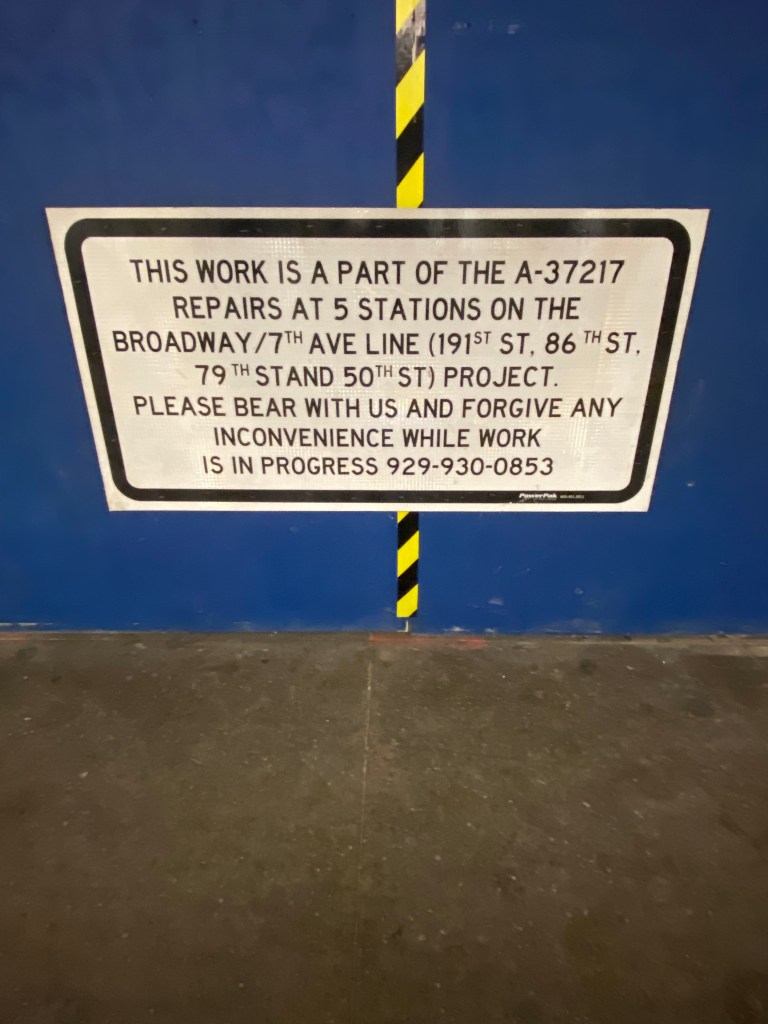
The projects for platform improvements are in different stages of progression. The project on the 1 train stations is 2% complete and is expected to be finished in October of this year. However, the other two projects are much further along in their development. The East Broadway station work is 93% complete while the 68th St-Hunter College work is substantially finished with 44% of the work completed. Work at 68th St-Hunter College is set to be finished in December 2024.
As the MTA continues to work on station platforms, the agency’s work will undoubtedly serve not just to update infrastructure, but also to make a lasting difference in communities. When combined with other service improvements, they can make a difference for riders and make the subway a more attractive way of getting around. As the projects are moving along, there is hope that these platform improvements will lead to substantially better station conditions for years to come.
Works Cited
“Chinatown: State of Neighborhood Small Businesses Survey — Welcome to Chinatown.” Welcome to Chinatown, 29 April 2023, https://welcometochinatown.com/news/state-of-neighborhood-survey. Accessed 21 January 2024.
Erway, Cathy, and Jutharat Pinyodoonyachet. “Chinatown, Three Years After COVID.” Eater NY, 15 March 2023, https://ny.eater.com/2023/3/15/23639808/chinatown-2023-covid-restaurants. Accessed 21 January 2024.
“The Julia Richman Education Complex — Urban Academy Laboratory High School.” Urban Academy Laboratory High School, https://www.urbanacademy.org/the-julia-richman-education-complex. Accessed 21 January 2024.
Leys, Tony, and Mike Moen. “Report: Two-Thirds of NYC Schools Not ADA Compliant.” Public News Service, 28 August 2023, https://www.publicnewsservice.org/2023-08-28/disabilities/report-two-thirds-of-nyc-schools-not-ada-compliant/a85987-1. Accessed 21 January 2024.
McKenna, Chris. “Congestion pricing: Will MTA hold Hudson Valley hearing on $15 toll?” Lohud, 18 January 2024, https://www.lohud.com/story/news/politics/2024/01/18/congestion-pricing-nyc-will-mta-hold-hudson-valley-hearing-toll/72194735007/. Accessed 21 January 2024.
Metropolitan Transportation Authority. “Installing new track and replacing switches on the 1 line.” MTA, https://new.mta.info/system_modernization/uptown-1-track-work. Accessed 21 January 2024.
Metropolitan Transportation Authority. “MTA Announces Next Phase of Service Increases to Begin on 1 and 6 Subway Lines.” MTA, 9 August 2023, https://new.mta.info/press-release/mta-announces-next-phase-of-service-increases-begin-1-and-6-subway-lines. Accessed 21 January 2024.
Metropolitan Transportation Authority. “MTA Board-Capital Program Committee Meeting.” YouTube, 21 February 2023, https://www.youtube.com/watch?v=UXVtE8GQBXY&t=75s. Accessed 21 January 2024.
Metropolitan Transportation Authority. “MTA Completes Re-NEW-Vation at 145 St 1 Subway Station.” MTA, 18 July 2023, https://new.mta.info/press-release/mta-completes-re-new-vation-145-st-1-subway-station. Accessed 21 January 2024.
New York City Department of City Planning. Tableau, 24 November 2022, https://public.tableau.com/app/profile/dcptransportation/viz/ACSProfiles/Dashboard1. Accessed 21 January 2024.
New York City Transit. “MTA Completes Re-NEW-Vation at 145 St 1 Subway Station.” MTA, 18 July 2023, https://new.mta.info/press-release/mta-completes-re-new-vation-145-st-1-subway-station. Accessed 21 January 2024.
NYC Public Schools. MySchools NYC, https://myschools.nyc/en/schools/high-school/?dbn=02M459. Accessed 21 January 2024.
Piersol, Bill. “Cancer Care Worth Traveling For: Why People Come to MSK From Across the Country.” Memorial Sloan Kettering Cancer Center, 26 June 2023, https://www.mskcc.org/news/cancer-care-worth-traveling-for-why-people-come-to-msk-from-across-country. Accessed 21 January 2024.
Powers, Keith, et al. “Out of Order: Focusing on MTA Elevators and Escalators.” New York City Council, 1 February 2023, https://council.nyc.gov/keith-powers/wp-content/uploads/sites/64/2023/02/Policy-Spotlight-MTA-Equipment.pdf. Accessed 21 January 2024.
“Station Named for Hunter College.” The New York Times, 31 December 1969, https://www.nytimes.com/1917/02/16/archives/station-named-for-hunter-college.html. Accessed 21 January 2024.
“Upper East Side Neighborhood Profile – NYU Furman Center.” NYU Furman Center, 2021, https://furmancenter.org/neighborhoods/view/upper-east-side. Accessed 21 January 2024.
Wanger, Katherine. “The Subway System – History of New York City.” TLTC Blogs, https://blogs.shu.edu/nyc-history/tours/the-subway-system/. Accessed 21 January 2024.
Zimmerman, Alex. “NYC school bus delays reach highest level in five years.” Chalkbeat, 21 November 2022, https://www.chalkbeat.org/newyork/2022/11/21/23472253/nyc-school-bus-delay/. Accessed 21 January 2024.
 Transit Central