
By Joseph Morales
New York City is the largest city in the United States and is one of the most vibrant and eclectic places in the World. The city is also among the world’s financial, cultural and commercial centers. Given the city’s immense population density and traffic, many residents rely on the city’s subways and buses to get around. Even as many New Yorkers continue to have hybrid schedules, subways and buses averaged 3.2 and 1.4 million daily riders respectively in 2022. As much as New Yorkers hate them, the transit system has afforded them with many things that other U.S Cities can only dream of. Today, we dive in to the Top 10 Things that Public Transit Makes Possible in NYC.
10. The Commercial Strip
In most neighborhoods, there is at least one street with at least a small array of shops. In some places, one may also find restaurants, offices, entertainment and more all within a short walk from their home. Additionally, each borough also has at least a handful of corridors such as Fordham Rd in The Bronx, Flatbush Avenue in Brooklyn and 5th Ave in Manhattan that are known for being major commercial hubs. In all of these cases, these facilities are located along walkable streets and are in the vicinity one bus route and/or a subway line. These strips are only able to exist simply because many New Yorkers take mass transit and hence less space is needed for vehicular parking.

In the majority of U.S Cities where most residents drive, almost all commercial facilities must provide some amount of parking, limiting the amount of facilities that can be in walking distance. Even in NYC’s most car-dominated borough in Staten Island where 83% of households out of a 500,000 resident-population own cars, the fact that about 17% go car free leaves a lot more room for the places people enjoy. So the next times you’re able to go shopping and then pick from a wide array of food establishments within a few blocks, thank the existence of mass transit.
9. School Choice
When young New Yorkers enter the 8th grade, they get the opportunity to apply to 700 programs in more than 400 high schools anywhere in the city they want. Many take the SHSAT for coveted spots at Specialized High Schools such as Bronx Science, Stuyvesant and Brooklyn Tech. Even for those who can’t pass this test, they still have access to a plethora of programs in almost any speciality imaginable with a variety of schools to choose from. In addition, this system allows students who live near lower-performing schools to receive better opportunities elsewhere. As high schoolers can’t drive for the most part in the city, mass transit is the only reason most NYC students have the options they do for high school. In most American cities, students are subject to either zoned schools or a smaller selection of magnet schools. In New York, students seem to take advantage of their choices as many schools like Bronx Science, have a many students with commutes of over an hour.

The Bronx.
8. A Free Art Museum
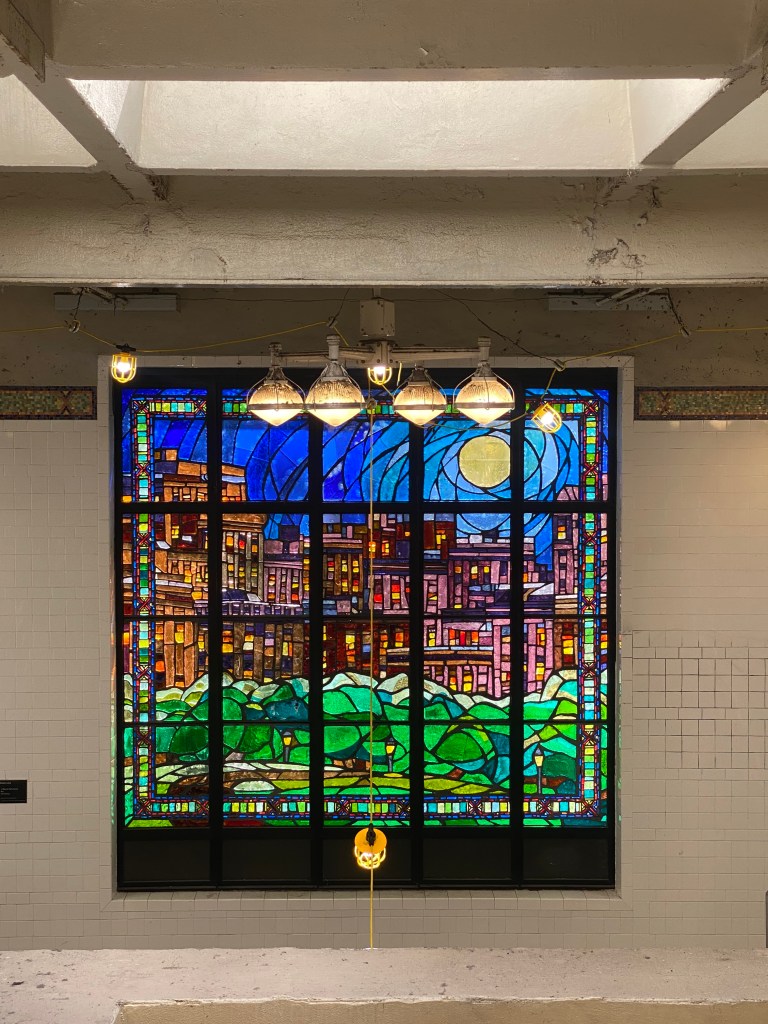
This one is probably the easiest commodity to connect to mass transit on this list. If you’ve traveled on the NYC Subway, you’ve definitely noticed the variety of artwork that covers a plethora of different mediums across the system. This allows New Yorkers to see art in a way that most are only able to at museums or galleries. Many artists also place their pieces directly outside of the system in places where they know it will be visible. Examples include this piece titled A Day in Parkchester by William Low, as seen at the Parkchester(6) subway station in the Parkchester section of The Bronx.
7. Fun on The Streets
In New York, streets are for more than just travel. The city’s Open Streets program allows for street space to be used for purposes such as recreation, cultural activities, outdoor learning and more. A new program named Dining Out NYC, will make outdoor restaurant seating permanent on city streets after the success of the Open Restaurant Program. Additionally, the city often closes its streets for many events such as parades, street festivals and block parties. While driving and parking does remain an issue in these cases, the presence of mass transit in the city definitely makes it easier to get around and enjoy the streets in the circumstances. For example, someone attending the iconic Macy’s Thanksgiving Day Parade could take one of seven subway routes to the parade route rather than sitting in traffic and parking their car several blocks away. One has even more subway options for getting to tonight’s New Year’s Ball Drop in Times Square. Mass transit also means less people have cars to drive and park, which makes it easier to justify using street space for non-travel purposes.

Upper West Side.
6. Unexpected Connections
Most New Yorkers don’t talk to others on transit. Many will even tell you they use noise-cancelling AirPods so they don’t even hear their surroundings, let alone have a conversation. However, it is easier to make connections to people on transit than you might realize! While this is harder to do on the subway due to the hustle and bustle, making friends on a bus ride is quite possible if you see the same people when you ride daily. As a high school student in the Bronx, I have made friends at other schools simply by riding the same bus on a daily basis. I have even switched phone numbers with some of them and now they are among my closest friends. Turns out I’m likely not alone in making friends on public transit. Lifestyle blog Cohabs ranked riding the bus as the 9th best way to meet new people in New York ahead of Coworking Spaces. On buses, you might even know your drivers’ name should you ride the same bus every day. While transit is known for connecting places, it seems to also be very good at connecting people.
5. Game Day? No Problem!
In most major U.S Cities, most major sports arenas/stadiums are often located in the middle of giant parking lots in suburban or otherwise remote locations. Even in places with downtown arenas, they tend to be major drivers of congestion as most people access them by car. However in NYC, all major teams besides the Jets and Giants have stadiums in the city, well accessible by mass transit. This limits congestion near stadiums and allows businesses around stadiums to not just function, but thrive on game days from additional foot traffic. In 2011, the MTA estimated that 45% of Yankee fans took mass transit to the stadium on game days. Fans taking mass transit to games also allows the excitement of the stadium to spill onto local streets after the game. As you might imagine, passionate Yankee fans are known for often carrying their emotions(good or bad) through the South Bronx and onto the 4 train after every game.

4. More Green Spaces, More Outdoor Fun
New York City’s parks are a major part of life in the city. While New York City is not known for its climate, the fun of outdoor sports can be felt almost anywhere during the warm months. Whether its handball, basketball or even cricket, you are guaranteed to find people playing to win on every corner. Not a sports person? NYC’s vast green spaces also provide a nice place to take a stroll, enjoy views of neighboring communities or just relax from the city’s hustle and bustle.
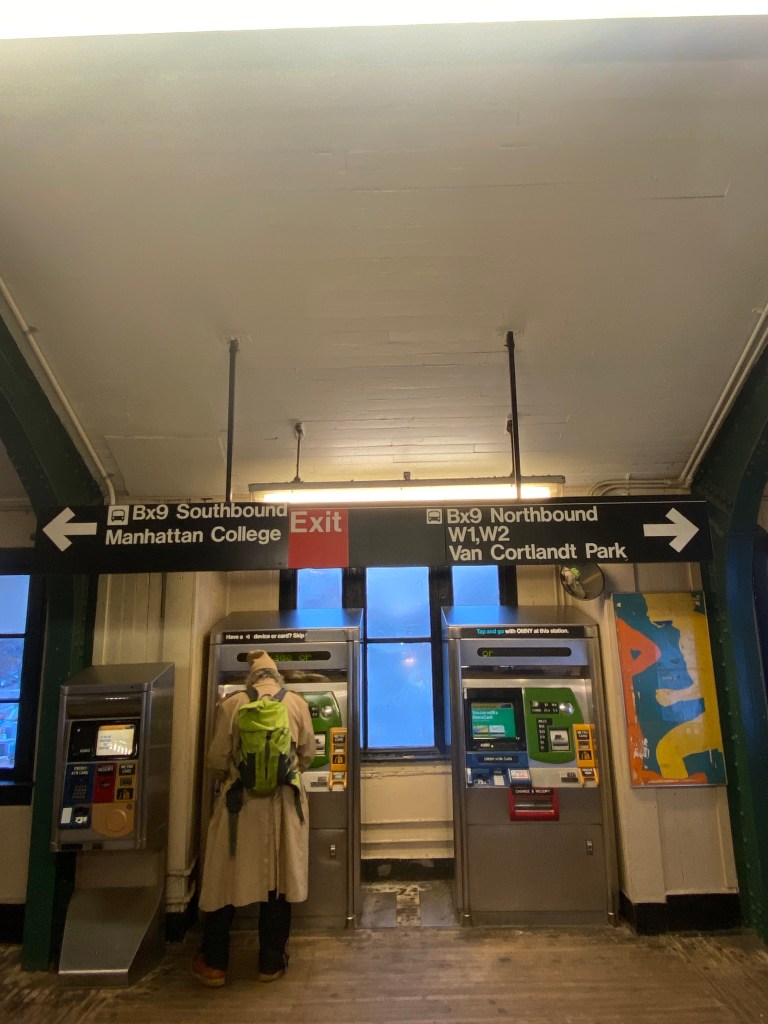
As parks are very popular in the city, the city is a ntaional leader in maintaining park access throughout al of its communities. According to the Trust For Public Land, 99% of NYC residents live within a 10-minute walk from a park, compared to a 55% national average for municipalities. NYC has also managed to have more green space than any American city despite its extremely high population density. How can this be the case? Answer: The city does not need as much space for parking. As parks exist in areas with varying rates of activity and residential density, NYC has this green space simply because that space is not needed for vehicles in the area for other purposes. Many of the city’s most prominent parks such as Central Park and Van Cortlandt Park have subway stations named after them. Additionally, countless other parks across the city are linked directly to stations and are served by bus lines. Hence, transit is a great way to travel to play a favorite sport, hang out with your friends or simply relax in New York’s premier green spaces.

3. A Healthier Lifestyle
You might not think that a walk to the bus stop or the subway station counts as a workout. While its not as vigorous as lifting weights at Planet Fitness, it does come with immense health benefits that driving a car dosen’t. The CDC recommends 22 minutes of moderate physcial activity such as walking daily and often, this is achieved if not surpassed by most daily transit commuters. A report from the U.S Department of Health showed that the risk of all causes of mortality began to decline even at the lowest levels of physical activity. Hence, even if you can’t hit the gym, your transit ride is making you healthier!
2. Neighborhood Vibes
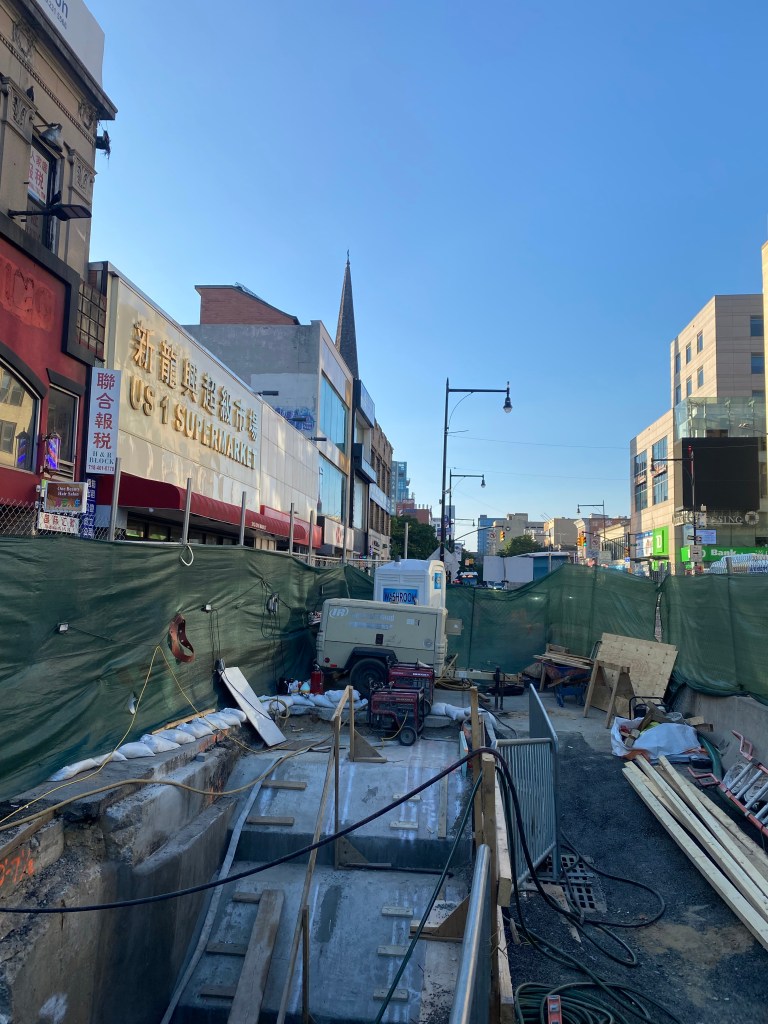
When you walk into a NYC neighborhood, you are bound to be immersed into the eclectic and distinct cultures of both the neighborhoods and the countries its residents come from. Whether its the Irish Hospitality in Woodlawn or the site of storefronts in Chinese characters in Flushing, New Yorkers clearly embrace a variety of traditions in the streets. The best way to experience these cultures is undoubtedly mass transit. Since mass transit forces you to walk, you are able to truly take in the sights and sounds of a place in a way that is impossible while focusing on the road. For example, you may be more inclined to visit a vendor selling ethnic foods or a store selling clothing with overseas roots.
Flushing-Main St(7) subway station.
You may also be more inclined to visit a small business, monument or other facility that allows you to learn something new that you wouldn’t have if you drove directly to your destination. For example, when I was in Midtown, one day, I noticed a sign for 6 ½ Ave while I was walking on W 55th St. After reading an Untapped New York article, I realized it was a covered pedestrian arcade between 51st and 57th Sts with wide public walkways, vibrant architecture and art installations. You can see pictures of the pedestrian arcade and learn more about its rich history here: https://untappedcities.com/2019/03/05/manhattans-6-12-avenue-turns-6-12-years-old/
This is an amazing place I wouldn’t have even knew existed had I had just drove right past it. I hope to one day get to visit the pedestrian arcade if I have the time.

- Panoramic Views
If you’re travelling from the outer boroughs to Manhattan on public transit, you are almost certainly travelling on an elevated structure at some point during your trip. This will usually be an elevated subway line, or an elevated highway if you ride an express bus. Even on other trips such as the Bx12-SBS on Interstate 95 in The Bronx, one gets to enjoy splendid views of the Northeast Bronx and parts of Westchester County.
These views are absolutely breathtaking, and they could only be enjoyed to the fullest if you don’t have to drive. If you ride the B, D, N, Q, J or Z trains, you get to enjoy exhilarating views of both the Manhattan and Brooklyn skylines from the Manhattan and Williamsburg Bridges depending on your train. If public transit wasn’t such an essential in NYC, one would arguably call access to these views for $2.90 one of the best entertainment bargains in the world. In comparison, the cost to see the view at One World Trade Center or the Empire State Building both start at $44 a person. While the subway can’t beat those views, it is definitely a great way to see views of the city on a budget.

CLOSING STATEMENT
As NYC is such a vibrant and exciting place, we often forget about how important transportation infrastructure is to New York being the place we know it to be. It is clear that transit is the engine that connects people to opportunity, fun and each other. As we recognize all that transit has done for us in the city, we can truly appreciate the impact that public transportation has on New York being among the world’s greatest cities.
Works Cited
“Buy Tickets for One World Observatory in New York City.” One World Observatory, 2023, https://www.oneworldobservatory.com/buy-tickets/. Accessed 21 December 2023.
Goldmark, Alex. “More Fans Look to Take Transit to See Yankees than Mets [UPDATED].” WNYC, 18 July 2011, https://www.wnyc.org/story/283116-more-fans-look-to-take-transit-to-see-yankees-than-mets/. Accessed 21 December 2023.
New York City Department of Transportation. “NYC DOT – Open Streets.” NYC.gov, https://www.nyc.gov/html/dot/html/pedestrians/openstreets.shtml. Accessed 21 December 2023.
New York City Economic Development Corporation. “New Yorkers and Their Cars.” NYCEDC, 5 April 2018, https://edc.nyc/article/new-yorkers-and-their-cars. Accessed 21 December 2023.
New York City Office of The Mayor. “Mayor Adams Signs Bill to Create Nation’s Largest Permanent Outdoor Dining Program.” NYC.gov, 16 August 2023, https://www.nyc.gov/office-of-the-mayor/news/598-23/mayor-adams-signs-bill-create-nation-s-largest-permanent-outdoor-dining-program#/0. Accessed 21 December 2023.
“ParkServe® for New York, NY – TPL.” Trust for Public Land, https://www.tpl.org/city/new-york-new-york. Accessed 21 December 2023.
Saraniero, Nicole, and Ariella Rosen. “Manhattan’s 6 ½ Avenue Turns 6 ½ Years Old this Month – Untapped New York.” Untapped Cities, 5 March 2019, https://untappedcities.com/2019/03/05/manhattans-6-12-avenue-turns-6-12-years-old/. Accessed 21 December 2023.
“6 Health Benefits Of Public Transportation.” TransLoc, 15 June 2023, https://transloc.com/blog/6-health-benefits-of-public-transportation/. Accessed 21 December 2023.
Stephenson, Rosheda. “Top 10 Ways to Meet New People in NYC | Cohabs New York.” The Cohabs Blog, 29 November 2022, https://blog.cohabs.com/the-best-10-ways-to-meet-new-people-in-nyc/. Accessed 21 December 2023.
“Ticket Information & Offers.” Empire State Building, 2023, https://www.esbnyc.com/buy-tickets. Accessed 21 December 2023.
United States Census Bureau. “Richmond County, New York.” Census Bureau, 1 July 2022, https://www.census.gov/quickfacts/fact/table/richmondcountynewyork/PST045222. Accessed 21 December 2023.
U.S. Department of Health and Human Services. “Physical Activity Guidelines for Americans, 2nd edition.” Office of Disease Prevention and Health Promotion, 2018, https://health.gov/sites/default/files/2019-09/Physical_Activity_Guidelines_2nd_edition.pdf. Accessed 21 December 2023.
Zimmer, Amy. “Tip sheet: What to know when applying to NYC high schools.” Chalkbeat, 20 October 2022, https://www.chalkbeat.org/newyork/2022/10/20/23415028/nyc-high-school-application-process-lottery-admissions/. Accessed 21 December 2023.
 Transit Central