
By Joseph Morales
Queens is New York City’s largest borough by land area and second in population, far surpassing that of Manhattan, The Bronx and Staten Island. Given its size and proximity to both Long Island and Manhattan, neighborhoods in Queens can range from suburban-like in Little Neck to Manhattan-like in Long Island City. Therefore, getting around Queens by public transit can mean traveling by various modes. In some parts of Central and Western Queens, the subway can easily be used in order to get from point A-point B east to west, while other trips require slower bus rides. In Eastern Queens, residents almost always have to rely on buses to get anywhere including to the subway. Many residents who can afford it can take the faster LIRR, however this may be prohibitively expensive for some even with the CityTicket. While buses in Eastern Queens do tend to be faster than other places, the length riders have to travel from here to subway stations still contributes to neighborhoods here having some of the longest commutes in the city.
To help address these issues, the MTA just released its final plan to redesign the Queens bus network in order to meet the needs of today’s riders. While the borough has changed a lot since the 1950’s, its bus system has not kept up and most of today’s routes are still based off trolley routes from this era.
One of if not the most significant addition to the bus system is going to be the addition of rush routes. Rush routes will mainly connect areas lacking subway service to the major business districts of Downtown Flushing, Jamaica and Long Island City(LIC) that all have subway stations, with Jamaica and LIC having access to multiple lines. Some rush routes will also go to other densely populated neighborhoods with stations such as Kew Gardens and Briarwood. These routes will have significant non-stop portions and stops the bus does make will spaced out much further than on today’s routes.
In addition to getting to subway stations, many riders will likely use the faster rush routes to get to the three core business districts due to the parking, congestion, and sometimes busway restrictions that make it harder to drive in these areas. This may even become riders’ primary purpose for using the Q66 and Q69 rush routes, as they both run within a 15 minute walk from subway stations in Central and Western Queens. If a substantial amount of riders switch to the bus, it may also help to greatly reduce congestion and improve quality of life in the core business districts. These routes will also run in the reverse peak direction during rush hours, making them useful for those who reverse commute, go to school and work nontraditional schedules. There will be 27 rush routes should the Proposed Final Plan be implemented.
Existing bus routes that are proposed to become rush routes include the Q66(Northern Blvd West), Q30(Utopia Pkwy) and Q27(Springfield Blvd/46th Ave). The MTA is also creating some new rush routes such as the Q86(Merrick Blvd) and Q82(Hempstead Ave/Hillside Ave) due to adjustments to other routes to make more trips more direct. In nonstop sections of all rush routes, the MTA will provide local or limited stop service to fill the gap. Rush routes on bus priority corridors such as Northern Blvd and Merrick Blvd, could play a huge role in speeding up trips, as buses not only will make less stops, but will spend less time exiting and reentering traffic. This will also help to reduce congestion in bus lanes, which will in turn benefit local and limited bus riders as well.
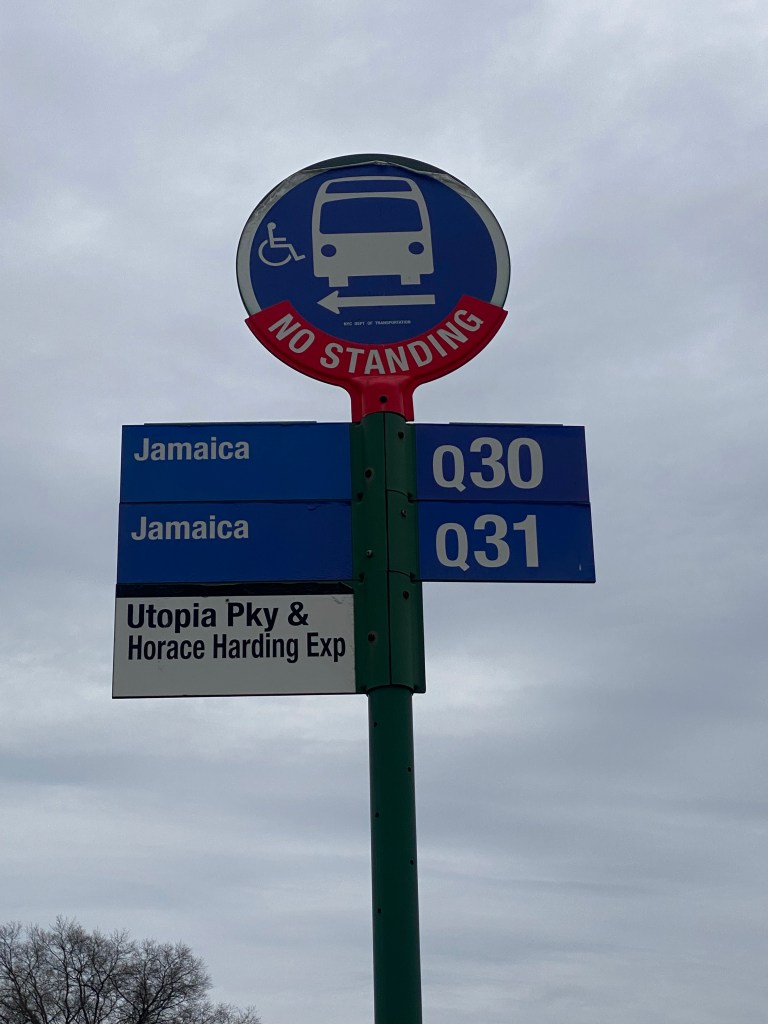
This new rush route strategy is an innovative technique that has not been attempted before in New York City. It also represents a new strategy to counter the ever lasting issue of transit deserts in the city, where many densely populated areas are far from subway service. Some of these areas in which rush routes have been proposed were even candidates for subway extensions as early as the 1930’s such as Bayside, College Point and Whitestone. However, no construction occurred due to a combination of the Great Depression, World War II and post-World War II development around the automobile. In more recent years, the Regional Plan Association(RPA) has also recommended subway lines to College Point/East Flushing and Oakland Gardens that would run along Northern Blvd and Jewel Ave respectively.
While subways would likely be faster than buses, improved bus service can be achieved sooner and at a much smaller cost. Subway service where most rush routes will be located would also be harder to justify, as most of NYC’s subway lines in the outer boroughs are in more populated communities such as Jackson Heights and Woodside. This is part of why the Dyre Ave Line in The Bronx(5 train between Eastchester-Dyre Av and E 180th St), only runs every 20 minutes during overnight hours and dosen’t run past E 180th St, forcing Manhattan-bound riders to transfer. No subway extensions to Eastern Queens were evaluated as part of the MTA’s 20-Year Needs Assessment, likely due to the cost that would be associated with building an extension for fewer riders.
As Queens is set to see its first bus network overhaul in 70 years, riders are excited but are still skeptical about how the changes will have on them. As the MTA begins the public feedback session for its final plan, people will have a lot to say about the changes and it may be hard for the MTA to accommodate all requests. While rush routes have not gained much opposition, implementation of the new routes along will have to wait until the rest of the plan is ready to go. The plan likely won’t be ready to go into effect until at least 2025 according to Streetsblog. Even though the redesign still has a ways to go, it is highly likely that rush routes will speed up commutes for thousands of Queens riders for years to come.
Works Cited
Barone, Richard, et al. “Save Our Subways – A Plan to Transform New York City’s Rapid Transit System.” Amazon AWS, June 2018, https://s3.us-east-1.amazonaws.com/rpa-org/pdfs/RPA-Save-Our-Subways.pdf. Accessed 16 December 2023.
Colon, Dave, and Kevin Duggan. “MTA’s Queens Bus Redesign: $30M in Service, 8 More Routes, Skepticism from Brooks-Powers – Streetsblog New York City.” Streetsblog NYC, 13 December 2023, https://nyc.streetsblog.org/2023/12/12/mtas-queens-bus-redesign-30m-in-service-8-more-routes-skepticism-from-brooks-powers. Accessed 17 December 2023.
Metropolitan Transportation Authority. “Queens Bus Network Redesign-Proposed Final Plan.” MTA, 12 December 2023, https://new.mta.info/document/128476. Accessed 16 December 2023.
Metropolitan Transportation Authority. “MTA 5 subway timetable.” MTA, 26 June 2022, https://new.mta.info/document/9446. Accessed 17 December 2023.
Nessen, Stephen, et al. “MTA pushes first overhaul of Queens bus routes since 1950s.” Gothamist, 16 December 2023, https://gothamist.com/news/mta-pushes-first-overhaul-of-queens-bus-routes-since-1950s. Accessed 16 December 2023.
Vanshnookenraggen. Much ado about Flushing: Regional Rail and Extending the 7 Train, 23 May 2022, https://www.vanshnookenraggen.com/_index/2022/05/flushing-regional-rail-extending-the-7-train/. Accessed 16 December 2023.
 Transit Central