By Joseph Morales
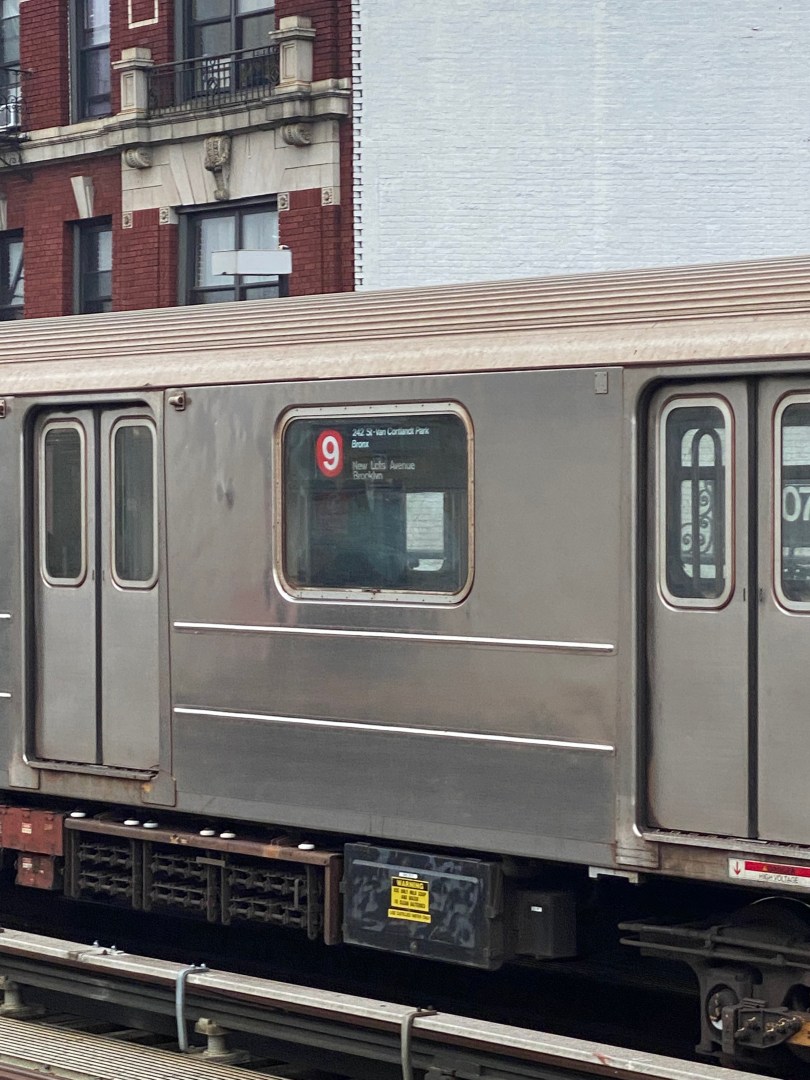
The 9 Train is a defunct New York City Subway line that used to be a skip-stop version of the 1 line that made select stops north of 137th St-City College, while the 1 train made other stops. Particularly busy stations such as 181st Street, were all-stop stations where both the 1 and 9 train stopped to provide adequately frequent service to a large number of riders. This is different than traditional express service, where only one or more train routes skips stops on a line while another route or routes makes all stops on a line(Ex: 4,5,6 Lexington Avenue Line, B,D,F, M Sixth Avenue Line). The purpose of this route configuration was to provide subway riders in the Northwest Bronx and Upper Manhattan with faster trips, as no matter what train they rode, it would not make all stops. In addition, the MTA wanted to decrease wait times at particularly busy stations that would be become all-stop stations. The service ran from 1989 to 2005 until it was ultimately discontinued due to less riders benefiting from the service as a result of the longer wait times it caused at many stations.

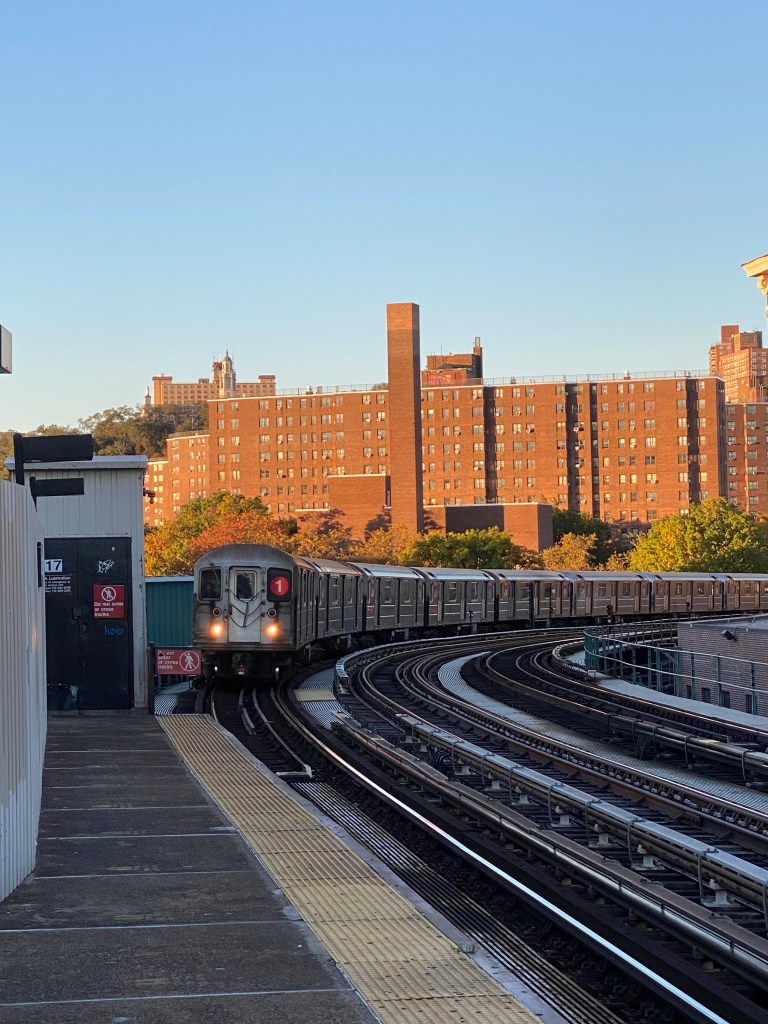
Given the 9 train’s brief existence, some may wonder if the 9 train or another route like it can return. Whether or not this could be the case likely depends on the numerous characteristics of a subway line such as the density around stations or the technical feasibility of running the service. As for the 9 train, stations that served more than 8,000 riders daily became all-stop stations while those with less riders than that were served by either a 1 or 9 train. The fact that the MTA felt that they could have more reliably spaced and reasonably crowded trains while providing the other benefits to riders is why the 1/9 train plan was implemented. In addition, there are many aspects of the rail design of a subway line that could impact the MTA’s ability to provide express or skip-stop service on a line. For example, the MTA initially considered running a traditional express service on the 1 line north of 116th St-Columbia University but it was immediately declared unfeasible as the center track on the line was not designed for express service. This was likely because during the period in which most of the line was opened between in the 1900s, the population density was not nearly as high around the line as it is today. Hence, transit officials of that era likely did not see the need for the line to accommodate express trains.
Even if a skip-stop service were to be considered feasible, it would have to be considered whether or not the service would actually be able to save people a significant amount of time or if riders actually want a skip-stop service. In the case of the 9 train, it took the MTA several months between July 1988 and March 1989 to get the public on board in part because they did not understand what skip-stop service was and riders wanted 125th St to be an all-stop station, which it was not planned to be initially. For all the MTA went through to study, revise and implement the skip-stop plan for the 1 and 9 trains, riders only saved between 2-3 minutes from the northernmost stations on the line and most riders actually saw better travel times once the 9 train was discontinued due to shorter wait times. This was because service was no longer split between the 1 and 9, allowing service to double at skip-stop stations.
While this was not explicitly mentioned by the MTA, the skip-stop pattern likely made traveling chaos for those with trips immediately between Van Cortlandt Park-242nd St and 125th St. This is because they would have to transfer at an all stop station and may have even needed to travel in the opposite direction if they needed to travel between stations served by either the 1 or 9 trains. As for if the line could return in 2023, it is safe to say that not many riders would be enthused with any changes to 1 train service. This is because the train regularly enjoys Customer Journey Time Performance(CJTP) rates of 90% or more based on MTA statistics and could get between its northern terminus in The Bronx and its southern terminus in Manhattan’s Financial District in around an hour.
If skip-stop service did not really work with the 9 train, could it work on some other lines? Back when the 9 train was proposed, the MTA had planned to bring skip-stop service to the Pelham Line in The Bronx(6) should it have been successful, which it obviously was not. Also, riders on the 6 train have really benefited from the diamond 6 express trains that skips nine stations between Parkchester and 3 Av-138th St that predates the skip-stop proposals.
There is also one skip stop service that currently operates on the NYC Subway, with the J, Z trains in Brooklyn and Queens. Here, Z train runs six times during the AM and PM rush hours with the J stopping at some stations and the Z stopping at others. The J train also runs a traditional express service in Brooklyn between Myrtle Av and Marcy Av, in the Manhattan-bound direction between 7AM-1PM and from Manhattan between 1-8PM. Unfortunately, as you might already imagine, this causes confusion as sometimes riders do not know which trains make which stops. On top of that, when this service does operate it causes longer wait times at skipped stations just like the 1 and 9 trains did. Even for the few Z train riders that do benefit, the Z train only runs for an hour during both the AM and PM peaks, meaning the route really only benefits some riders at a very specific time. While there are likely mixed opinions as to how important Z train service is, it probably is not a service pattern would the MTA would likely want to implement on other lines.
As most would come to the conclusion that skip-stop service was not successful, it was an attempt to speed up subway service that likely made sense to a degree when it was implemented. The MTA did recently increase subway service to being every 6 minutes on weekends for both the 1 and 6 train, indicating that shorter wait times is still a priority almost 20 years after the 9 train became defunct. Hopefully, the MTA will continue to find solutions to improve subway travel that benefit New Yorkers for years to come.
Works Cited
Siegel, Joel. “2 train changes get OK.” Newspapers, New York Daily News, 29 July 1989, https://www.newspapers.com/article/daily-news/24164180/. Accessed 19 November 2023.
Chan, Sewell. “On Its Last Wheels, No. 9 Line Is Vanishing on Signs (Published 2005).” The New York Times, 25 May 2005, https://www.nytimes.com/2005/05/25/nyregion/on-its-last-wheels-no-9-line-is-vanishing-on-signs.html. Accessed 19 November 2023.
New York City Transit Authority Operations Planning Department-Service Planning. “LaGuardia & Wagner Archives.” LaGuardia Community College, 4 May 1989, https://www.laguardiawagnerarchive.lagcc.cuny.edu/pages/FileBrowser.aspx?LinkToFile=FILES_DOC/Koch_FILES/08.005.0000.0000268.05.PDF#undefined. Accessed 19 November 2023.
Moore, Keith. “Skip-stop train blocked.” Newspapers, New York Daily News, 31 August 1988, https://www.newspapers.com/article/daily-news/25210846/. Accessed 19 November 2023.
Metropolitan Transportation Authority. “Subway Customer Journey Time Performance.” MTA Metrics, October 2023, https://metrics.mta.info/?subway/customerjourneytimeperformance. Accessed 19 November 2023.
Metropolitan Transportation Authority. “MTA J/Z Subway Timetable.” MTA, 2 July 2023, https://new.mta.info/document/9506. Accessed 19 November 2023.
New York City Transit. “MTA Announces Next Phase of Service Increases to Begin on 1 and 6 Subway Lines.” MTA, 9 August 2023, https://new.mta.info/press-release/mta-announces-next-phase-of-service-increases-begin-1-and-6-subway-lines. Accessed 19 November 2023.
 Transit Central