
By Joseph Morales
The State of Connecticut is a small state with a very diverse set of landscapes. Much of the state composes of small, but densely populated urban areas such as Hartford, New Haven, Bridgeport and Stamford. The state also has a plethora of smaller suburban cities and towns along with some rural areas. Many parts of the state are within commuting distance of New York City and 43,000 people commute from Connecticut into the city daily according to NYC Department of City Planning numbers. While the reverse commuting numbers are lower, 9,000 people also commute from NYC to Connecticut on a daily basis.
As Connecticut has a diverse range of communities, its residents get around through various means. While the majority of residents drive, at least 20-30% of residents do not drive in state’s larger cities. This is likely due to several reasons, such as high poverty in many areas along with CT having a bus system known as CT Transit that covers most areas of major cities. Many Connecticut residents also have access to the MTA Metro-North Railroad and CT Rail that connect to many communities across the state as well as to parts of New York and Massachusetts. There is also a large group of residents who own cars but still use the rails to get to larger cities and to New York City for convenience, with some even driving to their local railroad station to use the commuter rail. Even though Connecticut is not known for being as transit dependent as Boston and New York City, most if its cities are still much less car-dependent than the United States as whole, where only 8.3% of households lived car-free in 2021.
While transit ridership is higher in Connecticut than in most areas of similar population density in the U.S, the state has still been taking many initiatives to increase ridership in the past year. This is likely in order for residents to reap the benefits of having more transit use, such as less congestion in busy areas and reducing carbon emissions. For those who used transit often to begin with, they can benefit from increased ridership because CT Transit would then be able to receive more funding from fare revenue. This would in turn allow them to run more frequent and reliable bus service.
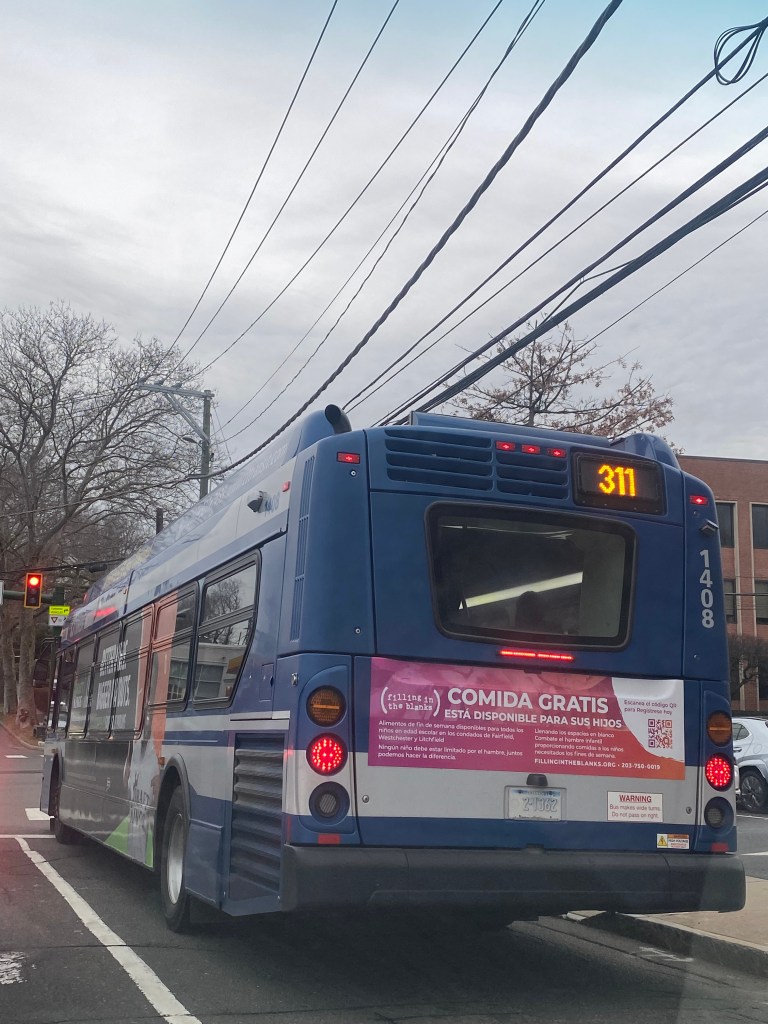
The state’s most significant initiative without question was when the bus system was free for an entire year from April 2022-April 2023. The Connecticut Department of Transportation(CTDOT) has also implemented a free trial program for CT Transit, where new riders can receive 10-day pass to try the system for free. More recently in September 2023, CT Transit started another program called the CT Pass program where eligible businesses and organizations could receive 10% discounts for transit passes.
Outside of fare-related incentives, state agencies and Governor Lamont hve taken several initiatives for improving transit service and accessibility. For example, the agency started the FastTrak Bus Rapid Transit system in 2015 to increase bus frequency and reliability in the Hartford area. Additionally, CTDOT is starting a microtransit pilot in select urban and rural areas to increase access to public transportation in areas with little to no access to public transit. To increase the number of residents living near public transit hubs, Governor Lamont had proposed a law known as the Work Live Ride law that would provide municipalities with financial incentives in order to build walkable communities within a half mile of transit stops, a practice commonly referred to as Transit-Oriented Development(TOD).
So, could these incentives help to encourage transit use in Connecticut? The distance that any one initiative will go in increasing ridership is unique and is based on numerous factors. Hence, it would likely take a host of different incentives and perks in order to attract new riders from various demographics. As for the incentives CT Transit already offers, they have a multitude of strengths and weaknesses for getting new riders on board.
As stated earlier, CT Transit’s most powerful incentive undoubtedly was making bus service free for a year. With free service, those who had financial trouble paying the fare, may have decided to make extra trips that they would not have otherwise. Those with cars may have chosen to take a free ride simply to take a break from the hassles of driving. This may have especially been the case during the free period higher gas prices putting an even greater strain on drivers’ finances during that timeframe. Visitors and tourists may be more inclined to ride the bus among their visit to the state if they can ride for free and be more likely to ride again on future visits if bus service worked for them. Given how tourism drives $17 billion in annual for many tourist-related businesses in CT, tourism can drive transit ridership more than you may think. However, the free service obviously could not last forever and thus, many of these riders likely switched back to their previous travel habits unless they found that the bus was more convenient for their trips than they previously taught before the program. As of now, there is now official data or reports on the effect free service had on ridership, or a riders’ tendency to travel more during the free bus program.
As for the 10-day bus free trials, riders may feel more inticed to ride the bus if they find out that a route works for them in a way that did not know otherwise. More specifically, this could help to reach prospective riders who did not believe that taking the bus could be competitive to driving simply because of the general association of public transit being an inferior mode. Like with the free buses, tourists may be more inclined to ride again if they found that a trial of the bus system worked for them. However, this program would not do much to keep riders on transit if its simply not frequent or reliable for them. In addition, it would not change the stigmas that often keep middle and upper class Americans off of buses. This includes the stigma that the bus is mainly for low-income riders who do not have an option, rather than something that can be useful for everyone. This stigma is often perpertuated in pop culture, where characters in TV shows who ride buses often do so when facing difficult situations. Therefore, these stigmas will have to be broken through bus service improvements that make the bus a viable travel option for those across all income and class brackets in Connecticut. However even then, there will likely be a long way to go in breaking the negative stereotypes associated with public bus travel.
In addition to the other fare incentives, the CTpass program can also go a long way to attracting new riders. This is because for organizations that just barely did not have the funding to obtain the passes, the 10% discount could mean that they could now distribute free passes to their employees and/or members, allowing these people to reap the benefits of free transit. Besides employers, colleges, trade schools, apprenticeships and social services providers are also eligible for the program.
While these incentives can all make transit more enticing from a financial perspective for riders, what about from a convenience perspective? CT Transit has made some notable service improvements such as the creation of the FastTrak Bus Rapid Transit System. This system includes several bus routes in the Hartford area that run mostly if not entirely on a dedicated busway and run frequently at headways of 10 minutes or less during rush hours. The service has very likely led to a ridership increase as riders have a much faster and more reliable option to get between many key destinations in Central Connecticut such as between Hartford and New Britain; a trip that previously required a slower bus ride or a long, congested drive on Interstate 84.
In addition, CTDOT has recently announced a pilot program to introduce microtransit to nine areas of the state scarcely served by local bus service. In these areas, riders will be able to request a vehicle to take them to destinations within a zone, similar to a rideshare service. The service should also be able to connect to the few fixed-route services available in the zone that travel outside of it to make them more accessible to riders. This type of service is operated in many areas with varying mobility contexts across the country such as in Dallas/Fort Worth, Valdosta, Georgia and West Sacramento, California. In Connecticut, microtransit is already a thing in cities like Norwalk, Westport, New London and Stonington. This can help to increase transit use amongst riders who would not have used transit just because it simply wasn’t there, wasn’t frequent enough or didn’t take them to where they needed to go. It can also help to increase ridership on busier fixed routes, where if it was not for the microtransit connection, riders from microtransit zones would otherwise drive. Even though microtransit does not serve as many people at once as a fixed bus route, it is still more efficient and eco-friendly than driving.
One other policy CT has considered implementing known as the Work Live Ride Law could have went a long way to encouraging transit use; as it would have encouraged the development of communities where transit was not only convenient, but it was competitive to owning a car at all let alone driving for a particular trip. However, it did not pass the state legislature in large part due to the argument that it would take funding from municipalities that do not engage in TOD and it would undermine the power of local governments in reference to their land use decisions. Both of these arguments are political in nature and thus, it would take substantial political will and depending on who’s in the legislature, bipartisan consensus to find a TOD bill that works for everyone. Some municipalities have already took matters into their own hands to develop TOD plans such as Stamford, New Haven and West Hartford. As TOD presents a host of social and economic benefits for cities along with increase transit use, it can be a major boon for Connecticut should more cities take it on.
As Connecticut is taking a versatile approach to increase transit ridership through initiatives such as fare incentives, improved service and transit-oriented development, one may wonder what the future of mobility looks like in the state. There is hope that one day, the state’s existing transit initiatives and new ones can help Connecticut become a state where a car is not necessary for every trip and all residents have reliable transit options that can get them to where they need to go. Given its diverse range of urban, suburban and rural areas, more transit use can make Connecticut a role model for places across the country on how to have reliable public transit in all types of communities.
Works Cited
“About CTfastrak.” CTtransit, https://www.cttransit.com/about/about-ctfastrak. Accessed 3 December 2023.
City of New Haven. “Union Station Transit-Oriented Development.” New Haven, CT, https://www.newhavenct.gov/government/departments-divisions/city-plan/plans-projects/union-station. Accessed 3 December 2023.
Connecticut Data Collaborative. “Poverty Status By Town: Year: 2016-2020 | Race/Ethnicity: All | Poverty Status: Below Poverty Level | Measure Type: Percent | Variable: Poverty Status,Margins of Error.” CT Data, 2021. Accessed 3 December 2023.
Connecticut Department of Transportation. “CTDOT Announces CTpass Program to Support Workforce Development Applications Now Available.” CT.gov, 27 September 2023, https://portal.ct.gov/DOT/CTDOT-Press-Releases/2023/CTDOT-Announces-CTpass-Program-to-Support-Workforce-Development-Applications-Now-Available. Accessed 3 December 2023.
Connecticut Department of Transportation. “Free Trial Ride – Department of Transportation.” CT.gov, https://portal.ct.gov/DOT/Publictrans/Bureau-of-Public-Transportation/Free-Trial-Ride. Accessed 3 December 2023.
Connecticut Department of Transportation. “Governor Lamont Announces Launch of Microtransit Pilot Program.” CT.gov, 13 November 2023, https://portal.ct.gov/DOT/CTDOT-Press-Releases/2023/Governor-Lamont-Announces-Launch-of-Microtransit-Pilot-Program. Accessed 3 December 2023.
Ely Portillo. “Overcoming the ‘stigma’ of riding the bus.” UNC Charlotte Urban Institute, 23 August 2021, https://ui.charlotte.edu/story/overcoming-stigma-riding-bus. Accessed 3 December 2023.
“Hartford, New Haven See Diminishing Car Ownership Among Households; Hartford Ranks 8th in U.S. in Percentage Without Cars.” Connecticut by the Numbers, 7 January 2018, https://ctbythenumbers.news/ctnews/tag/car+ownership. Accessed 3 December 2023.
Laguarda, Ignacio, et al. “How Stamford plans to spend $17M in state bond funding.” Stamford Advocate, 9 October 2023, https://www.stamfordadvocate.com/local/article/stamford-train-station-playscapes-18408861.php. Accessed 3 December 2023.
Monk, Ginny. “CT ‘Work Live Ride’ bill revives transit-oriented development debate.” CT Mirror, 15 March 2023, https://ctmirror.org/2023/03/15/ct-zoning-reform-work-live-ride-transit-oriented-development-tod-desegregate/. Accessed 3 December 2023.
New York City Department of City Planning. “The Ins and Outs of NYC Commuting – Regional Planning.” NYC.gov, September 2019, https://www.nyc.gov/assets/planning/download/pdf/planning-level/housing-economy/nyc-ins-and-out-of-commuting.pdf. Accessed 3 December 2023.
The Office of Governor Ned Lamont. “Governor Lamont Announces Connecticut Tourism Attracting Record Revenues and National Press Attention.” CT.gov, 26 May 2023, https://portal.ct.gov/Office-of-the-Governor/News/Press-Releases/2023/05-2023/Governor-Lamont-Announces-Connecticut-Tourism-Attracting-Record-Revenues. Accessed 3 December 2023.
Polansky, Chris, and Connecticut Public. “CTtransit bus rides are no longer free. Who’s to blame?” CT Mirror, 19 April 2023, https://ctmirror.org/2023/04/19/cttransit-ct-bus-fare-free-ending-april-1/. Accessed 3 December 2023.
Roberts, Scott. “CT Fastrak opens for commuters, bus riders – STN Channel 2.” STN Channel 2, 1 April 2015, https://stn2.tv/2015/04/01/ct-fastrak/. Accessed 3 December 2023.
Shrikant, Aditi. “American cities are trying to improve their buses.” Vox, 5 November 2018, https://www.vox.com/the-goods/2018/11/5/18057352/bus-stigma-public-transportation-micro-transit. Accessed 3 December 2023.
Tilford, Ashlee, and Michelle Menga. “How Many Vehicles Are There In The U.S.? – Forbes Advisor.” Forbes, 5 October 2023, https://www.forbes.com/advisor/car-insurance/car-ownership-statistics/. Accessed 3 December 2023.
“Transit Oriented Development.” Town of West Hartford, https://www.westhartfordct.gov/town-departments/planning-zoning/transit-oriented-development-planning-zoning-initiative. Accessed 3 December 2023.
 Transit Central