By Joseph Morales
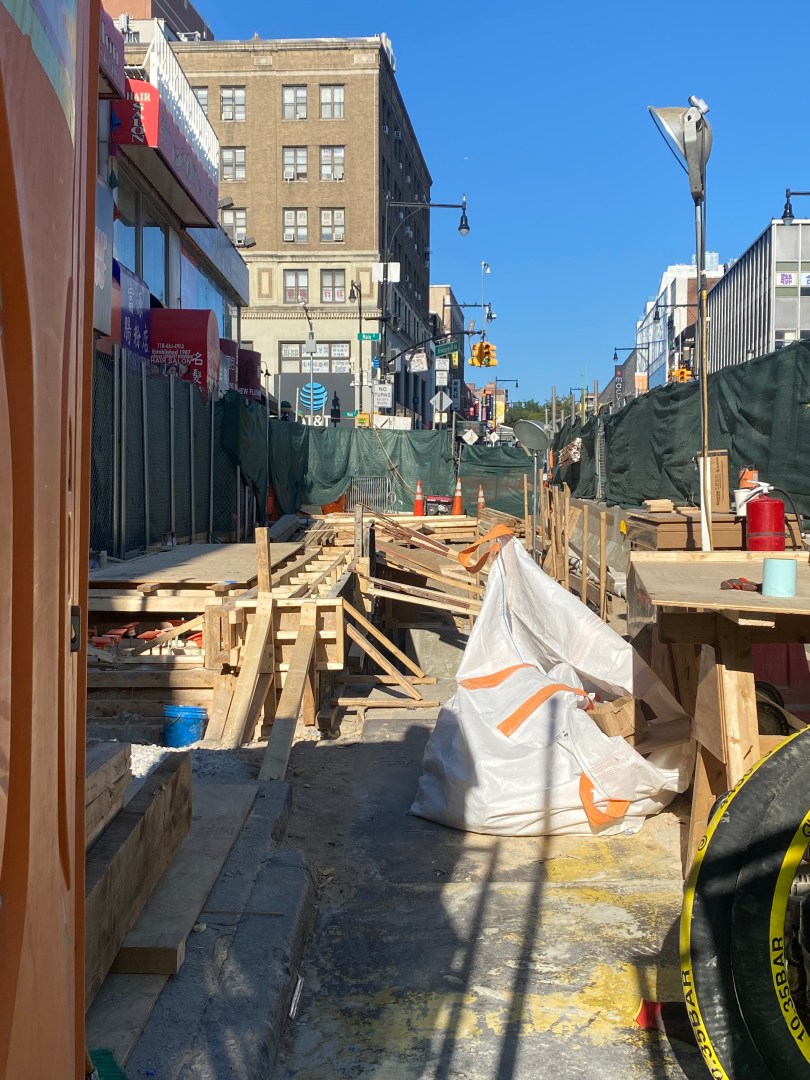
The Flushing Main-St(7) subway station is the busiest subway station in Queens and is one of the busiest stations in the entire city, with ridership ranking 11th out of all 472 subway stations in 2022. It is likely also the busiest station in the subway system that is served by a just a single line. This makes sense as the station is located directly in the heart of Downtown Flushing, one of Queens’ most vibrant residential and commercial destinations attracting visitors from across the city. In addition, given the lack of subway coverage in Northern and Eastern Queens, many Queens residents take the bus to the Flushing-Main St(7) in order to take the train to Western Queens and Manhattan. Inversely, many from Western Queens ride the subway here to transfer to buses that traverse Queens and/or enter Nassau County.
Given that Downtown Flushing is by far one of the most crowded neighborhoods in the outer boroughs, it is not surprising that the subway station was no exception. As a result, the MTA recently completed one of its largest station renovation projects ever in order to increase capacity at the always bustling station. This included installing a unprecedented 16 staircases of which 8 were newly installed and another 8 were replacements for existing staircases. The staircases included ones that go form the street to the mezzanine as well as from the mezzanine to the platform. The agency also constructed four new entry points to the station and two new sets of fare turnstiles to reduce crowding. This work has and will undoubtedly continue to increase passenger comfort in the station, given how crowding in the surrounding area can often be compared to environments to bustling Manhattan areas such as Times Square and Rockefeller Center.
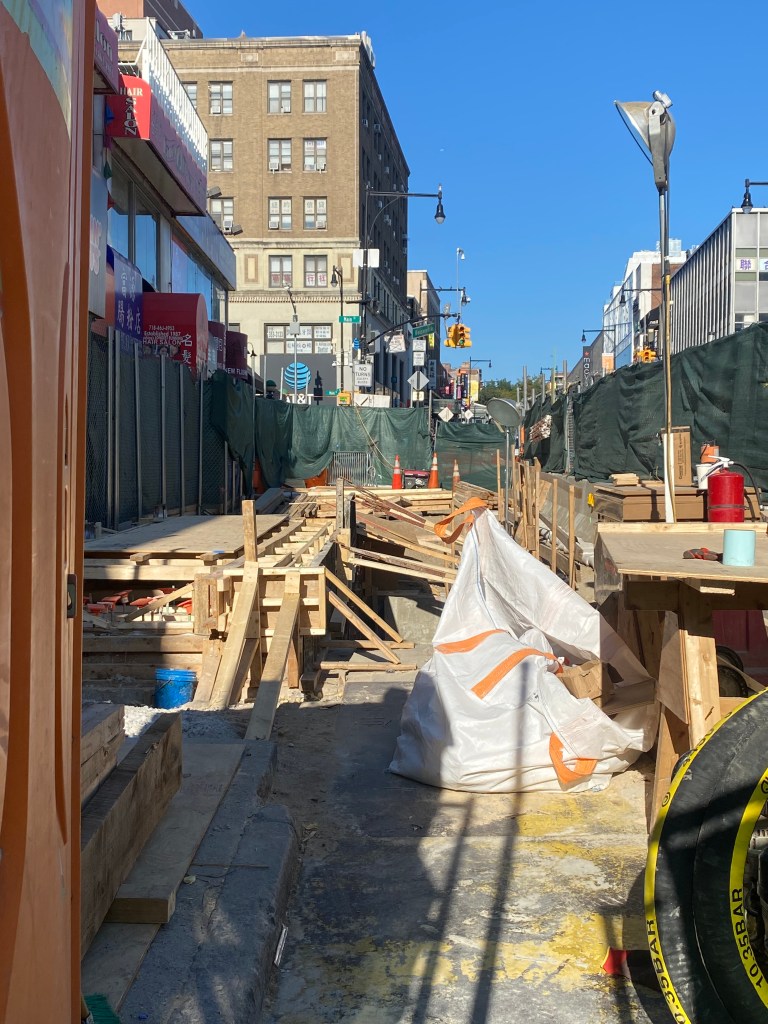
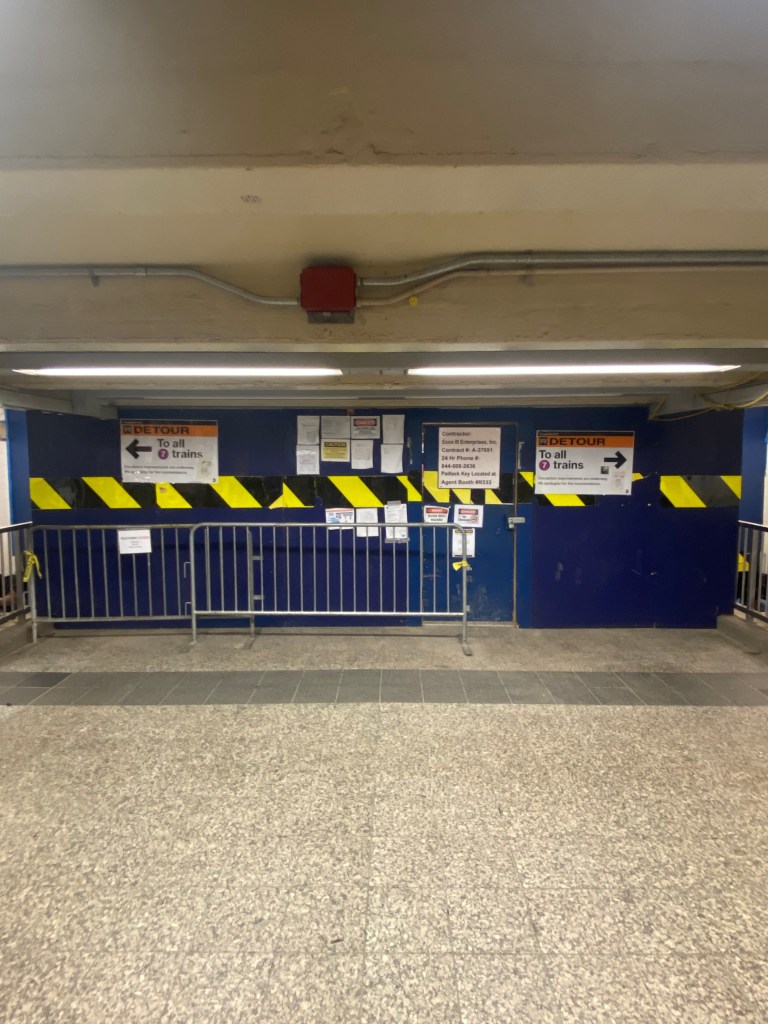

In addition to the circulation improvements, the MTA also performed upgrades to the station’s physical condition known as its “state of good-repair.” These types of upgrades included leak mitigation, concrete spall and steel rehabilitation. The MTA’s treatment for concrete spall will help to prevent cracked concrete in the station that could be dangerous for people walking in addition to being a general eyesore for riders. The other upgrades will go a long way in improving rider safety and accessibility as well. Outside of critical physical infrastructure, the MTA added 15 new digital screens and five new countdown clocks in order to enhance riders’ access to train information. As being the only subway station in the bustling community, the station’s state of good repair is critical to ensuring that visitors feel welcomed as they enter the neighborhood; especially for the first time given Flushing’s status as the world’s largest Chinatown.
To complete this major project, the MTA once again utilized its seemingly most powerful capital project strategies known as a design-build contract. A design-build contract is a contract type that the MTA has used where one team of one or more companies is tasked with the design and construction of a project rather than multiple teams. This makes it easier for the MTA to hold contractors accountable for project delays and devise solutions to complex issues when there are less involved parties to consult with. This contract method has led to the on-time, on-budget and sometimes even under-budget completion of many infrastructure projects within and outside of the MTA such as the LIRR Third Track Project and the new Kosciuszko Bridge. The project at the Flushing-Main St station was no exception, with the project also being finished on-time and under budget. Over many projects, design-build was also been known to save the MTA a grand total of $244 million in project costs along with four months off project durations in 2022. Hence, the evidence is clear that design-build has played a key role in helping the MTA to deliver on many important projects including the one to renovate the Flushing-Main St(7) station.
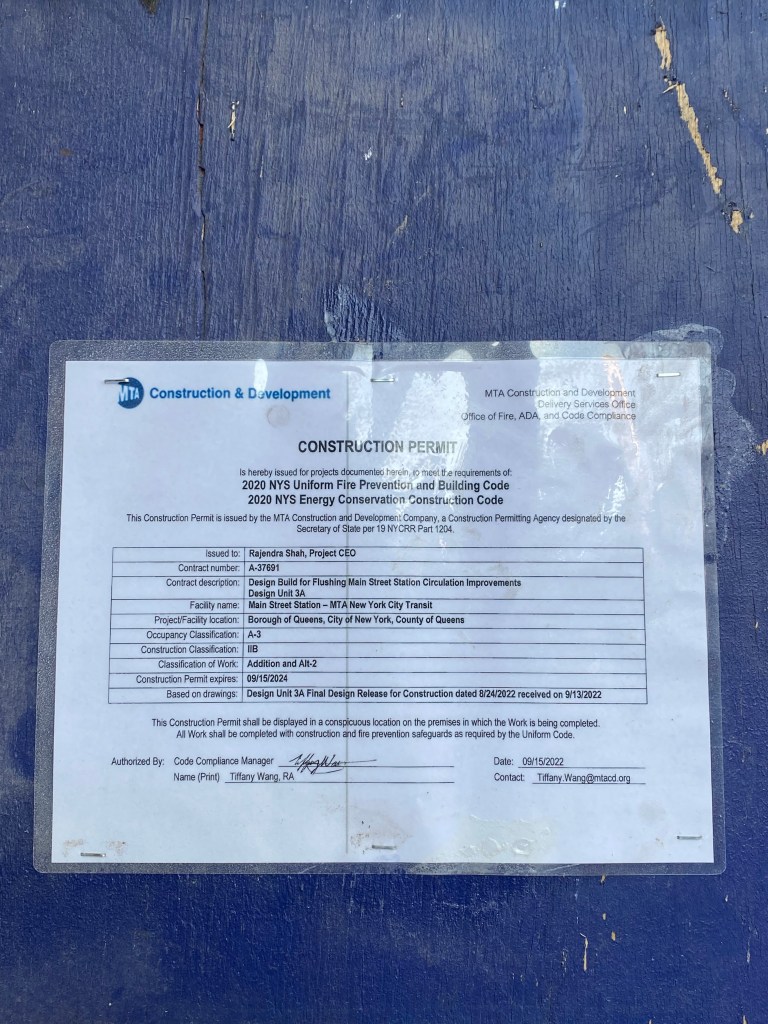
As the MTA completed such a significant renovation of the Flushing-Main St station, the station has and will undoubtedly feel different for riders given how much more spacious and rider friendly the station truly has become. As the station will serve Flushing for years to come, it can hopefully serve as a model for how major rail related projects can be performed on-time, on-budget, and in a way that benefits both riders and communities as a whole.
Works Cited
Metropolitan Transportation Authority. “MTA Announces Significant Station Upgrades Complet.” MTA, 22 November 2023, https://new.mta.info/press-release/mta-announces-significant-station-upgrades-completed-flushing-main-st-subway-station. Accessed 25 November 2023.
Dalinghaus, Brian. “What is Concrete Spalling? (Causes, Prevention, Treatment).” Dalinghaus Construction, 5 April 2021, https://www.dalinghausconstruction.com/blog/concrete-spalling/. Accessed 25 November 2023.
nycgo.com staff. “New York City Chinatowns – Manhattan, Queens and Brooklyn.” NYC Tourism, 23 January 2017, https://www.nyctourism.com/photo-galleries/new-yorks-three-big-chinatowns/. Accessed 26 November 2023.
New York City Department of Transportation. “NYC DOT – Design-Build.” NYC.gov, 2023, https://www.nyc.gov/html/dot/html/about/design-build.shtml. Accessed 26 November 2023.
MTA Live. “MTA Joint Committee Meeting.” YouTube, 30 January 2023, https://www.youtube.com/watch?v=nK0EBkwC1_o&t=7744s. Accessed 25 November 2023.
Metropolitan Transportation Authority. “MTA Long Island Rail Road Announces Upgraded New Hyde Park Station as Part of Third Track Project.” MTA, 15 June 2022, https://new.mta.info/press-release/mta-long-island-rail-road-announces-upgraded-new-hyde-park-station-part-of-third. Accessed 25 November 2023.
“Best Highway/Bridge: Kosciuszko Bridge Phase 2 | 2020-11-12.” Engineering News-Record, 12 November 2020, https://www.enr.com/articles/50692-best-highwaybridge-kosciuszko-bridge-phase-2. Accessed 25 November 2023.
 Transit Central