By Joseph Morales
The Riverdale station on the Metro-North’s Hudson Line is located in the serene Riverdale section of The Bronx. The station is the closest rail station of any kind to the College of Mount Saint Vincent. As the station is nearly two miles from the subway, many Riverdale residents rely on the Metro-North in order to get to Manhattan. In addition, the line also provides direct access to nearby Westchester County and popular reverse commuting destinations such as Yonkers and Tarrytown.
Unfortunately, Riverdale riders have never had an easy time being able to walk to the train. There has never been any sidewalks on W 254th St despite the rail station being nearby and the street being full of curves and hills. The circumstances left residents with little recourse but to drive and park in the Station’s Park and Ride. This would lead to inconvenience and money spent on both fuel and parking payments. On top of being undesirable for Metro-North riders, the walk likely posed risks for students at the Salanter Akiba Riverdale(SAR) Academy on W 254th St, who range in grades from Kindergarten to the 12th Grade.
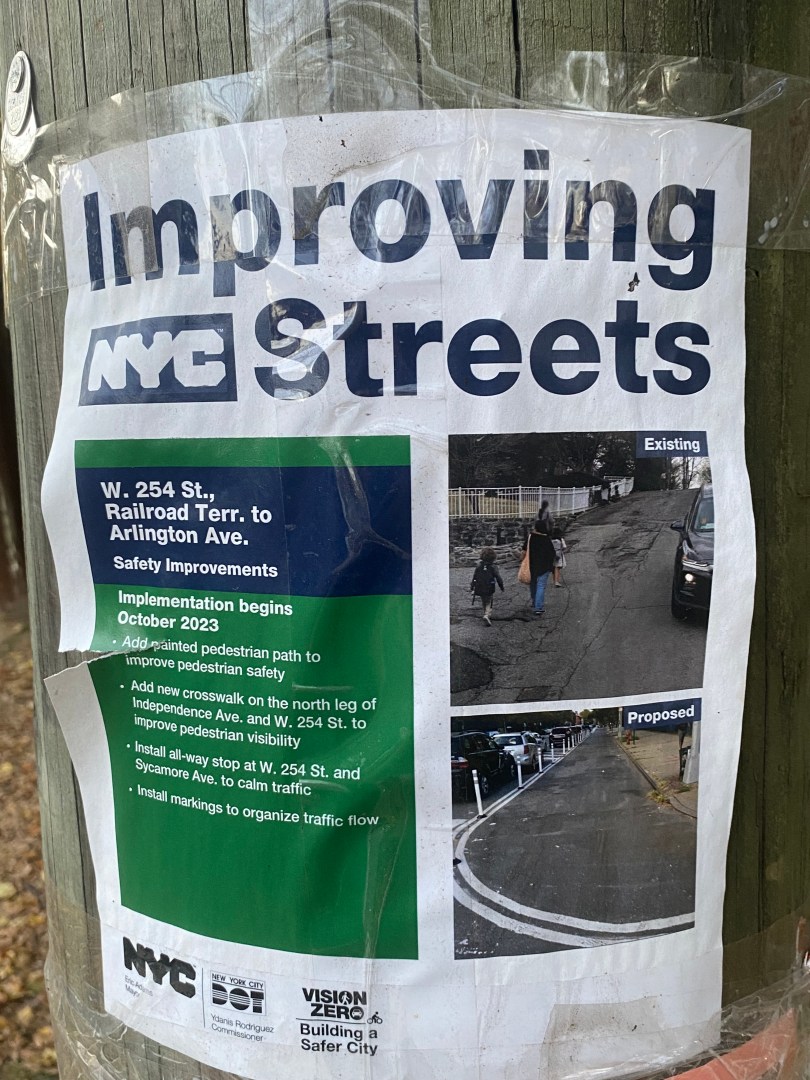
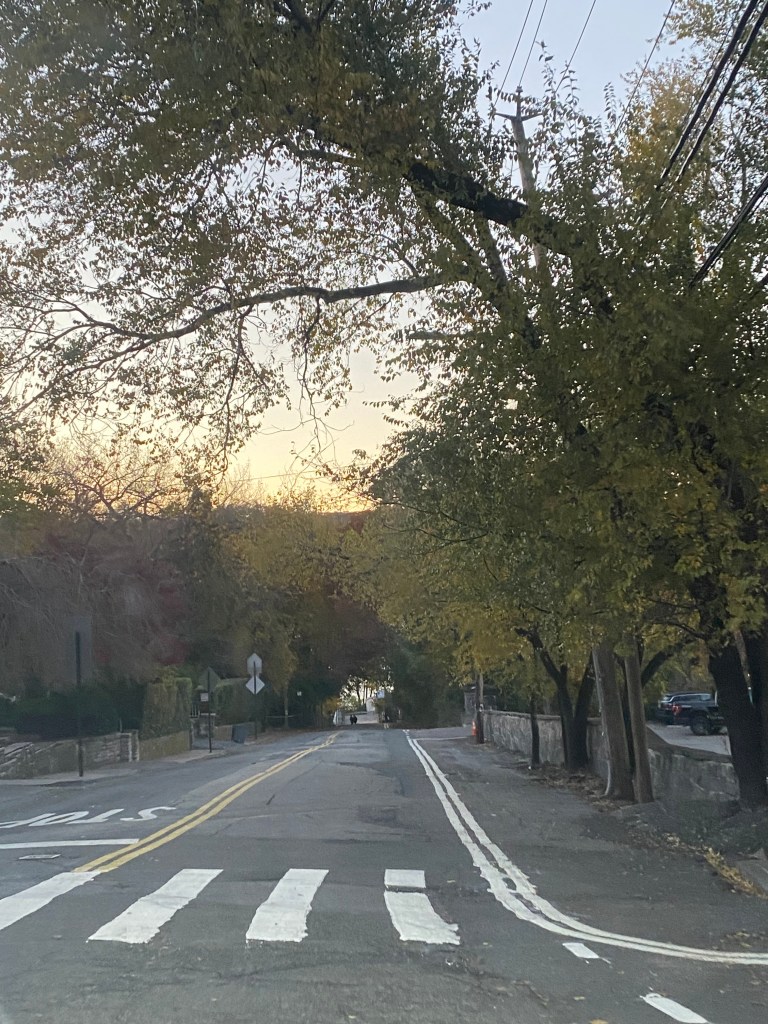
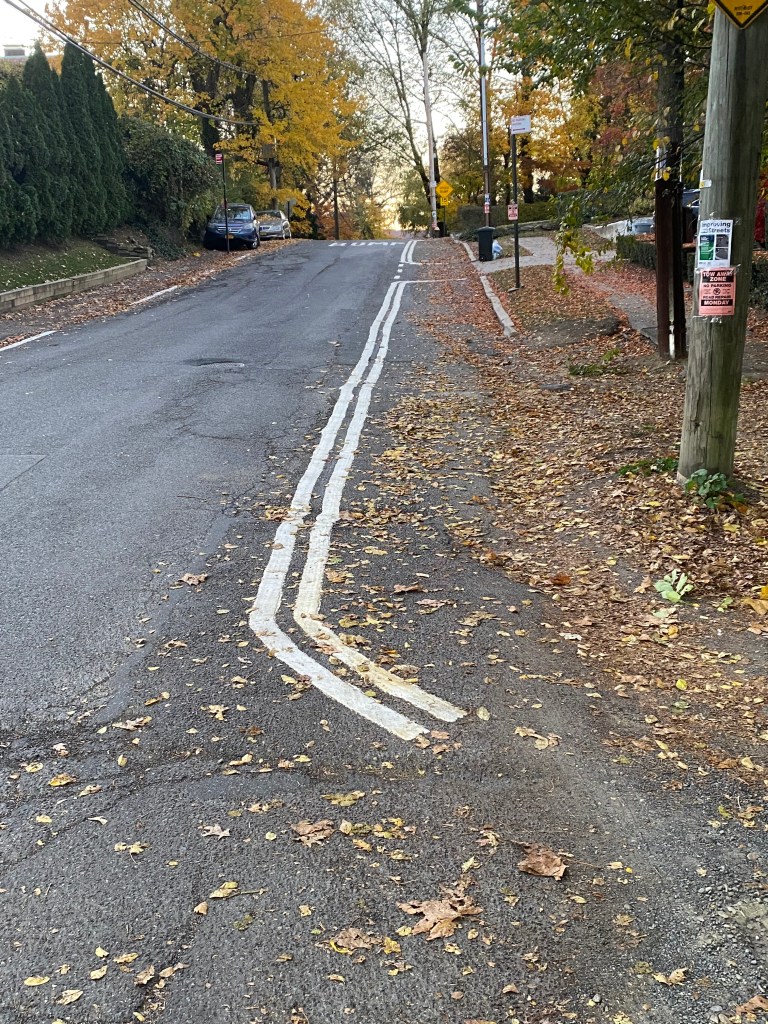
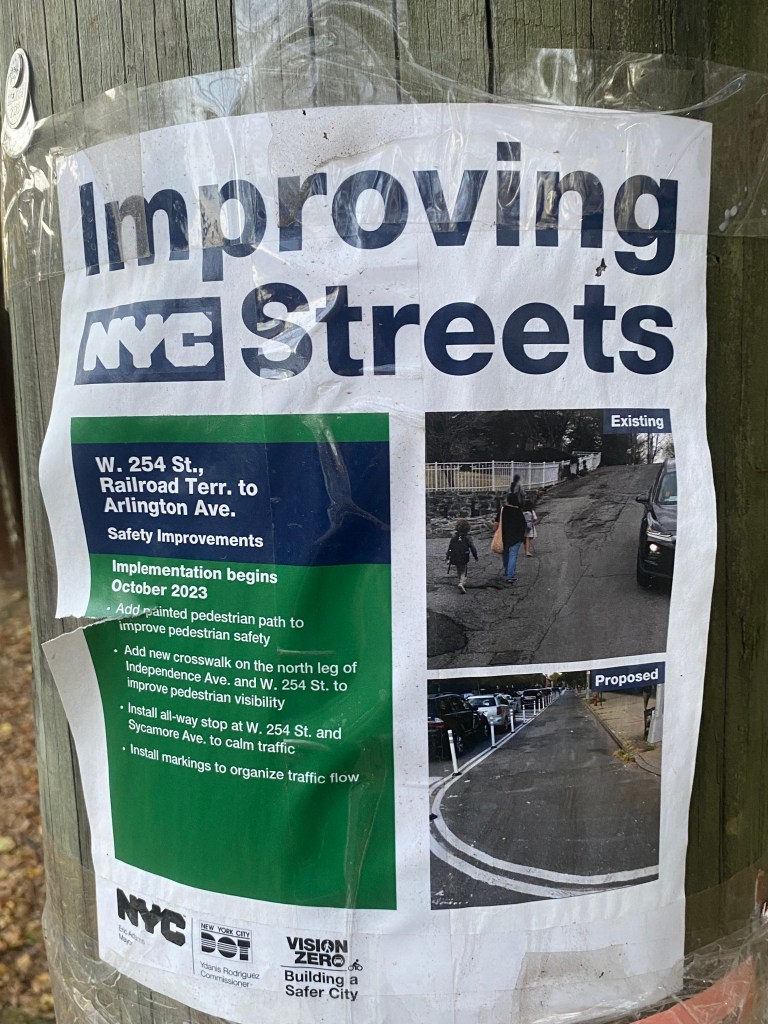
In what has been a long time coming, the NYCDOT has added a painted pedestrian path to W 254th St. This painted path essentially works like a standard bike lane. However, it is larger and has two solid and bright white lines, making it easily visible for motorists and pedestrians. Data from the Federal Highway Administration(FHWA) shows that separated pedestrian walkways of any kind can help reduce “‘walking along roadway crashes’” by 88%. As these types of crashes account for 8% of all roadway deaths in the U.S annually, the painted path is critical for the safety and comfort of all road users.
The path may have been a better alternative to constructing a traditional sidewalk due to lower construction and maintenance costs. Estimates from numerous agencies are mixed, but most of them have sidewalks costing at least $250,000 per mile on both sides of a street. Given the costs, the NYCDOT likely did not want to install sidewalks because population density and transit use, while high, is still lower than majority of both The Bronx as a whole. The NYCDOT also likely did not want to have another sidewalk to manage since the city is known for cracked and slightly damaged sidewalks. Though property owners are obligated to fix sidewalks adjacent to their property within 10 days, this work often falls on NYCDOT contractors following 311 complaints. Between this and the city’s current fiscal crisis, the painted pedestrian path probably was considered to be the best option.
In addition to the cost-benefit breakdowny of sidewalks, sidewalk construction could have garnered opposition due to how it could have effected life for residents of the adjacent houses. In the community district in which Riverdale is located, 33.8% of residents own their homes according to data from the NYU Furman Center. R77esidents may not have welcomed the prospect of a sidewalk taking up space from their front yards. Also, New York City residents are responsible for fixing any sidewalk defects adjacent to their property or they may receive a bill from the NYCDOT following repairs from an NYCDOT contractor. Homeowners would also be responsible for removing ice or snow in the event of a winter weather event, a task that is tedious and undesirable for many.
As the painted pedestrian path has been open for about a month, the project has the potential to be a model for how suburban-like neighborhoods across the United States can adopt more pedestrian-friendly streets. This project has made a street better for pedestrians in a low-cost manner that has a minimal impact on homeowners. Hopefully, the painted pedestrian path in Riverdale will make it easier for residents to both get to the train station and traverse the neighborhood for years to come.
Works Cited
Federal Highway Administration. “Safety Benefits of Walkways, Sidewalks and Paved Shoulders.” FHWA Safety Program, https://safety.fhwa.dot.gov/ped_bike/tools_solve/walkways_brochure/walkways_brochure.pdf. Accessed 27 November 2023.
New York City Department of City Planning. “Car Ownership in NYC.” Tableau, 24 November 2022, https://public.tableau.com/app/profile/dcptransportation/viz/ACSProfiles/Dashboard1. Accessed 27 November 2023.
New York City Department of Transportation. “Sidewalks in NYC: Maintenance & Repair.” YouTube, 19 August 2021, https://www.youtube.com/watch?v=-RaTG8f1Cqk&embeds_referring_euri=https%3A%2F%2Fwww.nyc.gov%2Fhtml%2Fdot%2Fhtml%2Finfrastructure%2Fsidewalkintro.shtml&source_ve_path=OTY3MTQ&feature=emb_imp_woyt. Accessed 27 November 2023.
“Riverdale/Fieldston Neighborhood Profile – NYU Furman Center.” NYU Furman Center, 2022, https://furmancenter.org/neighborhoods/view/riverdale-fieldston. Accessed 27 November 2023.
“Sidewalk Finances.” Walk Bike Central New York, June 2014, https://walkbikecny.org/wp-content/uploads/2014/06/SSM_ch6_Sidewalk_Finances.pdf. Accessed 27 November 2023.
 Transit Central