By Joseph Morales
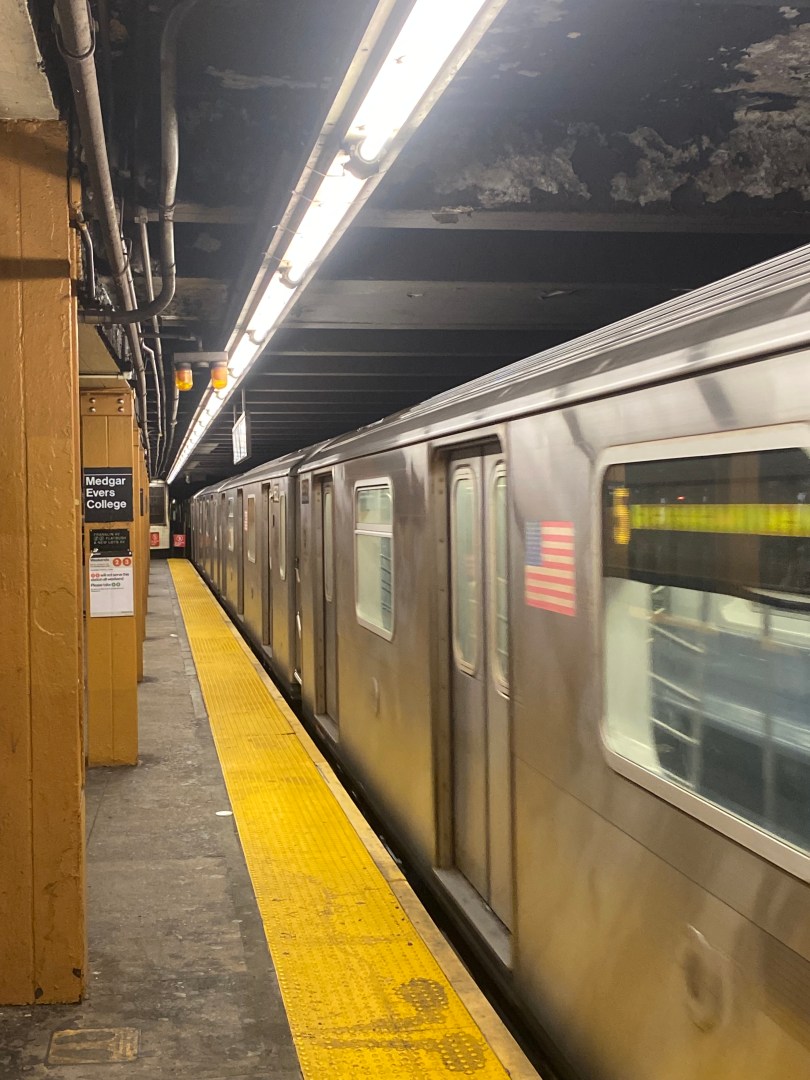
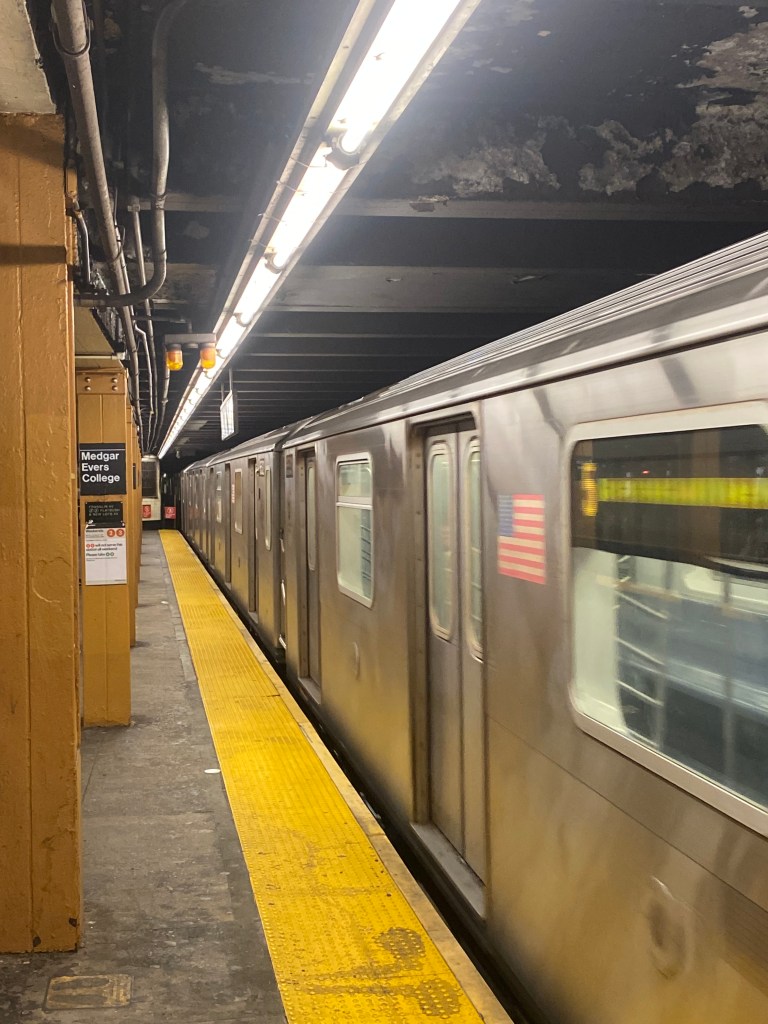
The Eastern Parkway Line(2,3,4,5) is one of the most important subway lines in Brooklyn, running from Borough Hall(2,3,4,5) to Crown Heights-Utica Av(3,4). Subway routes that serve the line connect riders to places along Eastern Pkwy along with Brooklyn and Manhattan. Notable locations that are served directly by the line include Prospect Park, The Brooklyn Museum, The Brooklyn Botanical Garden and Medgar Evers College. The line also provides connections to some of Brooklyn and NYC’s busiest bus routes such as the B46-SBS(Utica Ave) and the B44-SBS(Nostrand Ave), which help many riders from areas that lack subway service to be able to access the line. The Eastern Pkwy Line has two branches, with the 2 and 5 trains primarily running to Flatbush Av-Brooklyn College on the Nostrand Ave line and the 3 and occasionally the 4 train running to New Lots Av on the Livonia Avenue Line. On the Eastern Pkwy line itself, the 2 and 3 run local and the 4 and 5 run express. Given the congestion and hassle generally associated with driving in both Brooklyn and Manhattan, is absolutely critical for Brooklyn subway riders to be able to traverse the city quickly and reliably.
Given that the line serves two branches, trains use Rogers Junction(also known as Nostrand Junction) located just passed the Nostrand Av(3) station, in order to switch onto the Nostrand Ave branch. The MTA uses the flexibility the junction offers to provide numerous subway service combinations and reroute trains in various ways if construction needs to be done. For instance, since the Flatbush Av-Brooklyn College station was not built to be the terminus on the Nostrand Ave Line, not all 2 and 5 trains can terminate there. This is why you sometimes see 5 trains going to Crown Hts-Utica Ave and 2 trains ending at New Lots Av. In addition, 4 trains often run to New Lots Av during rush hours as well as late nights.
Unfortunately, subway service on the Eastern Pkwy is routinely slowed due to train traffic and malfunctions associated with the junction. This is because 5 trains that run express on the Eastern Pkwy Line have to directly cross the local tracks the 2 and 3 trains use in order to serve the Nostrand Av branch. According to a report done by the MTA in January 2009, it stated that any time trains cross each other the way these trains do, with the 5 trains crossing another mainline track at grade, there is a high potential for delays particularly during peak hours.
Nostrand Junction.
Thus, the MTA is considering a plan to remove the bottlenecks and improve capacity on the junction as part of its recently completed 20-Year Needs Assessment. The needs assessment compares proposed megaprojects with each other in areas such as cost, regional connectivity, expected ridership and more to help the MTA set priorities for the future.
The Nostrand Junction plan includes having the 2 and 3 trains to travel to Flatbush Av-Brooklyn College and the 5 train along with a new 8 train to travel to New Lots Ave. This would be done by installing diamond crossovers or double slip switches near the Crown Hts-Utica Av as well as near the end of the line’s branches at New Lots Av and Flatbush Av-Brooklyn College. The new switches would be necessary for this to happen as the trains would need switch tracks in different places then they are able to currently at Rogers Junction. In addition, the MTA would need to extend the storage tracks at New Lots Av to provide space for the added trains that would be able to serve the Eastern Pkwy Line.
Even though there has been no official word on where the proposed 8 train would go, the MTA has given it a red route bullet, which implies that it would like run along the Broadway-7th Av line with 1, 2 and 3 trains in Manhattan and proceed to terminate either at Harlem-148th St or somewhere in The Bronx. While the primary purpose of the project is to reduce delays, the project will be a great convenience for Livonia Ave Line riders, who would always have express service on Eastern Pkwy in addition to a one-seat trip to either the East or West Side of Manhattan. Unfortunately, this basically cancels out with Nostrand Ave riders missing out on both their one-seat trip to the East Side along with express service in Brooklyn. However, the benefits of the project significantly outweigh any the potential cons of service changes as anyone can transfer at Franklin Av-Medgars Evers College to an Eastern Pkwy express train or a train to the other side of Manhattan within 15 min of boarding a train on either branch. The project can also enable a future subway extension down Utica Ave, which currently does not have any subway service at all and is also being evaluated as part of the 20-Year Needs Assessment.
As this project is competing with many other projects for consideration, Brooklyn subway riders should be happy to know that Nostrand Junction Improvements are performing really well against the others. The project scored at least an 82 out of 100 in all areas of the needs assessment with the exception being resiliency as it would not create new travel connection than the ones that already exist for riders on its own without a Utica Ave subway extension being built. This gave this project the highest score of all projects except the Interborough Express, which is already in the public engagement process. The project also scored higher than many other notable proposals such as extensions of the Second Avenue Subway to other areas of Manhattan. This is largely because for the cost of $410 million in 2027 dollars, the MTA can greatly reduce delays for hundreds of thousands of riders, making it both cost-effective and substantially beneficial for the public. This type of project would likely receive a lot of political praise for both the MTA and state officials upon completion.
As improvements to the Nostrand Junction would be a game changer for Brooklyn subway riders, it is interesting to note that improvements to the Nostrand Junction were not always seen as being so cost effective. While proposals of altering subway routes so that trains did not cross each other has been discussed often by railfans for years, this had not always been the case by the MTA. The MTA had also at one point considered fully replacing the junction as early as 1968. This would have likely involved tearing up Eastern Pkwy, higher construction costs and even demolishing several surrounding properties through eminent domain. The work likely could have changed the character of a neighborhood in a manner that would still be effecting people in the community to this day. It was only since that report in January 2009, that shows a proposal similar to the one being considered costing $340 million plan and a plan showing a new junction costing $1.6 billion that the MTA has been documented considering something like they are now. Given the project’s low-cost and high impact, the project has the opportunity to show all New Yorkers the potential of what can happen when the government commits to innovation to solve complex problems in a way that benefits its constituents. Hopefully, Brooklynites and all New Yorkers get to see that through a Nostrand Junction Improvement project.
Works Cited
“IRT Eastern Parkway Line (mtamaster) edition) | Your MTA Wiki | Fandom.” MTA NYC Transit Fandom, https://mtanyctransitfanon.fandom.com/wiki/IRT_Eastern_Parkway_Line_(mtamaster_edition). Accessed 11 November 2023.
Metropolitan Transportation Authority. “Subway and bus ridership for 2021 – New York City Transit.” MTA, 2022, https://new.mta.info/agency/new-york-city-transit/subway-bus-ridership-2021. Accessed 11 November 2023.
Metropolitan Transportation Authority. “Overview of Comparative Evaluation.” MTA 20-Year Needs Assessment, 2023, https://future.mta.info/documents/20-YearNeedsAssessment_ComparativeEvaluation.pdf. Accessed 11 November 2023.
r/nycrail, and R42ToMoffat. “Why does the 5 train switch to the 4 line in Brooklyn so often?? : r/nycrail.” Reddit, August 2023, https://www.reddit.com/r/nycrail/comments/15jpsdj/why_does_the_5_train_switch_to_the_4_line_in/. Accessed 11 November 2023.
MTA New York City Transit-Office of The Executive Vice President-Capital Planning & Budget. “Final Report-Conceptual Engineering Study For Reconfiguration of the Nostrand Junction In Brooklyn CM-1335 Task Order No.2.” Vanshnookenraggen, January 2009, https://www.vanshnookenraggen.com/_index/wp-content/uploads/2018/03/IRT-Nostrand-Junction-Report.pdf. Accessed 11 November 2023.
Metropolitan Transportation Authority. “Interborough Express.” MTA, 8 November 2023, https://new.mta.info/project/interborough-express. Accessed 11 November 2023.
“Metropolitan transportation, a program for action. Report to Nelson A. Rockefeller, Governor of New York. : New York (State). Metropolitan Commuter Transportation Authority, February 1968Internet Archive, 25 February 2014, https://archive.org/details/metropolitantran00newy. Accessed 11 November 2023.
 Transit Central