
By Joseph Morales
Elmhurst, Queens, is one of New York’s most diverse and arguably one of Queens’ most vibrant communities with a high commercial and residential density. It is home to Elmhurst Hospital, one of Queens’ two public hospitals, and the Queens Center Mall, which likely draws shoppers from throughout the borough as Queens’ only major indoor shopping mall. For the most part, the community is well served by mass transit, with several stations on the M, R, and 7 subway lines that traverse various areas of Queens, Manhattan, and Brooklyn. Additionally, the area is served by many bus lines, including the Q52/Q53-Select Bus Service, which runs from Jackson Heights to the Rockaways and is the longest north-south bus line in Queens. Both the Q52 and Q53 were also among the highest-performing and most reliable bus routes in Queens in both May and October 2019, according to data from the NYC Bus Turnaround Coalition.
While Elmhurst is relatively rich in transit access, one mode of transit that is relatively absent in Elmhurst is the LIRR(Long Island Rail Road). While the Port Washington Branch does pass directly through the neighborhood, it does not stop between Mets-Willets Point and Woodside, both stations being over a considerable distance from Elmhurst. At one point, Elmhurst did have a station known as the Elmhurst LIRR station on Broadway between Whitney and Cornish Avenues. However, it closed in 1985 due to lower ridership, some say due to unfavorable train schedules that led to fewer people using the LIRR. If you visit the elevated train structure on Broadway between Cornish and Whitney, you can see outlines of where staircases used to be that lead to the platforms. A pedestrian underpass at 88th St that was part of the station is still open to this day.


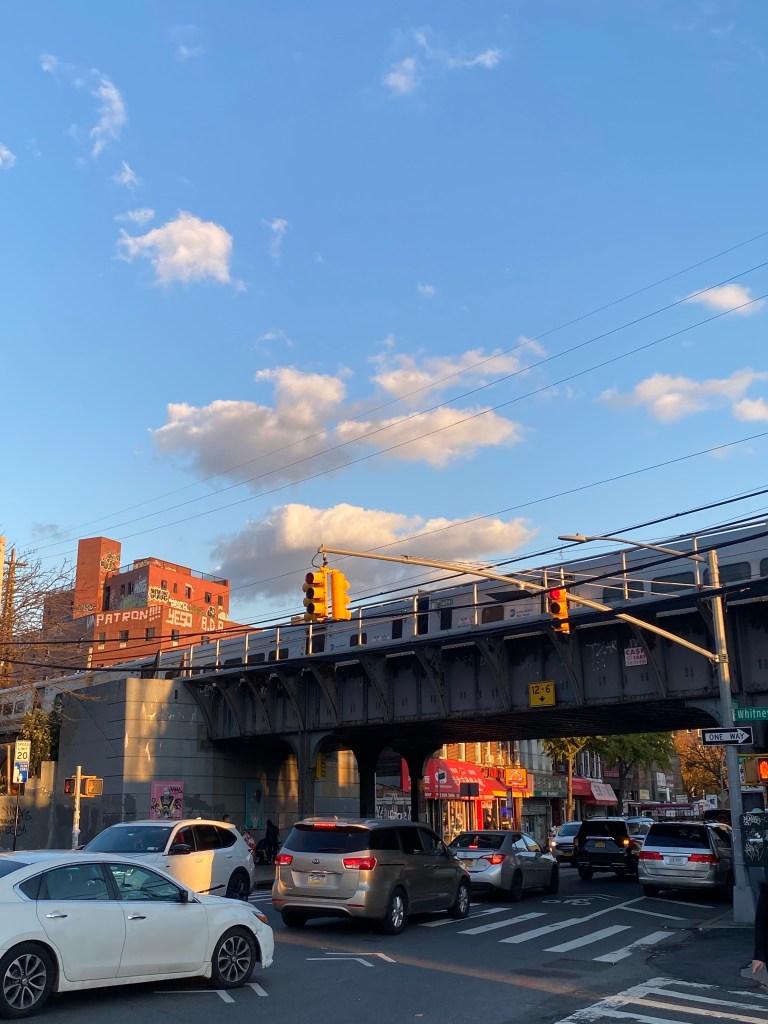
Nonetheless, in recent years, there have been calls from many community members and elected officials to bring back the Elmhurst station, including House Rep Grace Meng, who, since 2013, has been a strong champion for the station to be rebuilt given Elmhursts’ continued growth and the additional economic opportunities it could provide for residents. When discussing the immediate area around the station in 2013 with WCBS-TV(CBS 2-New York), Meng said, “I went to ribbon cuttings for six different businesses right on this block”. While politicians have not explicitly mentioned this, the stop for the Q52/Q53-SBS routes where the station would be creates the potential for people to be able to use this station from many other parts of Queens.
In June 2013, the MTA conducted a survey of people who live within a half-mile of the potential station to gauge potential ridership. The response was positive, and as a result, the MTA designated $40 million to build to design, and construct the Elmhurst station as part of its 2015-19 capital program. The station was set to be built much like a traditional elevated LIRR station, with two 12-car platforms, staircases, and ticket vending machines. The station was also set to include lighting, security, and communication systems along with platform railings and shelters for rider comfort. The site improvements part of the plan likely included any work needed to place the station at its designated location, such as cutting overgrown greenery. Elevators would have also been included to ensure the station complied with the Americans with Disabilities Act(ADA).
Unfortunately, this plan was gradually scaled back, with the MTA eventually pushing back construction for a future capital program in May 2017, just before the infamous “Summer of Hell,” where most modes of transit in the NYC area faced great decline and reliability issues. In 2019, the station was scrapped from the capital plan altogether and it was not even mentioned in the 2020-24 capital program. While MTA officials did not initially give a specific reason for canceling the project, MTA spokeswoman Meredith Daniels wrote in an email to the Queens Chronicle that the LIRR was focusing on upgrading its existing infrastructure and completing larger-scale expansion projects such as East Side Access and the Port Washington Yard track extension that needed to be completed before an Elmhurst LIRR station could be considered. While both projects were in progress at the time the MTA initially proposed building the station, it’s possible that delays and cost overruns associated with East Side Acces made it harder for the Elmhurst station to be built. East Side Access up about $7.5 billion over budget and 13 years behind schedule when it was all said and done. As for the Port Washington Yard Track Extension, while it was considered important to the MTA it has not been started for a slew of reasons.
While the Elmont-UBS Arena station was completed before an Elmhurst station was revisited, it received 90% of its funding from the developers of UBS Arena and 10% from New York State. As a result, the station was built at no cost to the MTA.
Now, there have been new signs that an Elmhurst LIRR station can be built. Not only have both priority projects since been completed, but the MTA included a potential station on its 20-Year Needs Assessment for expansion projects that could be done throughout the MTA system. It is important to note that placement on the needs assessment does not necessarily mean the station will be constructed, as the MTA uses this assessment to determine what projects the agency should prioritize for inclusion in its capital plans.
Unfortunately, during a discussion regarding the state of MTA operations in Queens with the Press, MTA Chairman Janno Lieber said that LIRR station proposals in Queens “didn’t do well in the metrics” in the MTA’s cost-benefit analysis as part of the 20-year needs assessment. Lieber was referring to both the Elmhurst station and another proposed station in Sunnyside that were evaluated.
In the MTA’s comparative evaluation document, the agency said it scored poorly due to its low ridership projections and the fact that it would not improve regional access since it is an area already well-served by mass transit. Some may find it interesting that the MTA’s ridership projection was 3,100-weekday riders by 2045, despite Elmhursts’ continuous growth and a projection that a station could have had 3,800 riders a day, back in 2013. To determine a ridership projection, the MTA used a model known as the Regional Transit Forecasting Model(RTFM) That considers trip generation(how many trips happen), trip distribution(where the trips go), travel mode choice, and the routes of trips.
The agency also said that the station would cost $210 million to construct in 2027 dollars, more than five times more than it projected back in 2014. As for regional access, an LIRR station would, without a doubt, substantially reduce travel times to Manhattan as the only subway lines in the immediate vicinity of the potential LIRR station, the M and R, both run local along Queens Blvd and in Manhattan. However, even if the MTA did not want to prioritize the project on the grounds that Elmhurst has subway access while many other communities don’t, Elmhurst currently does not have a direct transit connection at all to Long Island, with the nearest LIRR station being a 20 min bus or subway ride from where the Elmhurst LIRR station would be.
While it could be argued that the potential impact of an Elmhurst LIRR station was underestimated here, it is likely that this project may have had less of an impact on MTA riders as a whole compared to the other subway, bus, and commuter rail projects the MTA was evaluating for what it costs, hence the low evaluation scores. Some of these projects include various extensions of the Second Avenue Subway throughout Manhattan and building a busway on an MTA-owned section of Myrtle Ave in Ridgewood, Queens.
Also, it is important to note that Metro-North and LIRR stations in low-income communities in NYC like Elmhurst tend to have lower ridership than their suburban counterparts due to the railroad’s prohibitively high fares despite generally higher population densities in these communities. In the community board district Elmhurst is a part of, the median income was $67,330, and the poverty rate was 14.6% in 2021, according to data from the NYU Furman Center. While the MTA has implemented many fare discounts, such as the CityTicket for travel within NYC and a 10% discount for monthly passes that have decreased fares significantly, fares still remain unaffordable for many given that many in Elmhurst and NYC struggle to even pay the subway and bus fare of $2.90. The RTFM the MTA uses to predict ridership does consider cost, in determining whether or not people would ride a particular mode of transit.
Given the already substantial fare discounts the MTA has provided along with the stringent formula it uses to allocate money from fares to commuter rail service, it may be hard to justify further reductions to accommodate new riders at existing stations like an Elmhurst one. Another potential concern with lowering commuter rail fares within NYC is that should ridership surge dramatically at stations in NYC, platforms may need to be lengthened, and trains may need to be more frequent to accommodate the new riders. As the MTA’s original plan for the Elmhurst Station was to build a “12-car platform”, it would likely be more costly to either build larger platforms or have to expand platforms once a station is already constructed, which may have lead to an Elmhurst station being overcrowded.
As the LIRR continues to roll past the eclectic and vibrant streets of Elmhurst, there is hope that one day, the MTA has the resources to provide Elmhurst with the station that will help to tremendously improve Elmhurst’s connection to Manhattan and the entire New York Metropolitan Region.
Works Cited
“Meng Renews Effort To Reopen LIRR Station In Elmhurst, Queens.” Congresswoman Grace Meng, 15 February 2023, https://meng.house.gov/media-center/press-releases/meng-renews-effort-to-reopen-lirr-station-in-elmhurst-queens. Accessed 2 November 2023.
Shepard, Laura A. “Elmhurst Slated To Get Its LIRR Station Back.” Jackson Heights Post, 11 November 2015, https://jacksonheightspost.com/elmhurst-slated-to-get-its-lirr-station-back. Accessed 2 November 2023.
R36 Coach. “Former LIRR Elmhurst Station site.” Flickr, 11 February 2014, https://www.flickr.com/photos/29997762@N05/12471061715/in/photostream/. Accessed 3 November 2023.
WCBS-TV(CBS New York). “LIRR To Conduct Surveys About Reopening Elmhurst Station.” CBS News, 21 June 2013, https://www.cbsnews.com/newyork/news/lirr-to-conduct-surveys-about-reopening-elmhurst-staion/. Accessed 3 November 2023.
Barca, Christopher. “Elmhurst LIRR stop not a slam dunk.” Queens Chronicle, 9 October 2014, https://www.qchron.com/editions/central/elmhurst-lirr-stop-not-a-slam-dunk/article_6410b263-ecef-535f-bcf1-114c5b607b87.html. Accessed 3 November 2023.
Metropolitan Transportation Authority. “MTA Capital Plan Dashboard 2015-19.” MTA, 2023, http://web.mta.info/capitaldashboard/CPDPlan.html?PLN=8&AGY=a. Accessed 3 November 2023.
Fisher, Steve, and Richard Heaton. “MTA sidetracks new LIRR Elmhurst station | | qchron.com.” Queens Chronicle, 21 November 2019, https://www.qchron.com/editions/western/mta-sidetracks-new-lirr-elmhurst-station/article_9bc48ea4-101e-509b-96e2-3c9cae158b4b.html. Accessed 3 November 2023.
Siff, Andrew. “Cuomo Declares MTA State of Emergency as Outrage Grows.” NBC New York, 29 June 2017, https://www.nbcnewyork.com/news/local/mta-state-of-emergency-new-york-governor-andrew-cuomo-declares-after-chronic-lirr-subway-problems/191935/. Accessed 3 November 2023.
Castillo, Alfonso A. “East Side Access completed, LIRR riders get full service to Grand Central Madison Monday.” Newsday, 26 February 2023, https://www.newsday.com/long-island/transportation/grand-central-madison-east-side-access-lirr-gpwsijw3. Accessed 3 November 2023.
The Editorial Board. “Port Washington comes to regret a 14-year-old ‘no.’” Newsday, 16 June 2022, https://www.newsday.com/opinion/editorials/lirr-east-side-access-port-washington-mta-ijy7ye2r. Accessed 4 November 2023.
Morris, Sebastian. “MTA Completes Elmont-UBS Arena LIRR Station in Nassau County, Long Island.” New York YIMBY, 14 October 2022, https://newyorkyimby.com/2022/10/mta-completes-elmont-ubs-arena-lirr-station-in-nassau-county-long-island.html. Accessed 4 November 2023.
Metropolitan Transportation Authority. “20-Year Needs Assessment | Expand.” MTA 20-Year Needs Assessment, 2023, https://future.mta.info/expand/#plan-20year. Accessed 4 November 2023.
Gannon, Michael. “LIRR talks transit, transition in Queens | | qchron.com.” Queens Chronicle, 26 October 2023, https://www.qchron.com/editions/queenswide/lirr-talks-transit-transition-in-queens/article_4b301edc-6f3d-57f3-8b8f-3b012166b767.html. Accessed 4 November 2023.
Metropolitan Transportation Authority. “Comparative Evaluation.” MTA 20-Year Needs Assessment, 2023, https://future.mta.info/documents/20-YearNeedsAssessment_ComparativeEvaluation.pdf. Accessed 4 November 2023.
“TPB’s Four-Step Travel Model – Travel Demand Modeling.” Metropolitan Washington Council of Governments, 2023, https://www.mwcog.org/transportation/data-and-tools/modeling/four-step-model/. Accessed 4 November 2023.
“Elmhurst/Corona Neighborhood Profile – NYU Furman Center.” NYU Furman Center, 2021, https://furmancenter.org/neighborhoods/view/elmhurst-corona. Accessed 4 November 2023.
“Four-Step Travel Model.” Metropolitan Washington Council of Governments, 2023, https://www.mwcog.org/transportation/data-and-tools/modeling/four-step-model/step-3/. Accessed 4 November 2023.
Colon, Dave, and Gersh Kuntzman. “Seriously, It’s Time for $2.75 Fares on Intracity Trips on LIRR and Metro-North – Streetsblog New York City.” Streetsblog USA, 7 December 2022, https://nyc.streetsblog.org/2022/12/07/seriously-its-time-for-2-75-fares-on-intracity-trips-on-lirr-and-metro-north. Accessed 4 November 2023.
 Transit Central