
By Joseph Morales
The Outerbridge Crossing is a major travel artery between the South Shore of Staten Island and Perth Amboy, New Jersey. The bridge is one of three bridges connecting Staten Island with NJ, with the other two traveling out of the northern section of the Island. The Staten Island side of the bridge is located near major roads such as Arthur Kill Rd, Hylan Blvd, and the West Shore Expwy, which connects motorists to areas across Staten Island and the surrounding region. On the New Jersey side, the bridge provides motorists with direct access to both the Garden State Pkwy and the New Jersey Turnpike(I-95), which provide connections to destinations across the state of New Jersey. The bridge’s location near the southwesternmost corner of NYC and its proximity to the Garden State Pkwy might also make it popular with motorists from across NYC who wish to travel to the Jersey Shore. The bridge typically has served between 1-1.2 million motorists monthly since 2021, with higher numbers in the summer months, likely because of Jersey Shore travel. These numbers, with the exception of the summer upticks, compare closely to the numbers on the Holland Tunnel, which runs between Jersey City, NJ, and Lower Manhattan.

THE PROBLEM
Due to its high usage and 96-year old age, elected officials from both Staten Island and New Jersey have called for the bridge to be widened and, in some cases, even replaced as long ago as 2016. In 2020, the Port Authority of New York and New Jersey completed a preliminary study regarding different options for the bridge and has now decided to look further into widening the existing bridge, though a replacement has not been completely ruled out.

CALLS FOR CHANGE
Elected officials on the city, state, and federal levels led by NYC City Council Minority Leader Joe Borelli even wrote to the Port Authority around this time last year to request that the Port Authority study the feasibility of replacing the bridge with a tunnel. They argued that a tunnel would prevent property acquisitions that may be associated with an expanded bridge project and allow for continued access to the Arthur Kill waterfront. The officials also pointed out in their letter that the current bridge can operate during tunnel construction and could even help to pay off the construction costs by continuing to collect toll revenue. The letter obtained by the Staten Island Advance states, “While replacing the Outerbridge with an underwater tunnel would increase the price tag of this project significantly, it is important to consider both the immense benefit of doing so and the potential cost of missing out on any future economic opportunities, especially given the interest of maritime industries in development along the Arthur Kill. At the very least, a tunnel is worth studying.”
Staten Island House Representative Nicole Malliotakis has also called on the agency to take advantage of funding made available by the bipartisan infrastructure bill to complete a bridge widening or replacement project. Staten Island Borough President Vito Fosella and City Council Minority Leader/Staten Island Rep Joe Borelli have called on the Port Authority to use $2.1 billion that had previously been allocated toward a ceased attempt at bringing an AirTrain to LaGuardia Airport toward an Outerbridge Crossing project. However, given the fact that Gov. Hochul directed the authority to find alternatives toward the project coupled with the level of congestion issues at LGA, it is likely that at least a substantial portion of those funds will at some point be delegated toward an airport-related transportation project.
FEASIBILITY OF BRIDGE REPLACEMENT AND/OR WIDENING
So, one may wonder what it would actually take for a major bridge modernization project to be completed and what would have to happen for such a project to even begin. Many motorists will likely point to the $1.5 billion replacement of the nearby Goethals Bridge that occurred for nearly identical reasons, with the old Goethals even being the same exact age as the Outerbridge before being demolished. Ironically, both the old Goethals and the current Outerbridge Crossing opened on the same exact day on June 29th, 1928.
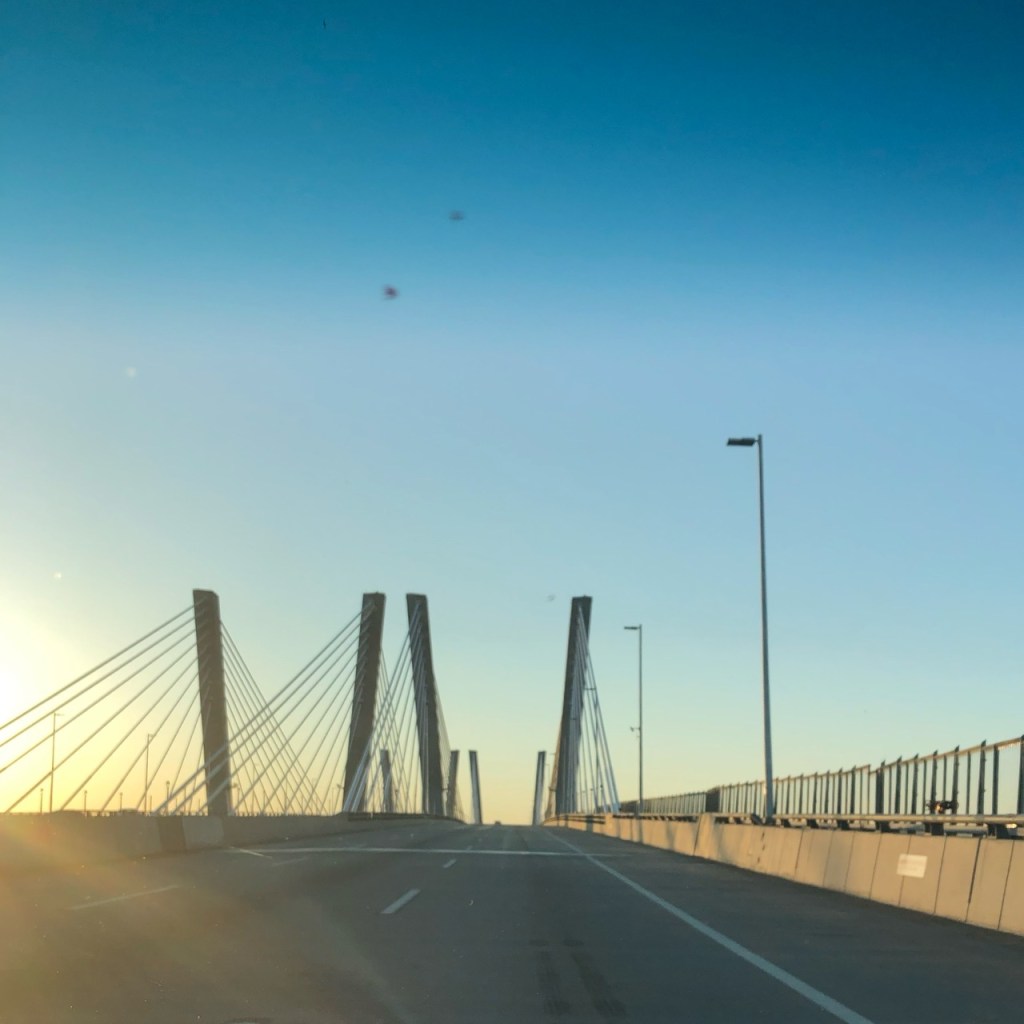
Like the Outerbridge Crossing, the old Goethals Bridge had a grand total of two 10 ft travel lanes in each direction with no walkways. The Goethals, as stated earlier, has also tended to carry a similar amount of vehicles as the Outerbridge Crossing on a daily basis. The new Goethals is a cable-stayed bridge with an eastbound and westbound span that includes a 10ft pedestrian walkway/bike path. A cable-stayed bridge is one where cables support the bridge rather than the bridge’s towers. The new bridge also includes a 65-foot area in between the spans for the purposes of possibly adding mass transit in the form of modes “up to and including light rail” in the future. The MTA may even consider adding light rail or bus rapid transit to the bridge in the near future, depending on whether or not they choose to build the West Shore Bus Rapid Transit project and send it from Tottenville to Newark International Airport. The new bridge is also equipped with technologies such as roadway weather information systems, traffic detection systems, and structural health monitoring systems.
Outside of the Port Authority’s jurisdiction, the Kosciuszko Bridge between Brooklyn and Queens and the Tappan Zee Bridge between Westchester and Rockland Counties in NY were replaced by the New York State Department of Transportation and the New York State Thruway Authority, respectively. Both were replaced mostly for very similar reasons and with practically the same type of replacement in the form of a cable-stayed bridge as the Goethals Bridge.
While they both differed in construction costs from the $1.5 billion Goethals ($3.98 billion for Tappan Zee and $900M for the Kosciuszko Bridge, this was likely due to the dramatic difference in length of the bridges and the engineering complexities associated with them. The Tappan Zee’s replacement(the Governor Mario. M Cuomo Bridge) is about 3 miles long, and the Kosciuszko Bridge is around 500 feet long(the distance of occasional MLB home runs). Both bridges have room for transit expansion in the center along with walkways, and the Cuomo Bridge even has a bus lane in both directions.


As the Outerbridge Crossing is very similar in nature to other bridges in the region that have been replaced, it would likely not be a surprise to many if the Outerbridge Crossing is the next major bridge to get a replacement. The only major difference between the Outerbridge and the other bridges that have been replaced is the fact that the Goethals, Tappan Zee, and Kosciuszko Bridges is that all three of these bridges were known for some sort of maintenance issues and, in some cases, required maintenance for the bridges that was getting increasingly expensive. On the other hand for the Outerbridge, the Port Authority has stated in the past, in response to calls from elected officials for a replacement, that the bridge “… remains safe and in a state of good repair, due to the integrity of its design and construction as well as regular Port Authority investment in operating and capital maintenance.” The spokesperson even gave multiple examples of projects such as roadway repavements and steel repairs that the agency was working on to keep the bridge in that state of good repair.
This is likely why the Outerbridge Crossing is being considered for widening more than anything else right now. Also, Port Authority executive director Rick Cotton told the Staten Island Advance that the agency was asked to study the widening as “a near term, less expensive option that could be accomplished near term.” If congestion is the primary issue associated with the Outerbridge, the Port Authority likely wants to take less expensive measures, as other bridge replacements in the region have cost the agency billions of dollars.
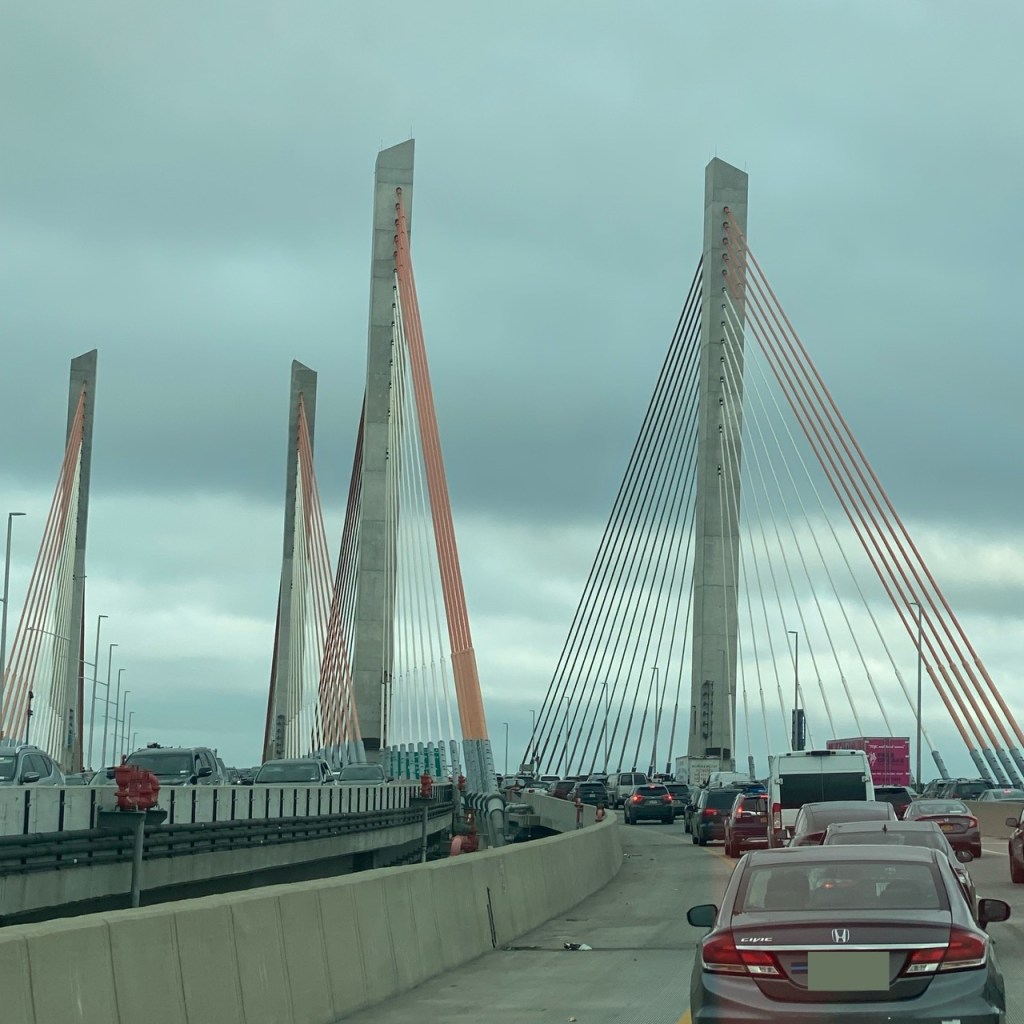
Also, considering the main issue with the Outerbridge is congestion, one may consider how much congestion would improve with a new bridge and if those improvements would be worth the cost of the replacement. For instance, in October 2019, transportation company INRIX did a study that found that there were no improvements to rush hour speeds on the new Kosciuszko Bridge and that speeds going from Brooklyn to Queens during the evening rush went down from 19 to 16 mph. However, the New York State Department of Transportation(NYSDOT) disputed that claim, saying that the data was unreliable. News reports from Spectrum NY1 and the Greenpointers in August 2019 show that even drivers did not have a complete consensus as to whether or not traffic on the Kosciuszko improved, with some saying the new bridge made no significant impact on congestion, while others feeling that it was helpful.
INDUCED DEMAND
Another potential concern with replacing or even widening the Outerbridge Crossing would be the effect of induced demand on congestion. Induced demand for roadways is when an increase in road space leads to an increase in traffic volume, which would negate the positive impact a roadway expansion could have on traffic congestion. The argument that this could happen with the construction of a new or widened Outerbridge has led to the news site Streetsblog referring to the current widening study as “madness.” Staten Island State Senator and Deputy Minority Leader Andrew Lanza disagreed, telling Streetsblog that induced demand does not apply to bridges since people have no choice but to use them.
Whether or not induced demand would lead to increased traffic on the Outerbridge Crossing long term would likely depend on a wide range of variables. First, it is essential to note that, as previously mentioned, there are no mass transit options that serve the Outerbidge Crossing. So, practically all travel is made by car since there are no other options. However, one way a larger bridge can induce new demand is if congestion improves for a short period of time and more Staten Islanders and New Jerseyans begin to commit to more activities on both sides of the bridge as they begin to believe that travel between the two areas is more seamless until congestion returns.
In addition, a wider bridge and less travel congestion can help to spur new residential and economic development on both sides of the bridge, which can, in turn, lead to increased travel demand. However, as both New Jersey and Staten Island are growing either way, it is likely that the current bridge will not be able to sustain more demand, and thus, this may be a reason the bridge should be replaced before this becomes the case.
MASS TRANSIT/WALKWAYS ON THE OUTERBRIDGE?
As far as adding mass transit to the bridge, it would likely be difficult to justify since there is limited population density on both sides of the bridge outside of certain Staten Island communities along with the core of Perth Amboy, NJ. While local bus service may be justified between Staten Island and Perth Amboy, those crossing the bridge tend to be going across the NY-NJ region, and it may be hard to justify transit that has significant connections to both Staten Island and New Jersey given the suburban-like population densities for much of both areas. As for transit hubs, the closest transit hubs to the Outerbridge Crossing are Metropark and New Brunswick on the NJ side and the Eltingville Transit Center along with St. George on the NY side. As these hubs are about 5-15 miles from the NJ and NY bridge landings, respectively, this makes it hard to justify a transit route of any mode that gets people to and from a transfer hub and allows them to connect to other transit services to reach their final destination. This is unlike situations such as near the Tappan Zee Bridge, where even though the populations of both Westchester and Rockland Counties are suburban in nature, the concentration of small cities and downtowns across the I-287 corridor likely made it possible for the NYSDOT to develop the HudsonLink bus system to connect all of the cities together via bus routes.
Above anything else, adding mass transit that plays a substantial role in reducing congestion would be difficult since not only do the vast majority of residents on both sides of the bridge have cars, but these cars are often necessary for these residents not only to cross the bridge but also to get around their likely transit-lite communities in both New Jersey and Staten Island. Hence, any form of transit would need to be frequent and have strong connections to other modes if it would encourage any motorists to switch to transit from their vehicles. As it stands, the one bus route that traverses the Bayonne Bridge connecting the 34th St-Hoboken Light Rail Station in Downtown Bayonne, NJ, to Staten Island only runs at specific times during the weekdays only. This is despite the light rail station being located in a densely populated suburb directly off the Bayonne Bridge, along with the route making two stops on Staten Island’s North Shore, where 27% of residents do not have cars, according to data from the NYC Department of City Planning. On the other hand, 92% of households on the South Shore, where the Outerbridge Crossing has access to a vehicle. Therefore, it would likely be hard for any form of transit besides a local bus line to fiscally sustain itself while utilizing the Outerbridge Crossing unless it is a very long bus/rail line.
As for a walkway, given that most development surrounding the bridge is located at least a 30-minute walk from either landing of the bridge, it is unlikely that the bridge would get much pedestrian traffic outside of those going for recreational purposes.
WHAT’S NEXT
Replacing or widening a bridge is often a massive undertaking, requiring a plethora of expertise as well as a significant financial investment, often worth billions of dollars to get right. Thus, the Port Authority is considering its options so that the agency can make as many improvements as possible in any given project both for the near term and the long term.
Works Cited
“History of the Outerbridge Crossing.” Port Authority of New York and New Jersey, 2024, https://www.panynj.gov/bridges-tunnels/en/Outerbridge-crossing/history.html. Accessed 17 October 2024.
Port Authority of New York and New Jersey. 2023 Monthly Traffic and Percent of E-ZPass Usage. 2023. Accessed 6 October 2023.
Port Authority of New York and New Jersey. 2022 Monthly Traffic and Percent of E-ZPass Usage. 2023. Accessed 6 October 2023.
Port Authority of New York and New Jersey. 2021 Monthly Traffic and Percent of E-ZPass Usage. 2023. Accessed 6 October 2023.
Bascome, Erik. “Outerbridge Crossing: Port Authority to continue study to widen nearly 100-year-old bridge.” SILive.com, 18 February 2022, https://www.silive.com/news/2022/02/outerbridge-crossing-port-authority-to-continue-study-to-widen-nearly-100-year-old-bridge.html. Accessed 6 October 2023.
Shapiro, Rachel. “Push to expand capacity of jam-packed Outerbridge Crossing – silive.com.” SILive.com, 21 April 2016, https://www.silive.com/news/2016/04/electeds_call_on_port_authorit.html. Accessed 6 October 2023.
Bascome, Erik. “Outerbridge Tunnel? Port Authority urged to evaluate underwater connection from Staten Island to New Jersey.” SILive.com, 15 September 2022, https://www.silive.com/news/2022/09/outerbridge-tunnel-port-authority-urged-to-evaluate-underwater-connection-from-staten-island-to-new-jersey.html. Accessed 6 October 2023.
“Goethals Bridge Replacement – Staten Island, NY to Elizabeth, NJ.” Parsons Corporation, 2023, https://www.parsons.com/project/goethals-bridge-replacement-staten-island-ny-elizabeth-nj/. Accessed 6 October 2023.
“History of the Goethals Bridge.” Port Authority of New York and New Jersey, https://www.panynj.gov/bridges-tunnels/en/goethals-bridge/history.html. Accessed 6 October 2023.
“Goethals Bridge Replacement Project, Staten Island, NY/NJ | Build America.” United States Department of Transportation-Build America Bureau, 9 September 2014, https://www.transportation.gov/buildamerica/projects/project-highlights/goethals-bridge-replacement-project-staten-island-nynj. Accessed 6 October 2023.
“Cable-stayed bridge | Definition & Facts.” Britannica, https://www.britannica.com/technology/cable-stayed-bridge. Accessed 10 October 2023.
Metropolitan Transportation Authority. “Staten Island West Shore Alternatives Analysis-Community Board Briefings.” MTA, January 2020, https://new.mta.info/document/14016. Accessed 6 October 2023.
“Governor Mario M. Cuomo Bridge (Tappan Zee Bridge Replacement).” HDR, 2023, https://www.hdrinc.com/portfolio/governor-mario-m-cuomo-bridge-tappan-zee-bridge-replacement. Accessed 6 October 2023.
Vertuccio, Rocco. “New Bridge, Same Problems? Data Shows Kosciuszko Traffic Not Any Better.” NY1, 14 October 2019, https://ny1.com/nyc/all-boroughs/news/2019/10/14/kosciuszko-bridge-traffic-data-shows-not-much-change-since-new-span-opened. Accessed 10 October 2023.
Bascome, Erik. “New Goethals Bridge could support future light rail.” SILive.com, 22 May 2018, https://www.silive.com/news/2018/05/new_goethals_bridge_could_supp.html. Accessed 10 October 2023.
“NO. 1 BRIDGE: Kosciuszko Bridge—Phase 2.” Roads and Bridges, 11 November 2020, https://www.roadsbridges.com/bridge-construction/article/10653451/no-1-bridge-kosciuszko-bridgephase-2. Accessed 10 October 2023.
Greenpointers Staff. “Kosciuszko Bridge Congestion Not Improving Despite Additional Lanes.” Greenpointers, 15 October 2019, https://greenpointers.com/2019/10/15/kosciuszko-bridge-congestion-not-improving-despite-additional-lanes/. Accessed 11 October 2023.
Duggan, Kevin, and Gersh Kuntzman. “Madness: Port Authority Will Spend $8.3M to ‘Study’ Widening Outerbridge Crossing – Streetsblog New York City.” Streetsblog NYC, 22 September 2023, https://nyc.streetsblog.org/2023/09/22/madness-port-authority-will-spend-8m-to-study-widening-outerbridge-crossing. Accessed 11 October 2023.
Metropolitan Transportation Authority. “MTA S89 bus timetable.” MTA, 2 January 2022, https://new.mta.info/document/7716. Accessed 11 October 2023.
New York City Department of City Planning-Transportation. “Car Ownership in NYC.” Tableau, 24 November 2022, https://public.tableau.com/app/profile/dcptransportation/viz/ACSProfiles/Dashboard1. Accessed 10 October 2023.
 Transit Central