
By Joseph Morales
. New York City is by far one of the most transit-dependent cities in the United States, with millions of people using mass transit to get around the five boroughs on a daily basis. While the city is world-famous for its subway system, its bus system is also a crucial part of the city’s transportation network, with 5,780 vehicles serving 327 total routes across the city as of 2021.
As you might predict, having this many vehicles in one of the densest cities in America means that finding the proper space to park and maintain these buses can be a challenge. This is where the MTA’s 29 bus depots come into play, where buses, in addition to being parked and maintained, are painted, cleaned, and have their respective fare revenues collected. Unlike subway trains, cleaners do not enter buses upon a bus’s arrival at the last stop. Hence, the cleaning buses undergo at their depots is essential to keeping them as sanitary and pleasant as possible for riders. In addition, the MTA has two central maintenance facilities, the Zerega Avenue Maintenance and Training Facility in The Bronx and the Grand Avenue Central Maintenance Facility in Brooklyn.
This system generally works as one would expect without obvious complications to the naked eye. However, bus depots and their locations do pose some challenges for both the MTA and their surrounding communities. While buses are more efficient than cars as far as transporting passengers is concerned, occasionally, buses on the streets surrounding depots, as well as the need for MTA employees to park their vehicles, can sometimes lead to increased parking demand in highly residential communities. In 2018, near the Flatbush Depot in Southern Brooklyn, business owners, as well as Brooklyn Community Board 18, were furious, claiming the MTA illegally parked buses outside of the depot and obstructed the entrances to businesses. Steve Zaharakis, owner of the Floridian Diner, a 24-hour diner on Flatbush Ave across the street from the depot, told the Brooklyn Paper at the time that the bus parking had been an issue for the previous 40 years.
With the congestion, depots have also led to increased emissions in communities. This particularly may have and is continuing to harm communities around depots such as the West Farms Bus Depot in The Bronx and the East New York Depot in Brooklyn, where asthma rates are among the highest in the city. Northern Manhattan, which is home to some of the highest asthma rates in the country, is home to five of the MTA’s six bus depots that are located in Manhattan. It does not help the cause that emissions from the diesel fuel the MTA has also been proven to be particularly harmful to humans. In September 2002, the U.S Environmental Protection Agency(EPA), concluded that diesel fuel is “a chronic respiratory hazard” and “likely to be carcinogenic to humans by inhalation.” Since many of the bus routes that operate out of Northern Manhattan depots run 24/7 and run more frequently than routes from other depots in the city, bus movement into and out of these depots is likely higher, and thus, more emissions are likely produced. Also, an issue is the noise produced by buses; however, this has likely been substantially alleviated over the years as the MTA has upgraded its bus fleet citywide.
Unfortunately, the former Mother Clara Hale Bus Depot on Malcolm X Blvd and W 146th and 147th Sts in the Harlem section of Upper Manhattan was no exception to many of these issues until its closure in January 2008. The depot was known as a driver of increased parking demand and even congestion in the surrounding community, which, as stated earlier, is home to some of the highest asthma rates in the country. Further exasperating things was the fact that the MTA, at one point, had less fuel-efficient buses running out of this depot, which produced even more emissions and were known for making a higher volume of noise.
However, the over $250 million Mother Clara Hale Bus Depot completed in November 2014 has addressed all these issues. The new depot opened with a capacity for 25 additional buses as well as parking for employees, substantially reducing, if not eliminating, the need for curb space for employee and bus parking.
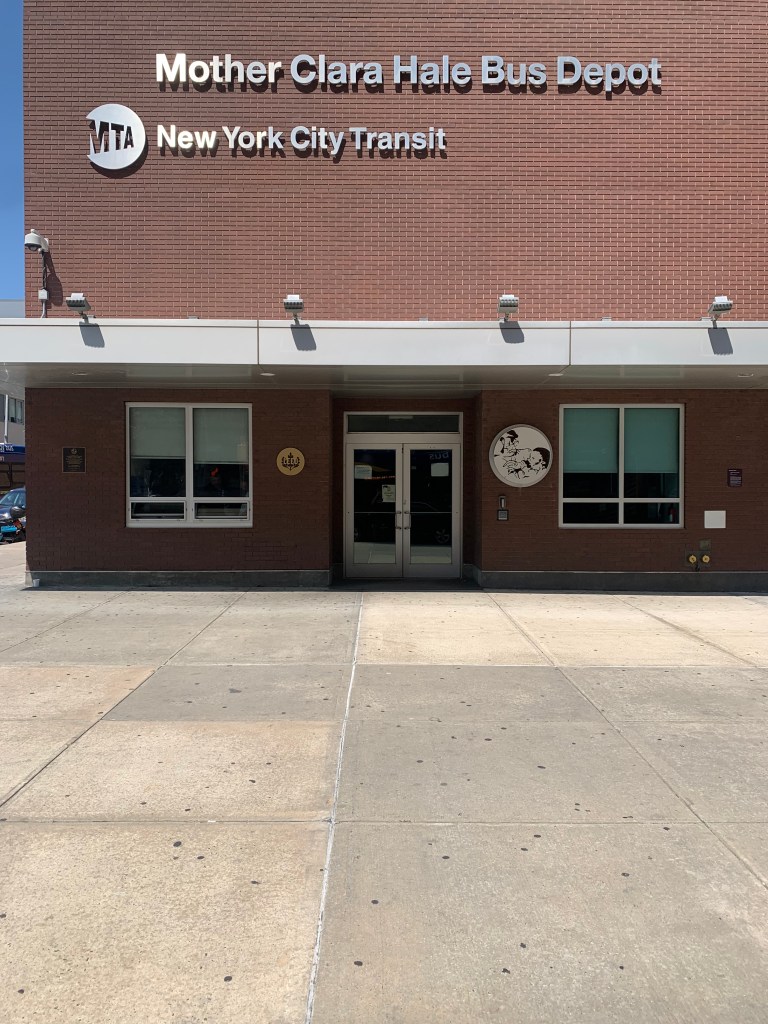
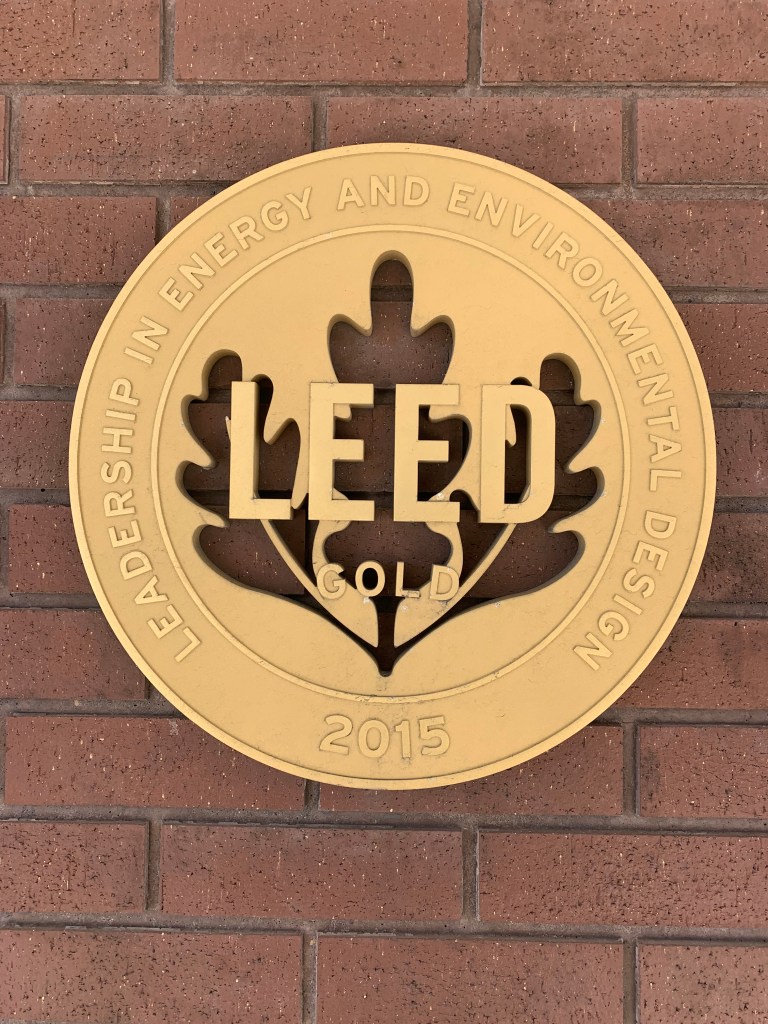
In addition, the depot was designed with green technologies not just to upgrade the building from the previous depot but to make the building a potential model of how bus depots should be built across the United States. The depot is one of if not the only bus depot in the country with a LEED Gold Certification, one of the most prestigious honors for sustainable buildings. This results from the addition of numerous technologies, including solar air heating, lower-emission buses, rainwater recycling, natural lighting, heat-recovery air handling units, and even a green roof. While not part of the building itself, the MTA, both as part of this project and its efforts to have a zero-emissions fleet by 2040, has continued to bring lower-emissions buses to the Mother Clara Hale Bus Depot as well as to the other Northern Manhattan bus depots.
Malcolm X Blvd.
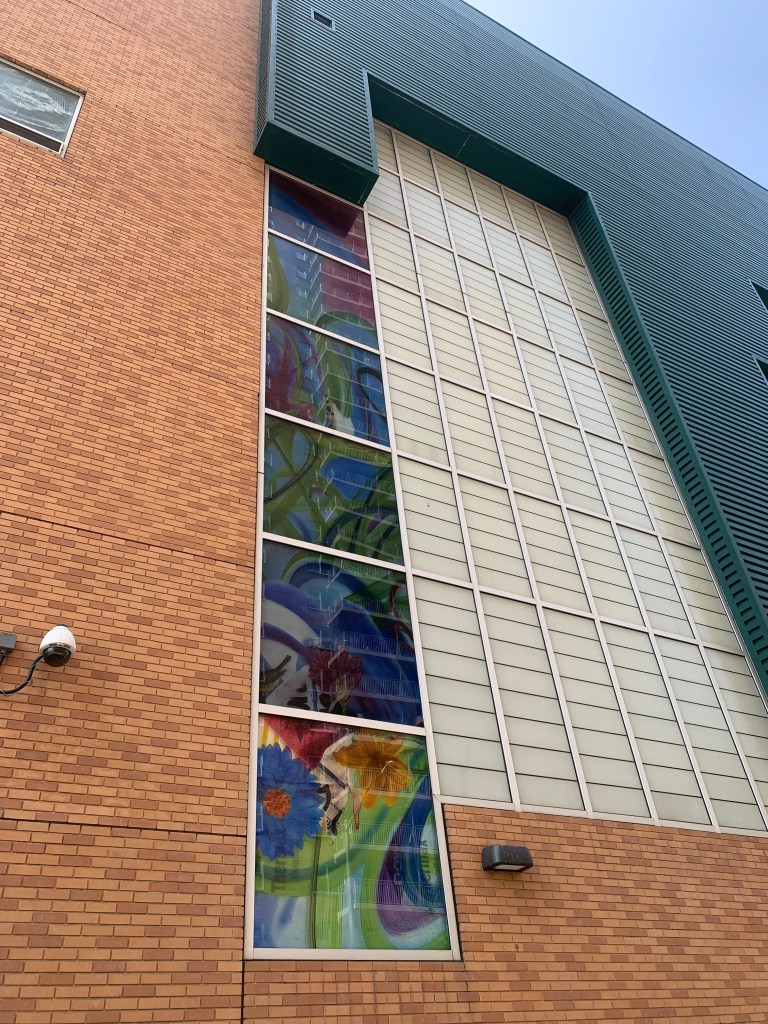
Outside of efficiency upgrades, the building features an art piece known as Mother Hale’s Garden by Shinique Smith that represents the legacy of Clara Hale, the woman the depot was named after who was known for her service in the Harlem community. Clara Hale dedicated her life to serving youth and caring for babies, including many who were sick, orphaned, and/or from broken homes.
The centerpiece of the artwork is a large mural at the front entrance of the depot on Malcolm X Blvd in which Smith had designed with the intent to “embody the spirit of mother Clara, creating beauty and grace from humble materials.” The humble materials Smith referred to in that statement for an MTA press release were the fabric, clothing, and other discarded items that she recycled in order to create the art piece, keeping in line with the depot’s sustainability focus.


Also featured on the sides of the building are 18 42-foot tall laminated glass windows displaying mother and child-like figures enjoying each other’s company in a garden. Smith worked with first graders at P.S. 242 The Young Diplomats Magnet Academy, in May 2012 to draw flowers that were incorporated into the panels. This piece was the first artwork commissioned by MTA Art and Design for a bus depot.
“Mother Hale’s Garden”.
As this bus depot is unique for its green design elements and prominent artwork, one might wonder if other depots in the city could be built like this, especially those located in neighborhoods that are disproportionately impacted by carbon emissions. As the MTA is now pushing to have a zero-emissions bus fleet by 2040, a goal that wasn’t set when the Mother Clara Hale Bus Depot was built, most bus depot reconstructions and/or adaptations in the future will most likely be to help the agency to adjust to a whole new type of bus fleet. This may even mean changes to the Mother Clara Hale Depot as it is likely not equipped for the battery-electric and hydrogen-powered buses the MTA is considering to help reach the zero-emissions goal.
Nonetheless, the Mother Clara Hale Bus Depot can serve as a model for how bus depots can be more sustainable and serve their communities in more ways than one. Hopefully, this depot’s successes are replicated across the New York Region and the United States.
Works Cited
“Subway and bus ridership for 2021 – New York City Transit.” MTA, 2022, https://new.mta.info/agency/new-york-city-transit/subway-bus-ridership-2021. Accessed 25 September 2023.
“Bus Depots of MTA Regional Bus Operations.” Wikiwand, https://www.wikiwand.com/en/Bus_depots_of_MTA_Regional_Bus_Operations. Accessed 25 September 2023.
Duggan, Kevin. “Boxed in! Illegally parked buses obstruct businesses around MTA depot • Brooklyn Paper.” Brooklyn Paper, 6 August 2018, https://www.brooklynpaper.com/boxed-in-illegally-parked-buses-obstruct-businesses-around-mta-depot/. Accessed 25 September 2023.
New York City Department of Health. “Disparities among Children with Asthma in New York City.” NYC.gov, September 2021, https://www.nyc.gov/assets/doh/downloads/pdf/epi/databrief126.pdf. Accessed 25 September 2023.
“Asthma.” Columbia University Mailman School of Public Health, https://www.publichealth.columbia.edu/research/centers/columbia-center-childrens-environmental-health/our-research/health-effects/asthma. Accessed 25 September 2023.
SF Gate, 4 September 2002, https://www.sfgate.com/news/article/new-epa-study-details-danger-of-diesel-exhaust-2801378.php. Accessed 25 September 2023.
Metropolitan Transportation Authority. “Building the new Mother Clara Hale Bus Depot.” mta.info, 2008, https://www.mta.info/nyct/bus/MH_depot.htm. Accessed 25 September 2023.
Ransom, Jan. “The nation’s first green bus depot will open next month in Harlem.” New York Daily News, 27 October 2014, https://www.nydailynews.com/2014/10/27/the-nations-first-green-bus-depot-will-open-next-month-in-harlem/. Accessed 25 September 2023.
United States Green Building Council, https://www.usgbc.org/projects?Search+Library=%22New+Mother+Clara+Hale+Bus+Depot%22&Certification=%5B%22Gold%22%5D. Accessed 26 September 2023.
“Mother Clara Hale Bus Depot | STV.” STV Inc., https://stvinc.com/project/mother-clara-hale-bus-depot. Accessed 25 September 2023.
Metropolitan Transportation Authority. “MTA Arts & Design: Mother Hale’s Garden by Shinique Smith.” YouTube, 27 February 2015, https://www.youtube.com/watch?v=rOiQO_rIZ1E. Accessed 25 September 2023.
MTA Zero-Emissions Fleet Transformation Working Group. “MTA Zero-emission BUS transition plan 2022.” MTA, May 2022, https://new.mta.info/document/91336. Accessed 25 September 2023.
 Transit Central