By Joseph Morales
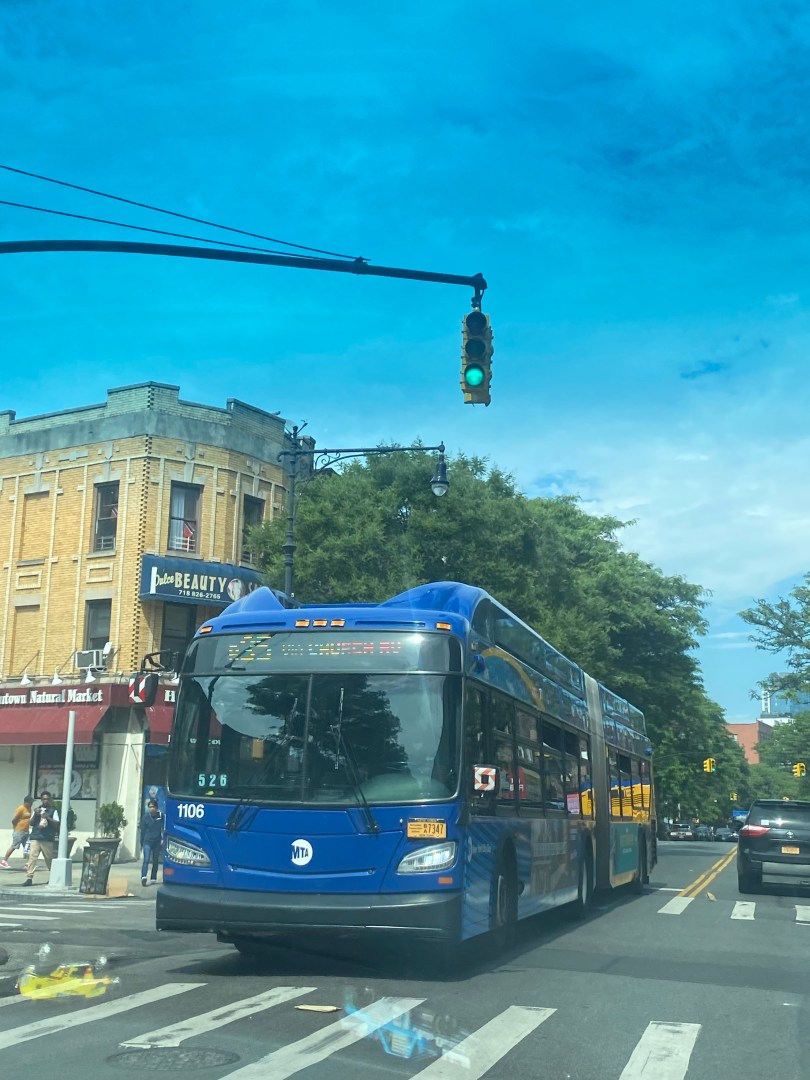
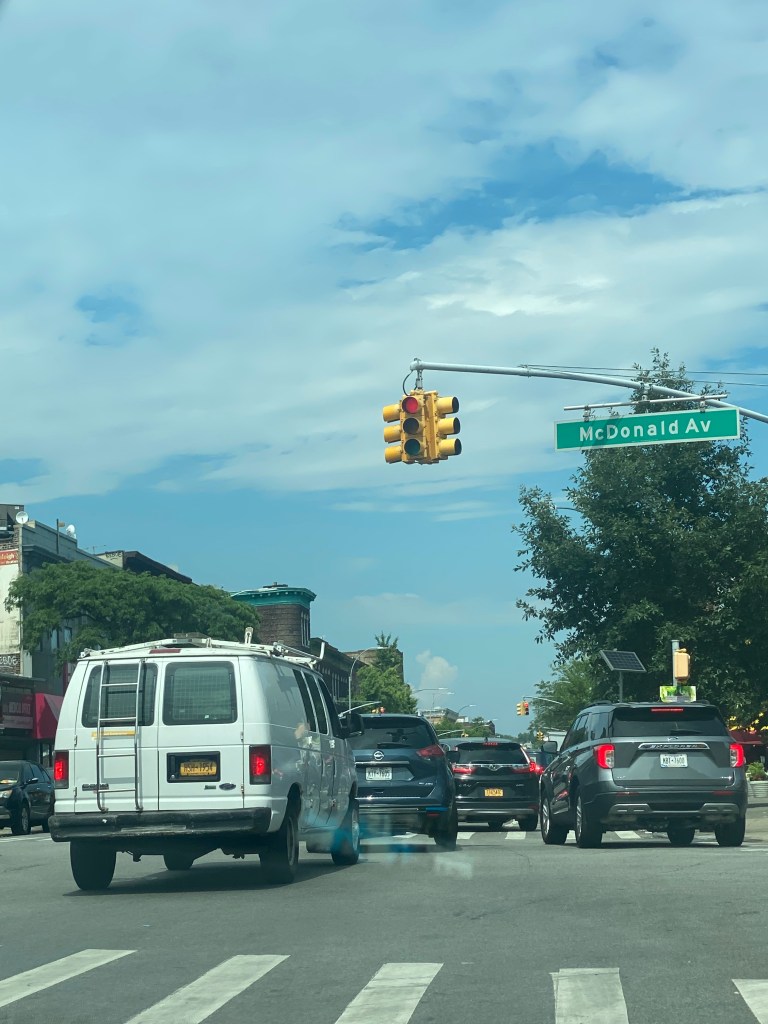
Church Ave is a major residential and commercial corridor that runs about 4 miles east-west through Central Brooklyn between the Kensington and Brownsville neighborhoods. In addition to traversing several busy neighborhoods, the corridor traverses several busy streets and roadways such as Ocean Pkwy/Prospect Expwy, Flatbush Ave, Nostrand/Bedford Ave, and Utica Ave, providing connections for motorists to travel to numerous destinations throughout Brooklyn. In addition, the street is home to several key destinations such as Prospect Park, SUNY Downstate Medical Center, and the Erasmus Hall High School Campus, which currently has about 1,994 students according to data on campus schools from MySchools NYC though the building once served over 7,000 students as a larger high school.
Given the activity density along the corridor, it is no surprise that the B35-LTD bus runs along Church Ave ranked as the 6th and 9th busiest routes in the entire transit system in 2020 and 2021, respectively. This is likely because, in addition to traversing Church Avenue, the route connects with several of both Brooklyn’s and NYC’s other busiest bus routes, such as the B46-SBS(Utica Ave), B41(Flatbush Ave), and B44-SBS(Utica Ave) that travel along other busy corridors and to other major destinations throughout Brooklyn. In addition, the B35-LTD provides connections to six different subway lines at three different subway stations, offering riders access to destinations throughout Brooklyn and the entire city, including Manhattan.
Unfortunately, it is no surprise that bus service on the B35-LTD is known to be slow and unreliable, with speeds generally averaging around the five mph mark at all times, according to MTA performance statistics, despite there being bus lanes on a significant portion of Church Ave. The route’s CJTP(Customer Journey Time Performance), which measures the percentage of trips completed within five minutes of its scheduled time, has almost always been below 75% since August 2017, forcing many riders to expect delays and plan accordingly while traveling, which is not always feasible for everyone and could lead to stressed out commuters.
As a result, the MTA seeks to make significant changes to bus service and routing along the corridor as part of the Brooklyn Bus Network Redesign to make Church Ave buses faster and more reliable. They plan to achieve this by discontinuing the B35-LTD and creating a new Select Bus Service route numbered the B55-SBS. This new route would extend past the B35’s current terminus in Brownsville and replace B15 service running to JFK Airport, providing riders with connections to the airport and other bus routes that traverse Queens. Like other SBS routes throughout the city, bus stops will be over 2,000 feet apart to allow for faster service. Also, like many routes such as the M15-SBS/LCL(1st/2nd Avenues) and Bx12-SBS/LCL(Fordham Rd), there will be a B35 local that serves the current B35 route in addition to 39th St extending local service westbound to Sunset Park. This variation is not proposed to travel east of Brownsville or into Queens or JFK Airport, likely due to the longer travel times that would be associated with making more stops on Church Ave. Overall, this plan seeks to make bus service along Church Ave faster, more reliable, and better connected to more places.
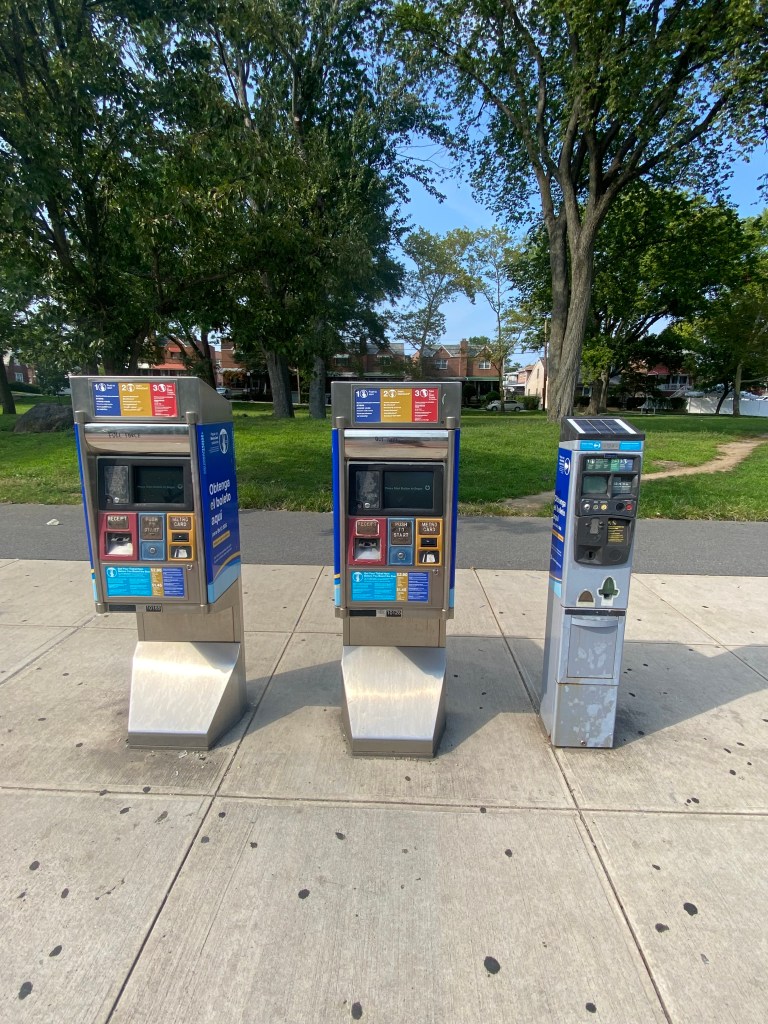
Though off-board fare machines are a feature of every SBS route but one in the city(that one route runs primarily on Staten Island), they will likely not be a part of B55-SBS service as the redesign will likely be implemented after the full retirement of the MetroCard. This is almost certain to be the case as with the Bronx Bus Network Redesign that was implemented in June 2022, an extension of the Bx6-SBS to the Soundview section of the Bronx is currently delayed because the agency said in the Bronx Bus Network Redesign Final Plan Addendum that installing the fare machines just to have to uninstall time in a short timeframe was “…not an effective or efficient use of limited resources.” The original timeframe the MTA had considered for the MetroCard’s retirement was a year, as the redesign was implemented on June 26th, 2022, while the agency had plans to retire the MetroCard this year in 2023. However, the MTA has delayed the MetroCard’s retirement to 2024 due to OMNY software issues. As the MTA has still not implemented the Bx6-SBS changes, it is likely that the implementation of new SBS routes or SBS extensions, including ones along Church Ave, will take place in or after 2024.
The Bronx.
Another feature New Yorkers often associate with Select Bus Service is bus lanes, which are present along at least a substantial portion of each SBS route operating throughout the five boroughs. Currently, on Church Ave, curbside bus lanes are in effect from 7 AM-7 PM Monday-Saturday from E 7th St to Marlborough Rd, representing about 0.5 out of 4 miles or 12.5% of the Church Ave corridor. It is worth noting that since the bus lanes are operating along one of the more congested portions of Church Ave, the lanes likely have and can continue to significantly increase reliability on Church Ave buses because, as mentioned earlier, delays on one portion of a long bus route can cause a ripple effect of delays regardless of whether or not riders are using the congested portion of the route. In the bus lanes, bus speeds increased between 6-13% eastbound and 8-24% westbound, according to NYCDOT statistics from May 2022, almost three years after the bus lanes were implemented in October 2019.
In addition to the bus lanes, the NYCDOT has implemented transit-signal priority on the entire corridor at 51 intersections to improve speeds. Transit-signal priority is when buses and traffic signal controllers wirelessly communicate and either hold a green light longer or turn from red to green faster for those buses. While there are no specific statistics on whether or not this improved service along Church Ave, TSP reduced bus travel time substantially during rush hours on numerous bus routes throughout the city, such as the M15-SBS(First/Second Avenues), by 13.6-18.2% and the Bx41-SBS(Webster Ave) by 17.2-19.6% according to an NYCDOT study. The NYCDOT study only included SBS routes with bus lanes. However, the data suggested that bus speeds almost always improved with TSP or when TSP was implemented along with dedicated bus lanes.
Unfortunately for bus lanes, like many mixed-use corridors in NYC, Church Avenue has been known for a high demand for curb space even before curbside bus lanes were installed. This results in frequent illegal and double parking as motorists attempt to access the plethora of small businesses along Church Av, which reduces the effectiveness of the current bus lanes and likely indicates that many will be opposed to the implementation of any new ones. As for the existing bus lanes that were installed in 2019, they were truncated at Marlborough Road due to opposition from the B’Shert (Beth Shalom v’Emeth) Reform Temple, who argued that many of the congregants access their temple by car and thus needed to be able to park. While this likely only resulted in about a block’s worth of bus lane not being constructed, it is an indicator of how the NYCDOT may consider parking demand when making decisions about bus lanes. As seen before, these decisions might not always favor bus riders even when ridership is high.
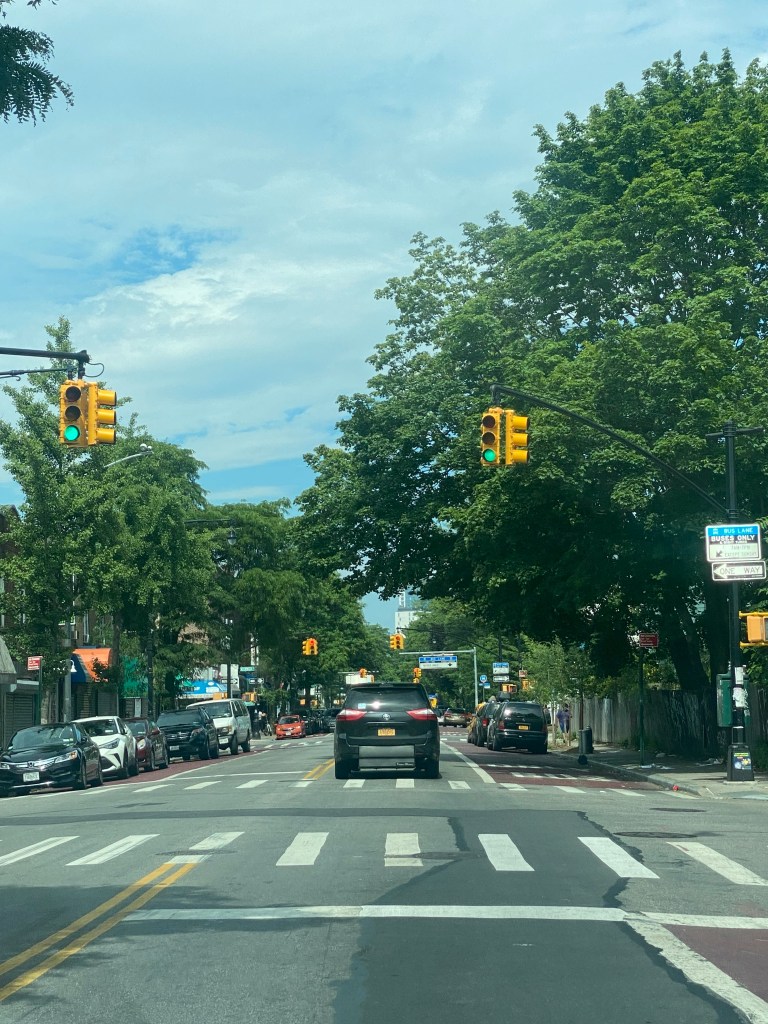
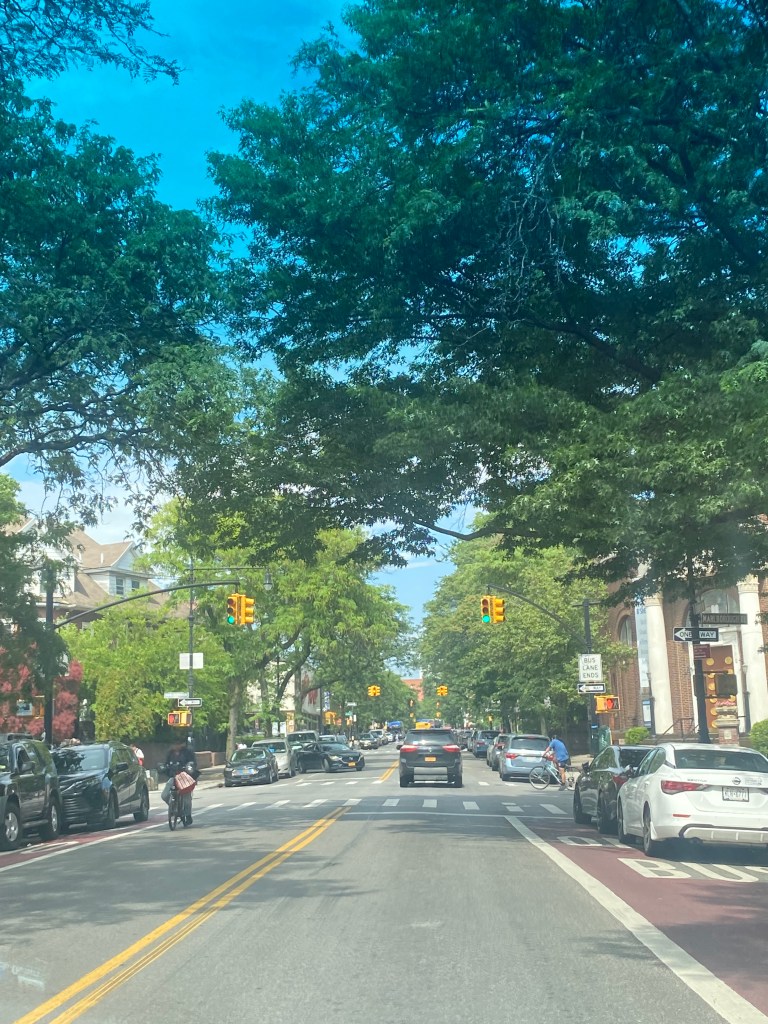
Thus, cars likely continue to use lanes for illegal parking and moving as bus speeds along the corridor, while faster, are still at around the average speed for all bus routes in Brooklyn. Despite only 7% of Church Ave visitors using personal vehicles, according to NYCDOT data collected in October 2019, just a single illegally parked vehicle in the bus lane can result in buses having to merge into general traffic, which can not only slow down buses but also create a traffic bottleneck for all motorists in the vicinity of the bus making the merge. The problem is likely exacerbated on Church Ave since the B35 route uses articulated buses, which are about double the length of standard buses and thus take longer to merge into traffic. Curb regulations that the NYCDOT implemented, such as the addition of short-term parking spaces, loading zones, and parking spaces on side streets, may have helped to alleviate these issues in the bus lanes. However, in the portion of the corridor where curb regulations were implemented without bus lanes, bus speeds actually dropped between 5-11% at most times of day, indicating that they either were ineffective or effective only when complementing dedicated bus lanes.
Outside of bus lane deficits, the only pong of this plan that people have expressed concern about, according to the Bklyner, is the elimination of B15 service to the airport, which is the only bus route connecting JFK Airport with Bedford-Stuyvesant, Crown Heights, and Brownsville. The MTA’s reasoning for the truncation is that it would “improve reliability.” This theory does make sense as the bus already connects several busy areas in Brooklyn, and the portion of the route that extends to JFK may cause buses to be stuck in traffic there. This likely significantly affects Brooklyn riders regardless of whether they are going to Queens or the airport. In addition, if a minority of riders are going to Queens or the airport, this portion of the route may be doing more riders harm than good in the eyes of the MTA. After all, the proposed B15, which outside of the subtraction of service to the airport, includes only minor routing changes, still connects riders to over 20 bus routes and seven subway lines, meaning service here is likely essential to riders, not just getting around Eastern Brooklyn but also other parts of the borough and city at large.
Post redesign, B15 riders will still be able to connect to the B55-SBS or the A train to access the airport. Both the current B15 and the new B55-SBS have or will require transfers to the AirTrain at Howard Beach to get into the airport due to the ongoing redevelopment of JFK Airport Terminal 6. While the AirTrain costs $8.25 for a single ride, with discounts available for frequent travelers, the entrance to the Howard Beach station will be free, allowing bus commuters to bypass the high fares. As for people traveling to other parts of Queens besides JFK Airport, the B55-SBS will connect them to some of the same Queens bus routes that the B15 does. As part of the Queens Bus Network Redesign, the MTA proposes deviating the Q8 bus route away from the Gateway Center and instead sending it to the New Lots Av(3) subway station, which will also prevent many Queens-bound riders from having to make additional transfers.
As the Brooklyn Bus Network Redesign is still ongoing, there is still time for people to continue to give feedback on all proposals for the Brooklyn Bus Network, including the ones regarding the B15/B55-SBS. While these proposals may not make everyone happy, they may present an opportunity for bus service to be faster and connect more riders to more places. As Select Bus Service has led to substantially better service almost everywhere, it has been implemented in the five boroughs; hopefully, the MTA can reach a solution that enhances the commutes of as many riders as possible.
Works Cited
New York City Department of Education. “High Schools – NYC MySchools.” MySchools, 2023, https://www.myschools.nyc/en/schools/high-school/. Accessed 18 August 2023.
Robinson, Gail. “Erasmus Hall Educational Campus – District 17.” InsideSchools, August 2012, https://insideschools.org/school/00Z021. Accessed 19 August 2023.
Metropolitan Transportation Authority. “New York City Transit – Subway and bus ridership for 2020.” MTA, 2021, https://new.mta.info/agency/new-york-city-transit/subway-bus-ridership-2020. Accessed 18 August 2023.
Metropolitan Transportation Authority. “Subway and bus ridership for 2021 – New York City Transit.” MTA, 2022, https://new.mta.info/agency/new-york-city-transit/subway-bus-ridership-2021. Accessed 18 August 2023.
Metropolitan Transportation Authority. “Brooklyn Bus Network Redesign Draft Plan.” MTA, 1 December 2022, https://new.mta.info/document/101521. Accessed 18 August 2023.
Metropolitan Transportation Authority. “The Bronx Bus Network Redesign Final Plan Addendum.” MTA, November 2021, https://new.mta.info/document/63526. Accessed 19 August 2023.
Guse, Clayton. “End of NYC’s MetroCards delayed amid software issues with OMNY.” New York Daily News, 24 January 2022, https://www.nydailynews.com/new-york/ny-mta-metrocards-omny-transit-delay-fare-payment-20220124-g22k56mlp5bwzirl6scmg6u4cm-story.html. Accessed 19 August 2023.
New York City Department of Transportation. “Church Ave Transit & Traffic Improvements.” NYC.gov, 1 October 2019, https://www.nyc.gov/html/brt/downloads/pdf/church-ave-project-update-oct2019.pdf. Accessed 19 August 2023.
New York City Department of Transportation. “Church Avenue Transit & Traffic Improvements – CB 14 – May 2022.” NYC.gov, 14 May 2022, https://www.nyc.gov/html/dot/downloads/pdf/church-ave-cb14-may2022.pdf. Accessed 19 August 2023.
New York City Department of Transportation. “Green Means Go: Transit Signal Priority in NYC.” NYC.gov, January 2018, https://www.nyc.gov/html/brt/downloads/pdf/brt-transit-signal-priority-july2017.pdf. Accessed 19 August 2023.
Brachfeld, Ben, and Liena Zagare. “Church Avenue Dedicated Bus Lanes Looking Good on First Day in Operation.” Bklyner, 23 October 2019, https://bklyner.com/b35-dedicated-bus-lanes-looking-good-on-first-day-in-operation/. Accessed 19 August 2023.
B’ShERT Beth Shalom v’Emeth Reform Temple. “Worship Services & Multi-Access.” B’ShERT, August 2023, https://bshert.org/worship/. Accessed 20 August 2023.
Metropolitan Transportation Authority. “New Draft Plan-Queens Bus Network Redesign.” MTA, 29 March 2022, https://new.mta.info/queens-bus-redesign-draft-plan-hi-res. Accessed 19 August 2023.
Metropolitan Transportation Authority. “New Draft Plan-Queens Bus Network Redesign.” MTA, 29 March 2022, https://new.mta.info/queens-bus-redesign-draft-plan-hi-res. Accessed 19 August 2023.
 Transit Central