
By Joseph Morales
The G Train(Brooklyn-Queens Crosstown Line) is unique because it is the only subway line outside of shuttles that does not enter Manhattan. Nevertheless, it serves some of the busiest and fastest growing neighborhoods in Brooklyn and Queens, connecting Long Island City to Williamsburg, Downtown Brooklyn, Park Slope and more. Long perceived as a low ridership route with trains having only 5 cars versus the typical 8-10, ridership has increased as neighborhoods have grown and residents and jobs came with it. According to census data obtained by Spectrum News 1, state assembly districts the G passes through have seen an increase in population between 3.7 and 22.3% between 2011 and 2021. The population of Williamsburg/Greenpoint which is along along the G train grew by 26% between 2010 and 2020. Also, in the five years prior to the pandemic G train ridership rose 15%. Thus, the need for travel is increasing along the line and the G train will continue to be an important connector between some of the most rapidly growing areas of the city.
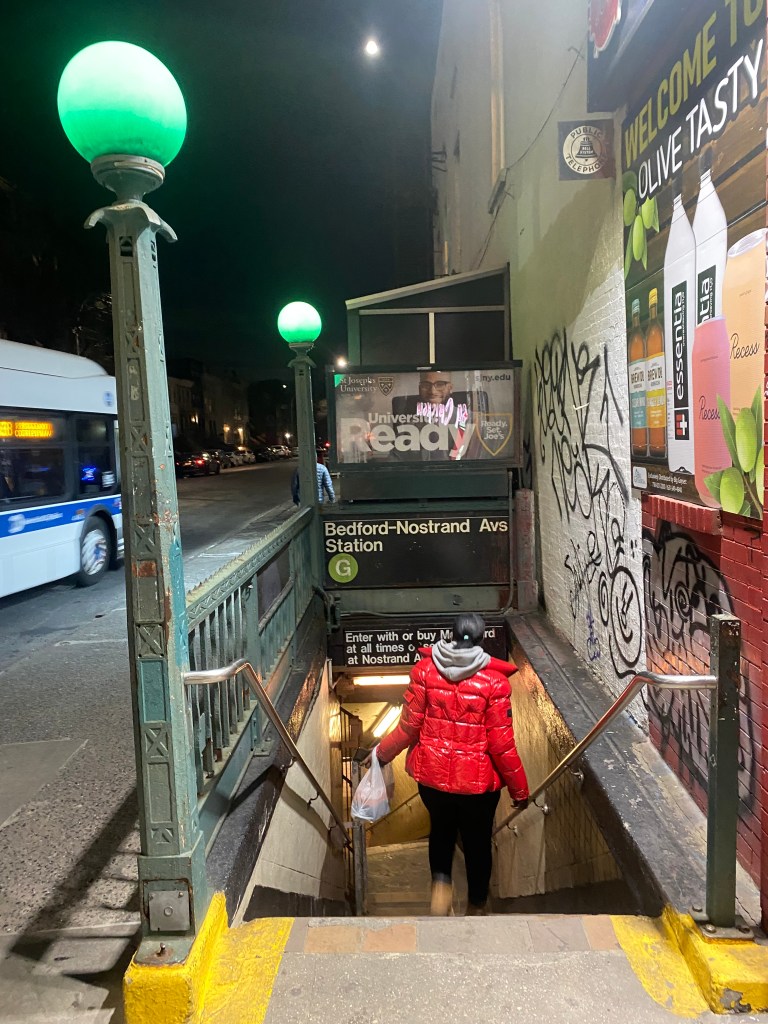
Thus, upgrades to the G Train have and will continue to make a huge difference in providing a faster, more reliable and comfortable ride for G Train riders for years to come. This is in large part due to the introduction of R160s to the G in October 2021, that will make it possible for the MTA to implement CBTC(Communications-Based Train Control) to the G as well as introduce other features. These additions will make rides along the line faster, more reliable and pleasing for riders. This should work to help rid the G train of its common perception as the forgotten stephcild of the transit system.
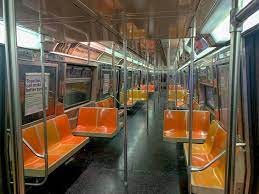
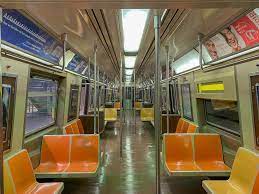
One of these upgrades began in November 2021 with the introduction of R160 subway cars to the G train replacing the line’s previous fleet of R46’s/R68’s that were both about 50 and 35 years old respectively. These R160’s have sleek designs as well as features such as electronic strip maps with stop information. In addition, these trains have automated station announcements as well as LED Interior Lighting, yellow- painted loop stanchions and arrows on the floors around doorways.
R160 trains have also been chosen for some notable technology pilots in the past few years. In 2010, R160 cars 8713-8722 tested CCTV , looped stanchions, pivoted grab handles and folding seats to increase capacity. In 2016, a pilot program saw 20 R160 trains equipped with on-board WI-FI which could be useful for many passengers. Most recently in September 2020, the cars also received a pilot for digital display advertisements similar to those found on R188 cars 7847-7848 that operate on the 7 train(Flushing Line).
These cars alone with or without CBTC will make trains more reliable as younger cars are less likely to break down. In addition, they will provide a more experience for all and create a more welcoming feel to the G train and the communities that it serves.
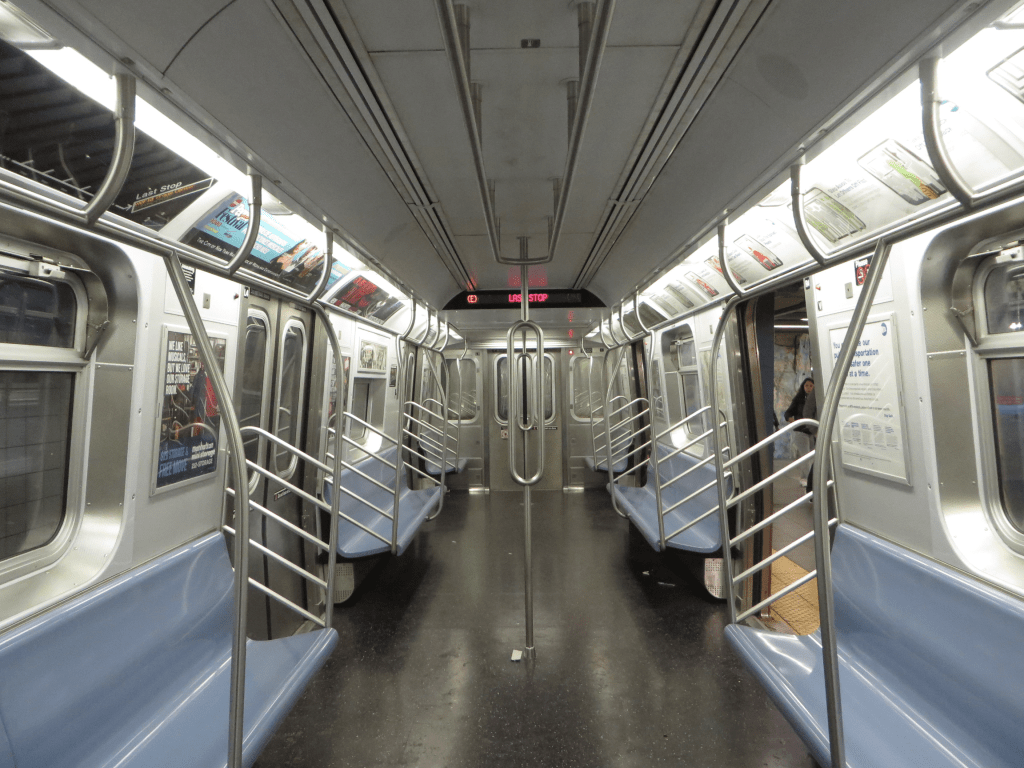
As mentioned earlier, the most significant upgrade R160s enable is for the MTA to install CBTC along the line. The MTA has recently announced a $368 million contract to Crosstown Partners, a consortium of French transit communications company Thales Group and LI-based electric contractor TC Electric LLC. This will allow the MTA to run trains closer together and increase frequency as well as reduce signal-related delays, as the more modern system allows the MTA to know exactly where trains are as opposed to the current block-based system, where a buffer zone must be kept between trains in order to prevent accidents as the exact location or speed of trains is not known. Considering the G train’s continued ridership growth and ridership growth that is expected in the coming years, installing CBTC may be the key in allowing the MTA to increase service when ridership warrants it. CBTC helped the 7 train(Flushing Line) and L Train(Canarsie Line) improve on-time performance to be consistently near or above 90% and become some of the most reliable routes in the entire subway system. Given this track record, it could be the icing on the cake for recent G train upgrades. CBTC is currently being installed on the Queens Boulevard Line from Kew Gardens-Union Tpke to Jamaica-179th St(E,F) in Queens , Culver Line from Church Ave to Coney Island-Stillwell Av(F) in Brooklyn and Eighth Avenue Line(A,C,E) in Manhattan.
In order to get CBTC installed, the MTA is using a new project completion model that emphasizes a principle known as “design-build”. Design-build contracts are contracts that include both the design and construction portions of the project in the contract in order to consolidate accountability in the event of project delays. This has already helped the MTA complete multiple critical projects such as for ADA-accessibility at subway stations along with the reconstruction of the L’s East River Tunnels in response to damage from Hurricane Sandy.
In addition to signal upgrades, there are plans to make certain astations more accessible. The Metropolitan Av(Brooklyn) as well as 7 Av station(Brooklyn) are scheduled to become ADA accessible by July 2023 according to the MTA capital program dashboard for the 2020-2024 Capital Plan. The Lorimer St station on the L train(Canarsie Line) in the same complex as the Metropolitan Av station is also on track to become ADA-Accessible by July 2023 allowing riders with mobility disabilities the ability to transfer between the lines. Escalators will also be replaced at the Smith-9th St station as part of a project to replace 18 escalators at 7 locations across various lines.
The upgrades to the line will be felt for years to come. There will be a day where grandparents and old-timers speak to the younger generations about what the G train looked like in the past as well as the service quality of the G train now to what it will be post-CBTC installation. As population and businesses boom along the Brooklyn-Queens Crossstown Line, the best is yet to come for the G train, its riders and the communities it serves.
Works Cited
Konig, Joseph. “G line to get upgrade as ridership continues to increase.” NY1, 21 February 2022, https://www.ny1.com/nyc/all-boroughs/transit/2022/02/22/g-line-to-get-upgrade-as-ridership-continues-to-increase. Accessed 18 February 2023.
DJ Hammers Trains, director. R160 being Permanently Swapped to G Line Service. 2021. Youtube, https://www.youtube.com/watch?v=M44XwaGac2I. Accessed 18 February 2023.
Calcagno, Michael, and David Pirmann. “nycsubway.org: R-46 (Pullman-Standard, 1974-1975).” NYCSubway.org, https://www.nycsubway.org/wiki/R-46_(Pullman-Standard,_1974-1975). Accessed 18 February 2023.
Calcagno, Michael, and David Pirmann. “nycsubway.org: R-68 (Westinghouse-Amrail) — R-68A (Kawasaki).” NYCSubway.org, https://www.nycsubway.org/wiki/R-68_(Westinghouse-Amrail)_–_R-68A_(Kawasaki). Accessed 18 February 2023.
East New York. “WiFi Equipped NYC Subway Cars – New York City Subway.” NYC Transit Forums, 13 September 2016, https://www.nyctransitforums.com/topic/49589-wifi-equipped-nyc-subway-cars/. Accessed 19 February 2023.
Brachfeld, Ben. “MTA set to award $368 million contract to modernize G line signals.” amNewYork, 20 December 2022, https://www.amny.com/transit/mta-contract-modernize-g-line-signals/. Accessed 19 February 2023.
Metropolitan Transportation Authority, director. What is CBTC? 2015. Youtube, https://www.youtube.com/watch?v=Mjx3S3UjmnA&t=342s. Accessed 18 February 2023.
Metropolitan Transportation Authority. “CBTC: Upgrading signal technology.” MTA, 11 May 2022, https://new.mta.info/project/cbtc-signal-upgrades. Accessed 19 February 2023.
Metropolitan Transportation Authority. “MTA.” mta.info, 2022, http://web.mta.info/capitaldashboard/CPDPlan.html?PLN=8&AGY=a. Accessed 18 February 2023.
 Transit Central