By Joseph Morales
The Nostrand Avenue Station on the Fulton Line(A,C trains) is located under Fulton St between Nostrand and Bedford Avenues in the Bedford-Stuyvesant section of Brooklyn. The area immediately surrounding the station is known for being a busy commercial strip with a combination of high-density residential buildings and retail stores. The station also provides transfer between local and express trains along the Fulton Line as well as the Eighth Avenue Line in Manhattan, in addition to transfers to the B25 and B26 buses along with the B44-LCL/SBS. The station is also a short walk away from the Nostrand Ave LIRR station.
Though the station and surrounding community have always been extremely busy, two spacious entrances on Bedford Ave/Fulton St had been closed and abandoned between 1991 and 2021 after the NYPD Transit Bureau determined that they could not provide enough police in the entrances in order to protect straphangers when subway crime was considered out of control in New York City.
While subway crime was considered to be at elevated levels in 2021 and is still at the top of many people’s minds in 2023, it is not nearly as severe as it was back then. According to a New York Times article, 15,572 felonies were reported in the subway system in 1991. In 2020, 2021 and 2022, there were 3,411, 3,918 and 4,715 complaints of crime in the system respectively according to annual reports published by the NYPD. It is also important to note that the felony count from 1991 did not include misdemeanor offenses where as the complaint tallies form 2020, 2021 and 2022 do include misdeamenors. In addition, ridership was around 45% of pre-pandemic levels in 2021 and generally ranging between 55-65% of pre-pandemic levels on most 2022 weekdays as well, so the ratio of crime to ridership is still higher in 1991 than it was in recent years.
As a result of the extent of the crisis back then,the NYPD had advocated for the closure of 15 entrances across the subway system based on factors such as crime volume, foot traffic, quality of lighting and layout and the Bedford Avenue entrances were among these. Though, While NYCT(New York City Transit) then known as the TA(Transit Authority) at the time was initially hesitant to close the entrances fearing backlash from advocates for the homeless. The rape of a woman in a long passageway between the 34th St-Herald Sq and the 42nd St-Bryant Park stations in Midtown Manhattan, prompted the TA to pull the trigger and to close this passageway, the Bedford Ave entrances as well as 13 other subway entrances throughout the subway system in 1991.
With a need to increase capacity along with there being a quarter mile gap between Bedford Ave and the closest subway entrance, the MTA decided to reopen the entrances in 2021. In addition, to providing better access to destinations in the area, reducing crowding and providing opposite-direction transfers, the entrances also provide better access to the northbound B44-SBS toward Williamsburg. Reopening the entrances can also increase the potential of any redevelopment or new retail openings that occurs at several abandoned storefronts/vacant lots in the vicinity of the entrances. Before reopening the entrances, the MTA made improvements such as scraping and repainting surfaces, adding new LED lighting and rehabilitating staircases. The MTA also added things such as OMNY readers, help points and electronic advertisement signs in order to provide the same amenities in these entrances as seen in pretty much all open subway stations today. The project costed a total of $2 million, with $1 million coming from MTA NYCT, $750,000 coming from former State Assemblyman Tremaine Wright. It is worth noting that the entrances had been intact for quite some time, as seen in a video from Youtuber Sneaky Boy that is linked here: https://www.youtube.com/watch?v=k8pKlIiBbFA. So, work was limited to that of a small renovation.
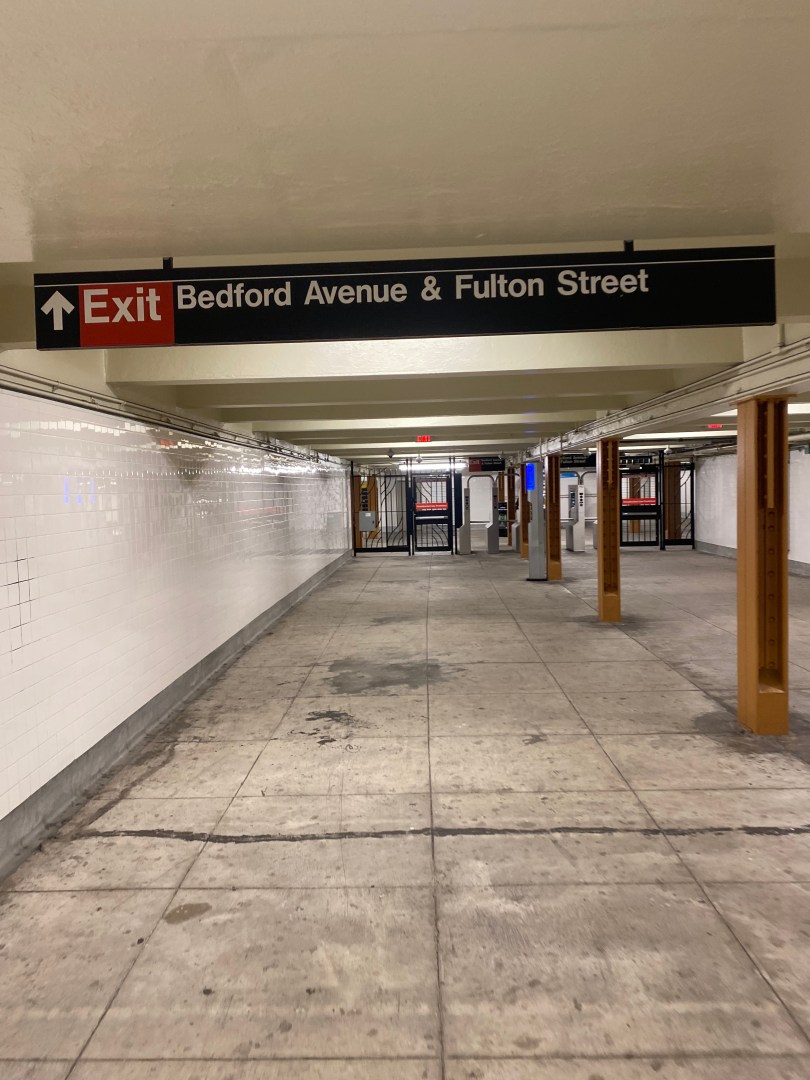
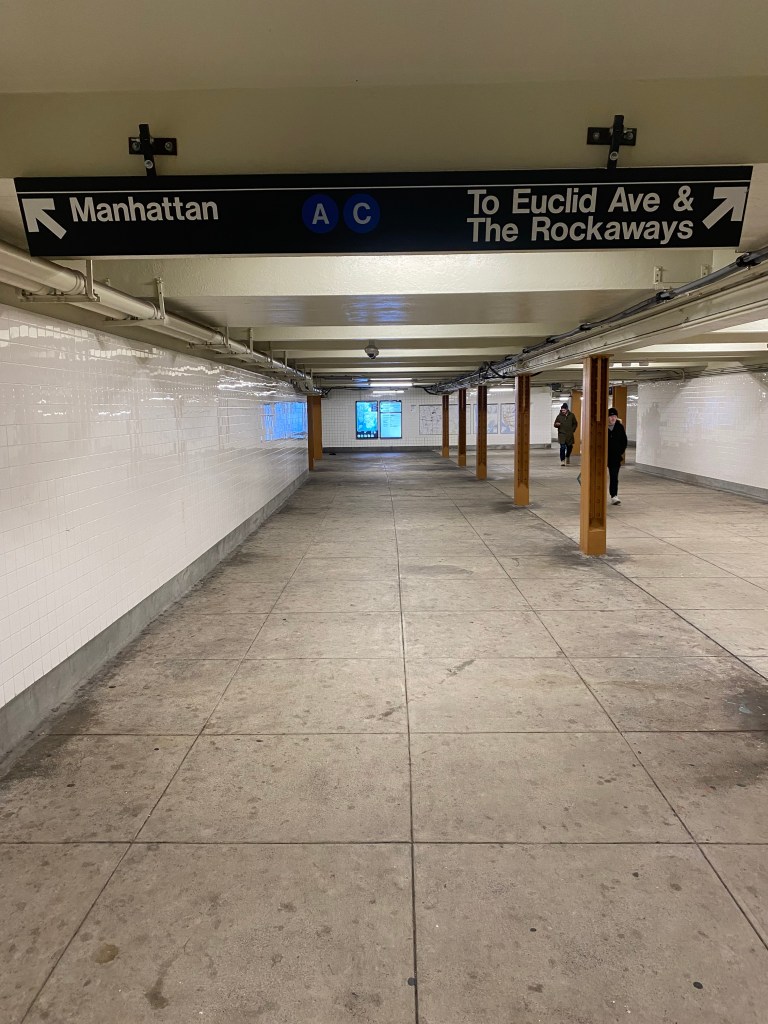
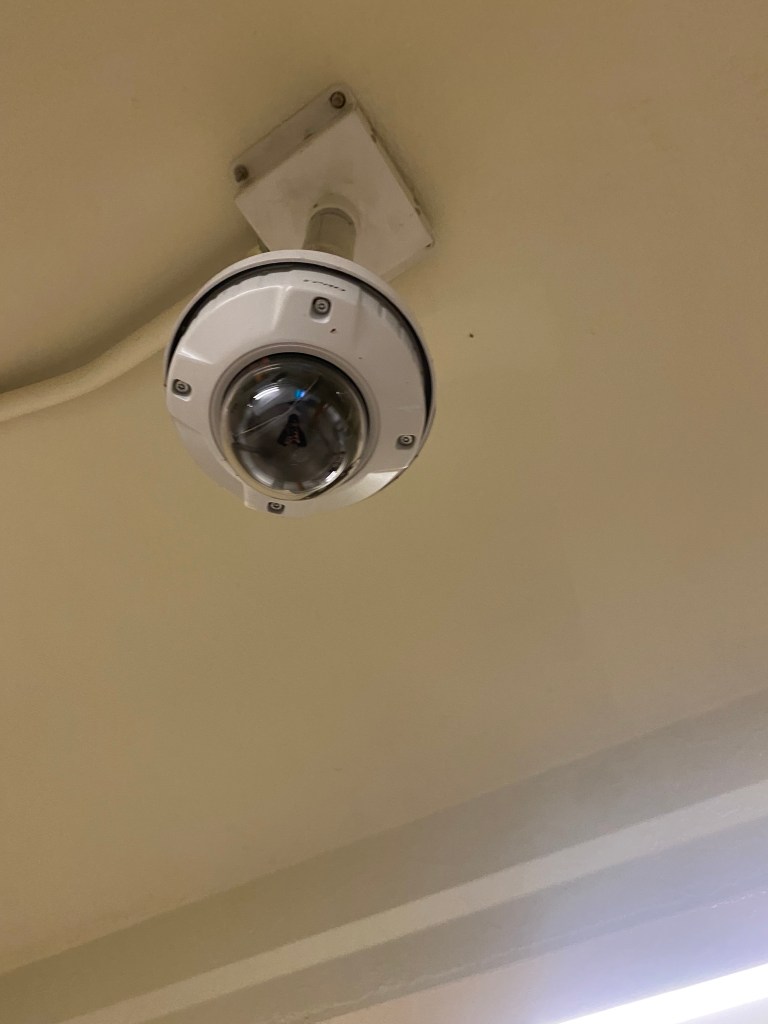
On my visit to one of the Bedford Ave entrances at around 6:30 PM on Saturday, February 4th, 2023 exactly two years after the entrances reopened, the entrances seemed to be used regularly by riders. The station seemed extremely clean, and one could tell that the entrances were well polished, especially considering the visual appearance of many IND stations such as those along the Concourse Line(B,D trains in The Bronx) before it’s rehabilitation last year. Security cameras were also a prevalent sight throughout the entrance, which may be a valuable addition to many as subway crime was still elevated at the time of the entrance’s opening and is still a concern of many riders in 2023.


Considering the success of the reopening of these entrances, why has the MTA not reopened the other 14 entrances that were closed in 1991 especially considering crime levels in the subway system is lower in 2023 than it even was in 2020 or 2021. In addition, many of these entrances, such as those on the Fordham Rd(B,D) stations on the IND Concourse Line seem just as structurally intact as the Bedford Ave entrances were before their reopening, as also seen in this video from Sneaky Boy linked here: https://www.youtube.com/watch?v=aGKJyu1w_nk
While the entrances are physically intact, these entrances may not be considered as significant in the mobility context of the station. For example, at the Fordham Rd(B,D) station, while the entrances leading to the northwestern and southwestern corners of E Fordham Rd are closed, there is an entrance on the southeastern corner of Fordham Rd, so riders are not faced with substantially longer walks without the closed entrance the way riders were on the A,C in Brooklyn. Similar passageways include a passage between the 14th St(1) and 14th St(L) station, numerous staircases at 50th St(C,E) and free opposite-driection transfers at 23rd St(R) and 28th St(6). Security cameras and other security measures may be needed for a reopening depending on the safety context for both the station and community as well as the physical layout of the entrance.
The passageway between the 34th St-Herald Sq and 42nd St-Bryant Park stations where a rape had led to the closure of it along with the 14 other entrances, traverses two stations both covered by the B and D trains, so the amount of need for people to walk the distance is minimal. Many may wonder if the entrance could be turned into an underground retail corridor along with a subway entrance, similar to the setup at the 47-50th St Rockefeller Center Station on the Sixth Avenue Line(B,D).
The new station entrances at Bedford Av/Fulton St station on the A and C trains hve no doubt made a difference for subway riders and the surrounding Bed-Stuy community. Many will now wonder what might be for the other 14 subway entrances all over the city that have been closed since 1991.
Works Cited
Verde, Ben. “Nostrand Avenue station entrance reopens after more than 30 years • Brooklyn Paper.” Brooklyn Paper, 4 February 2021, https://www.brooklynpaper.com/nostrand-avenue-station-entrance-reopens-after-more-than-30-years/. Accessed 5 February 2023.
Steinberg, Jacques. “Subway Crime Fell in 1991, Officials Say.” The New York Times, 21 February 1992, https://www.nytimes.com/1992/02/21/nyregion/subway-crime-fell-in-1991-officials-say.html. Accessed 5 February 2023.
New York City Police Department. “Complaints for Offenses Described in Administrative Code 14-150(d) Occuring In Transit Jurisdiction Calendar Year 2020.” NYC.gov, 2020, https://www.nyc.gov/assets/nypd/downloads/pdf/analysis_and_planning/transit-bus-crime-reports/2020/complaints-in-transit-report-cy-2020.pdf. Accessed 5 February 2023.
New York City Police Department. “Complaints for Offenses Described in Administrative Code 14-150(d) Occuring In Transit Jurisdiction Calendar Year 2021.” NYC.gov, 2021, https://www.nyc.gov/assets/nypd/downloads/pdf/analysis_and_planning/transit-bus-crime-reports/2020/complaints-in-transit-report-cy-2020.pdf. Accessed 5 February 2023.
New York City Police Department. “Complaints for Offenses Described in Administrative Code 14-150(d) Occuring In Transit Jurisdiction Calendar Year 2021.” NYC.gov, 2022, https://www.nyc.gov/assets/nypd/downloads/pdf/analysis_and_planning/transit-bus-crime-reports/2020/complaints-in-transit-report-cy-2020.pdf. Accessed 5 February 2023.
Packenham, Michael, et al., editors. “Tunnel Vision.” New York Daily News, 30 March 2021, https://www.newspapers.com/image/406724822/?fcfToken=eyJhbGciOiJIUzI1NiIsInR5cCI6IkpXVCJ9.eyJmcmVlLXZpZXctaWQiOjQwNjcyNDgyMiwiaWF0IjoxNjc1NTY4NjkyLCJleHAiOjE2NzU2NTUwOTJ9.PYZW5GzV-SrLkPFd8T8tKe8fW_qd3VX0GcLOuH5vFu4&clipping_id=28821203. Accessed 5 February 2023.
Sims, Calvin. “15 More Areas In Subways To Be Closed.” The New York Times, 29 March 1991, https://www.nytimes.com/1991/03/29/nyregion/15-more-areas-in-subways-to-be-closed.html. Accessed 5 February 2023.
Metropolitan Transportation Authority. “MTA Reopens Bedford Av Entrances of Nostrand Av AC Subway Station.” MTA, 4 February 2021, https://new.mta.info/press-release/mta-reopens-bedford-av-entrances-of-nostrand-av-ac-subway-station. Accessed 5 February 2023.
Sneaky Boy. “Nostrand Avenue Station ABANDONED Entrances and Passageways (IND Fulton Street Line).” YouTube, 6 December 2017, https://www.youtube.com/watch?v=k8pKlIiBbFA. Accessed 5 February 2023.
Kabak, Benjamin, and Russell Warshay. “Remembering subway passageways lost to time.” Second Ave. Sagas, 15 April 2010, https://secondavenuesagas.com/2010/04/15/twenty-years-later-subway-passageways-lost-to-time/. Accessed 5 February 2023.
 Transit Central