By Joseph Morales
The B82-SBS is New York City’s newest select bus service route which began service in October 2018. The route runs along Kings Hwy, which is among the busiest roads and travel arteries in Southern Brooklyn to the Canarsie and Starrett City areas and it has done so for little more than 4 years. The bus connects many areas without subway service to the L, B, Q, D, N and F trains as well as 21 bus routes including the B44-SBS(Nostrand/Bedford Av) and B46-SBS(Utica Avenue) which are also among the city’s busiest bus routes. The route contains many large high school campuses such as the Canarsie Educational Campus , South Shore Educational Campus, and James Madison High School. There are also multiple hospitals such as Mt Sinai Brooklyn, The New York Community Hospital and Midwood Medical Center. A large number of residents in communities along this corridor have a car free commute as per the NYU Furman Center such as Flatlands/Canarsie 52.1%, Flatbush/Midwood 73.5% and 67.8% Bensonhurst. Thus, many rely on that bus to get to the many subway stations on the route as well as across Brooklyn. Therefore, access to quality transit across this corridor is crucial to ensure that people have equitable access to transportation. The B82-LCL/SBS was the 7th busiest bus route in all of New York City and the 3rd busiest in Brooklyn in 2021 with a ridership of 5,287,019.
The purpose of a select bus service route is to provide rapid transit service to areas without subway service that can benefit from subway-like service. Rather than spending years constructing a subway or light rail, the MTA can choose to create a select bus service route in its place. That is exactly what happened with the B82-SBS.
The B82-SBS opened in the summer of 2018 but not before some controversial decisions that resulted in many changes to the final plan that angered Brooklyn bus riders and changes that continue to impact the route today. Bus lanes on the route are relatively inconsistent, despite the B82-SBS being an SBS route, the route only has 5 miles out of its around 8 mile bus route in dedicated bus lanes from the initially proposed amount of 6.5 miles of dedicated bus lanes from the NYCDOT, which means the B82-SBS runs less of its route in dedicated bus lanes than a lot of SBS routes in the city. Unfortunately, as a result bus speeds have almost not increased at all since SBS was implemented in September 2018 according to MTA figures. The only time the average speed of the bus increased was between February and May 2020 during the height of the COVID-19 pandemic, only to then decrease to pre-pandemic levels. The pre-pandemic speeds of around 7 mph are still what the bus averages in a typical month to this day.
Though bus speeds themselves have not improved, buses have gotten from end to end faster overall thanks to off-board fare collection as well as significant bus stop spacing. Small routing changes such as the bus using Ave K instead of Flatbush Ave to enter Kings Hwy as well as a simpler route around the Canarsie-Rockaway Pkwy(L) subway station have also helped. The NYCDOT also used the project as an opportunity to improve and redesign many intersections for pedestrian safety along Kings Hwy as well as to improve certain bus stops, many of which were located on narrow medians and were not considered safe or ADA-accessible. There are likely many reasons why there are not more dedicated bus lanes on the B82-SBS.
For one, Flatlands Ave, where the bus operates in Canarsie and the Flatlands, is a wide boulevard style street where there is little congestion for the most part. On one portion of Flatlands Avenue that is known for congestion between Ralph Ave and Rockaway Pkwy, the NYCDOT decided to widen all travel lanes rather than add dedicated bus lanes to most of this section, This can speed up all vehicles including buses however, it is interesting to see whether the principle of induced demand will cause congestion to increase in the long term should more drivers take to the roads after seeing a small decrease in congestion for a short period of time. There is a bus lane in the eastbound direction from E 57th St to Ralph Ave which is active everyday except Sunday from 7AM-7PM and has likely helped speed up buses in of the busiest sections of Flatlands Ave.
As for Kings Highway, which is the primary street in which the B82-SBS operates, the area between Avenue K and E 23rd St has 24/7 bus lanes. However, the corridor between Ocean Avenue and Bay Parkway is extremely narrow and has few bus lanes, mainly adjacent to subway stations. If a bus lane were to be present, it would take up half of an already congested street, causing large numbers of vehicles to crowd into one small lane going in both directions. The narrowness causes difficulty for buses as the street is often congested and it has to weave in and out of small spaces to stop and reenter traffic. This issue is exasperated by the fact that double parking is a major issue on Kings Highway. Not only do businesses on Kings Hwy attract motorists from throughout Brooklyn, but these businesses all have to take deliveries and given the density of the businesses along the corridor , curb space becomes a premium. The city has added commercial loading zones to the corridor in order to make it easier for businesses to accept deliveries however, that has had its own problems as many cars have illegally parked in them as there is still a high density of cars that did not have space to park even before the loading zones were implemented.
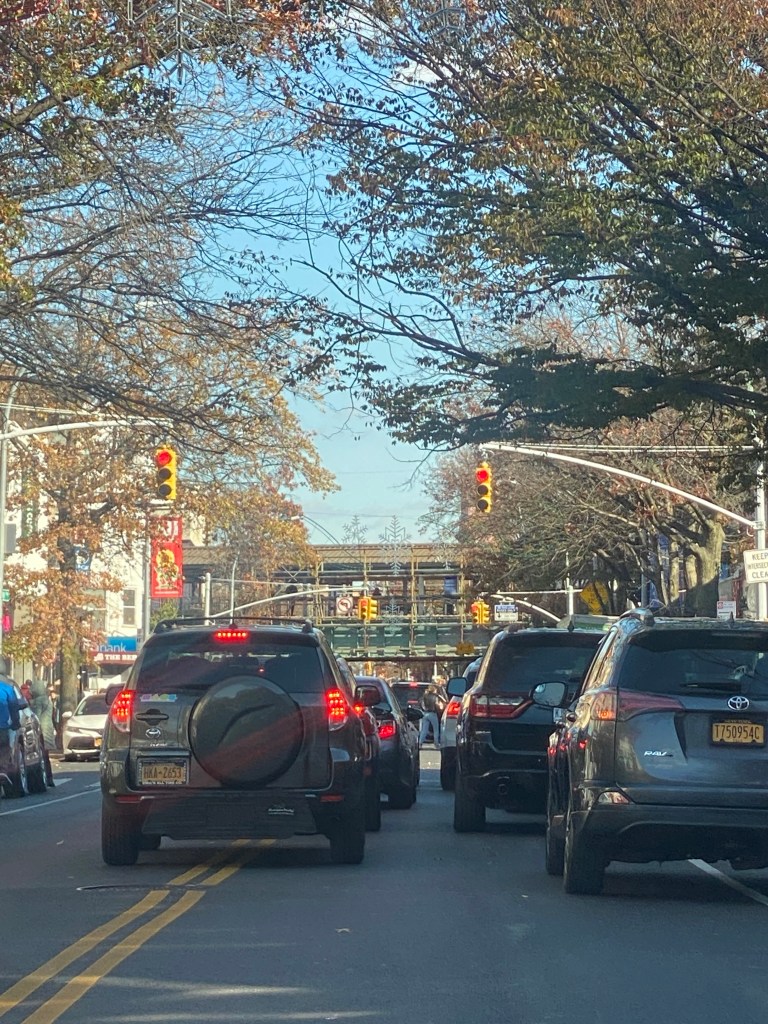
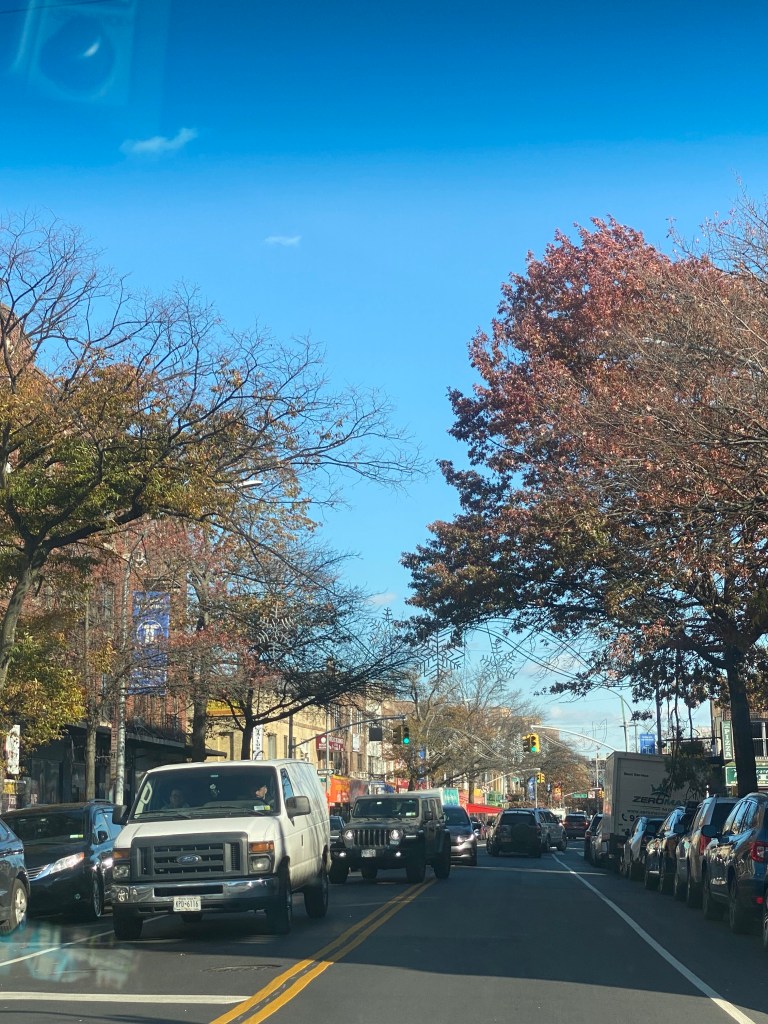
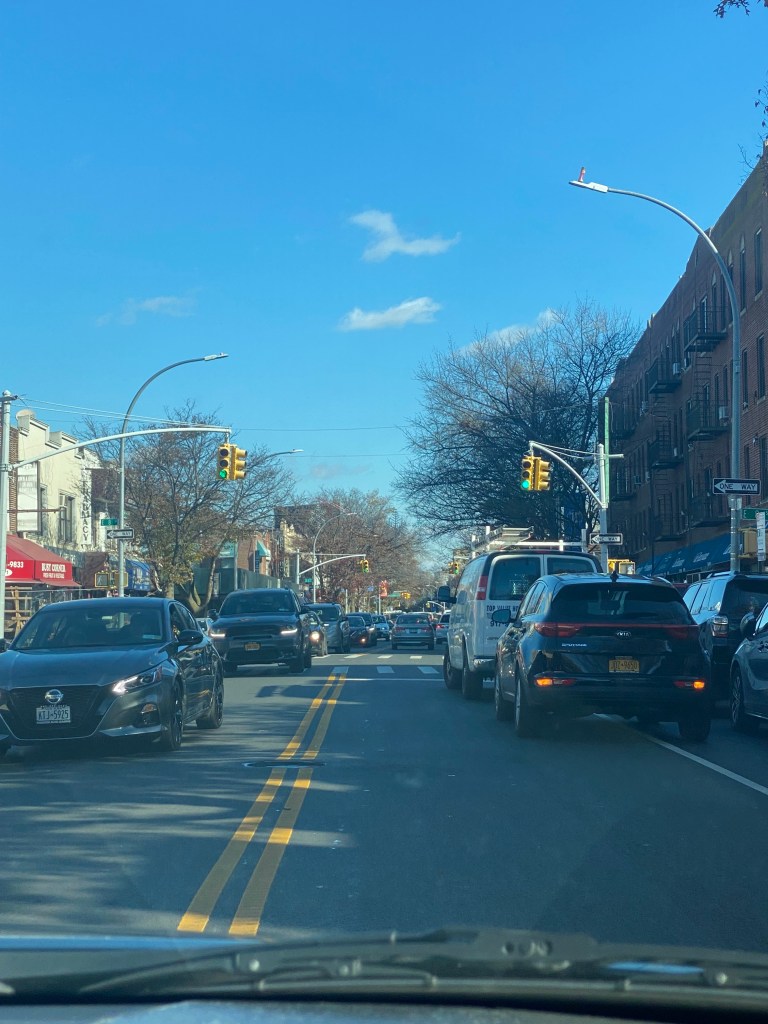
Taking a lane from cars to give to buses can be viewed as a positive thing, as a bus is more efficient than a car and a bus lane in most cases will help to carry more people in a faster amount of time than individual cars. As you might predict, creating a bus lane in this particular stretch can eliminate already limited space for almost all car traffic, making it a unique challenge. Unfortunately, delays on a small segment of a route can impact an entire route, so riders who ride the B82-SBS experience the delays caused by these streets regardless of where they’re going.
As you could expect, that led to vocal opposition of the bus lanes along Kings Hwy from various local politicians such as former State Senator Marty Golden(R-22), State Senator Simcha Felder(R-17), and former NYC Councilman Chaim Deutsch(D-48) on the grounds that bus lanes on Kings Hwy would take parking spots away from drivers and hurt local businesses. According to a NYCDOT shoppers survey done on 7,500 shoppers on Kings Hwy between W 10th St and Ocean Ave, during the week 23% of shoppers drove and 11% took the bus. On the weekends the splits were even more lopsided, with 21% of shoppers driving and 8% taking the bus. Thus, it makes sense why politicians were against the bus lanes. While the NYCDOT did say in a March 2018 community board presentation, that there would be more parking available for 75% of the day on weekdays and on weekends with the addition of parking they were including in the project; the parking may not exist when businesses and motorists most need it given the extremely vocal opposition in the time after the presentation over the need for parking. They wound up compromising with the plan that would eventually be implemented.
There are also no bus lanes on the Bay Pkwy or Cropsey Ave section of the bus route however as this is a residential corridor so bus lanes may not have been considered necessary by the NYCDOT.
While the NYCDOT and the MTA has taken some major steps to improve bus service, many may feel like this project has fallen short of what it could’ve been for bus riders. Motorists and business owners may be frustrated with the amount of vehicle parking loss during peak hours. As with many projects before, this shows that one of New York City’s biggest transportation challenges is balancing the need for dedicated bus lanes and faster buses with the needs of car space, parking and deliveries in commercial areas.
Works Cited
“New York Neighborhood Data Profiles – NYU Furman Center.” NYU Furman Center, https://furmancenter.org/neighborhoods. Accessed 5 November 2022.
New York City Department Of Transportation. “For presentation to CB 15 Transportation Committee | March 13, 2018.” NYC.gov, 13 March 2018, https://www1.nyc.gov/html/brt/downloads/pdf/brt-south-brooklyn-b82-mar2018.pdf. Accessed 5 November 2022.
Kuntzman, Gersh. “Eyes On The Street: Great B82 SBS Service Hurt by Cars, Golden, Felder.” Streetsblog NYC, 25 October 2018, https://nyc.streetsblog.org/2018/10/25/eyes-on-the-street-great-b82-sbs-service-hurt-by-cars-golden-felder/. Accessed 5 November 2022.
Aaron, Brad. “Will DOT and the MTA Prioritize Parking Over Tens of Thousands of B82 Riders?” Streetsblog NYC, 16 April 2018, https://nyc.streetsblog.org/2018/04/16/will-dot-and-the-mta-prioritize-parking-over-tens-of-thousands-of-b82-riders/. Accessed 5 November 2022.
MTA. Bus Dashboard, http://busdashboard.mta.info/. Accessed 5 November 2022.
Parks, Jessica, and Meg Capone. “Kings Highway loading zones ‘a complete disaster’ • Brooklyn Paper.” Brooklyn Paper, 5 February 2020, https://www.brooklynpaper.com/kings-highway-loading-zones-a-complete-disaster/. Accessed 6 November 2022.
 Transit Central