By Joseph Morales
The Auburndale station is a station on the Long Island Rail Road(LIRR) Port Washington Branch in the Auburndale section of Queens. As this area has no subway service, many residents rely on the LIRR in order to get to Western Queens as well as Manhattan in order to avoid having to take the bus to the subway and transfer at the often extremely congested Flushing-Main St(7) station.

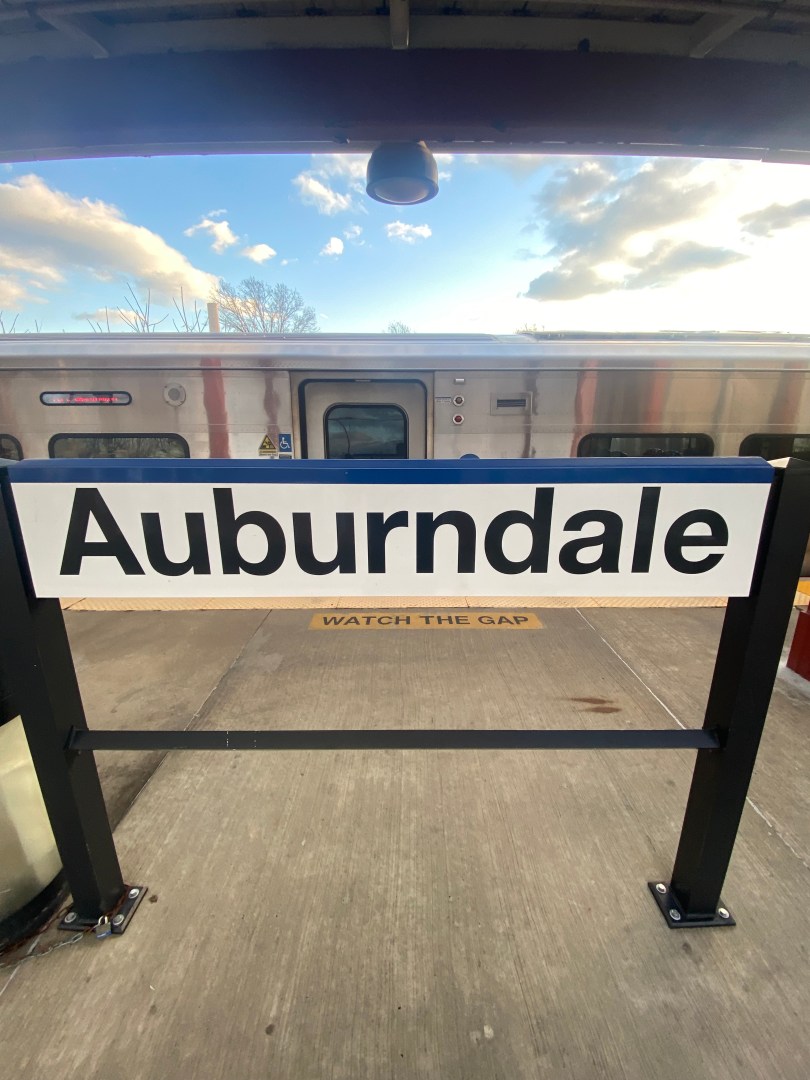
Station sign at Auburndale LIRR Station.
Thus, the MTA is planning to make the station more pleasurable for riders as well as ensure the station is fully accessible for those with mobility disabilities. While this may not seem like a major project or may even seem like a routine one, projects like these are essential to encouraging those who live in the outer boroughs of New York City as well as its suburbs to use commuter rail instead of driving into Manhattan especially ahead of the implementation of Congestion Pricing which will charge all drivers entering Manhattan below 60th street a toll between $5-$23 with limited exemptions. This will not only help Queens residents traveling into Manhattan avoid tolls but also reduce emissions and road congestion.
The presence of reliable and pleasant transportation options from Eastern Queens and Long Island into Manhattan is especially essential given the fact that many Queens residents drive into Manhattan and endure large amounts of traffic congestion on major highways such as the Long Island Expressway(LIE) and Grand Central Pkwy(GCP) as well as local streets in Manhattan. Long Island also accounts for the most residents that drive into Manhattan as according to research done by the NYC Department of City Planning(DCP) in 2017, 35K Long Island residents drive to work in Manhattan. In addition, NYCDCP research from 2017 indicates Queens is home to 90,000 people who drive to work outside of New York City and most of these drivers drive into Long Island.
The elevator replacement is by far the most critical aspect of the Auburndale LIRR station work as a broken elevator can lead to someone with a mobility disability not being able to access the station with little to no notice. Thus if an elevator is not functional frequently, this makes it harder for these people to plan trips using the station. Should they be eligible, they still would not be able to use Access-A-Ride Paratransit system as the system requires paratransit trips to be scheduled one to two days in advance. Most paratransit services in the region also require at least a day of advance notice in order to book a trip. Thus, these riders could be effectively stranded.
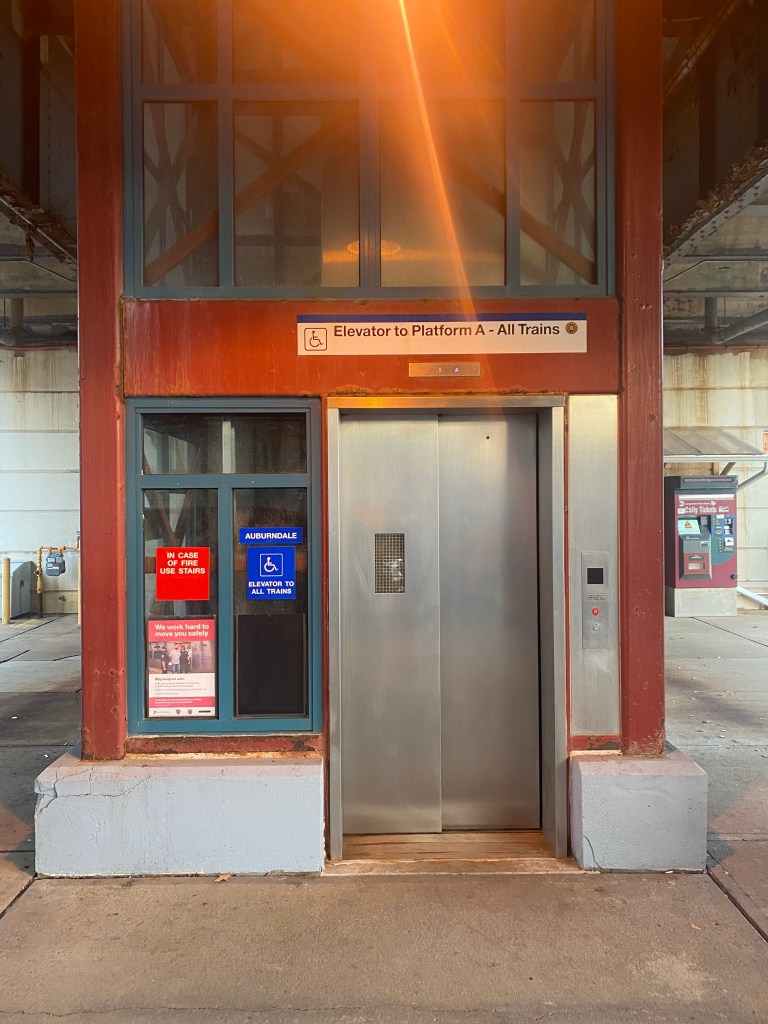
Elevator at Auburndale LIRR station that takes riders from street level to the platform.
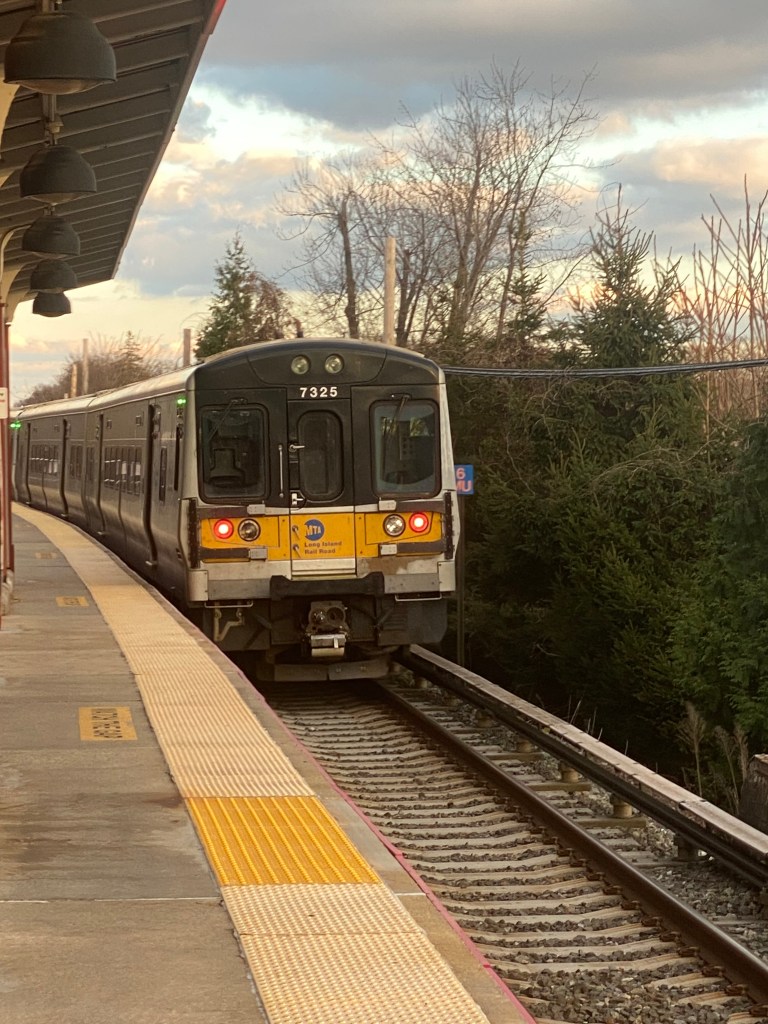
Port Washington-bound train pulls out of Auburndale LIRR station.
Other parts of the project will also be welcome. ADA travel amenities such as accessible walkways, lighting and other accessories will be installed. The addition of lighting around the station can definitely benefit riders perception of safety especially at night given that the surrounding neighborhood is largely residential and may arguably have a suburban feel to it depending on who you ask. An ADA-accessible restroom will also be installed, which may be useful for riders who have to wait long epiords of time for trains or need to be able to go before an otherwise long ride. The MTA has allocated a total of about $5.9 million for the project. Work is expected to be completed by September 2025. The length of this project’s timeline could be because of technical complexities regarding the elevator replacement or a lack of funding, especially given the MTA’s current financial troubles.
As construction on this project is set to start this month, this project is hopefully one that sets the precedent for future station improvement projects across the Metro-North and LIRR systems. With East Side Access approaching, there is hope that more riders will utilize the system and this ensures that riders from the Auburndale station with mobility disabilities can depend on their home station and that all riders can have a better experience.
Works Cited
Metropolitan Transportation Authority. “2020-2024 Capital Plan Dashboard.” mta.info, 2020, http://web.mta.info/capitaldashboard/CPDPlan.html?PLN=8&AGY=a. Accessed 22 December 2022.
“Public weighs in on NYC’s congestion pricing plan at 1st public hearing.” ABC7 New York, 26 August 2022, https://abc7ny.com/congestion-pricing-mta-nyc-traffic-commuting/12167714/. Accessed 22 December 2022.
 Transit Central